
Landlord Rights: How to Evict a Tenant in Indiana Legally 2026
Evict a tenant legally in Indiana 2026: Full guide to 10-day notices, court hearings, judgments, writs, costs, timelines, tenant defenses & common myths. Southern Indiana landlord help from Fritch Law Office.
Landlord rights: how to evict a tenant in Indiana legally is one of the most practical and frequently searched questions for property owners in 2026. Indiana is considered a landlord-friendly state, but the eviction process is strictly regulated under Indiana Code Title 32, Article 31 to protect both landlords and tenants. You cannot simply change the locks or shut off utilities — doing so can result in lawsuits, fines, or even criminal charges.
- This complete 2026 guide explains the full legal eviction process in plain, step-by-step language: valid grounds for eviction, required notices and timelines, filing in court, hearing, writ of possession, costs, typical timeline, documents checklist, real-life examples from Indiana courts, common tenant defenses, pitfalls to avoid, myths debunked, and FAQs. Whether you own a single rental home in Jasper or manage multiple units in Evansville or Indianapolis, following these steps ensures you evict legally, quickly, and with minimal risk.
Eviction is always a last resort. Many landlords resolve issues with late rent notices or payment plans first, but when necessary, Indiana’s process is predictable and efficient.
Legal Grounds for Eviction in Indiana (What Justifies Removing a Tenant?)
Indiana law allows eviction only for specific reasons (IC 32-31-1-1 et seq.):
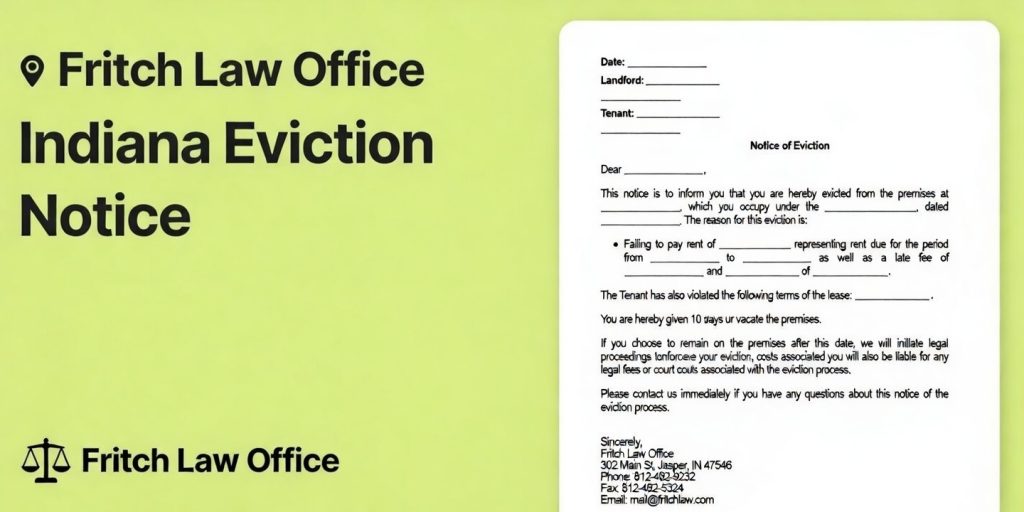
Indiana Eviction Notice Form – Comply with State Laws
Another visual flowchart of the full eviction process in Indiana — from notice to writ of possession.

Step-by-Step: How to Legally Evict a Tenant in Indiana 2026
Step-by-Step: How to Legally Evict a Tenant in Indiana 2026
Serve by certified mail, hand delivery, or posting on door + regular mail. Keep proof of service.
This photo shows a landlord taping an eviction notice to a tenant’s door — common legal method in Indiana.

Handling Eviction Notices: Essential Tips for Property Managers A close-up of a completed Indiana eviction notice form — exactly what you must use.
Step 2: File the Eviction Complaint in Court (If Tenant Doesn’t Leave)
Many counties now allow e-filing through Indiana Odyssey system.
Step 3: Serve the Summons on the Tenant
Step 4: Court Hearing (Usually 2–4 Weeks After Filing)
- ● Both sides appear before a judge or magistrate.● Landlord presents evidence (lease, notices, photos, payment history).● Tenant can raise defenses (e.g., habitability issues, retaliation).● Judge issues judgment for possession if landlord wins.
If you're facing eviction in Indiana, what do you need to know?

Another view of a crowded eviction docket day in an Indiana county court — common scene in 2026.
Everyone struggles’: Heading off evictions in Lawrence Township court
Step 5: Obtain Writ of Possession (If Tenant Still Won’t Leave)
This is the official “Writ of Possession” document used in Indiana courts — the final step that forces removal.
Step 6: Post-Eviction Cleanup and Recovery
Documents Checklist for Evicting a Tenant in Indiana 2026
Timeline & Costs of Eviction in Indiana 2026
Tenant Defenses & How Landlords Can Overcome Them
Common defenses: improper notice, habitability violations, retaliation, or payment made after notice. Document everything and respond promptly.
Real-life example: In a 2025 Dubois County case, a landlord won eviction in 5 weeks after proving repeated lease violations with photos and witness statements.
Another example: 2026 Evansville — Tenant raised habitability defense, but landlord proved repairs were made, securing possession in 9 weeks.
Myths Debunked About Eviction in Indiana
Myth 1: You can change locks immediately. Fact: Illegal — can lead to treble damages.
Myth 2: Eviction erases owed rent. Fact: You can still sue for back rent separately.
Tips for Landlords Evicting in Southern Indiana

A modern Indiana county courthouse where eviction cases are heard daily.
Frequently Asked Questions
Q1. How long does the eviction process take in Indiana?
4–8 weeks uncontested; longer if tenant contests.
Q2. Can I evict for non-payment without a 10-day notice?
No — strict 10-day notice required.
Q3. What if the tenant files bankruptcy?
Automatic stay — eviction halts until court lifts it.
Q4. Do I have to store tenant belongings?
Yes, for 30 days.
Q5. Can I do self-help eviction?
No — illegal and risky.
If you’re a landlord in Southern Indiana (Jasper, Huntingburg, Dale, Tell City, Washington, Boonville, Evansville or surrounding areas) facing eviction, lease issues, or tenant disputes, Fritch Law provides clear, efficient legal guidance for landlords. They handle notices, court filings, hearings, and post-eviction recovery with a focus on protecting your property and income. Visit https://www.fritchlaw.com/ for landlord-tenant resources or call 812-482-9232 for straightforward, no-pressure advice tailored to your situation.
This guide is based on Indiana Code Title 32, Article 31 (current as of 2026). Eviction laws and court procedures can vary slightly by county. This is not legal advice — every situation is unique. Consult a licensed Indiana attorney for advice specific to your property and tenant.