
Indiana Landlord-Tenant Laws: Rights and Responsibilities Explained 2026
Indiana landlord-tenant laws: rights and responsibilities explained is the go-to resource for both landlords and tenants in 2026. Indiana is considered moderately landlord-friendly, but the laws under Indiana Code Title 32, Article 31 balance protections for both sides. Landlords must provide habitable housing and follow strict notice rules, while tenants must pay rent on time, maintain the property, and not disturb neighbors.
This comprehensive 2026 guide covers everything in clear, practical language: key rights for landlords and tenants, security deposit rules, repair and maintenance responsibilities, lease requirements, eviction process, notice periods, habitability standards, costs involved, real-life examples from Indiana courts, common myths, negotiation tips, and FAQs. Whether you own a single-family rental in Jasper or rent an apartment in Evansville or Indianapolis, understanding these laws prevents disputes, protects your rights, and ensures smooth tenancy.
The laws have remained stable in 2026 with no major changes to security deposit return timelines or implied warranty of habitability, but local ordinances in larger cities (Indianapolis, Fort Wayne) add extra tenant protections.
Core Principles of Indiana Landlord-Tenant Law
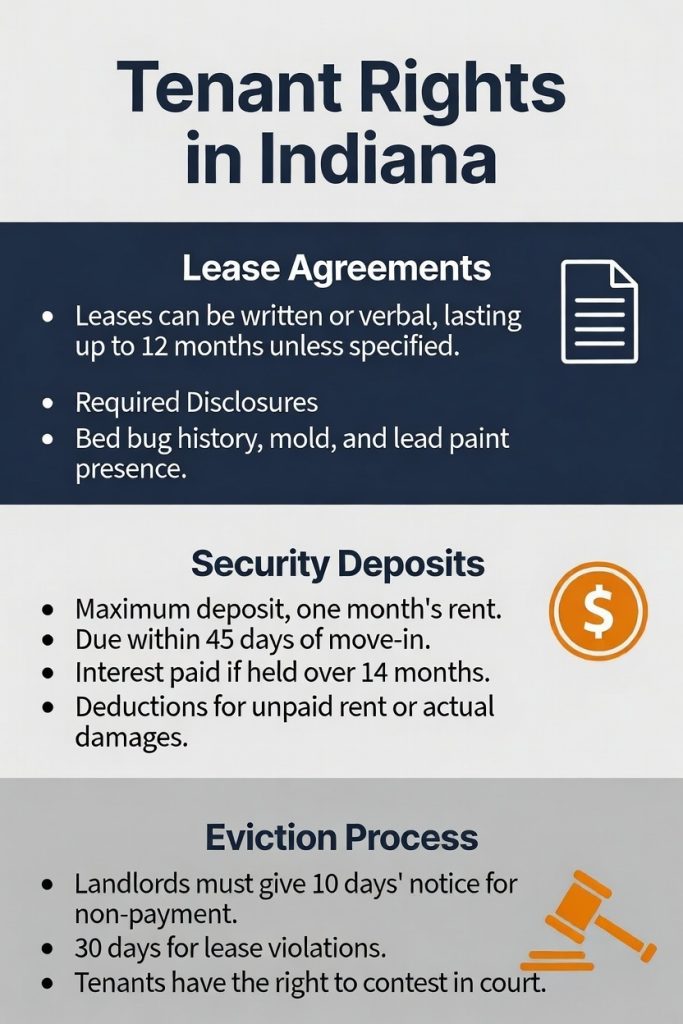
What Is Considered Landlord Retaliation in Indiana: Top 5 Shocking Facts 2025
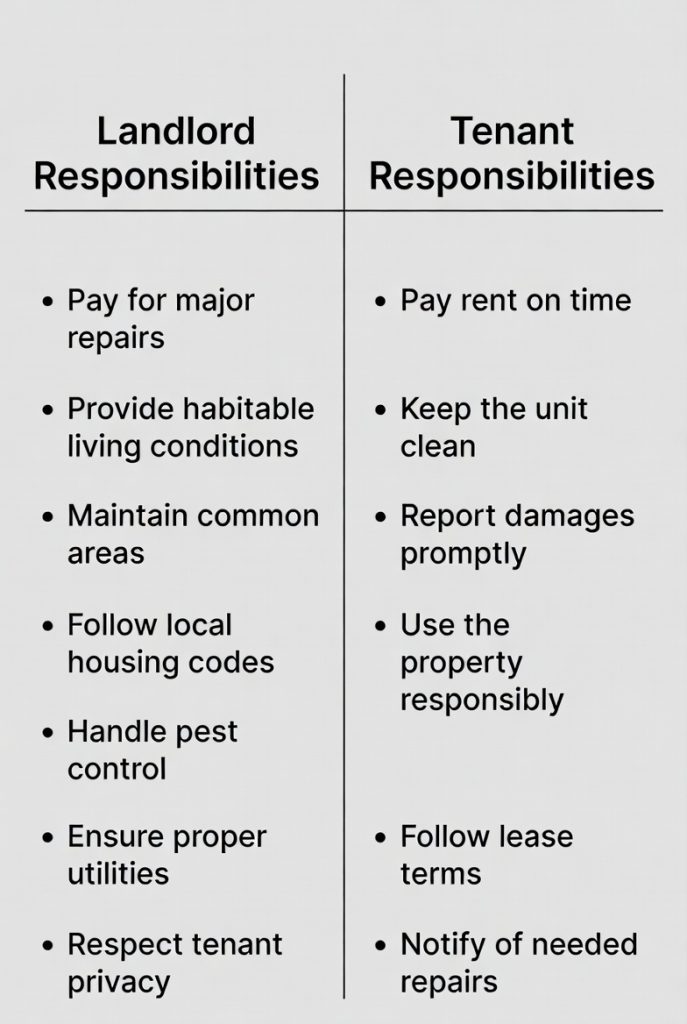
Another chart showing landlord responsibilities vs tenant duties — perfect for understanding the balance.
How to Understand Indiana Tenant Eviction Process in 5 Steps -
Security Deposits in Indiana (Rules, Return Timeline, Deductions)
Security deposits are the most common source of disputes.
Landlords must provide a written, itemized statement of deductions.
Real-life example: In a 2025 Dubois County case, a landlord deducted $800 for “cleaning” without photos — court ordered full refund plus attorney fees to the tenant.
This chart shows Indiana security deposit return rules with examples of allowable vs non-allowable deductions.

Repairs and Maintenance Responsibilities
If landlord ignores repair requests in writing, tenant can “repair and deduct” up to one month’s rent or break the lease in extreme cases (after proper notice).
This photo shows a landlord performing repairs in a rental property — common scene for responsible Indiana landlords.

What Are Tenant Rights in Indiana?
A tenant reporting a repair issue to the landlord — key step in the process.
-
Lease Agreements and Notice Requirements
● Written Leases: Highly recommended. Must include rent amount, due date, late fees, rules, and termination notice.● Month-to-Month: Either party can terminate with 30 days’ written notice.● Fixed-Term: Tenant must stay until end or pay early termination fee if allowed.Notices must be in writing and properly delivered (certified mail or hand delivery).
This example lease agreement template shows key clauses required in Indiana.

Eviction Process (Quick Reference for Landlords)
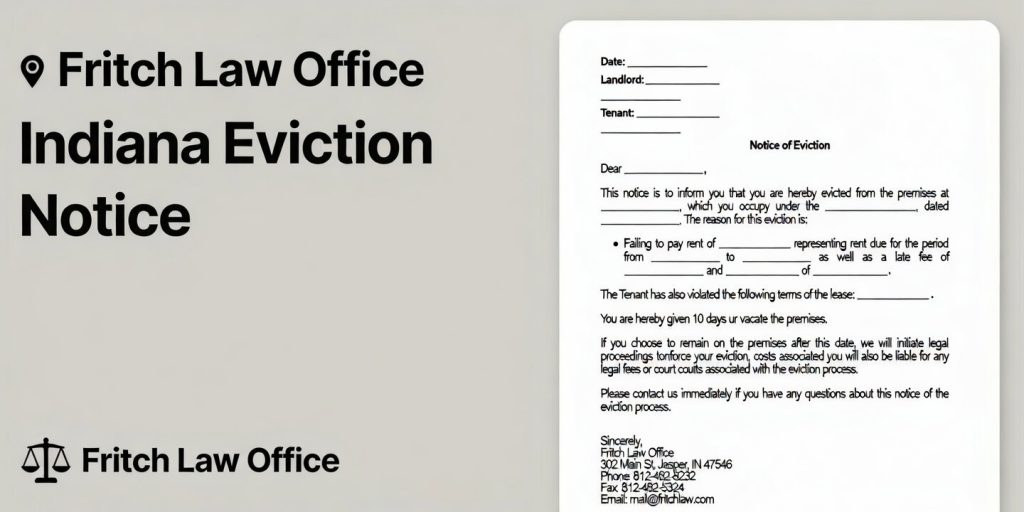
Eviction follows the same legal steps covered in the dedicated eviction guide: 10-day notice for non-payment, court filing, hearing, writ of possession. Self-help evictions (changing locks) are illegal and can cost landlords treble damages.
Tenant Rights Summary
Landlord Rights Summary
Costs and Timeline for Common Landlord-Tenant Issues
Real-Life Examples from Indiana Courts
Common Myths Debunked
Myth 1: Landlords can enter anytime. Fact: Reasonable notice required.
Myth 2: Security deposits are non-refundable. Fact: Must be returned minus legitimate deductions.
Tips for Landlords and Tenants in Southern Indiana

Frequently Asked Questions
Q1. How long does a landlord have to return a security deposit?
45 days with itemized deductions.
Q2. Can a landlord evict without court?
No — self-help is illegal.
Q3. What is the implied warranty of habitability?
Landlord must keep the property safe and livable.
Q4. Do tenants have to allow entry for repairs?
Yes, with reasonable notice.
Q5. Can rent be raised anytime?
In month-to-month, with proper notice.
If you’re a landlord or tenant dealing with lease issues, security deposits, repairs, or disputes in Southern Indiana (Jasper, Huntingburg, Dale, Tell City, Washington, Boonville, Evansville or nearby), Fritch Law provides clear, practical guidance for both sides. They draft leases, handle security deposit disputes, represent landlords in evictions, and defend tenant rights with a focus on fair, cost-effective solutions. Visit https://www.fritchlaw.com/ for landlord-tenant resources or call 812-482-9232 for straightforward, no-pressure advice tailored to your situation.
This guide reflects current Indiana Code Title 32, Article 31 (as of 2026). Laws and local ordinances can vary by city or county. This is not legal advice — every situation is unique. Consult a licensed Indiana attorney for advice specific to your rental property or tenancy.