
Property Title Search and Due Diligence Before Buying in Indiana
Complete Guide 2026 (Step-by-Step Process, Costs, What to Check, Title Insurance, Common Pitfalls, Real-Life Examples, Myths Debunked & FAQs)
Property title searches and due diligence before buying in Indiana are absolutely essential to protect your investment in real estate in the Hoosier State. In 2026, a thorough title search helps prove ownership, identify liens, uncover easements and reveal unpaid taxes, judgments, or other hidden defects that could derail a transaction or cost tens of thousands of dollars down the road.
In Indiana, the title search is typically performed by a title company or attorney using county recorder records and online public data. This search must be paired with a broader due diligence review that includes zoning, surveys, inspections, and financial records so buyers can proceed with full confidence.
This complete 2026 guide explains the full legal eviction process in plain, step-by-step language: valid grounds for eviction, required notices and timelines, filing in court, hearing, writ of possession, costs, typical timeline, documents checklist, real-life examples from Indiana courts, common tenant defenses, pitfalls to avoid, myths debunked, and FAQs. Whether you own a single rental home in Jasper or manage multiple units in Evansville or Indianapolis, following these steps ensures you evict legally, quickly, and with minimal risk.
Whether you’re a first-time buyer in Jasper, an investor in Evansville, or buying farmland near Tell City, skipping proper due diligence is the fastest way to regret a purchase. Let’s walk through it all.
Why a Property Title Search Is Critical in Indiana (2026 Risks)
A title search examines public records to prove the seller legally owns the property and can transfer clear title. In Indiana, this is done by a title company or attorney at the county recorder’s office (or online portals in many counties).
- Unpaid property taxes or tax liens
- Mortgage liens and subordinate loans
- Mechanic’s liens from unpaid contractors
- Judgments or claims from prior owners
- Easements, rights-of-way, or encroachments

Another chart explaining common title defects in Indiana and how they affect buyers.
Step-by-Step: How to Conduct a Property Title Search in Indiana
Step 1: Hire a Professional
Most buyers choose a title company (often lender-recommended) or attorney. Costs range from $75–$300, typically included in closing fees. Timeframe: 1–3 weeks for residential properties.
Step 2: Gather Property Details
Provide the address, legal description, or parcel number from tax records.
Step 3: Review Public Records
Professionals examine deeds, mortgages, liens, tax records, and court filings.
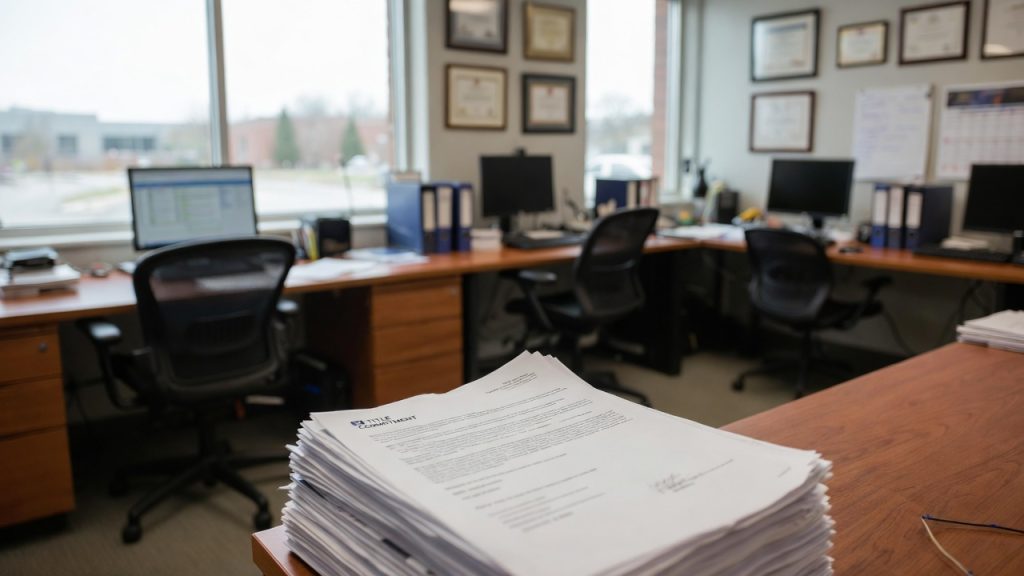
Step 4: Evaluate the Title Commitment
Receive a preliminary report listing exceptions (issues). Review it carefully with your attorney or realtor.
Step 5: Resolve Issues Before Closing
The seller usually clears defects. Alternatively, negotiate credits or walk away.
Due Diligence Beyond the Title Search
A title search is only part of due diligence. Complete the following:
Home Inspection – Checks structural, HVAC, plumbing, and roofing systems.
Property Survey – Confirms boundaries and identifies encroachments.
Appraisal – Validates market value.
Zoning & Permits Review – Ensures intended use is permitted.
Environmental Checks – Especially for commercial properties.
HOA or Condo Document Review – Finds rules, fees, and reserves.
Real-life example: In a 2026 Lake County purchase, a survey revealed an encroachment by the neighbor’s fence — buyer negotiated $8,000 price reduction.

Title Insurance in Indiana: Who Pays & What It Covers
Owner’s title insurance typically protects the buyer and is often paid for by the seller (custom, not law).
Lender’s title insurance protects the mortgage lender and is usually paid by the buyer.
- Cost: 0.5–1% of purchase price (owner’s ~$800–$2,500 for $300k home).
- Covers forgery, undisclosed heirs, recording errors, etc.

Current Costs of Title Search & Due Diligence in Indiana 2026
-
● Title search: $75–$300● Owner’s title insurance: Seller-paid (custom)● Lender’s title insurance: Buyer-paid (~$1,000–$3,000)● Home inspection: $300–$600● Survey: $400–$1,500● Total due diligence: $1,500–$5,000+ (buyer responsibility)
Common Pitfalls & How to Avoid Them
Skipping a survey — This often leads to boundary disputes later.
Ignoring HOA documents — Unexpected fees and restrictions frequently cause buyer regrets.
Failing to review tax records — Back taxes can become the buyer’s burden.
Another view of a crowded eviction docket day in an Indiana county court — common scene in 2026.
Everyone struggles’: Heading off evictions in Lawrence Township court
Step 5: Obtain Writ of Possession (If Tenant Still Won’t Leave)
This is the official “Writ of Possession” document used in Indiana courts — the final step that forces removal.
Myths Debunked
Myth 1: Seller always pays all title costs. Fact: Buyer pays lender’s policy.
Myth 2: Title search guarantees no problems. Fact: Only covers recorded issues.
Tips for Buyers in Southern Indiana

Frequently Asked Questions
Q1. How long does a title search take in Indiana?
1–3 weeks for most residential properties.
Q2. Who pays for title insurance in Indiana?
Seller pays owner’s policy; buyer pays lender’s.
Q3. Do I need a survey when buying a house?
Recommended, especially for older properties or land.
Q4. Can I do my own title search?
Yes, at county recorder, but professional is safer.
Q5. What if title issues are found?
Seller must clear them or buyer can renegotiate/walk away.
If you’re a landlord in Southern Indiana (Jasper, Huntingburg, Dale, Tell City, Washington, Boonville, Evansville or surrounding areas) facing eviction, lease issues, or tenant disputes, Fritch Law provides clear, efficient legal guidance for landlords. They handle notices, court filings, hearings, and post-eviction recovery with a focus on protecting your property and income. Visit https://www.fritchlaw.com/ for landlord-tenant resources or call 812-482-9232 for straightforward, no-pressure advice tailored to your situation.
This guide is based on Indiana Code Title 32, Article 31 (current as of 2026). Eviction laws and court procedures can vary slightly by county. This is not legal advice — every situation is unique. Consult a licensed Indiana attorney for advice specific to your property and tenant.