
How to File for Divorce in Indiana: 7 Powerful Steps for 2026
(Complete Guide with Official Forms, Residency Rules, 60-Day Waiting Period, Filing Fees, Documents Checklist, Uncontested vs Contested, Costs, Timeline, Real-Life Examples, Common Mistakes & FAQs)
How to file for divorce in Indiana: 7 powerful steps for 2026 is the exact roadmap you need when your marriage has reached its end. Indiana is a no-fault divorce state under Indiana Code § 31-15-2. The most common ground is “irretrievable breakdown” of the marriage — you do not need to prove adultery, cruelty, or any other fault.
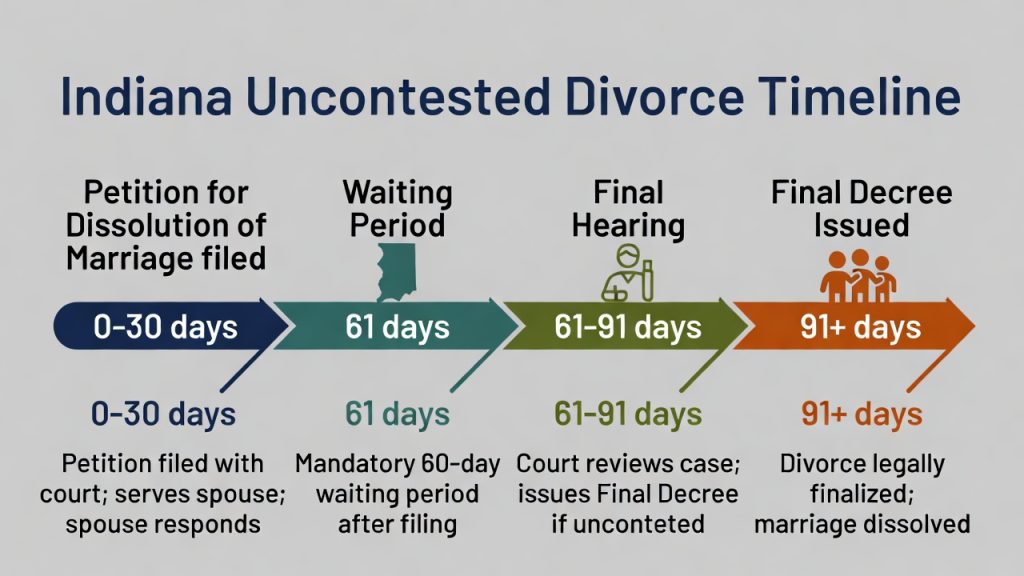
The process is straightforward if you follow the rules: strict residency requirements, a mandatory 60-day waiting period, proper paperwork, service on your spouse, and a final decree. In 2026, most counties allow e-filing through the Indiana Odyssey system, forms are free from the official Indiana Courts Self-Service Legal Center, and uncontested divorces (full agreement) can finalize quickly after the waiting period with no trial.
This complete, verified 2026 guide (cross-checked with official Indiana courts sources, Indiana Code Title 31 Article 15, and current self-service resources) walks you through exactly 7 powerful steps so you know what to do, when to do it, how much it costs, what documents you need, how to make it uncontested and fast, when the 60-day wait applies, child custody/support considerations, special situations (military, domestic violence, out-of-state spouses), common mistakes, and real-life examples.
Important 2026 Note: All information below is confirmed current as of March 2026 from the Indiana Judicial Branch Self-Service Legal Center, county clerk offices, and Indiana Code. Filing fees and procedures can vary slightly by county — always double-check your local clerk’s office or the official IN.gov self-service site before filing.
The 7 Powerful Steps to File for Divorce in Indiana (2026)
Step 1: Confirm You Meet the Strict Residency Requirements
Before you file anything, you (or your spouse) must satisfy Indiana Code § 31-15-2-6:
You can file in:

Step 2: Gather All Required Documents and Financial Information
Collect:
Organize everything — this makes Steps 3–7 much faster and prevents delays.
Step 3: Decide Uncontested or Contested and Draft a Marital Settlement Agreement (If Possible)
Work with your spouse (or lawyers) to create the agreement. Include it with your petition if ready.
Step 4: Prepare and File the Verified Petition for Dissolution of Marriage

File in the Circuit or Superior Court of the proper county.
Both spouses can sign and file jointly in uncontested cases. Many counties now allow e-filing.
Step 5: Serve the Petition on the Other Spouse
This waiting period cannot be waived in most cases.
You can remarry immediately.

Indiana Divorce Appeals Explained: Key Grounds and Procedures for Success -
Full Documents Checklist for Filing Divorce in Indiana 2026
What “Good Standing” Means in Indiana & How to Verify It
Current Costs of Divorce in Indiana 2026
Timeline Summary
- ● Uncontested: 2–4 months● Uncontested with waiver (rare): 1–2 months● Contested: 6–18+ months
Special Situations
- ● Military spouses: Special federal protections.● Domestic violence: File protective order first.● Children involved: Court focuses on best interest of the child.
Common Mistakes to Avoid
- ● Filing before meeting residency.● Not disclosing all assets.● Signing unfair agreements without review.● Ignoring the 60-day rule.
Tips for Success with Indiana Business Entity Searches
● Always search multiple variations (LLC, L.L.C., Inc., Corp)● Save screenshots or PDFs of results● Check both INBiz and USPTO for trademarks● Use the search before every major decision involving another entity
Frequently Asked Questions
Q1. Can I file divorce online in Indiana?
Many counties allow e-filing through Odyssey, but you still need proper forms.
Q2. Do I need a lawyer for uncontested divorce?
Not required, but strongly recommended.
Q3. How long after filing can I remarry?
Immediately after the decree is signed.
Q4. What if my spouse won’t sign?
It becomes contested — proceed on no-fault grounds.
Q5. Is there a waiting period after the decree?
No — divorced the day the judge signs.
If you are facing divorce in Southern Indiana (Jasper, Huntingburg, Dale, Tell City, Washington, Boonville, Evansville or surrounding areas), Fritch Law provides clear, compassionate guidance for filing divorce, drafting settlement agreements, handling custody/support, and protecting your interests. They handle both uncontested and contested cases with practical, cost-effective solutions. Visit https://www.fritchlaw.com/ for family law services or call 812-482-9232 to discuss your situation — no pressure, just straightforward answers.
This guide is based on Indiana Code Title 31, Article 15 and official Indiana Courts Self-Service resources (verified current as of 2026). Court practices vary slightly by county. This is not legal advice — every case is unique. Consult a licensed Indiana family law attorney for advice specific to your circumstances.