
How to Evict a Tenant in Indiana Legally 2026 – Step-by-Step Guide (Updated Notice Periods, Court Process, Costs, Forms & Mistakes to Avoid)
Evicting a tenant in Indiana is a legal process that must be followed exactly — one small mistake (wrong notice, improper service, self-help actions) can get your case dismissed, cost you thousands in damages, or even expose you to a tenant countersuit. Indiana landlord-tenant law is governed mainly by Indiana Code Title 32, Article 31 (Landlord-Tenant Relations), with eviction procedures handled through small claims or circuit/superior courts depending on the county and amount in controversy.
As of 2026, the key rules remain unchanged from recent years:
This complete 2026 guide gives landlords the exact steps, timelines, forms, costs, notice wording examples, court process, sheriff execution details, and the most common mistakes that cause landlords to lose eviction cases in Indiana.
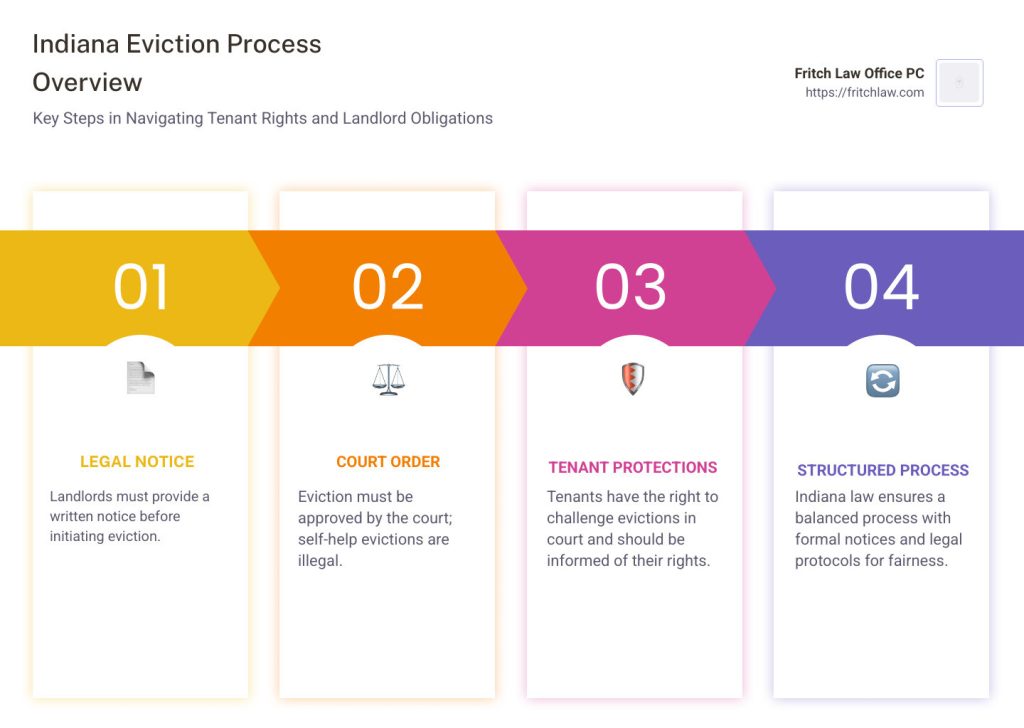
Indiana Eviction Process Overview (2026 Flowchart)
This flowchart shows the full legal eviction process in Indiana from notice to possession.
Legal Reasons You Can Evict a Tenant in Indiana

You can only evict for specific cause during a fixed-term lease. The most common legal grounds are:
This photo shows a landlord carefully reviewing and preparing the official eviction notice

Step-by-Step: How to Evict a Tenant in Indiana Legally
Step 1: Document Everything Before You Start
Step 2: Serve the Correct Written Notice to Vacate
Indiana requires written notice before filing in court. The type and length of notice depend on the reason:

Step 3: File the Eviction Lawsuit (Ejectment Complaint) If Tenant Doesn’t Leave
This photo shows an Indiana courtroom during an eviction hearing — judge, landlord, tenant (or attorney), and sometimes witnesses are present.
Step 4: Attend the Eviction Court Hearing
Step 5: Obtain Writ of Possession & Sheriff Removal
This calendar graphic highlights the key eviction deadlines in Indiana — notice periods, filing, hearing, and sheriff possession dates.
Step 6: Handle Tenant’s Abandoned Property & Sue for Damages
This photo shows a landlord meeting with an attorney before starting the eviction process — early legal advice prevents costly mistakes and delays.
Typical Costs & Timeline for Eviction in Indiana (2026)
Top 10 Landlord Mistakes That Get Eviction Cases Dismissed
If you’re a landlord in Southern Indiana (Jasper, Huntingburg, Dale, Tell City, or nearby) dealing with eviction, lease violations, or tenant disputes, Fritch Law provides experienced representation for landlords — including drafting compliant notices, filing eviction complaints, attending hearings, and pursuing damages. Visit https://www.fritchlaw.com/ for real estate and landlord-tenant services, or call 812-482-9232 for practical advice.
This guide is based on Indiana Code Title 32, Article 31 (current as of 2026 — no major amendments to notice periods, small claims limits, or self-help prohibitions). Eviction laws are strictly enforced — one error can delay or defeat your case. This is not legal advice. Always consult a licensed Indiana attorney for your specific situation.