Indiana probate law: Complete 2026 Guide
Fritch Law Office handles indiana probate law cases for Indiana residents every day. First, our attorneys examine your situation carefully. Next, we identify your strongest legal options. Furthermore, we explain every step in plain language. Therefore, you make confident decisions from day one.
Key Facts About Indiana probate law in Indiana
Indiana courts apply strict 2026 rules to indiana probate law matters. Moreover, experienced attorneys win better outcomes for clients. Additionally, early legal advice prevents costly mistakes. Consequently, clients who hire Fritch Law gain a clear advantage. However, waiting too long weakens your position significantly.
Take Action on Indiana probate law Today
Do not delay your indiana probate law case. First, call our Jasper office directly. Next, we schedule your free consultation immediately. Then, we build a winning strategy for you. Additionally, we represent you at every court hearing. Finally, we resolve your case as fast as possible.

Visit the Indiana Courts website for official legal information. Contact Fritch Law for your free consultation today.
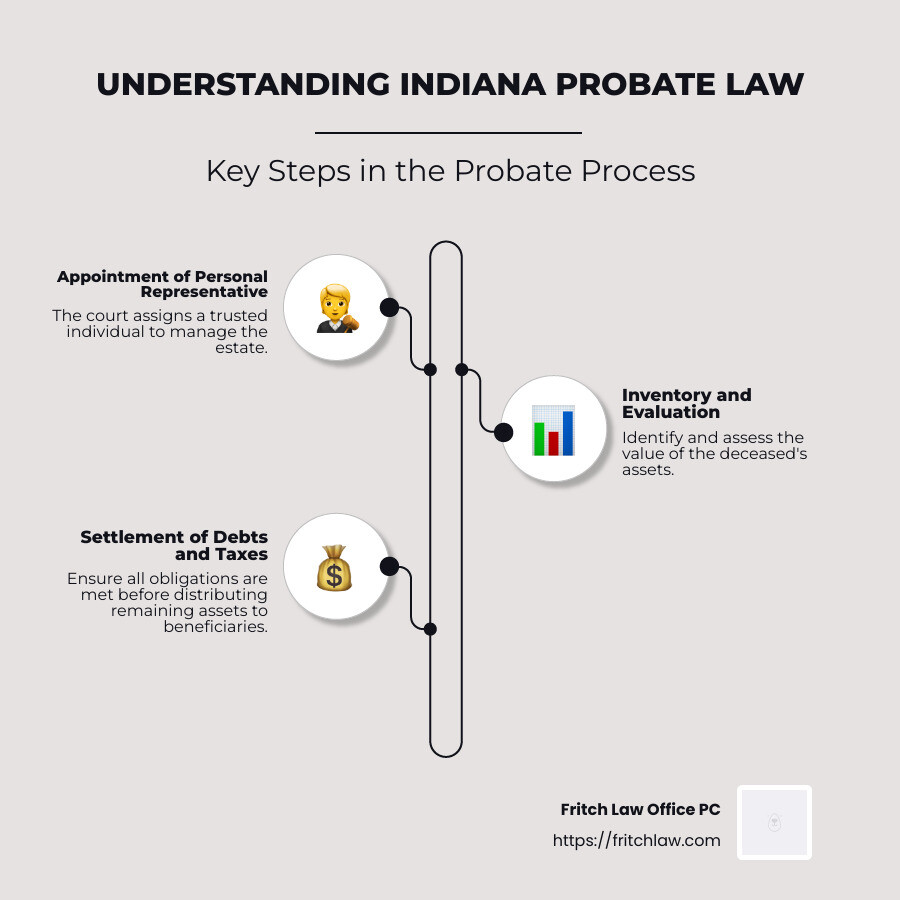
Indiana probate law is essential for managing the assets and estate of a deceased person, ensuring their rightful distribution. Whether you’re an executor, administrator, or an interested party, understanding this process is crucial. Here’s a quick takeaway on Indiana probate law:
- Administers the estate: Ensures all debts and taxes are settled before distributing the remainder to beneficiaries.
- Appointment of a personal representative: A court assigns someone to manage the estate.
- Assets and inventory: Identification and evaluation of the deceased’s assets are necessary.
In Indiana, probate ensures the legal transfer of assets and resolves any remaining debts. The process not only protects the wishes of the departed but also safeguards the rights of heirs and creditors. To efficiently steer Indiana probate law, familiarizing yourself with its requirements and procedures is key.
I am David Fritch, with over 40 years of experience in law and estate planning, including Indiana probate law. Having managed my law firm and CPA practice, I’ve dedicated my career to assisting clients in understanding and navigating complex legal landscapes.
What is Probate and Why is it Necessary?
The Role of the Probate Court
Probate is a court-supervised process that ensures a deceased person’s affairs are handled correctly. In Indiana, probate is crucial, especially for estates worth over $50,000, as mandated by state statutes. The primary role of the probate court is to ensure that all taxes and debts of the estate are settled before any assets are distributed to heirs or beneficiaries.
Why is probate necessary?
-
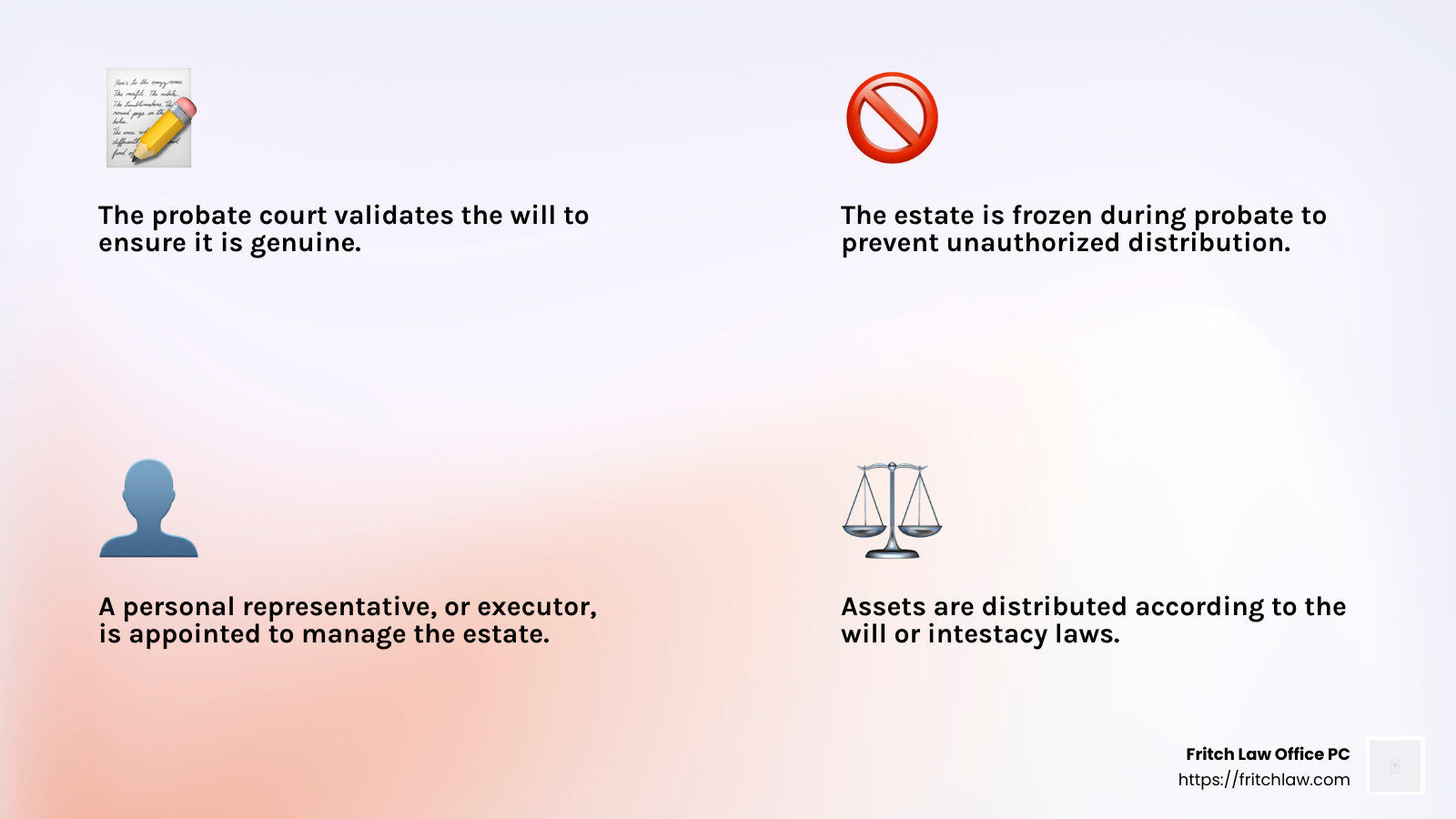
Validates the will: The probate court checks the legality of the deceased’s will. This step ensures that the document is genuine and that the deceased’s wishes are honored.
-
Freezes the estate: Once probate begins, the estate is frozen. This means no assets change hands until all debts are paid, and the court gives approval. This prevents any premature or unauthorized distribution.
-
Assigns a personal representative: Often referred to as an executor, this person is appointed by the court to manage the estate. If the deceased named an executor in their will, the court usually honors that choice. If not, the court will appoint someone, typically a close relative.
-
Selects heirs and distributes assets: The court oversees the distribution of assets, whether according to the will or, if there is no will, according to Indiana’s intestacy laws. This ensures a fair and legal distribution to the rightful heirs.
The probate court’s importance lies in its ability to manage the deceased’s affairs systematically. It protects the interests of all parties involved, including creditors who might have claims against the estate. By supervising the process, the court ensures that everything is done according to Indiana probate law, maintaining order and fairness in asset distribution.
This structured approach is vital for the smooth transition of assets and the resolution of any outstanding obligations.
Indiana Probate Laws
In Indiana, probate laws provide a structured way to manage and distribute a deceased person’s estate. This process is essential for ensuring that the deceased’s wishes are honored and that all legal and financial obligations are met.
Assets Requiring Probate
Certain assets must go through probate to be legally transferred to heirs or beneficiaries. Typically, these include:
-
Solely Titled Property: Any real estate or personal property solely in the deceased’s name needs to be probated to transfer ownership.
-
Bank and Investment Accounts: If these accounts lack a designated beneficiary or aren’t jointly held, they must be probated.
-
No Identified Beneficiary: Assets without a named beneficiary, such as life insurance policies or retirement accounts, may require probate.
The probate process involves several key steps:
-
Authority Over Estate: The court grants authority to a personal representative, often named in the will, to manage the estate. If there’s no will, the court appoints someone, usually a close relative.
-
Death Certificate: The process starts by filing the death certificate with the probate court, confirming the individual’s passing.
-
Creditors and Beneficiaries: The personal representative identifies and notifies all creditors and beneficiaries, ensuring that debts and taxes are settled before distributing assets.
-
Inventory of Assets: An inventory of the estate’s assets is compiled, and their market value is assessed. This step is crucial for determining the estate’s total worth and settling any financial obligations.
-
Paying Debts and Taxes: The personal representative uses the estate’s assets to pay off any outstanding debts and taxes. This step ensures that the estate is clear of liabilities before distribution.
-
Administering the Estate: Finally, the personal representative administers the estate, distributing assets according to the will or, if there is no will, according to Indiana’s intestacy laws.
Assets Not Requiring Probate
Some assets bypass the probate process altogether, simplifying the transfer to beneficiaries:
-
Joint Tenancy: Property held in joint tenancy automatically passes to the surviving owner without probate.
-
Beneficiary Designations: Accounts like retirement funds or life insurance with designated beneficiaries transfer directly to those individuals.
-
Transfer-on-Death and Payable-on-Death Accounts: These accounts allow assets to transfer directly to named beneficiaries upon death, avoiding probate.
-
Living Trusts: Assets placed in a living trust are managed according to the trust’s terms, bypassing probate and often providing greater privacy.
-
Community Property: In some cases, community property laws may allow for the direct transfer of assets to a surviving spouse without probate.
Understanding which assets require probate and which do not can significantly impact the administration of an estate. It helps in planning and executing a smoother transition of assets, ensuring that beneficiaries receive their inheritance promptly and efficiently. This distinction is crucial for families navigating the complexities of Indiana probate law.
Types of Probate Administration in Indiana
In Indiana, the probate process can be managed through two main types of administration: unsupervised and supervised. The choice between these types depends on several factors, including the complexity of the estate and the relationships among beneficiaries.
Unsupervised Administration
Unsupervised administration is the simpler and more common method for handling estates in Indiana. It’s often chosen when:
-
The Estate is Solvent: This means the estate’s assets exceed its debts, making it easier to settle obligations without court oversight.
-
Will or Beneficiaries Authorize It: If the will explicitly allows for unsupervised administration or if all beneficiaries agree, this process can be pursued.
-
Agreement Among Heirs: All parties involved must be in agreement about the distribution of assets. This harmony among heirs is crucial for avoiding disputes.
In unsupervised administration, the court’s involvement is minimal. The personal representative (executor) handles most tasks independently, such as paying debts and distributing assets. This approach is faster and less costly, as it requires less paperwork and fewer court appearances.
Supervised Administration
Supervised administration is necessary when the estate requires more oversight due to complications or disputes. This process is appropriate when:
-
Court Involvement is Needed: Some estates require the court to guide and approve each step, ensuring legal compliance.
-
The Estate is Insolvent: If debts exceed assets, the court may need to prioritize payments and ensure fair treatment of creditors.
-
Disputes Among Beneficiaries: When beneficiaries disagree on the will’s interpretation or asset distribution, court supervision can help resolve conflicts.
-
Difficult-to-Value Assets: Estates with assets that are hard to appraise or sell might need court assistance to determine their value.
-
Unclear Will: If the will’s instructions are ambiguous, the court can help interpret the decedent’s wishes.
In supervised administration, the court actively oversees the process. The personal representative must seek court approval for major actions, such as selling property or distributing assets. This type of administration can be more time-consuming and expensive due to the increased court involvement and legal fees.
Choosing between unsupervised and supervised administration depends on the estate’s complexity and the relationships among heirs. Understanding the nuances of each type can help ensure a smooth probate process under Indiana probate law.
Steps in the Indiana Probate Process
Navigating the probate process in Indiana involves several key steps, which ensure that the deceased’s estate is managed and distributed lawfully and efficiently. Here’s a simplified breakdown of each step in the process:
Filing the Will
The first step in the Indiana probate process is to file the will with the probate court in the county where the decedent resided. If there is no will, the estate will be handled according to Indiana’s intestacy laws. Filing the will initiates the probate process and allows the court to begin overseeing the estate’s administration.
Court Validation
Once the will is filed, the court steps in to validate the will. This involves confirming that the will is legitimate and was created in compliance with Indiana law. If there are any challenges to the will, such as claims of forgery or undue influence, they are addressed at this stage.
Assigning the Executor
After the will is validated, the court appoints a personal representative, often referred to as the executor, to manage the estate. If the will names an executor, the court typically honors this choice. In the absence of a named executor, the court appoints someone, usually a close relative, to fulfill the role.
Identifying Creditors and Beneficiaries
The executor’s next task is to identify creditors and beneficiaries. This includes notifying all known creditors of the decedent’s passing and the commencement of probate proceedings. Creditors are given a specific period to file claims against the estate. Beneficiaries, those entitled to inherit from the estate, are also identified and informed.
Inventory and Valuation
The executor must compile a comprehensive inventory of the estate’s assets. This includes real estate, personal property, bank accounts, and investments. The assets are then appraised to determine their market value. This step is crucial for ensuring that the estate’s value is accurately assessed and reported.
Paying Debts and Taxes
Once the inventory is complete, the executor uses the estate’s assets to pay off any debts and taxes. This includes funeral expenses, medical bills, outstanding loans, and any applicable state or federal taxes. The executor must ensure all legitimate debts are settled before distributing the remaining assets to beneficiaries.
Administering the Estate
With debts and taxes settled, the executor proceeds to administer the estate. This involves distributing the remaining assets to the beneficiaries as specified in the will or, if there is no will, according to Indiana’s intestacy laws. The executor must follow the court’s instructions and adhere to legal guidelines during this process.
By understanding these steps, executors can efficiently steer the probate process, ensuring that the decedent’s wishes are honored and the estate is handled in compliance with Indiana probate law.
Frequently Asked Questions about Indiana Probate Law
Does an estate have to go through probate in Indiana?
In Indiana, whether an estate must go through probate depends on several factors, including the presence of a Last Will & Testament and the value of the estate. Typically, probate is necessary if the estate’s value exceeds $50,000 and there are assets that require legal transfer. However, if the deceased had a comprehensive estate plan, such as a living trust or designated beneficiaries for most assets, probate might be avoided or minimized.
Who inherits if there is no will in Indiana?
When someone dies without a will, they are said to have died intestate. In such cases, Indiana’s intestate succession laws determine who inherits the estate. Here’s a basic rundown:
- Spouse and Children: If the deceased is survived by a spouse and children, the estate is typically divided between them. The spouse usually receives half, and the children share the other half.
- Spouse Only: If there are no children, the spouse inherits the entire estate.
- Children Only: If there is no surviving spouse, the children inherit the estate equally.
- No Spouse or Children: If there are neither a spouse nor children, the estate goes to the deceased’s parents or siblings.
These default rules highlight the importance of having a will to ensure your assets are distributed according to your wishes.
What is the time limit for probate in Indiana?
In Indiana, probate must be initiated within three years after the death of the decedent. This timeframe is crucial for ensuring the estate is settled properly and efficiently. Delays in starting the probate process can lead to increased administrative burdens and potential disputes among heirs and beneficiaries. Therefore, it’s advisable to begin the process as soon as possible to avoid complications.
Conclusion
Navigating Indiana probate law can seem daunting, but with the right support, it becomes manageable. At Fritch Law Office PC, we are committed to providing personalized legal representation that meets the unique needs of each client. Our experienced lawyers understand the intricacies of probate and estate administration and are equipped to guide you through every step of the process.
Located in Jasper, Indiana, we pride ourselves on our client-centered approach. We know that every estate and every family is different. That’s why we focus on understanding your specific situation and tailoring our services to ensure your loved one’s affairs are handled with care and precision.
Whether it’s assisting with the preparation of a will, navigating the probate process, or addressing disputes among beneficiaries, our team is here to help. We believe in clear communication and compassionate guidance, ensuring you feel supported and informed throughout.
If you need assistance with probate or estate planning in Indiana, don’t hesitate to reach out to us. Visit our Probate Services page to learn more about how we can assist you in securing your family’s future. Let us help you steer this challenging time with confidence and peace of mind.