

Indiana landlord tenant law abandoned property: Complete 2026 Guide
Fritch Law Office handles indiana landlord tenant law abandoned property cases for Indiana residents every day. First, our attorneys examine your situation carefully. Next, we identify your strongest legal options. Furthermore, we explain every step in plain language. Therefore, you make confident decisions from day one.
Key Facts About Indiana landlord tenant law abandoned property in Indiana
Indiana courts apply strict 2026 rules to indiana landlord tenant law abandoned property matters. Moreover, experienced attorneys win better outcomes for clients. Additionally, early legal advice prevents costly mistakes. Consequently, clients who hire Fritch Law gain a clear advantage. However, waiting too long weakens your position significantly.
Take Action on Indiana landlord tenant law abandoned property Today
Do not delay your indiana landlord tenant law abandoned property case. First, call our Jasper office directly. Next, we schedule your free consultation immediately. Then, we build a winning strategy for you. Additionally, we represent you at every court hearing. Finally, we resolve your case as fast as possible.

Visit the Indiana Courts website for official legal information. Contact Fritch Law for your free consultation today.
In Indiana, the topic of indiana landlord tenant law abandoned property can be overwhelming, but understanding it is crucial for landlords eager to protect their investments. When a tenant seemingly vacates a property, landlords often wonder about their next steps. Here’s a quick breakdown:
- Abandonment Definition: A tenant’s property is deemed abandoned if a reasonable person concludes the tenant has vacated without intent to return.
- Action for Landlords: Once abandonment is presumed, a landlord may petition the court to remove the tenant’s belongings legally.
- Property Handling: The tenant’s belongings must be stored appropriately, allowing for potential retrieval within a set timeframe.
Navigating these regulations can safeguard landlords from legal troubles and ensure they reclaim and maintain their property rights effectively.
As David Fritch from Fritch Law Office, located in Jasper, Indiana, my extensive experience with indiana landlord tenant law abandoned property has informed this guide. Leveraging nearly 40 years in legal practice, I assist clients in understanding and managing complex property issues.
Understanding Abandonment in Indiana
In Indiana, understanding abandonment is a key aspect of managing rental properties. Abandonment occurs when a tenant vacates a rental unit and leaves personal belongings behind without indicating an intention to return. But how do you know when abandonment has truly happened?
Abandonment Definition
The Indiana Code provides a clear definition: property is considered abandoned if a reasonable person would conclude that the tenant has vacated the premises and surrendered possession of their personal property. This means that both the physical absence of the tenant and the condition of the property are taken into account.
The Reasonable Person Standard
The “reasonable person” standard is a legal benchmark used to decide if abandonment has occurred. It involves evaluating the situation as any typical person might. For instance, if essential items like beds, clothing, and food are missing from the property, it could indicate abandonment.
This standard helps protect landlords from making premature decisions about a tenant’s absence. It ensures that actions taken are fair and justified based on observable facts.
When a Tenant Vacates
When a tenant vacates, it’s not just about them leaving the property. It’s about whether they’ve left it in a state that suggests they won’t be returning. This might include turning off utilities, not paying rent, or leaving behind personal belongings.
Understanding these indicators helps landlords determine when they can legally reclaim their property. It also guides them on how to handle any possessions left behind, ensuring compliance with Indiana’s laws.
By grasping these concepts, landlords in Indiana can confidently steer the complexities of tenant abandonment. This knowledge is crucial for protecting their investments and maintaining good legal standing.
Indiana Landlord Tenant Law Abandoned Property
When a tenant leaves personal belongings behind, landlords in Indiana must steer specific legal requirements regarding abandoned property. This involves understanding how to handle a tenant’s personal property, obtaining a court order, and using a storage facility.
Tenant’s Personal Property
Once a tenant vacates, determine if the items left behind are indeed abandoned. The Indiana Code clarifies that property is considered abandoned if a “reasonable person” would conclude that the tenant has left for good. This assessment often hinges on the absence of critical items like beds, clothing, and food.
Court Order
If you find yourself dealing with abandoned property, the next step is often to seek a court order. This legal document allows landlords to remove the tenant’s belongings legally. Having a court order helps protect landlords from potential disputes or accusations of wrongful disposal of personal property.
Storage Facility
After obtaining a court order, landlords must store the tenant’s belongings in a court-approved storage facility. This step ensures that the tenant has the opportunity to reclaim their items. According to the Indiana Code, tenants have up to 90 days to retrieve their property after receiving notice. If they fail to do so, the storage facility may sell the items.
By following these procedures, landlords can handle abandoned property in compliance with Indiana landlord tenant law abandoned property regulations. This approach not only protects the landlord’s interests but also respects the tenant’s rights.
Handling Abandoned Property
When dealing with abandoned property in Indiana, landlords must follow a structured approach to manage tenant belongings left behind. This ensures compliance with the law and protection from liability.
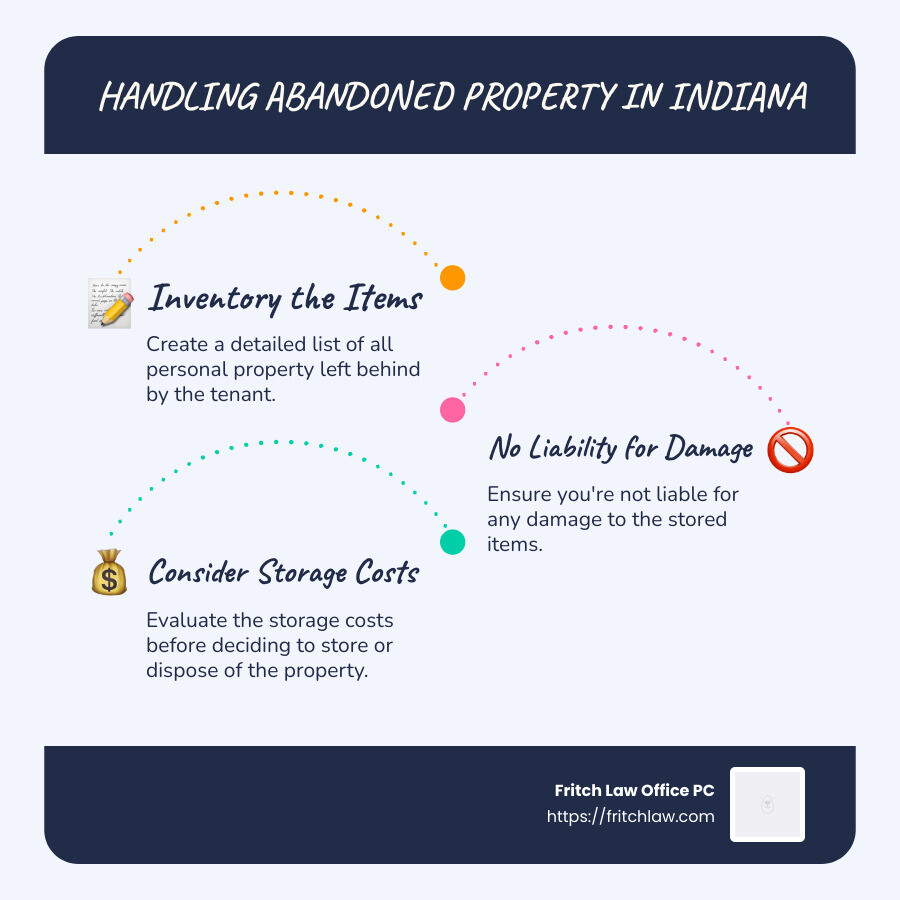
Inventory
Start by creating a detailed inventory of all items left by the tenant. This includes taking photographs and making a list of all belongings, such as “1 box of men’s clothing” or “kitchen utensils.” This documentation is crucial to protect yourself from any future claims that you disposed of valuable or sentimental items.
Pro Tip: Keep the inventory list and photos secure. They can be vital if legal questions arise.
No Liability
By properly documenting and handling the abandoned items, landlords can significantly reduce their liability. Taking the right steps, like obtaining a court order and storing items properly, ensures that you are legally protected. If the tenant later claims you mishandled their possessions, your meticulous records will be your best defense.
Storage Costs
Once you have a court order, it’s necessary to store the belongings in a court-approved facility. The costs associated with moving and storing these items are typically recoverable from the tenant. Make sure to keep all receipts and invoices related to these expenses. You may need them if you pursue reimbursement later.
Reminder: Tenants have 90 days to claim their belongings after receiving notice. If they don’t, the storage facility can sell the items to recoup costs.
By following these steps, landlords can manage abandoned property efficiently and in line with Indiana landlord tenant law abandoned property guidelines. This careful process helps protect your investment while respecting tenant rights.
Legal Steps for Landlords
When a tenant abandons a rental property in Indiana, landlords must steer a legal pathway to regain control and mitigate any financial losses. Here’s how to proceed:
Court Order
First, if you suspect abandonment, it’s essential to secure a court order confirming this status. Indiana landlord tenant law abandoned property guidelines are clear: you need legal confirmation before taking further action with the tenant’s belongings. This step ensures that you have the legal right to remove and store the items.
Note: Without a court order, any action taken could expose you to liability or claims of unlawful eviction.
Relet Premises
Once the court grants possession, your next step is to prepare the property for new tenants. This process involves cleaning, repairing, and possibly upgrading the unit to make it appealing for future renters. By doing so, you can quickly relet the premises and minimize the financial impact of the vacancy.
Quick Tip: Keep records of all expenses incurred during this process. These costs might be recoverable from the former tenant.
Mitigate Damages
Landlords have a duty to mitigate damages, meaning you should take reasonable steps to reduce financial losses. This includes actively marketing the property and setting a fair rental price based on current market conditions. By demonstrating efforts to relet the property promptly, you can improve your standing should any disputes arise later.
Pro Tip: Document all efforts to relet the property, such as advertising expenses and interactions with prospective tenants. This can be crucial if you need to prove your diligence in court.
Following these legal steps helps ensure compliance with Indiana laws while protecting your interests. By obtaining a court order, reletting the premises, and mitigating damages, landlords can efficiently manage the challenges that come with tenant abandonment.
Frequently Asked Questions about Indiana Abandoned Property Laws
What is the property abandonment law in Indiana?
In Indiana, property abandonment occurs when a tenant leaves their rental unit and a reasonable person would conclude that the tenant has vacated the premises and surrendered possession of their personal property. This often means the tenant has removed essential items like beds, clothing, and food, suggesting they do not plan to return.
How long do you have to keep someone’s belongings after they move out in Indiana?
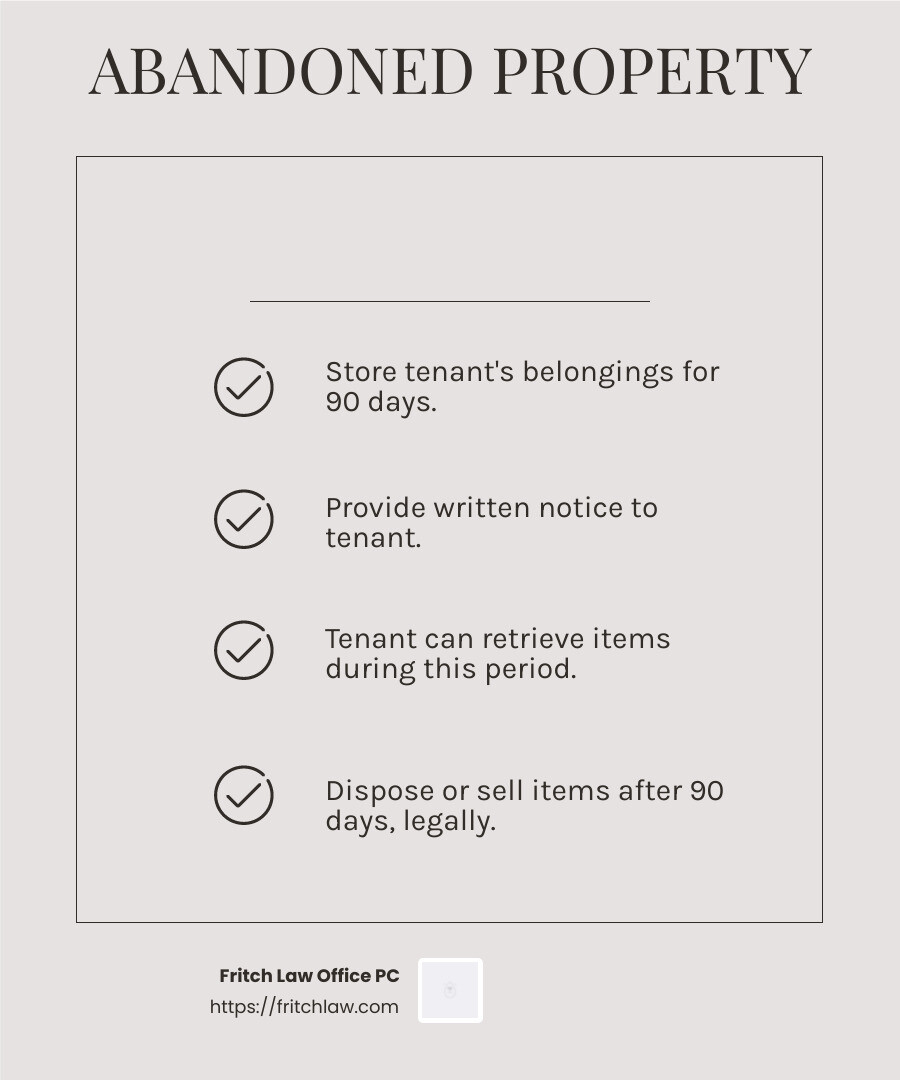
According to Indiana law, once a tenant vacates the premises and is considered to have abandoned their personal property, landlords must store the items for 90 days. During this period, the tenant has the right to retrieve their belongings. It’s important for landlords to provide written notice to the tenant about the storage and retrieval process.
Fact: If the tenant does not claim their belongings within the 90-day period, the landlord may dispose of or sell the items, following proper legal procedures.
What is considered home abandonment in Indiana?
Home abandonment in Indiana is typically identified by a tenant’s failure to pay rent and their actions suggesting they have surrendered possession of the rental property. This might include a lack of personal belongings in the unit and no communication from the tenant about their intentions. Before taking any action, landlords should ensure that these conditions are met to avoid legal complications.
Conclusion
Navigating the complexities of Indiana landlord tenant law abandoned property can be daunting. At Fritch Law Office PC, we understand the challenges landlords face when dealing with abandoned property. Our experienced lawyers are here to provide personalized legal representation, ensuring that your rights and interests are protected every step of the way.
We believe in clear communication and custom solutions. Whether it’s helping you understand the nuances of abandonment laws or guiding you through the legal processes involved, our team is committed to making the complex simple. We take pride in offering client-focused services that address your unique needs and concerns.
If you are a landlord in Indiana dealing with abandoned property issues, don’t steer this journey alone. Let us help you ensure compliance and safeguard your property interests. For more information on landlord laws in Indiana, visit our Indiana Landlord Laws page.