

Tax and compliance: Complete 2026 Guide
Fritch Law Office handles tax and compliance cases for Indiana residents every day. First, our attorneys examine your situation carefully. Next, we identify your strongest legal options. Furthermore, we explain every step in plain language. Therefore, you make confident decisions from day one.
Key Facts About Tax and compliance in Indiana
Indiana courts apply strict 2026 rules to tax and compliance matters. Moreover, experienced attorneys win better outcomes for clients. Additionally, early legal advice prevents costly mistakes. Consequently, clients who hire Fritch Law gain a clear advantage. However, waiting too long weakens your position significantly.
Take Action on Tax and compliance Today
Do not delay your tax and compliance case. First, call our Jasper office directly. Next, we schedule your free consultation immediately. Then, we build a winning strategy for you. Additionally, we represent you at every court hearing. Finally, we resolve your case as fast as possible.

Visit the Indiana Courts website for official legal information. Contact Fritch Law for your free consultation today.
Tax and compliance are the backbone of lawful financial management, for both individuals and businesses. In today’s changing regulatory landscape, staying compliant isn’t just a good practice—avoid hefty legal penalties and maintain your financial well-being.
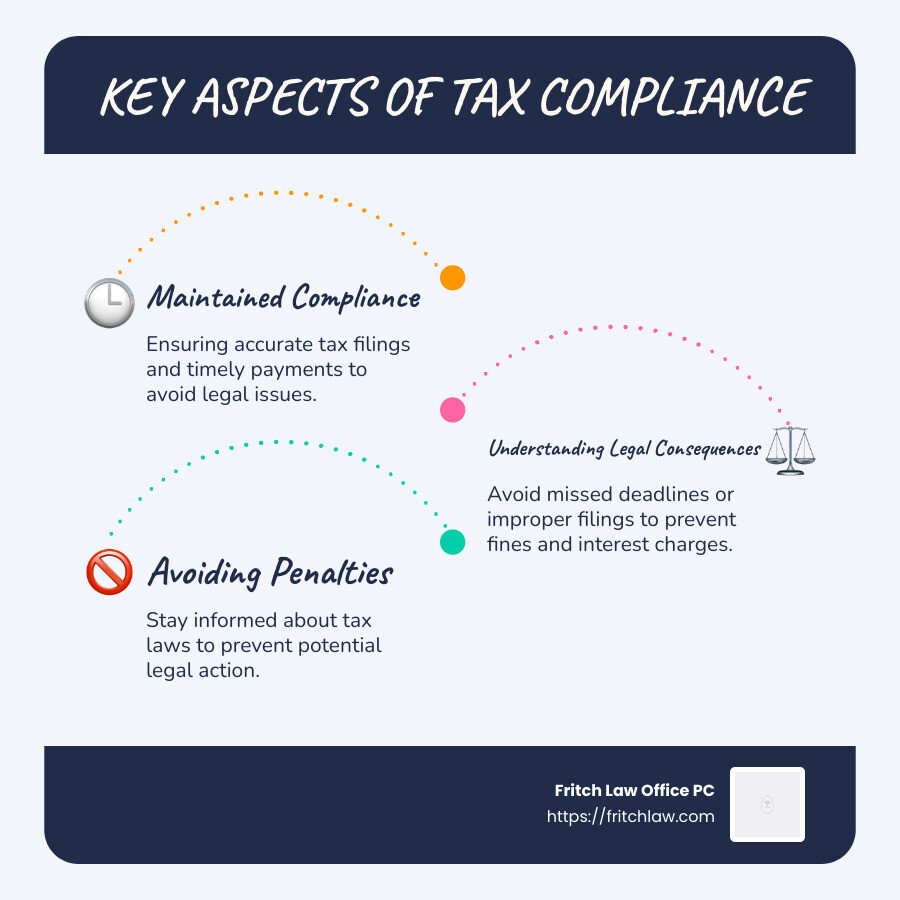
Here’s a snapshot of tax and compliance essentials:
- Maintained Compliance: Ensures accurate tax filings and timely payments.
- Legal Consequences: Can result from missed deadlines or improper filings.
- Penalties: Include fines, interest charges, and potential legal action.
Exploring the intricacies of tax compliance is vital for managing your tax liabilities and avoiding stumbling blocks that could lead to unwanted consequences. In particular, understanding the rules around tax compliance helps you steer situations like audits or disputes with the IRS more effectively. As a reliable partner, Fritch Law Office is committed to guiding you through these complexities, leveraging our familiarity with both federal and state tax legislation.
I’m David Fritch, an experienced lawyer with over 40 years of dedication to helping clients secure their financial and legal interests. With a background in law and accounting, I provide comprehensive support for tax and compliance matters, ensuring that you stay on the correct side of the law and achieve peace of mind.
Understanding Tax Compliance
Navigating tax compliance might seem daunting at first, but breaking it down into simple parts makes it manageable. Let’s explore the basics: tax laws, regulations, and accurate record-keeping.
Tax Laws and Regulations
Tax laws are the rules set by the government to determine how much tax you owe. These laws cover various types of taxes, like income tax, payroll tax, and sales tax. Regulations are the detailed guidelines that explain how these laws are applied in real life. They often change, so staying informed is key.
For example, businesses must comply with both federal and state tax regulations. Fritch Law Office helps clients understand Indiana state tax laws, ensuring compliance with local rules.

Accurate Records: Your Best Friend
Keeping accurate records is crucial. It means tracking all your income, expenses, and deductions. These records support your tax return and help you avoid mistakes that could lead to penalties.
Here’s how you can maintain accurate records:
- Receipts and Invoices: Keep all receipts and invoices organized. They prove your expenses and income.
- Bank Statements: Regularly review your bank statements. They help verify your financial transactions.
- Tax Returns: Store copies of your filed tax returns. They serve as a reference for future filings or audits.
Accurate records not only help you file accurate tax returns but also make it easier to handle any compliance checks or audits.
The Importance of Staying Informed
Tax laws and regulations are not static; they change frequently. This means you must stay updated to ensure compliance. Reading updates from reliable sources or consulting with experienced professionals like those at Fritch Law Office can keep you informed.
In summary, understanding tax compliance is about knowing the laws, following the rules, and keeping detailed records. Doing so helps you avoid legal troubles and ensures your financial health.
The Role of Tax Compliance in Business
Tax compliance is not just about following rules; it’s a critical part of running a successful business. Let’s explore why it’s so important and how it can actually benefit your business.
Reporting Requirements: More Than Just Paperwork
Businesses have specific reporting requirements to meet. This means regularly filing tax returns and paying any taxes owed. It’s not just about avoiding penalties; compliance is a legal obligation.
Accurate reporting ensures transparency. It shows stakeholders like investors and partners that your business is trustworthy and well-managed. Inaccurate reports, on the other hand, can lead to audits, penalties, and a damaged reputation.
Global Standards: Navigating Complexity
For multinational companies, tax compliance becomes even more complex. Different countries have different tax laws and standards. Staying compliant means understanding and following these diverse regulations.
Many businesses find it helpful to work with experienced professionals who understand global tax standards. This ensures they meet all local and international obligations, avoiding costly mistakes.
Tax Compliance as a Business Enabler
While it might seem like a burden, tax compliance can actually be a business enabler. By adopting efficient compliance practices, businesses can open up new opportunities.
For instance, automation and digital tools can streamline tax reporting. This reduces the time and effort spent on compliance, allowing businesses to focus on growth and innovation. Companies that treat compliance as a strategic priority often gain a competitive edge.
Moreover, a strong compliance record can open doors to government contracts and partnerships. It signals to potential partners that your business operates with integrity and responsibility.
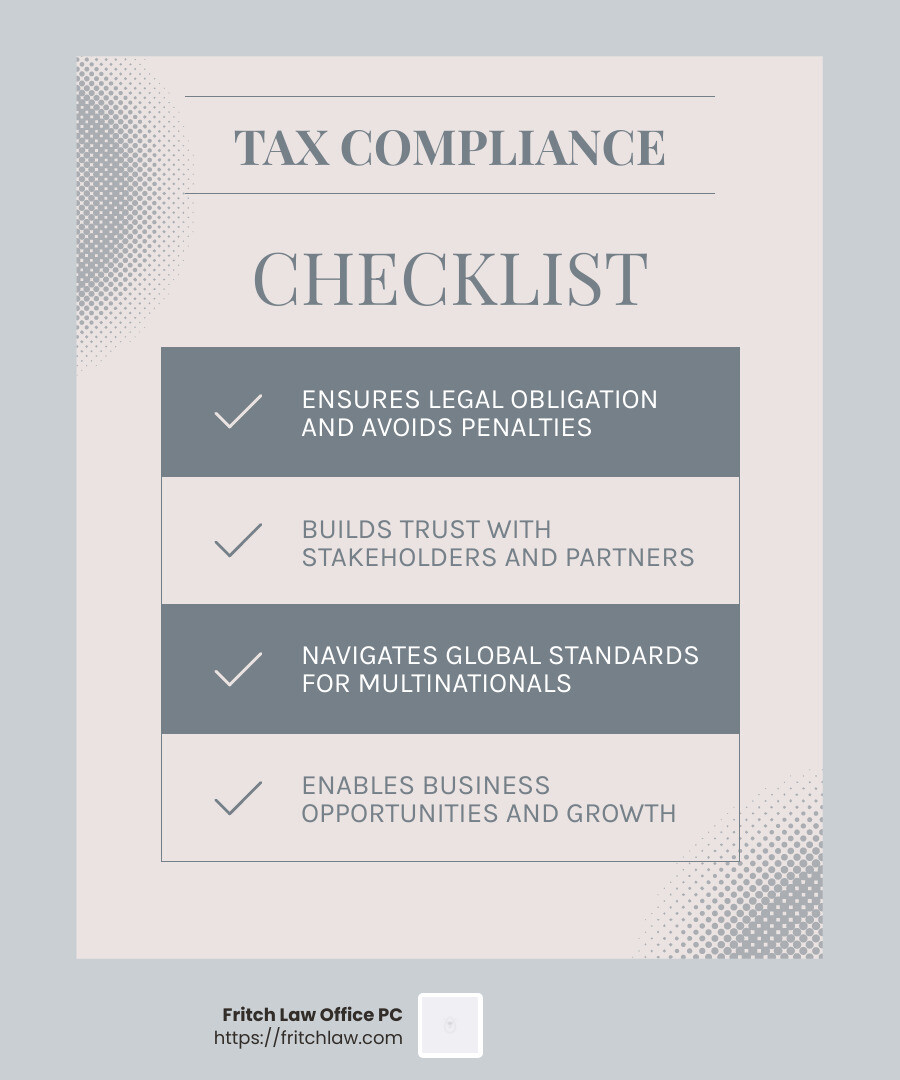
In short, tax compliance is more than just a legal requirement. It’s an opportunity to build trust, improve efficiency, and drive business success. By understanding and embracing compliance, businesses can stay on the right side of the law and thrive in today’s complex world.
Tax Compliance Reports and Their Importance
Tax compliance reports are essential tools for demonstrating that individuals and businesses have met their tax obligations. These reports provide a snapshot of your tax status and can be crucial when dealing with employers, banks, or federal agencies.
What is a Tax Compliance Report?
A tax compliance report shows whether you’ve filed your tax returns and paid your taxes on time. It gives a summary of your compliance status as compliant, non-compliant, or having a compliance issue. Unlike a tax transcript, which details your income and dependents for one year, a compliance report covers a longer period and is less detailed in terms of personal information.
Letters 6201 and 6575: What Do They Mean?
Letter 6201 is for individuals and sole proprietors, while Letter 6575 is for other businesses. These letters are official documents that confirm your tax compliance status.
-
Letter 6201: This is relevant for individuals and sole proprietors. It shows whether you have filed your personal tax returns and paid any taxes due.
-
Letter 6575: This applies to other business entities. It is often required for federal contract awards and indicates whether your business has any seriously delinquent tax debt.
Why Are These Reports Important?
Tax compliance reports are not just bureaucratic paperwork; they serve several important purposes:
-
Proof of Compliance: They act as a formal record that you or your business have met tax obligations. This can be crucial when applying for loans, contracts, or even jobs.
-
Avoiding Penalties: Staying compliant helps avoid penalties and interest charges that can accrue from unpaid taxes or unfiled returns.
-
Building Trust: A clean compliance report builds trust with stakeholders, showing that your business is responsible and well-managed.
In short, tax compliance reports are key to maintaining a good financial standing and ensuring that your business operates smoothly without legal hiccups. They are a testament to your commitment to following the law and can open doors to new opportunities.
Tax and Compliance in Hybrid Work Environments
Hybrid work models are becoming more common. They offer flexibility, allowing employees to work both remotely and in the office. But with this flexibility comes new challenges, especially in tax and compliance.
How Hybrid Work Affects Tax Obligations
When employees work in different locations, it can complicate payroll and tax obligations. Each location may have its own set of tax laws and regulations. This means businesses must stay informed and adapt to these varying requirements.
Payroll Complexity: Managing payroll for a hybrid workforce is not as straightforward as it seems. Employers must consider state and local tax laws where employees are working. This can include different income tax rates or even additional taxes like local payroll taxes.
Tax Withholding: With employees working across state lines, businesses must accurately withhold taxes based on each employee’s work location. The IRS encourages using tools like the Tax Withholding Estimator to ensure the correct amount is withheld.
Navigating Compliance Challenges
With hybrid work models, maintaining tax compliance requires careful planning and execution. Here are some strategies:
-
Accurate Record-Keeping: Keep detailed records of where employees are working and for how long. This information is crucial for determining tax obligations.
-
Stay Updated on Tax Laws: Tax laws can change frequently. Businesses should regularly check for updates in the jurisdictions where their employees work.
-
Use Technology: Digital tools and tax software can help manage compliance more efficiently. They automate many tasks, reducing the risk of human error.
Why It Matters
Failing to comply with tax obligations can lead to penalties and interest charges. It can also damage a business’s reputation. Ensuring compliance in hybrid work environments is not just about avoiding penalties; it’s about building trust with employees, stakeholders, and the government.
In conclusion, as more businesses adopt hybrid work models, understanding and managing tax obligations becomes essential. By staying informed and using the right tools, businesses can steer these challenges effectively.
Leading into the next section, let’s address some common questions about tax and compliance.
Frequently Asked Questions about Tax and Compliance
What is a tax compliance check for a job?
A tax compliance check is a review conducted by tax authorities like the IRS to ensure that individuals or businesses are adhering to tax laws. This check verifies that all tax returns have been filed correctly and that all taxes owed have been paid. Employers might request a tax compliance report before hiring to confirm a candidate’s compliance status. This report can show whether a person is compliant, non-compliant, or has compliance issues.
What does a tax compliance specialist do?
A tax compliance specialist plays a crucial role in helping businesses and individuals adhere to tax laws and regulations. They are responsible for ensuring that all tax filings are accurate and submitted on time. This includes keeping track of changing tax laws, maintaining detailed records, and advising on tax-related matters. They often use technology to streamline compliance processes, reducing the risk of errors. They serve as a technical expert in navigating the complexities of tax compliance.
What is the IRS tax compliance program?
The IRS tax compliance program, known as the Compliance Assurance Process (CAP), aims to improve federal tax compliance by collaborating with large corporate taxpayers. This program involves real-time audits and reviews of tax returns before they are filed. The goal is to resolve any potential issues early, ensuring that the tax returns are accurate and complete. This proactive approach helps both the IRS and taxpayers avoid lengthy post-filing audits and disputes. By participating in CAP, businesses can gain clarity and certainty on their tax positions, fostering a more transparent tax environment.
Conclusion
At Fritch Law Office PC, we understand that navigating tax and compliance can be daunting. Our approach is simple: provide personalized legal representation to meet your unique needs.
Our experienced lawyers are here to guide you through the complexities of tax law. We know that staying compliant is more than just a legal requirement—it’s essential for your peace of mind and the smooth operation of your business. That’s why we’re committed to offering clear, straightforward advice, helping you avoid legal pitfalls and penalties.
Whether you’re a business owner needing to ensure compliance with changing regulations or an individual seeking clarity on your tax obligations, we’re here to help. Our team is dedicated to providing the support and expertise you need to stay on the right side of the law.
Ready to take control of your tax and compliance needs? Contact us today to learn more about how our personalized legal services can benefit you. Let’s work together to secure your financial future and ensure that you meet all your tax obligations with confidence.