Labor law attorneys: Complete 2026 Guide
Fritch Law Office handles labor law attorneys cases for Indiana residents every day. First, our attorneys examine your situation carefully. Next, we identify your strongest legal options. Furthermore, we explain every step in plain language. Therefore, you make confident decisions from day one.
Key Facts About Labor law attorneys in Indiana
Indiana courts apply strict 2026 rules to labor law attorneys matters. Moreover, experienced attorneys win better outcomes for clients. Additionally, early legal advice prevents costly mistakes. Consequently, clients who hire Fritch Law gain a clear advantage. However, waiting too long weakens your position significantly.
Take Action on Labor law attorneys Today
Do not delay your labor law attorneys case. First, call our Jasper office directly. Next, we schedule your free consultation immediately. Then, we build a winning strategy for you. Additionally, we represent you at every court hearing. Finally, we resolve your case as fast as possible.

Visit the Indiana Courts website for official legal information. Contact Fritch Law for your free consultation today.
When navigating complex workplace issues, understanding the distinct roles within the legal field becomes crucial. Labor law attorney is a term often associated with legal professionals adept at handling matters related to unions and collective bargaining. Here’s what you need to know:
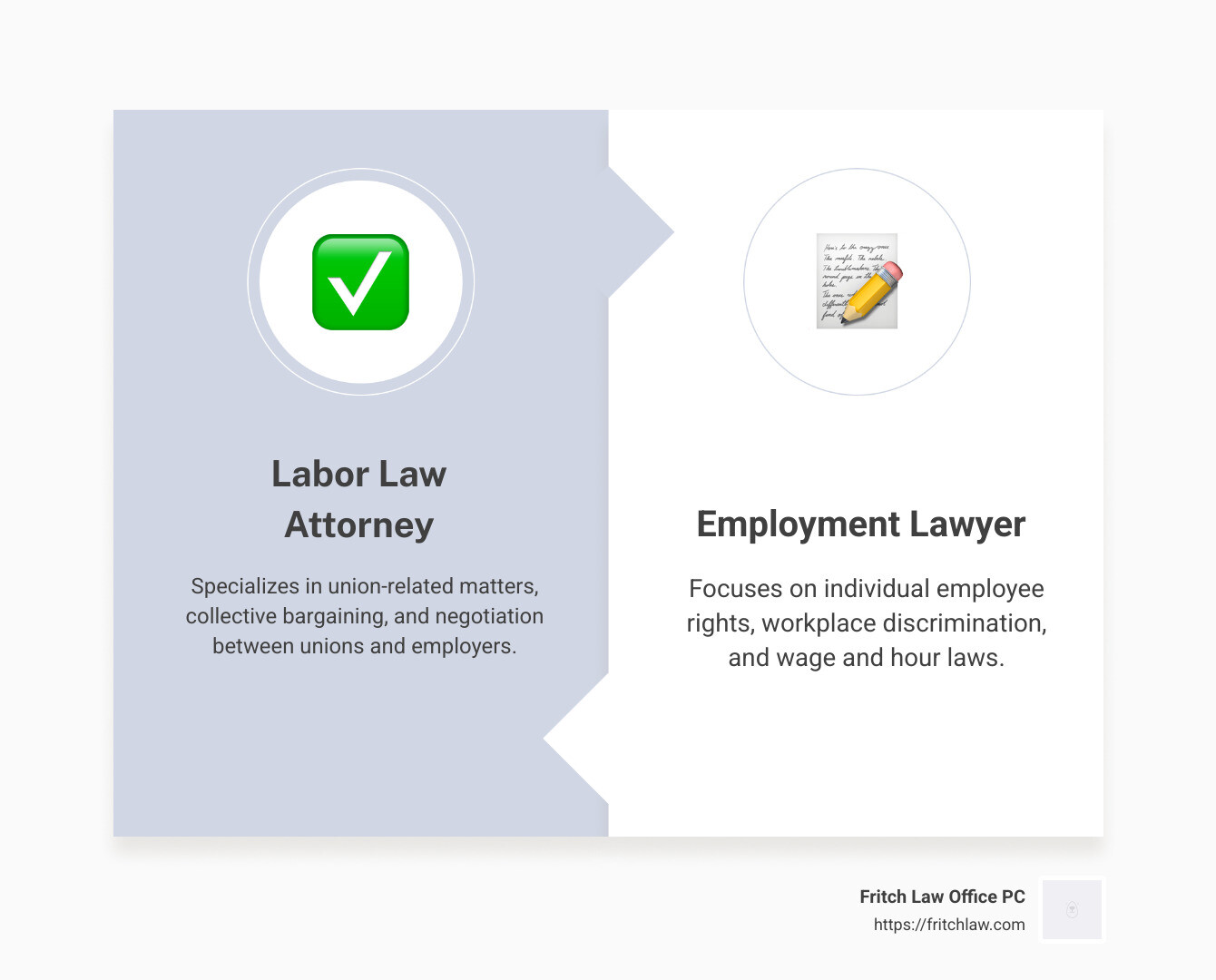
- Labor law attorneys generally focus on issues that arise between unions and employers, including negotiation and administration of collective bargaining agreements.
- Employment law, meanwhile, covers areas such as employee rights, workplace discrimination, and wage and hour laws, typically outside the union context.
- For matters involving unions, a labor law attorney should be your first point of contact.
Labor and employment law cover vast territories within the workplace, often requiring specialized legal expertise. Whether dealing with union negotiations or employment disputes, choosing the right legal representation can be crucial to navigating these challenges effectively.
My name is David Fritch, and with over 40 years of experience in the legal field, I’ve dedicated my career to helping clients manage complex business and employment issues. As an experienced lawyer in employment and labor law, my focus is on ensuring that both businesses and employees understand their rights and responsibilities. Let’s explore together how a labor law attorney can strategically support your workplace needs.
Basic labor law attorney terms:
– employee attorney
– employee rights attorney
Understanding Labor Law Attorneys
When it comes to union relations, collective bargaining, and employee rights, a labor law attorney plays a pivotal role. Let’s break down these key areas:
Union Relations
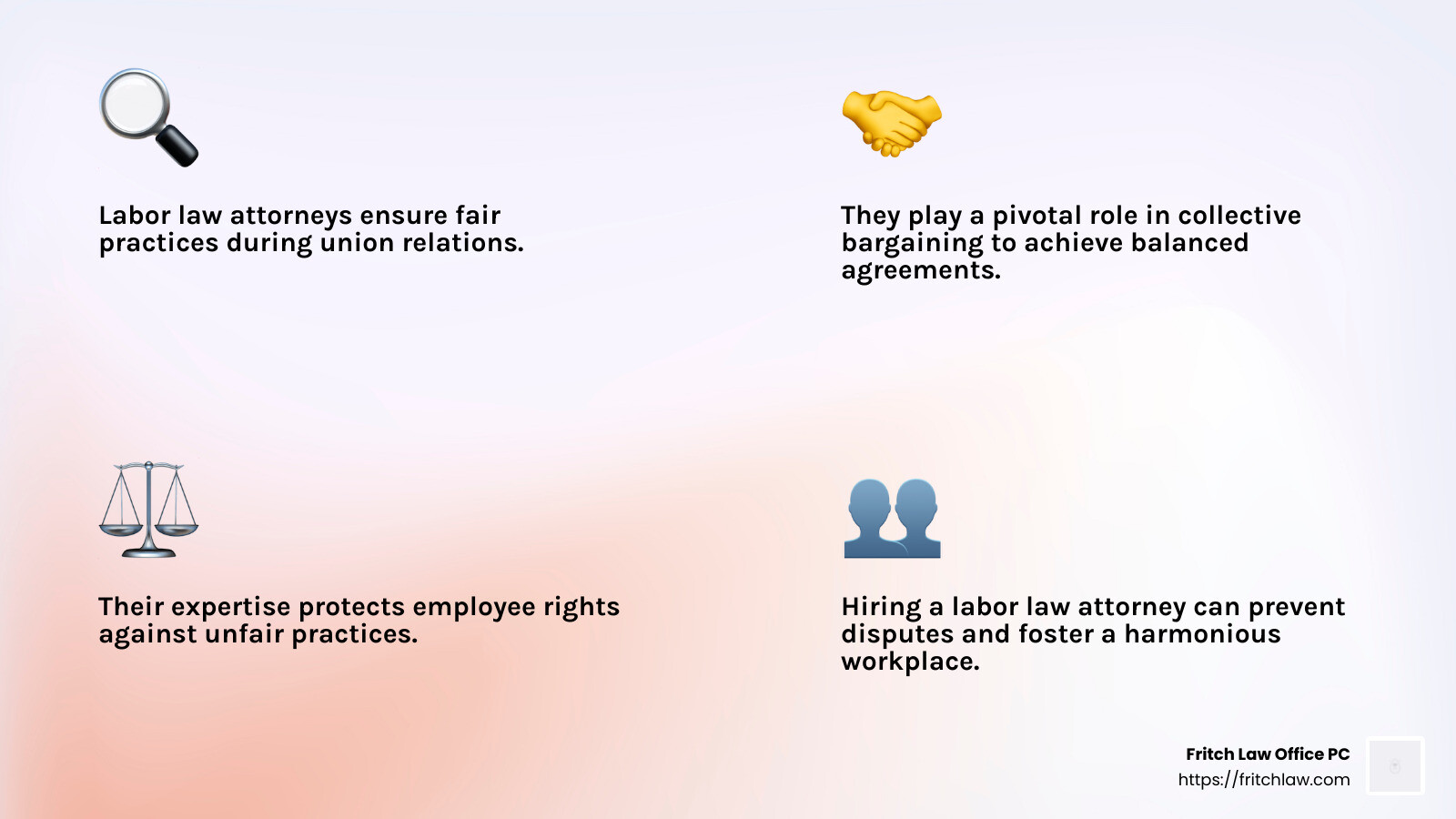
Union relations involve the dynamics between labor unions and employers. A labor law attorney helps steer this complex relationship. They ensure that both parties adhere to legal standards while fostering a cooperative environment. Unions represent workers in negotiations with employers, and the attorney’s expertise ensures fair practices and adherence to labor laws.
Collective Bargaining
Collective bargaining is the process where unions and employers negotiate employment terms. This includes wages, working conditions, and benefits. Labor law attorneys are crucial during these negotiations. They provide legal guidance to ensure that agreements are fair and legally binding. An experienced attorney can help prevent disputes and maintain a harmonious workplace.
Employee Rights
Protecting employee rights is a core focus for labor law attorneys. They ensure that employees, especially those in unions, are treated fairly. This involves addressing issues like unfair labor practices, discrimination, and wrongful termination. Attorneys advocate for employees to ensure their rights are upheld under state and federal laws.
Why You Need a Labor Law Attorney
Hiring a labor law attorney can be essential when dealing with union-related matters. They bring specialized knowledge and experience to the table, ensuring that both employers and employees are well-represented. Whether it’s negotiating contracts or addressing rights violations, their role is pivotal in safeguarding fair labor practices.
In summary, when dealing with unions or collective bargaining, having a labor law attorney by your side can make a significant difference. They offer the expertise needed to steer the complexities of labor relations and protect employee rights effectively.
Next, we’ll explore how to choose the right labor law attorney for your specific needs.
Key Differences Between Labor and Employment Lawyers
Understanding the difference between a labor lawyer and an employment lawyer is crucial when seeking legal assistance. While both fields deal with workplace issues, their focus and expertise differ significantly.
Labor Lawyer
A labor lawyer primarily deals with issues involving unionized employees. Their expertise lies in navigating the complexities of union relations and collective bargaining. These attorneys play a critical role in:
-
Negotiating Collective Bargaining Agreements (CBAs): Labor lawyers represent either the union or the employer during negotiations to ensure that the terms of employment are fair and legally binding.
-
Handling Union Disputes: If there’s a conflict between a union and an employer, a labor lawyer steps in to mediate and resolve disputes, ensuring compliance with labor laws.
-
Advising on Unionization Efforts: Labor lawyers also guide employees who wish to unionize, explaining their rights and the legal processes involved.
Employment Lawyer
On the other hand, an employment lawyer deals with a broader range of workplace issues that typically involve non-unionized employees. Their focus includes:
-
Employment Contracts: They help draft and review employment contracts, ensuring that terms are clear and enforceable.
-
Workplace Discrimination and Harassment: Employment lawyers address issues like discrimination, harassment, and wrongful termination, advocating for employees’ rights under various statutes.
-
Compliance with Employment Laws: These lawyers ensure that employers comply with laws regarding wages, hours, and workplace safety.
Choosing the Right Lawyer
When deciding between a labor and an employment lawyer, consider the nature of your issue. If it involves a union or collective bargaining, a labor lawyer is your best bet. For broader workplace issues, an employment lawyer is more appropriate.
Selecting the right type of lawyer ensures you get the specialized expertise needed for your specific situation. Next, we’ll explore how to choose the right labor law attorney for your specific needs.
How to Choose the Right Labor Law Attorney
Choosing the right labor law attorney can make a significant difference in the outcome of your case. Here are some key factors to consider:
Experience
Experience is crucial when selecting a labor law attorney. Look for an attorney who has a proven track record in handling cases similar to yours. Experienced lawyers understand the nuances of union relations and collective bargaining, which can be complex and challenging. They have likely dealt with a variety of scenarios, allowing them to anticipate potential problems and develop effective strategies.
Reputation
An attorney’s reputation speaks volumes about their ability to represent you effectively. Research their background by reading reviews and testimonials from past clients. You can also check with local bar associations for any disciplinary actions or accolades. A lawyer with a strong reputation is more likely to have the respect of peers and judges, which can be advantageous in negotiations or court proceedings.
Communication
Effective communication is essential in any attorney-client relationship. Choose a lawyer who keeps you informed and explains legal terms in simple language. They should be responsive to your questions and concerns, ensuring you understand the progress of your case. Clear communication helps in setting realistic expectations and reduces anxiety during the legal process.
Making Your Decision
When choosing a labor law attorney, balance these factors to find someone who aligns with your needs. It’s important to feel comfortable with your lawyer, as you’ll be working closely together. Don’t hesitate to ask potential attorneys about their experience, approach to communication, and any concerns you have about your case.
Selecting the right attorney can greatly impact your case’s success and your peace of mind. Next, we’ll address some frequently asked questions about labor law attorneys.
Frequently Asked Questions about Labor Law Attorneys
How do I get free advice from a labor law attorney?
Finding free legal advice from a labor law attorney can be a great first step in understanding your rights and options. Many attorneys offer free initial consultations, which can be a good opportunity to discuss your case without any financial commitment. During this consultation, you can ask about potential labor law violations, such as issues with collective bargaining or unfair labor practices.
Another option is to contact local legal aid organizations. These groups often provide free or low-cost legal services to individuals who qualify. They can connect you with a labor law attorney who can help you understand your situation better.
What is the difference between a labor lawyer and an employment lawyer?
Understanding the distinction between a labor lawyer and an employment lawyer is crucial when seeking legal assistance. A labor lawyer specializes in issues related to union relations. This includes collective bargaining, unionized employee rights, and disputes between unions and management.
On the other hand, an employment lawyer deals with a broader range of issues affecting non-unionized employees. They handle matters like employment contracts, workplace discrimination, wage disputes, and wrongful termination.
Choosing the right type of lawyer depends on whether your issue involves union activities or general employment concerns. This ensures you get the expertise needed for your specific situation.
What is a power of attorney in employment law?
A power of attorney in employment law grants someone the legal authority to act on your behalf in certain situations. This can include making decisions about financial matters or dealing with employment-related issues if you’re unable to do so yourself.
For example, if you’re involved in a complex labor dispute and are unable to attend meetings, you might grant power of attorney to a trusted individual or attorney to represent your interests. This ensures that your rights and preferences are protected, even if you’re not directly involved in the proceedings.
Understanding these legal tools can help you manage your employment affairs more effectively, especially during challenging times.
Conclusion
At Fritch Law Office PC, we pride ourselves on providing personalized legal representation to our clients in Jasper, Indiana. Navigating labor law can be complex, but our experienced lawyers are dedicated to guiding you through every step of the process.
Our approach is client-focused, meaning we take the time to understand your unique situation and tailor our services to meet your needs. Whether you’re dealing with union relations, collective bargaining, or employee rights issues, our team is here to help.
We believe that strong communication is key to effective legal representation. That’s why we prioritize open and honest dialogue with our clients. We ensure you’re informed and comfortable with every decision made throughout your case.
If you’re facing labor law challenges, don’t hesitate to reach out to us. Our team is ready to provide the support and expertise you need to steer your legal matters successfully.
For more information on our services, visit our Practice Areas. Let Fritch Law Office PC be your partner in achieving the best possible outcome for your labor law concerns.