Indiana real estate disclosure law: Complete 2026 Guide
Fritch Law Office handles indiana real estate disclosure law cases for Indiana residents every day. First, our attorneys examine your situation carefully. Next, we identify your strongest legal options. Furthermore, we explain every step in plain language. Therefore, you make confident decisions from day one.
Key Facts About Indiana real estate disclosure law in Indiana
Indiana courts apply strict 2026 rules to indiana real estate disclosure law matters. Moreover, experienced attorneys win better outcomes for clients. Additionally, early legal advice prevents costly mistakes. Consequently, clients who hire Fritch Law gain a clear advantage. However, waiting too long weakens your position significantly.
Take Action on Indiana real estate disclosure law Today
Do not delay your indiana real estate disclosure law case. First, call our Jasper office directly. Next, we schedule your free consultation immediately. Then, we build a winning strategy for you. Additionally, we represent you at every court hearing. Finally, we resolve your case as fast as possible.

Visit the Indiana Courts website for official legal information. Contact Fritch Law for your free consultation today.
Understanding Your Legal Obligations as a Seller
Selling a home in Indiana involves more than just finding a buyer and signing papers. Indiana real estate disclosure law creates specific legal responsibilities that protect both buyers and sellers during property transactions. If you’re selling residential property with 1-4 units, understanding these obligations isn’t just helpful—it’s essential.
Think of disclosure as your shield against future headaches. By being upfront about your property’s condition, you create clarity that benefits everyone involved.
| Requirement | Details |
|---|---|
| Legal Basis | Indiana Code § 32-21-5 |
| Form Required | Seller’s Residential Real Estate Sales Disclosure (Form 46234) |
| When Required | Before accepting an offer |
| What to Disclose | Known defects affecting property value, occupant safety, or expected lifespan |
| Exemptions | Court orders, foreclosures, family transfers, new construction |
| Buyer Rights | 2 business days to cancel after receiving late/amended disclosures |
| Penalties | Potential fraud liability, actual damages, attorney’s fees |
“It ain’t what you don’t know that gets you into trouble. It’s what you know for sure that just ain’t so.” This quote from Mark Twain perfectly captures why honest disclosure matters in real estate transactions. When selling property in Indiana, transparency isn’t just ethical—it’s the law.
The days when sellers could simply say “here’s the house, hope you like it” while hiding defects are long gone. Indiana real estate disclosure law creates a framework that protects both buyers and sellers by establishing clear expectations about property condition.
I’m David Fritch, an experienced lawyer with over 40 years of managing my own law firm where I’ve guided countless clients through real estate transactions and helped them steer Indiana’s disclosure requirements.
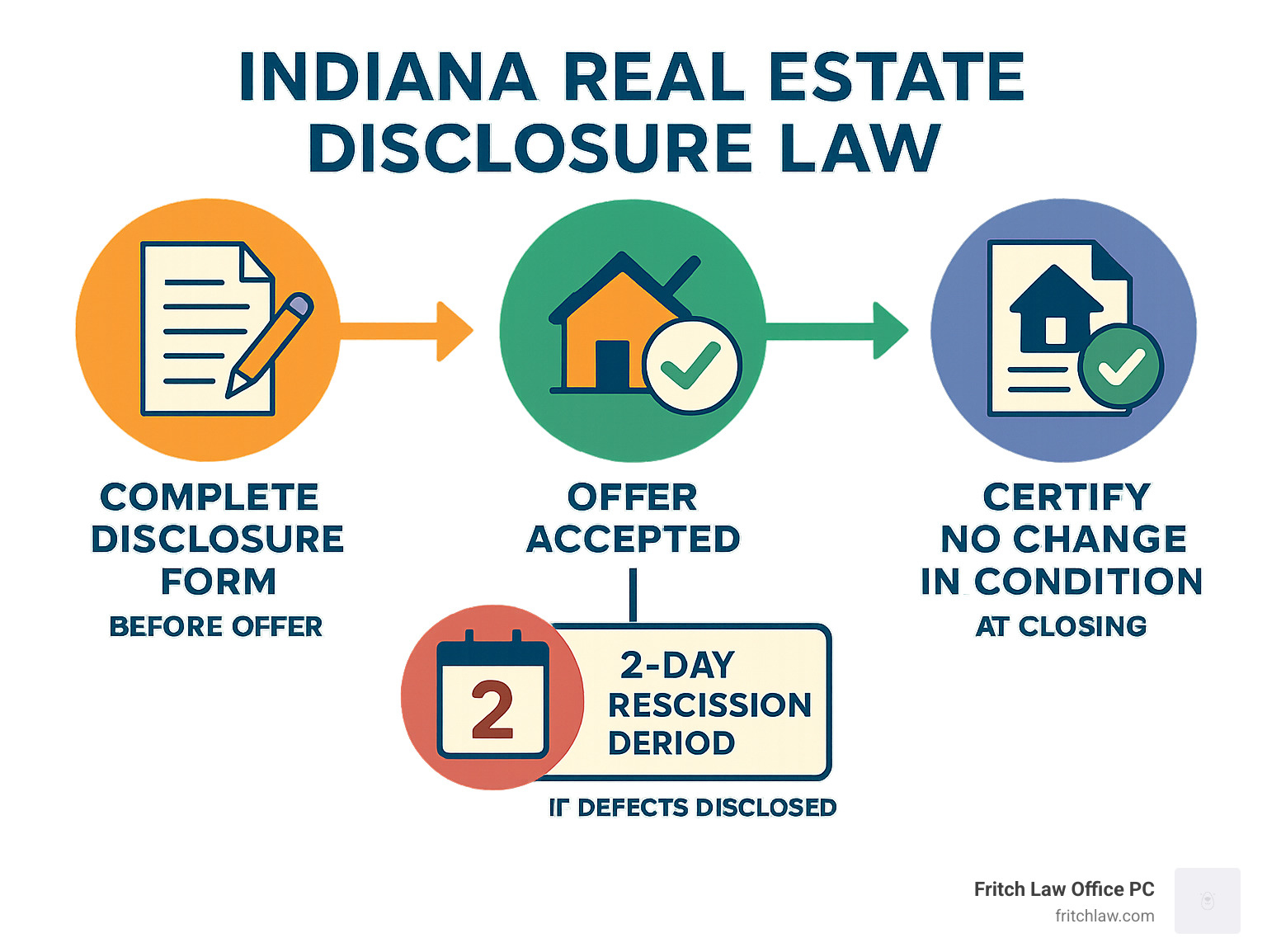
Why Disclosure Matters
Proper disclosure serves as a crucial risk management tool for sellers. By thoroughly documenting known issues upfront, you significantly reduce the chance of post-sale disputes or lawsuits. Many sellers worry that disclosing problems will scare away buyers, but in reality, most buyers appreciate honesty and factor known issues into their offers rather than walking away completely.
For buyers, disclosure provides the foundation for making informed decisions about potentially the largest investment of their lives. When a buyer knows what they’re getting—both good and bad—they can move forward with confidence rather than anxiety.
Transparency builds trust in our real estate marketplace. When buyers know they’re getting honest information about a property’s condition, transactions proceed more smoothly, with fewer surprises and less conflict. This creates a healthier real estate environment for everyone involved.
The Indiana real estate disclosure law isn’t designed to burden sellers but to create a fair playing field where everyone understands what they’re giving and what they’re getting. By embracing these disclosure requirements rather than seeing them as obstacles, you protect yourself while contributing to a more ethical real estate market.
Understanding Indiana Real Estate Disclosure Law: The Basics
Indiana wasn’t always a state that required sellers to disclose property defects. Before Indiana real estate disclosure law came into effect through Indiana Code § 32-21-5, the state followed the old “caveat emptor” principle—Latin for “buyer beware.” This put all the responsibility on buyers to find problems before purchasing.
Thankfully, times have changed. Indiana lawmakers recognized this approach was unfair since sellers typically know far more about their properties than buyers ever could. The current law represents a significant shift in public policy, creating a more balanced approach to real estate transactions.
What makes this law work is the “known material” standard. As a seller, you’re not expected to be a professional home inspector or have x-ray vision to find hidden problems. You only need to disclose defects you actually know about. This reasonable approach protects both parties.
As the Indiana Supreme Court explained in Johnson v. Wysocki, the General Assembly “has simply relieved the buyer of needing to initiate a specific inquiry in order to get honest disclosure about significant features of a purchase and, by the same token, it has forced the seller’s affirmative duty to initiate disclosure—and therefore full and honest disclosure—about those same features.”
It’s worth noting that certain issues like lead hazards can be particularly concerning. The Indiana Department of Health provides scientific research on lead hazards that can help you understand these risks better.
Primary Goals of Indiana Real Estate Disclosure Law
At its heart, Indiana real estate disclosure law aims to create a more transparent real estate market. The law has three main objectives:
First, it ensures buyers receive truthful information about properties they’re considering. No one wants to find major problems after they’ve already moved in and unpacked.
Second, it promotes truly informed consent. With proper disclosure, buyers can make educated decisions about whether to proceed with a purchase, ask for repairs, or adjust their offer price based on the actual condition of the property.
Third, it levels the playing field between buyers and sellers. By establishing clear disclosure requirements, the law prevents those with superior knowledge from taking advantage of others, creating a fairer marketplace for everyone.
Key Terms Under Indiana Real Estate Disclosure Law
Understanding the terminology in Indiana real estate disclosure law helps you stay compliant and protects you from potential liability:
A “defect” isn’t just any small imperfection. According to State Form 46234, it’s “a condition that would have a significant adverse effect on the value of the property, that would significantly impair the health or safety of future occupants of the property, or that if not repaired, removed or replaced would significantly shorten or adversely affect the expected normal life of the premises.” Notice how many times the word “significant” appears!
“Actual knowledge” means exactly what it sounds like—what you genuinely know. The disclosure form specifically refers to the seller’s “CURRENT ACTUAL KNOWLEDGE” in capital letters to emphasize this point. You can’t disclose what you don’t know.
When we talk about “material adverse” conditions, we mean issues substantial enough that they would affect a buyer’s decision to purchase or the price they’re willing to pay. Minor cosmetic issues typically don’t meet this threshold.
Understanding these basics helps both buyers and sellers steer the disclosure process with confidence and clarity. When in doubt about your specific situation, seeking guidance from an experienced real estate attorney can provide peace of mind.
When You Must Provide the Seller’s Residential Real Estate Sales Disclosure Form
If you’re selling a home in Indiana, understanding when you need to complete the disclosure form is just as important as knowing what to disclose. Under Indiana real estate disclosure law, sellers of residential properties with one to four dwelling units must provide potential buyers with the Seller’s Residential Real Estate Sales Disclosure Form (State Form 46234).
The timing here is crucial – you must give this form to buyers before accepting their offer. This gives them a chance to review all the property information before they’re legally committed to the purchase. Think of it as laying all your cards on the table before anyone makes a binding decision.
And the disclosure process doesn’t end there. When you reach closing day, you’ll need to either confirm that everything is still substantially the same as when you first completed the form, or disclose any material changes that have occurred in the meantime. It’s a final checkpoint to ensure the buyer is getting what they agreed to purchase.
Statutory Exemptions to the Disclosure Requirement
Not every property transfer requires this disclosure form. Indiana Code § 32-21-5-2 specifies nine situations where you’re exempt from this requirement:
- Transfers ordered by a court, including foreclosure sales
- Transfers to a mortgage lender by a borrower in foreclosure
- Transfers by a lender who acquired the property through foreclosure
- Transfers by fiduciaries managing an estate, guardianship, conservatorship, or trust
- Transfers between spouses resulting from divorce or legal separation
- Transfers between co-owners
- Transfers to or from any governmental entity
- Transfers of newly constructed homes built for first occupancy
- Transfers to a living trust
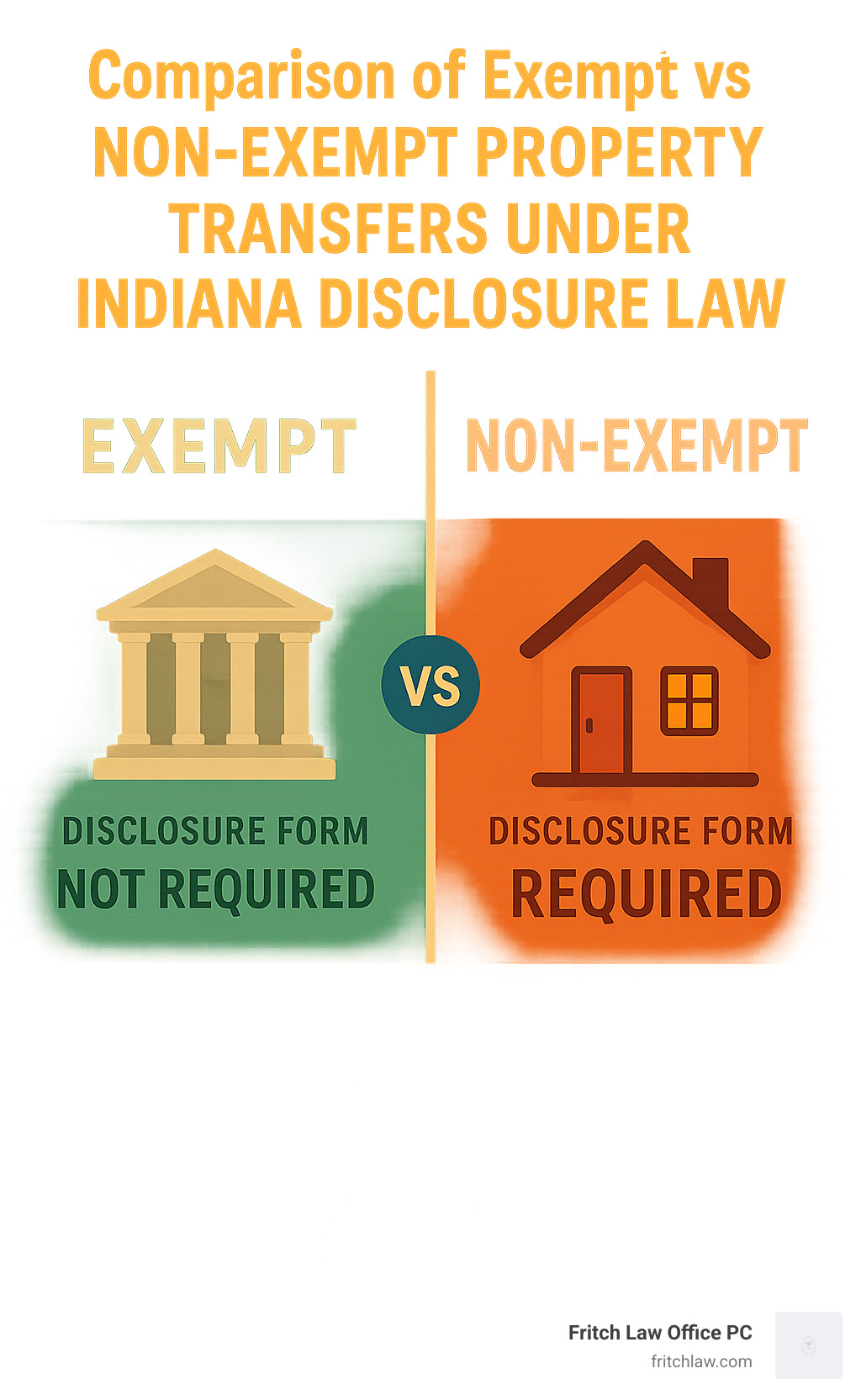
These exemptions are quite specific, and many sellers mistakenly believe they qualify when they don’t. For instance, there’s no exemption just because you’ve never lived in the property or because you’re selling it “as is.” If you’re uncertain whether your situation qualifies for an exemption, it’s always better to consult with an experienced real estate attorney rather than risk legal complications down the road.
Does “As-Is” Remove the Obligation?
Here’s a common misconception I hear frequently: “I’m selling my house ‘as is,’ so I don’t need to bother with the disclosure form.”
This is simply not true.
The Indiana Supreme Court addressed this exact issue in Johnson v. Wysocki (990 N.E.2d 456), making it crystal clear that even when a buyer agrees to purchase a property “as is” or waives their inspection rights, the seller still must truthfully complete and provide the disclosure form.
As the court explained, the law “has simply relieved the buyer of needing to initiate a specific inquiry in order to get honest disclosure about significant features of a purchase and, by the same token, it has forced the seller’s affirmative duty to initiate disclosure—and therefore full and honest disclosure—about those same features.”
The good news for buyers: if you receive a disclosure form after your offer has been accepted and it reveals previously unknown defects, you have two business days to cancel the contract and get your deposit back. This is an important protection that ensures buyers aren’t stuck with unexpected problems.
Honesty in disclosure isn’t just about following the law—it’s about creating the foundation for a smooth, dispute-free transaction that benefits everyone involved.
What Must Be Disclosed and How to Fill Out the Form
When you’re selling your home in Indiana, the disclosure form might seem like just another piece of paperwork, but it’s actually your shield against future legal troubles. The Indiana Seller’s Residential Real Estate Sales Disclosure Form covers about 60 different aspects of your home, giving buyers a clear picture of what they’re purchasing.
The form is comprehensive for a reason – it protects both you and the buyer. It’s divided into several major categories that cover virtually every important aspect of your property:
The appliances section asks about everything from your built-in vacuum system to your refrigerator. Your electrical system disclosure includes items like ceiling fans, garage door openers, and smoke detectors. For water and sewer systems, you’ll need to indicate whether you’re connected to public utilities or have private systems like a well or septic tank.
Your heating and cooling system information helps buyers understand what to expect from the furnace, air conditioning, and other climate control features. The roof section requires details about its age, condition, and any existing leaks or damage.
One of the most critical sections covers hazardous conditions – this is where you’ll disclose any presence of methane gas, radon, lead paint, asbestos, toxic mold, or contamination from controlled substances like methamphetamine production. The other disclosures section covers everything else from zoning violations to flood plain status.
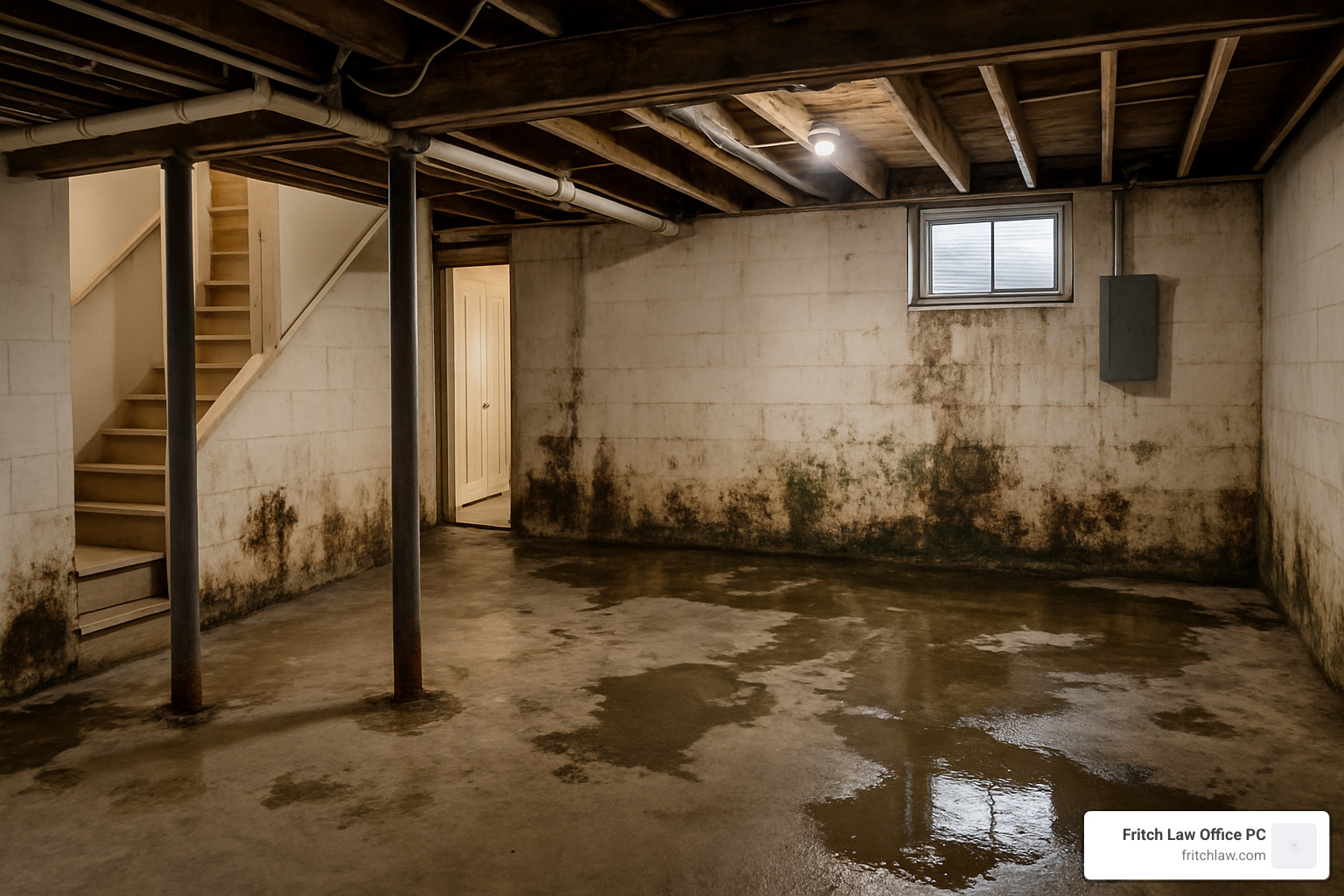
When filling out this form, honesty isn’t just the best policy – it’s the only legal option. For each item, mark “Yes,” “No,” or “Do Not Know” based on your current actual knowledge. If you answer “Yes” to any question, provide detailed explanations. Don’t be afraid to use additional pages if you need more space – better too much information than too little.
What Counts as a “Defect” in Indiana
Under Indiana real estate disclosure law, not every little issue qualifies as a “defect.” The law specifically defines a defect as a condition that would:
- Significantly impact the property’s value
- Create health or safety risks for future occupants, or
- Substantially reduce the expected lifespan of the property if left unaddressed
Think about major issues like foundation cracks that threaten structural integrity, not the squeaky floorboard in the hallway. Significant plumbing leaks that have caused hidden damage? Yes, that’s a defect. The faucet that occasionally drips? Probably not.
Active termite infestations, toxic mold growth, and environmental hazards absolutely need disclosure. Indiana specifically requires you to disclose any contamination related to controlled substances, particularly methamphetamine production – this requirement was strengthened in 2014 with the passage of P.L. 180-2014.
How to Answer “Unknown” Without Creating Liability
The “Do Not Know” option on the form can be your friend, but use it wisely. This option exists because no homeowner can reasonably know every detail about their property, especially issues that might be hidden within walls or systems.
Use this option when you genuinely don’t have information – not as a convenient way to avoid disclosing problems. If you’ve lived in your home for twenty years and claim you “don’t know” about the basement that floods every spring, that’s going to raise eyebrows and potentially create liability rather than prevent it.
When you’re uncertain about something, consider whether you should reasonably know the answer. For items truly beyond your knowledge, encourage the buyer to get professional inspections. The form explicitly states that both parties “may wish to obtain professional advice or inspections” – this language exists to protect everyone involved.
Always keep copies of all disclosure forms and amendments. These documents are your evidence of compliance with the law and could be invaluable if questions arise later.
Disclosures aren’t about creating perfect properties – they’re about creating perfect understanding between buyer and seller. When in doubt, disclose. It’s always better to mention a minor issue than to face a major lawsuit later.
Timing, Updates, and Buyer Cancellation Rights
When it comes to Indiana real estate disclosure law, timing isn’t just important—it’s everything. As a seller, you must provide the completed disclosure form to buyers before accepting their offer. This isn’t just a technicality; it gives buyers the chance to review what they’re really getting into before they’re contractually committed.
Think of it as laying all your cards on the table before shaking hands on the deal. This transparency helps build trust and can actually make transactions go more smoothly.
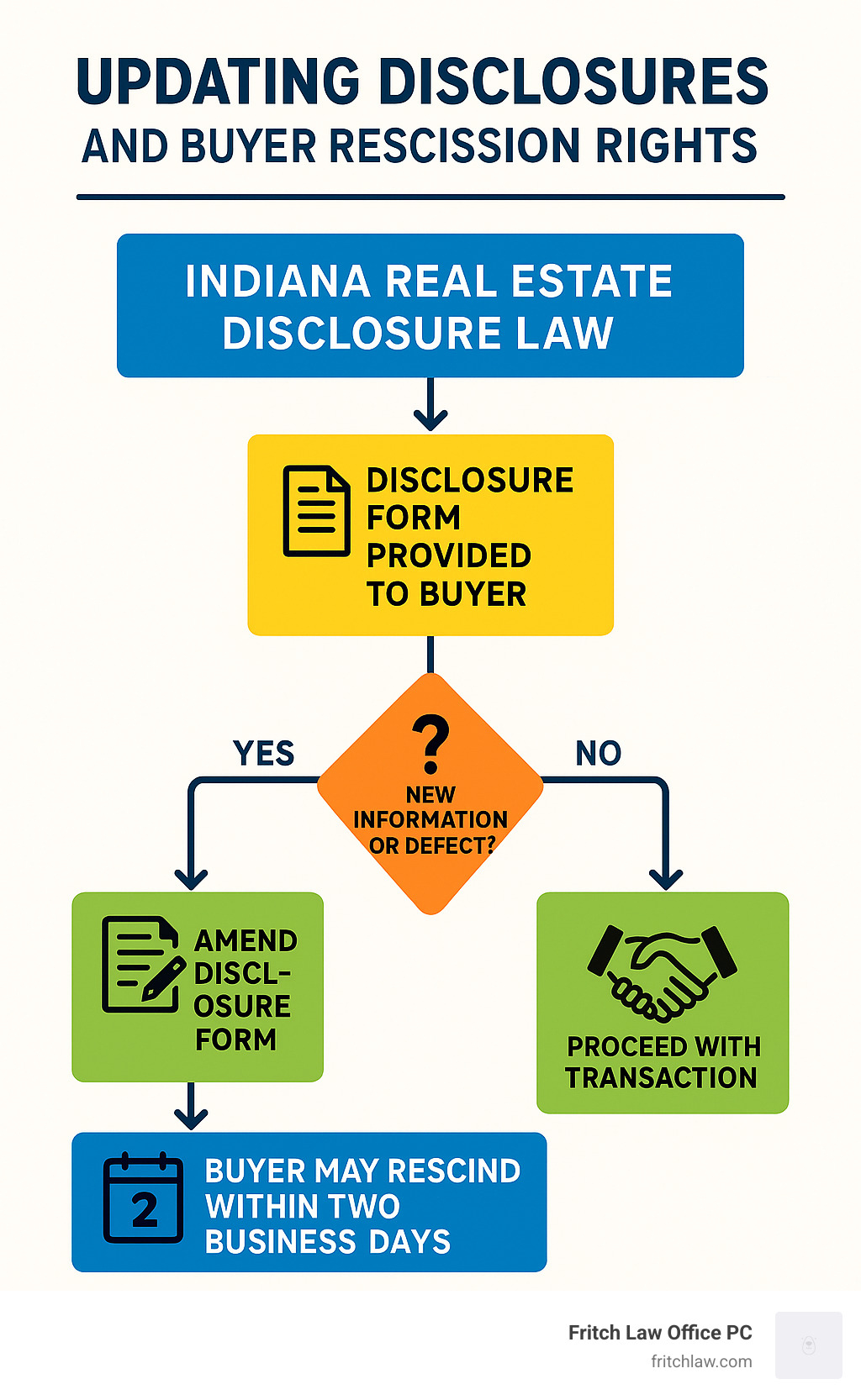
If you’re a seller who provides the disclosure after accepting an offer (oops!), or if you need to amend the form with new information about a defect, the buyer gets a two-business-day “cooling off” period. During this time, they can walk away from the deal and get their deposit back in full.
At closing, you’ll need to sign the disclosure form one more time. This confirms that the property’s condition hasn’t substantially changed since your original disclosure, or it gives you the opportunity to note any material changes that have occurred.
Seller’s Obligation to Amend After New Facts Emerge
Life happens, and properties change. If you find new information or if your property’s condition changes materially after you’ve provided the disclosure but before closing, you’re legally obligated to update the buyer.
Common scenarios that trigger amendments include:
A home inspector finding something you genuinely didn’t know about (that leaky pipe hidden behind the drywall)
Completing repairs for previously disclosed issues (fixed that cracked foundation!)
Unexpected damage occurring (like when that summer storm took down part of your fence)
Finding information you honestly didn’t know when filling out the original form
When amending, provide the updated information to the buyer in writing as soon as possible. While there’s no specific required format for amendments, many sellers simply use the original disclosure form, clearly marking it as an amendment and highlighting what’s changed. This keeps everything clear and organized for everyone involved.
Buyer Remedies for Late or Amended Disclosures
What happens when a buyer gets a surprise disclosure or amendment after their offer is accepted? Indiana real estate disclosure law provides clear remedies:
The buyer has two business days to decide whether to proceed or walk away. If they choose to cancel, they must provide written notice to you or your agent within that timeframe.
If they do cancel, they’re entitled to get every penny of their deposit back. No questions asked.
Even if they decide to move forward with the purchase despite the new information, they may still have grounds to negotiate repairs or price adjustments. After all, the deal they agreed to has changed.
It’s worth noting that if a buyer doesn’t exercise their right to cancel within that two-day window, they generally waive their right to use the late or amended disclosure as grounds for cancellation later on. The clock starts ticking as soon as they receive the new information.
At Fritch Law Office, we’ve seen how proper handling of disclosure timing can prevent headaches for both buyers and sellers. When in doubt about when and how to update your disclosures, getting proper legal guidance can save you from potential liability down the road.
Liabilities, Penalties, and Buyer Recourse
Selling a home isn’t just about handing over the keys and walking away. Under Indiana real estate disclosure law, there’s a real responsibility to be honest about your property’s condition—and real consequences if you’re not.
Think of disclosure as your insurance policy against future legal headaches. When sellers hide known defects or stretch the truth about their property’s condition, they’re essentially inviting trouble to their doorstep.
If a buyer believes they’ve been misled, they typically pursue a claim of fraud or fraudulent misrepresentation. For such a claim to stick, they’ll need to show that you made false statements about important aspects of the home, that you knew these statements weren’t true (or made them recklessly), that you intended for them to rely on this information, that they did indeed rely on it, and that they were harmed as a result.
Successful claims can hit your wallet hard. Courts typically award buyers their actual damages—either the cost to fix the undisclosed problem or the difference between what they paid and what they would have paid had they known the truth. And don’t forget about attorney’s fees, which can add up quickly.
The clock doesn’t run out immediately on these claims either. Depending on the specific legal theory, buyers generally have between two and six years from findy to bring their case to court.
Consequences of False or Incomplete Disclosures
The aftermath of dishonest disclosure can extend beyond just financial penalties. When you provide false or incomplete information about your property, you’re risking:
Civil liability that includes both actual damages and potentially hefty attorney’s fees. This is the most common outcome.
Potential criminal fraud charges in extreme cases where there’s clear evidence of intentional deception. While rare, this possibility exists for particularly egregious cases.
Reputational damage that can follow you long after the sale, especially in smaller communities where word travels quickly. As they say, trust takes years to build and seconds to break.
Contract rescission in the most serious situations, where a court might actually cancel the entire sale and force the return of the property to you. Talk about an awkward homecoming!
It’s worth noting that the law doesn’t punish honest mistakes. Indiana Code § 32-21-5-11 offers protection for sellers who make errors based on information they received from qualified professionals or public agencies, as long as you truly didn’t know the information was wrong.
Post-Closing Finding of Hidden Defects
The moving trucks have left and the buyers have settled in. Then they find a serious problem you never mentioned. What happens next?
Their options typically include:
Filing a claim for negligent or fraudulent misrepresentation, where they’ll need to prove you knew about the problem and deliberately kept quiet.
Seeking rescission of the entire sale in extreme cases, though courts rarely grant this remedy after closing has occurred.
Taking legal action either through small claims court (for damages up to $10,000 in most Indiana counties) or superior court for larger claims.
Smart buyers will strengthen their case by documenting the defect with photos and detailed descriptions, getting professional assessments of the damage and repair costs, looking for evidence that you knew about the issue (previous repair attempts, statements from neighbors), and keeping receipts for all repairs they make.
The bottom line? Honesty really is the best policy when it comes to property disclosure. Not just because it’s the right thing to do, but because the alternative could cost you far more in the long run than addressing issues upfront.
At Fritch Law Office PC, we’ve seen how disclosure disputes can quickly turn a successful sale into a legal nightmare. Our experienced attorneys can help guide you through the disclosure process to protect your interests while fulfilling your legal obligations.
Federal vs. State: Additional Disclosures You Cannot Skip
When selling your Indiana home, understanding both state and federal disclosure requirements is essential. While Indiana real estate disclosure law provides a comprehensive framework, there are additional federal mandates that operate alongside state requirements—not in place of them.
The most significant federal rule you absolutely cannot ignore is the Residential Lead-Based Paint Hazard Reduction Act. If your home was built before 1978 (when lead paint was banned for residential use), you must take several specific actions:
First, you need to disclose any known lead-based paint or related hazards in your home. This goes beyond Indiana’s state form requirements and uses separate federal paperwork. Second, you must provide buyers with the EPA’s educational pamphlet “Protect Your Family from Lead in Your Home”—a straightforward guide explaining lead hazards and prevention.
Your sales contract must also include specific warning language about lead paint risks. Don’t worry—most real estate agents have standard language for this, but it’s your responsibility to ensure it’s included.
Perhaps most importantly, you must give buyers a 10-day window to conduct their own lead-based paint inspection or risk assessment. While this inspection period can be shortened or waived if both parties agree, you cannot skip offering this opportunity. After closing, keep signed acknowledgments of these disclosures for at least three years.
Lead paint isn’t the only additional disclosure to consider. Depending on where your property is located in Indiana, local ordinances might require specific disclosures about environmental concerns like radon levels or wetlands proximity. For example, some communities near the Ohio River have additional flood disclosure requirements beyond the state form.
The interplay between federal, state, and local requirements can be complex. What seems like a minor oversight could create significant legal exposure down the road. That’s why many sellers find value in consulting with an experienced real estate attorney who understands the nuances of Indiana real estate disclosure law and how it intersects with federal requirements.
At Fritch Law Office, we’ve guided countless Indiana homeowners through the disclosure process, helping them meet all legal obligations while protecting their interests. A small investment in proper legal guidance often prevents much larger headaches after closing.
Best Practices for Sellers, Buyers, and Agents to Stay Compliant
Navigating Indiana real estate disclosure law doesn’t have to feel like walking through a legal minefield. With some thoughtful preparation and attention to detail, you can protect yourself while creating a smooth transaction for everyone involved.
For Sellers:
Honesty truly is the best policy when it comes to property disclosure. When you disclose everything you know about your property’s condition—even those small issues you’ve learned to live with—you’re not just following the law, you’re building trust with potential buyers.
Keeping good maintenance records is like having an insurance policy for your disclosure statements. Those furnace service receipts, roof repair invoices, and plumbing work orders aren’t just clutter—they’re valuable documentation that shows you’ve taken care of your home and addressed problems promptly.
Many sellers find that investing in a pre-listing inspection pays dividends in peace of mind. For a few hundred dollars, you can identify potential issues before they become deal-breakers. This gives you the chance to make repairs on your timeline instead of rushing to meet a closing deadline—or worse, ending up in court over an undisclosed defect.
“As is” clause you were thinking might protect you? Unfortunately, it doesn’t exempt you from disclosure requirements. As the Indiana Supreme Court has made clear, your duty to disclose known defects exists regardless of any “as is” language in your contract.
For Buyers:
When you receive a seller’s disclosure form, resist the urge to skim it. This document deserves your full attention, as it contains critical information about what might be your largest investment. Look for patterns—multiple plumbing repairs might indicate a larger issue—and don’t ignore items marked “Do Not Know,” as these areas might warrant extra scrutiny.
Don’t be shy about asking questions. If the disclosure mentions a basement repair but doesn’t explain the cause or extent, it’s perfectly reasonable to request more details. You’re not being picky—you’re being prudent.
Even with the most detailed disclosure form, a professional home inspection is money well spent. Inspectors can identify issues the seller might not even be aware of, from hidden moisture problems to electrical concerns that only a trained eye would catch.
Consider documenting the property’s condition when you take possession. A simple walk-through with your smartphone camera can establish a baseline that proves invaluable if you later find an issue that should have been disclosed.
For Real Estate Agents:
As an agent, you play a crucial role in ensuring disclosure compliance. Take time to educate your clients about their obligations (if selling) or rights (if buying). A few minutes explaining the disclosure process can prevent hours of headaches later.
While you can help interpret the form, resist the temptation to complete it for your seller clients. Their personal knowledge is what matters, and having them complete the form themselves helps ensure accuracy and reduces your potential liability.
Be meticulous about documenting when disclosure forms were provided and acknowledged. These timestamps can be critical if questions arise later about whether a buyer had adequate time to review disclosures before making an offer.
Completing the Form Step-by-Step
Filling out the disclosure form doesn’t have to be overwhelming. Start by gathering your home maintenance records, utility bills, warranty information, and inspection reports. These documents will refresh your memory and help you provide accurate information.
Answer each question based on what you actually know—not what you think might be true. If you genuinely don’t know the answer to a question, mark “Do Not Know” rather than guessing. Speculation can create liability if you guess incorrectly.
When you mark “Yes” to indicate an issue or defect, provide a thorough explanation. “Yes, roof leaked in 2019 near chimney flashing. Repaired by ABC Roofing on 7/15/2019. No further leaks.” is much more helpful than simply “Yes, roof leaked.”
Don’t hesitate to attach supporting documentation. If you’ve had major repairs done, including the invoice and warranty information builds credibility and gives buyers peace of mind that the issue was properly addressed.
Before signing, review the entire form carefully. It’s easy to miss a question or forget about a repair from years ago. Both sellers must sign if the property is jointly owned.
Storing and Sharing the Disclosure Securely
In our digital age, managing disclosure documents has become easier but requires attention to security. Keep both electronic and paper copies of all disclosure documents, including any amendments and buyer acknowledgments. Cloud storage services provide an excellent backup in case physical copies are lost or damaged.
Email delivery of disclosure documents provides a helpful timestamp, but consider using secure document sharing platforms that require login credentials for added security. These platforms typically provide notification when documents are viewed, giving you confirmation that buyers have accessed the information.
Electronic signature platforms like DocuSign or Adobe Sign can streamline the process while creating a clear record of when documents were signed. These services are increasingly the norm in real estate transactions and can help prevent disputes about timing.
Maintain your records for at least five years after closing. While this might seem excessive, property disputes can arise years after a sale, and having documentation of your disclosure process could make all the difference in protecting yourself.
At Fritch Law Office PC, we’ve guided countless Indiana homeowners through the disclosure process, helping them steer requirements with confidence while protecting their interests. When you understand your obligations and approach them with thoroughness and honesty, you’re not just complying with the law—you’re contributing to a more transparent and fair real estate market for everyone.
Frequently Asked Questions about Indiana Real Estate Disclosure Law
Are deaths or crimes on the property disclosable?
One question that frequently comes up is whether sellers need to disclose deaths or crimes that occurred on the property. The good news for sellers is that Indiana law provides some protection in this area.
Under Indiana Code § 32-21-6, sellers are not required to disclose if a property is “psychologically affected.” This means you don’t have to volunteer information about:
- A previous occupant who had or was suspected of having HIV
- A homicide, suicide, or other death that occurred on the property
- Criminal activity like gang-related incidents or drug manufacturing
- Past law enforcement actions at the property
This creates what’s sometimes called a “stigma shield” for sellers. However, there’s an important caveat: while you don’t have to volunteer this information, you cannot lie if directly asked. If a buyer specifically asks “Has anyone died in this home?” you can’t say “no” if that’s not true.
Many sellers and their agents choose to disclose such events anyway, even though they’re not legally required to. This transparency often prevents disputes later and builds trust with potential buyers. After all, in small communities, neighbors might share this information anyway once the new owners move in.
Must landlords disclose if they never lived in the home?
“I’ve never lived in the rental property I’m selling, so I don’t need to fill out the disclosure form, right?”
Wrong! This is one of the most common misconceptions about Indiana real estate disclosure law. The law makes no exception for properties the seller hasn’t personally occupied. Even if you’ve never spent a single night in the home, you’re still required to complete the disclosure form to the best of your ability.
For items you genuinely don’t know about, you can mark “Do Not Know” on the form. However, as the property owner, you’re expected to have knowledge about certain aspects of the property. For example, you should know whether the property:
- Is located in a flood plain
- Is subject to homeowners association covenants
- Has had major repairs during your ownership
- Has known structural issues
- Faces environmental concerns
The fact that you haven’t lived there might explain why you don’t know about some aspects of the property’s condition, but it doesn’t exempt you from the disclosure requirement altogether. The disclosure is about what you know, not how you came to know it.
What happens if the buyer finds a defect during inspection?
Home inspections often reveal surprises, even with the most diligent sellers. So what happens when a buyer’s inspection uncovers a defect you didn’t mention on your disclosure form?
If the buyer finds a previously undisclosed defect during their inspection, several things might happen:
The buyer might request repairs before closing. This is the most common outcome, where the buyer asks you to fix the problem as a condition of moving forward with the purchase.
Price negotiations might reopen. Instead of repairs, the buyer might ask for a reduction in the purchase price to offset the cost of addressing the issue themselves.
The buyer could walk away. If your purchase agreement includes an inspection contingency (most do), the buyer typically has the right to cancel the contract and get their earnest money back if they’re not satisfied with the inspection results.
Sometimes, the buyer decides to proceed anyway. If the issue is minor or they’re particularly motivated to purchase your home, they might choose to move forward despite the newly finded defect.
If you genuinely didn’t know about the defect, you haven’t violated the disclosure law. However, once you learn about the issue, you should promptly amend your disclosure form to include this new information. This is especially important if the current deal falls through and you put the property back on the market.
The inspection period can be stressful for both buyers and sellers, but the goal is the same for everyone: a fair transaction where all parties understand what they’re giving and getting. Working collaboratively when issues arise usually leads to the best outcomes for everyone involved.
If you’re facing a complicated situation with property disclosures, Fritch Law Office PC can provide personalized guidance custom to your specific circumstances. With decades of experience in Indiana real estate transactions, we can help you steer disclosure requirements with confidence and peace of mind.
Conclusion
Navigating Indiana real estate disclosure law requires understanding both your legal obligations and the practical steps to fulfill them. Property transactions shouldn’t be a game of “hide and seek” where buyers must hunt for hidden problems. Instead, the law creates a framework promoting honesty and transparency that benefits everyone involved.
When sellers prioritize thorough disclosure, they not only protect themselves from potential liability but also build trust with buyers. This transparency creates smoother transactions with fewer surprises and disputes down the road.
Let’s recap what we’ve covered about these important requirements:
Indiana law requires sellers of 1-4 unit residential properties to complete the Seller’s Residential Real Estate Sales Disclosure Form before accepting any offer. This isn’t just paperwork—it’s a legal obligation that carries real consequences if ignored.
You must disclose known defects that would significantly impact the property’s value, compromise occupant safety, or reduce the expected lifespan of the home. You’re only responsible for sharing what you actually know, not becoming a home inspector yourself.
Many sellers mistakenly believe that selling a property “as is” removes their disclosure obligations. The Indiana Supreme Court has clearly ruled this isn’t the case—disclosure requirements apply regardless of “as is” language in your contract.
For buyers who receive disclosures about defects after their offer is accepted, the law provides protection through a two-business-day window to nullify the contract and receive a full refund of any deposits.
Sellers who fail to disclose known defects face potential liability for actual damages and attorney’s fees. The cost of hiding problems almost always exceeds the cost of fixing them or adjusting the price accordingly.
At Fritch Law Office PC, we understand that real estate transactions represent major life moments—whether you’re selling a family home filled with memories or purchasing a property where you’ll create new ones. Our team provides personalized guidance to help you steer the disclosure process with confidence and peace of mind.
We’ve guided countless clients through Indiana real estate transactions over our four decades of practice. Whether you’re a seller preparing disclosures or a buyer reviewing them, we’re here to help you understand your rights and obligations under Indiana law in plain, straightforward language.
For personalized advice on your specific situation, please contact us to schedule a consultation. Our experienced attorneys in Jasper, Indiana are ready to assist you with all aspects of your real estate transaction—helping you avoid pitfalls and protect your investment.