

Lawyers for rental agreement: Complete 2026 Guide
Fritch Law Office handles lawyers for rental agreement cases for Indiana residents every day. First, our attorneys examine your situation carefully. Next, we identify your strongest legal options. Furthermore, we explain every step in plain language. Therefore, you make confident decisions from day one.
Key Facts About Lawyers for rental agreement in Indiana
Indiana courts apply strict 2026 rules to lawyers for rental agreement matters. Moreover, experienced attorneys win better outcomes for clients. Additionally, early legal advice prevents costly mistakes. Consequently, clients who hire Fritch Law gain a clear advantage. However, waiting too long weakens your position significantly.
Take Action on Lawyers for rental agreement Today
Do not delay your lawyers for rental agreement case. First, call our Jasper office directly. Next, we schedule your free consultation immediately. Then, we build a winning strategy for you. Additionally, we represent you at every court hearing. Finally, we resolve your case as fast as possible.

Visit the Indiana Courts website for official legal information. Contact Fritch Law for your free consultation today.
Why Rental Agreements Need Legal Expertise
Well-written rental agreements keep both rent checks and neighborly relations flowing. They work because the document is a legally binding contract that must obey federal fair-housing law, Indiana landlord-tenant statutes, and often city ordinances. A single missing sentence about security-deposit limits or notice periods can turn into months of headaches.
Quick look: when to call lawyers for rental agreement support
• Landlords – draft or update leases, confirm state compliance, manage evictions
• Tenants – review terms, negotiate changes, challenge unfair clauses
• Either side – settle disputes, write mid-term addendums, prepare for court
• Typical cost – $150-$400/hr local counsel or $26.95/mo subscription clinics
• Value – lower legal risk, clear duties, fewer misunderstandings, peace of mind
Rental agreements control move-in money, property upkeep, privacy rights, and (if things go badly) eviction timelines. Because every rule carries financial penalties, a short consultation with counsel up-front almost always costs less than a lawsuit later.
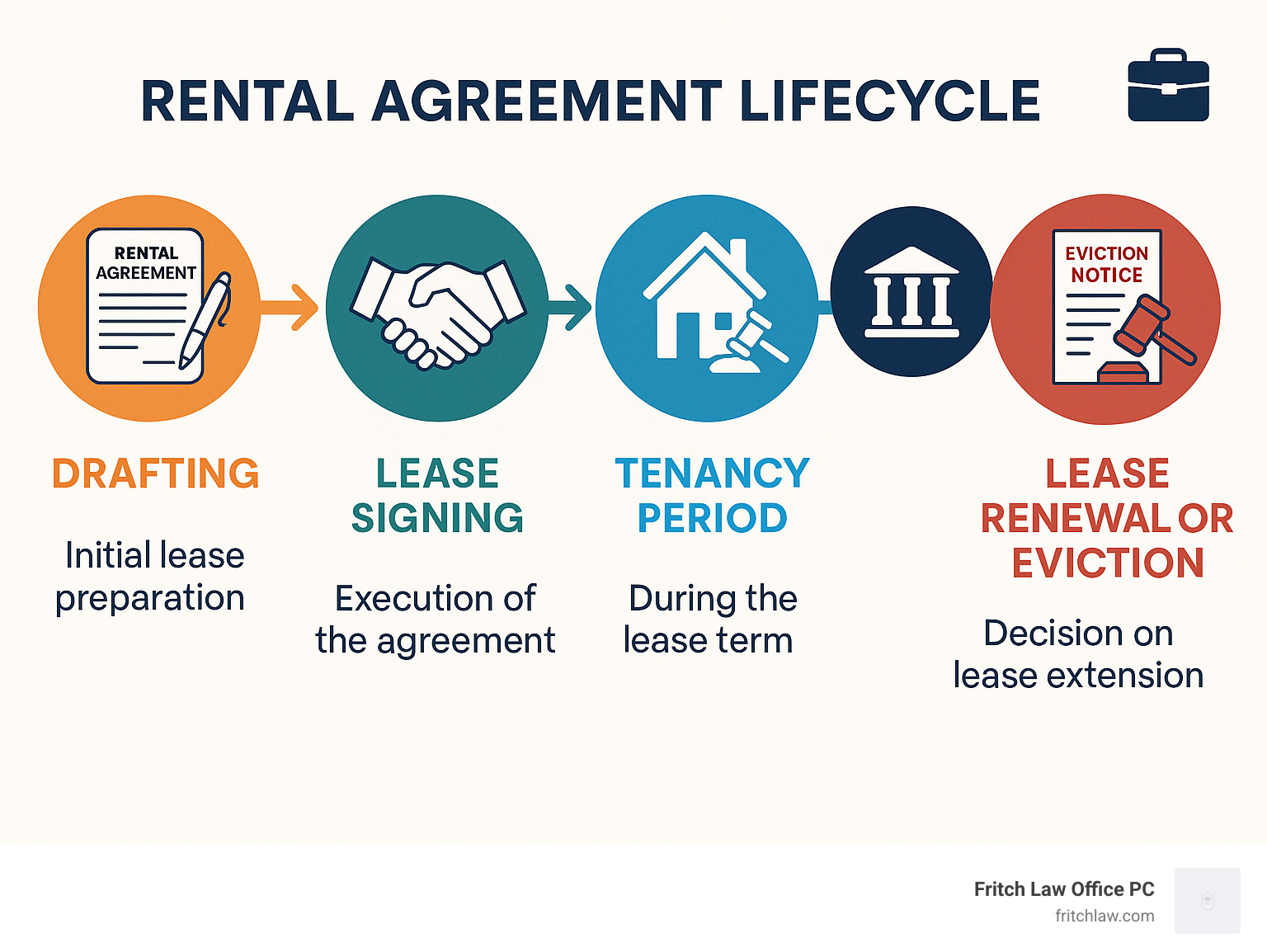
Why Every Rental Agreement Deserves Serious Attention
Signing a lease is agreeing to thousands of dollars in future obligations. That promise is controlled by overlapping rules about habitability, deposits, notices, and discrimination.
• Habitability – Indiana landlords must supply heat, plumbing, and other basics. If the duty is vague, tenants struggle to enforce repairs.
• Deposits – State caps and refund deadlines vary. A wrong number on the page can trigger automatic double-damage awards.
• Fair housing – Service-animal or family-status restrictions hidden in innocent-looking clauses can spark federal complaints.
• Local rules – Cities often require extra notice before rent increases or specific wording in eviction papers.
Hidden risks in “standard” templates
Downloadable forms rarely match Indiana law word-for-word. Typical problems:
• Clauses that try to waive the warranty of habitability (unenforceable)
• Missing lead-paint disclosures for pre-1978 homes (federal fines)
• Conflicting language about who fixes what, inviting disputes
When skipping legal review backfires
Landlords who attempt self-help evictions—changing locks or shutting off utilities—often pay damages far above the rent owed. Tenants relying on unclear repair clauses may end up funding fixes the landlord legally owed. A brief legal check would have spelled out rights and procedures and prevented those costs.
How Lawyers for Rental Agreement Simplify the Process
A focused legal review replaces guesswork with a plan:
• Drafting & compliance – language custom to the property and current statutes
• Custom clauses – pets, smart-home devices, historic homes, or military deployment
• Negotiation leverage – objective explanation of what is and is not legally required
• Dispute prevention – clear remedies and timelines stop small issues from escalating
| DIY template | Lawyer-drafted lease |
|---|---|
| One-size form | Custom to Indiana and your property |
| Risk of illegal clauses | Verified compliance |
| Vague remedies | Step-by-step dispute path |
| Little leverage | Informed bargaining |
| Reactive fixes | Proactive protection |
Benefits for landlords
• Legally sound rent-increase clauses that respect any local caps
• Detailed property-use rules (guests, alterations, sublets)
• State-approved late-fee and damage-recovery language
For more details, see our guide on Indiana Landlord Laws.
Benefits for tenants
• Clear repair timelines and remedies
• Transparent deposit refund steps
• Proper entry-notice rules protecting privacy
• Lease language that avoids hidden discrimination
If you encounter discrimination, you can file a fair housing complaint with HUD.

Hiring, Costs & Choosing the Right Attorney
• Hourly – $150–$400 for customized drafting or dispute work
• Flat-fee review – $300–$800 for a standard lease check-up
• Subscription clinics – about $26.95/month for basic questions and document review
• Retainers – useful for landlords with multiple units who need steady advice
Not-for-profit and alternative options:
• Check the bar association attorney finder for local counsel
• Local legal-aid offices may assist qualifying tenants or small landlords
• Community mediation programs help settle lease disputes at low cost
Checklist when interviewing counsel:
- Regular landlord-tenant experience
- Familiarity with local courts and ordinances
- Transparent fees in writing
- Communication style that matches yours
More resources are available on our Tenant Lawyers page.
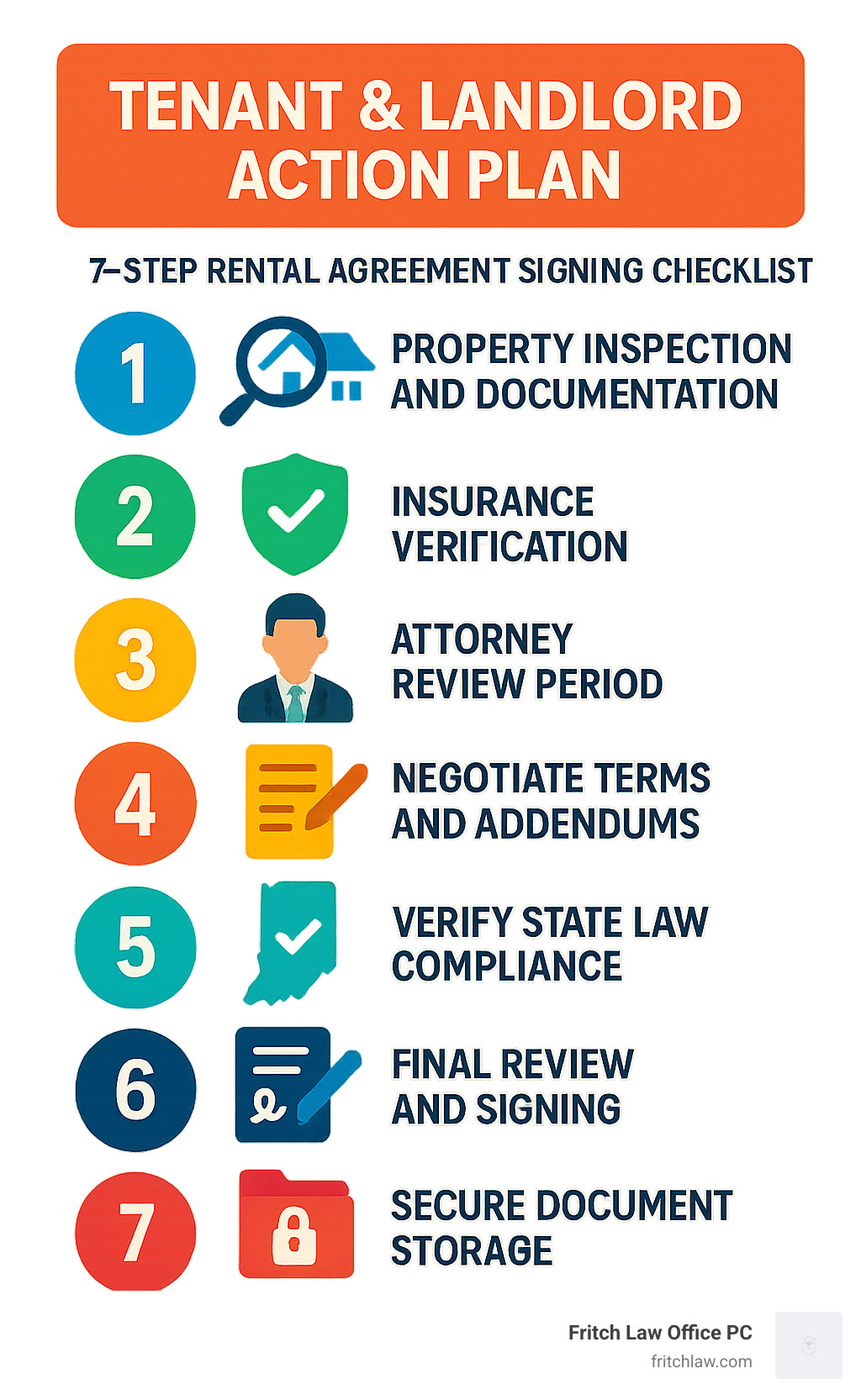
Before You Sign: Tenant & Landlord Action Plan
- Walk-through & photos – document every room before move-in.
- Exchange insurance proof – renters and property policies protect both sides.
- Certified mail for key notices – green receipts are cheap evidence.
- Addendums – parking, pets, utilities: spell them out on a separate page.
- Rent-increase language – dates, caps, and notice periods must follow local law.
- Attorney review window – give each party 3–5 business days to consult counsel.
Frequently Asked Questions about Rental Agreement Lawyers
Do I really need a lawyer for a one-year lease?
Even a “simple” lease covers thousands of dollars in rent and deposits. A short legal review catches out-of-date clauses, saving far more than it costs.
How can a lawyer modify an existing lease?
Most changes are handled with a signed addendum. Both sides must agree, and counsel checks the new language for conflicts with the original lease or current law.
What if I can’t afford full representation?
Look into legal-aid services, flat-fee reviews, or limited-scope coaching where an attorney reviews the lease and you handle negotiations. Subscription plans can also provide low-cost document checks.
Conclusion
Whether you own the building or rent the apartment, clear agreements keep everyone protected. Lawyers for rental agreement tasks turn a generic form into a contract that fits Indiana law and your real-world needs. Investing a little time with counsel today helps avoid expensive disputes tomorrow.
For more information about our tenant-landlord services, visit the Fritch Law Office PC website. Let us help make your next lease the smoothest one yet.