

Indiana wills and trusts: Complete 2026 Guide
Fritch Law Office handles indiana wills and trusts cases for Indiana residents every day. First, our attorneys examine your situation carefully. Next, we identify your strongest legal options. Furthermore, we explain every step in plain language. Therefore, you make confident decisions from day one.
Key Facts About Indiana wills and trusts in Indiana
Indiana courts apply strict 2026 rules to indiana wills and trusts matters. Moreover, experienced attorneys win better outcomes for clients. Additionally, early legal advice prevents costly mistakes. Consequently, clients who hire Fritch Law gain a clear advantage. However, waiting too long weakens your position significantly.
Take Action on Indiana wills and trusts Today
Do not delay your indiana wills and trusts case. First, call our Jasper office directly. Next, we schedule your free consultation immediately. Then, we build a winning strategy for you. Additionally, we represent you at every court hearing. Finally, we resolve your case as fast as possible.

Visit the Indiana Courts website for official legal information. Contact Fritch Law for your free consultation today.
Why Estate Planning Matters for Every Indiana Family
Indiana wills and trusts are essential legal tools to protect your family’s future and ensure your wishes are carried out. A solid estate plan provides peace of mind and protects the people you care about most, regardless of your age or stage in life.
Quick Answer: Indiana Wills vs. Trusts
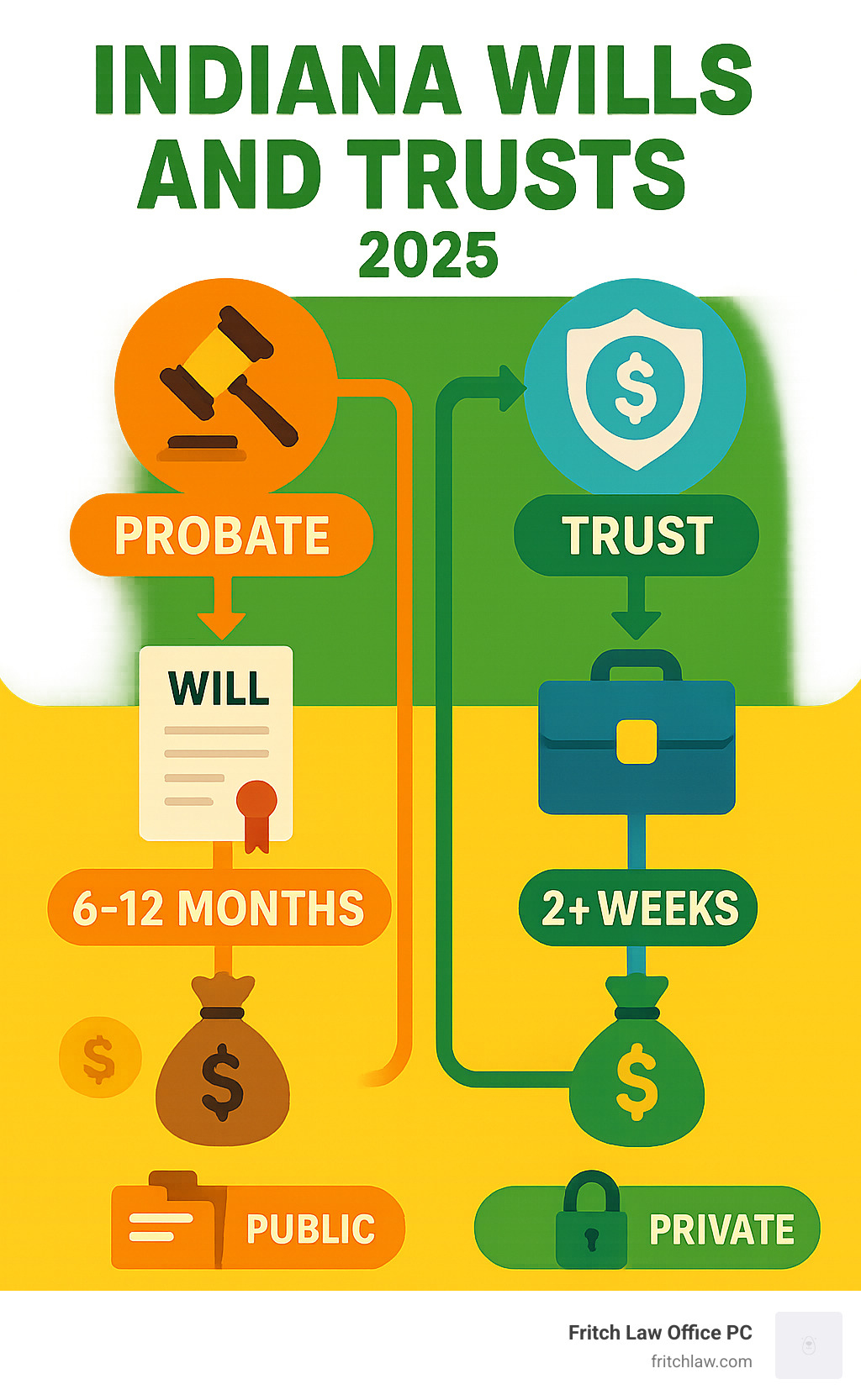
- Will: Takes effect after death, goes through probate (public process), names guardians for children
- Trust: Can take effect during your lifetime, avoids probate (private), helps with incapacity planning
- Both: Can work together in a comprehensive estate plan
- Cost: Wills are cheaper to create, trusts may save money long-term by avoiding probate
Without a plan, Indiana’s intestate succession laws dictate who inherits your assets, which may not align with your wishes. For example, your spouse might have to share your estate with your children, or distant relatives could inherit.
Statistics show that only 21 percent of Americans have discussed their last wishes, and just one in three adults have advance directive documents. Don’t let your family face uncertainty.
With 40 years of practice in Indiana, I’ve helped countless families at Fritch Law Office PC steer the complexities of Indiana wills and trusts. Proper estate planning can spare families from unnecessary stress during difficult times.
Basic indiana wills and trusts vocab:
- Irrevocable Trust Indiana
- Estate Planning and Probate Attorney Indiana Indianapolis
- Estate Planning Attorney South Bend Indiana
Decoding the Last Will and Testament in Indiana
A Last Will and Testament is a legal document that outlines how you want your property distributed after your death. It is your voice when you can no longer speak for yourself.
In your will, you name beneficiaries for your assets, appoint an executor to carry out your wishes, and, crucially for parents, designate guardians for minor children. Without this designation in a will, a judge will decide who raises your kids.

A will only takes effect after you die, at which point it typically enters probate. Probate is Indiana’s court-supervised process for validating the will, paying debts, and distributing assets. If you’d like a broader explanation of probate beyond Indiana, the probate process overview on Wikipedia offers a helpful summary.
The Role of a Will in Indiana Wills and Trusts
A will can be sufficient for simple estates, especially if your main goal is to name guardians or if your estate qualifies for Indiana’s simplified probate (for estates under $50,000). However, a will’s biggest limitation is that it doesn’t help with incapacity planning. If you become unable to manage your affairs while alive, your will is not effective until your death.
To be valid in Indiana, a will must be signed by you (the testator, who must be at least 18 and of sound mind) and two witnesses. The witnesses must watch you sign and then sign in your presence and each other’s. A self-proving affidavit can simplify the probate process later. Indiana does not recognize handwritten (holographic) wills unless they meet these formal requirements, and verbal wills are only valid in very limited deathbed situations.
What is a Pour-Over Will?
A pour-over will is a special type of will that acts as a safety net for a living trust. It is designed to “pour over” any assets you forgot to formally transfer into your trust during your lifetime.
For example, if you opened a new bank account and didn’t title it in the name of your trust, the pour-over will directs that account into the trust upon your death. While that specific asset must go through probate, it ensures the asset is ultimately distributed according to your trust’s instructions, not state law.
This makes a pour-over will a key component of a comprehensive plan, working with a trust to ensure no asset is left behind in your Indiana wills and trusts strategy.
Exploring the World of Indiana Trusts
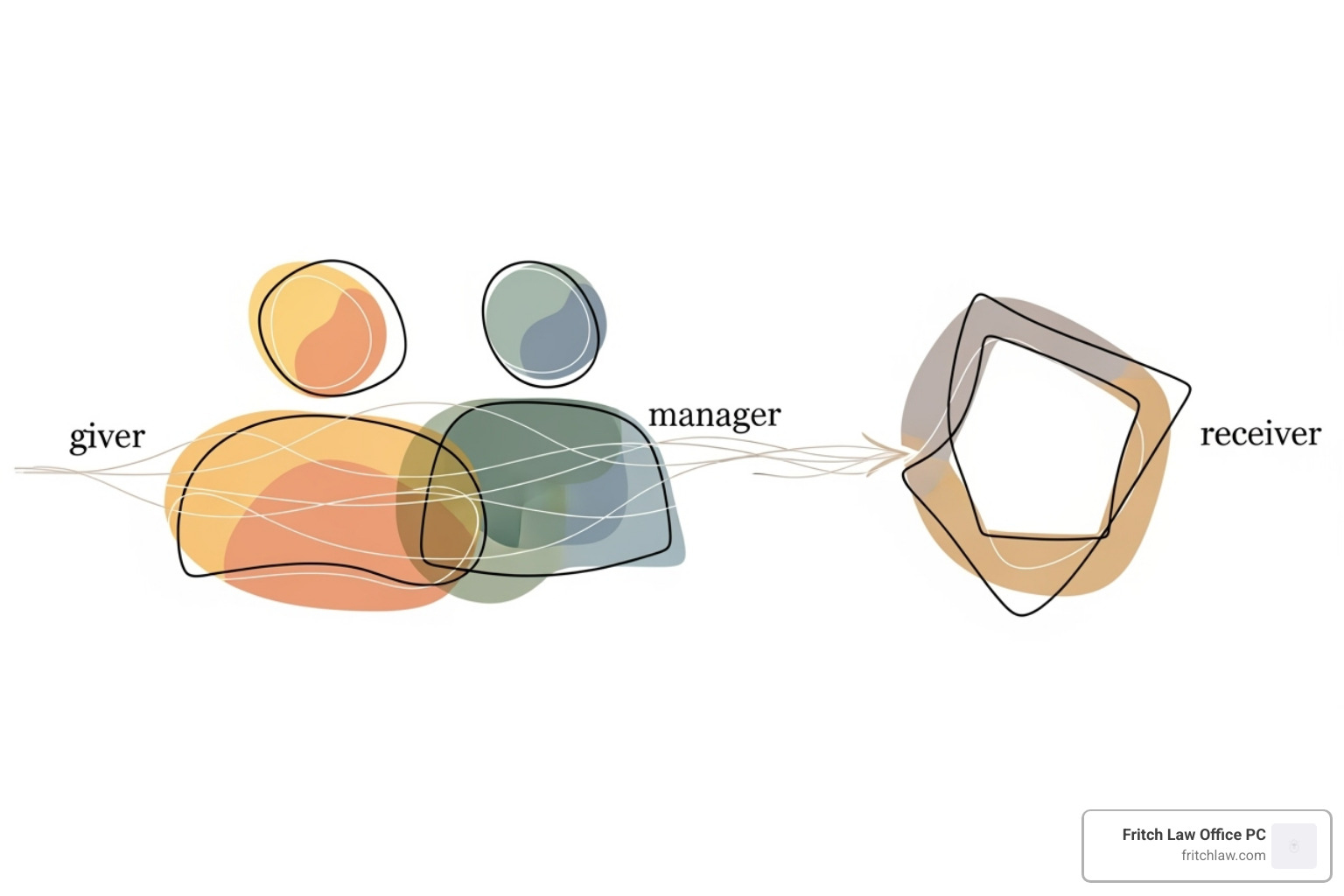
A trust is a legal arrangement where a grantor transfers property to a trustee, who manages it for the beneficiaries. Unlike a will, which is only effective after death, a trust can be active immediately, offering more ways to protect and manage your assets.
Key benefits of using a trust in your Indiana wills and trusts plan include:
- Avoiding Probate: Assets in a trust pass to beneficiaries without court involvement.
- Privacy: Trust administration is a private process, unlike public probate records.
- Incapacity Planning: A successor trustee can manage your assets if you become unable to do so.
- Asset Control: You can set specific conditions for how and when beneficiaries receive their inheritance.
- Asset Protection: Certain trusts can shield assets from creditors or lawsuits.
Common Types of Trusts for Hoosiers
- Revocable Living Trusts: These are flexible; you can alter or cancel them during your lifetime. You typically act as the initial trustee, maintaining full control. A successor trustee takes over upon your death or incapacity, avoiding court intervention.
- Irrevocable Trusts in Indiana: These generally cannot be changed once created. They offer powerful asset protection and can be used for Medicaid planning, though they must be established well in advance (typically five years).
- Testamentary Trusts: These are created within a will and only become active after your death and after the will goes through probate. They are often used to manage inheritances for minor children.
- Special Needs Trusts: These allow you to provide for a loved one with disabilities without disqualifying them from essential government benefits like Medicaid or SSI.
Choosing the Right Trust for Your Indiana Wills and Trusts Strategy
A trust is only effective if it is “funded”—meaning you must transfer ownership of your assets (real estate, bank accounts, etc.) into the trust’s name. This is a critical step where errors often occur. Indiana also allows Transfer-on-Death (TOD) designations for vehicles and real estate, which can be another tool to avoid probate.
Your trustee has a fiduciary duty to manage trust assets responsibly and according to your instructions. Choosing the right trustee—whether a family member, friend, or professional—is a crucial decision. At Fritch Law Office PC, we help Indiana families make these important choices to create a plan that fits their unique goals.
Will vs. Trust: A Head-to-Head Comparison
Choosing between a will and a trust for your Indiana wills and trusts strategy depends on your specific needs. Both are valuable tools, but they function differently.
-
Timing and Probate: A will only takes effect after death and must go through the public court process of probate. A properly funded trust is effective immediately and allows your assets to bypass probate, saving time and money.
-
Privacy: Because wills go through probate, they become public record. Trusts are private documents, so the details of your estate and its distribution remain confidential.
-
Cost: A will is generally less expensive to create upfront. A trust costs more to set up but can result in significant long-term savings by avoiding the costs associated with probate.
-
Incapacity Planning: A will offers no protection if you become incapacitated. A trust, however, allows your chosen successor trustee to step in and manage your financial affairs without needing court approval for a guardianship.
-
Asset Control: Trusts offer far more control over asset distribution. You can specify when and how beneficiaries receive their inheritance, such as distributing funds in stages or for specific purposes like education.
-
Naming Guardians: A will is the only document where you can legally name guardians for your minor children. This is a critical function that a trust cannot perform.
For many Indiana families, the best approach is a combination: a revocable living trust to manage assets and a pour-over will to name guardians and catch any forgotten assets. This strategy maximizes privacy and control while ensuring all your bases are covered. The right choice depends on your assets, family structure, and overall goals.
Building Your Comprehensive Indiana Estate Plan
A comprehensive estate plan is more than just a will or trust. It includes several key documents that work together to protect you and your family during life’s unexpected moments.

Beyond your will and trust, your plan should include:
-
Durable Power of Attorney for Finances: This document lets someone you trust handle your financial matters if you become unable to do so. Without it, your family may need to go to court to access your accounts to pay your bills.
-
Health Care Power of Attorney: This appoints a person to make medical decisions on your behalf if you cannot communicate your wishes.
-
Advance Healthcare Directives: These documents state your wishes regarding medical treatment. Indiana provides specific forms, including the Indiana Living Will Form | Declaration (Form 55316), which outlines your preferences for life support if you are terminally ill. Without these directives, your family may face difficult decisions and potential court involvement.
Your estate plan is not a one-time event; it should be reviewed and updated after major life events like marriage, divorce, the birth of a child, or significant financial changes.
While DIY options exist, an experienced attorney provides personalized guidance that generic forms lack. An attorney understands Indiana law, helps ensure your documents are valid, and can structure a plan to meet your unique goals, such as planning for a blended family or a family business. This professional guidance is an investment in your family’s security.
Frequently Asked Questions about Indiana Wills and Trusts
Here are answers to some common questions about Indiana wills and trusts.
What happens if I die without a will or trust in Indiana?
If you die without a will (intestate), Indiana’s intestate succession laws control your estate. This means your assets may be distributed in ways you wouldn’t want. For example, your spouse might only receive 50% of your assets, with the other 50% going directly to your children. The court appoints an administrator, and your estate goes through the public, lengthy, and often expensive Indiana probate requirements. People you wish to provide for, like a close friend or a charity, will receive nothing under the law.
Can a trust help me plan for disability or incapacity?
Yes, a trust is an excellent tool for incapacity planning. Unlike a will, which is only effective after death, a revocable living trust allows your chosen successor trustee to manage your finances seamlessly if you become incapacitated. This avoids the need for a public, costly, and time-consuming court-supervised guardianship. Paired with a Durable Power of Attorney for finances and a Health Care Power of Attorney, a trust provides a complete plan for managing your affairs if you are unable to do so, avoiding court intervention.
Do I need a lawyer to create a will or trust in Indiana?
While DIY options are available, the risks of errors are significant. Estate planning law is complex, and mistakes in drafting or funding can invalidate your documents, leading to the very probate process you sought to avoid. An experienced lawyer can steer complex situations (blended families, special needs children), ensure all legal requirements are met, and provide personalized advice that a generic form cannot. Investing in professional legal help to ensure the validity of your plan provides true peace of mind and is often less costly than fixing errors later.
Secure Your Legacy with a Personalized Plan
The journey through Indiana wills and trusts doesn’t have to be overwhelming. A will gives you essential control over asset distribution and lets you name guardians for your children, while a trust offers privacy, avoids probate, and provides crucial protection if you become unable to manage your own affairs.
For most Indiana families, the magic happens when these tools work together. A revocable living trust handles the bulk of your assets privately and efficiently, while a pour-over will catches anything you might have missed and ensures your children have the guardians you’ve chosen.
But here’s what matters most: your plan needs to fit your life. Maybe you’re a young parent who just needs a simple will to name guardians and distribute a few assets. Perhaps you’re approaching retirement with significant savings and want the privacy and control that comes with a trust. Or you might be somewhere in between, trying to figure out the best path forward.
At Fritch Law Office PC in Jasper, Indiana, we understand that no two families are exactly alike. That’s why we take the time to really listen to your concerns, understand your goals, and explain your options in plain English. We’ve been helping Indiana families steer these important decisions for decades, and we know that the best estate plan is one that truly reflects your wishes and circumstances.
The peace of mind that comes from having a comprehensive estate plan in place is invaluable, both for you and for the people you love.
Your legacy is more than just money and property. It’s about the security and peace of mind you leave behind. Contact us today to schedule a consultation and take that important first step toward creating your personalized estate plan. Your family’s future – and your own peace of mind – deserve nothing less than a plan that’s built specifically for you.