
Probate Process in Indiana: Step-by-Step Guide for Families (2026 Update – Timelines, Costs, Small Estate Options, Common Challenges & How to Avoid Full Probate)
Probate in Indiana validates a will. If there is no will, it distributes assets. It also pays debts and taxes. Finally, it transfers property to heirs or beneficiaries.
This 2026 guide explains Indiana probate step by step. Families will know exactly what to expect. It covers supervised probate and the small estate shortcut. It also explains timelines, costs, documents, executor duties, common delays, avoidance tips, and real Indiana examples.
Indiana probate is governed by Title 29, Article 1 of the Indiana Code (Probate Code).
As of 2026, the small estate threshold is still $100,000. This is gross probate value minus liens, debts, and funeral expenses. It has not changed since 2022. No major updates affect supervised probate, creditor claims, or executor duties.
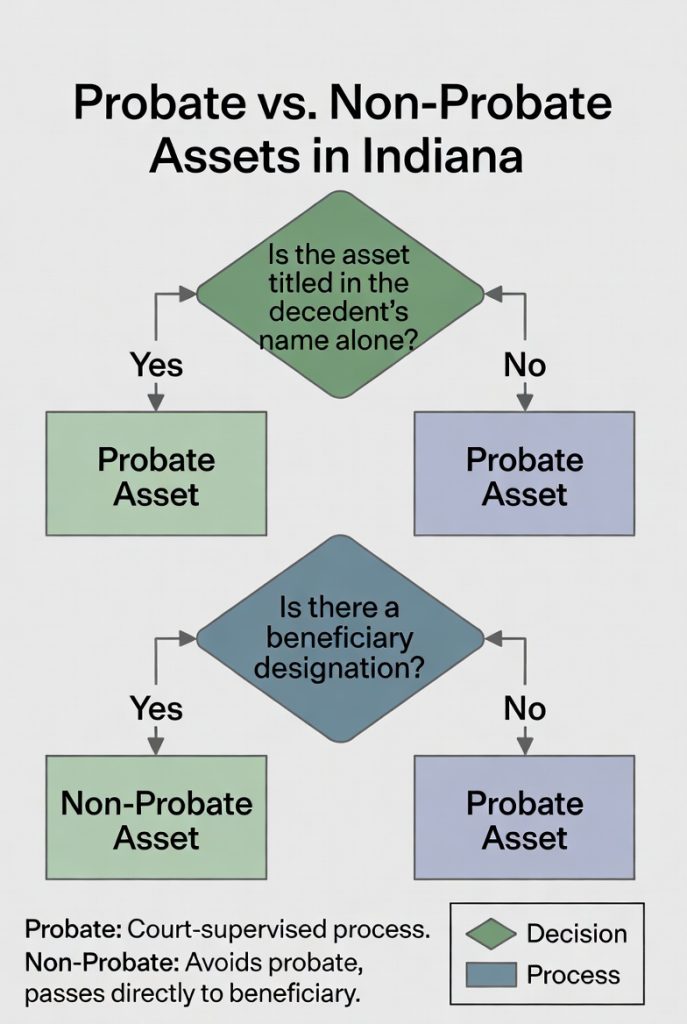
What Assets Go Through Probate in Indiana?
- Life insurance with named beneficiaries
- Retirement accounts (IRAs, 401(k)s)
- POD accounts
- TOD vehicles or real estate
- Joint accounts with survivorship rights
- Assets in a revocable living trust
This flowchart shows which assets go through probate and which transfer directly to beneficiaries in Indiana.
Step-by-Step: The Full Probate Process in Indiana
Step 1: Locate the Will (If One Exists)
Step 2: Determine If Probate Is Needed
Step 3: File to Open the Estate (Petition for Probate)
This photo shows an Indiana courthouse clerk’s office where families file the initial probate petition and death certificate.

Step 4: Notice to Heirs, Beneficiaries & Creditors
Step 5: Inventory & Appraisal of Assets
Step 6: Pay Debts, Taxes & Expenses
Step 7: Final Accounting & Distribution
This image shows an Indiana probate courtroom where the judge approves the final accounting and closes the estate.

Small Estate Affidavit – The Fast Shortcut for Estates ≤ $100,000 (2026)
This sample small estate affidavit form shows the simple one-page document that transfers assets quickly in qualifying Indiana estates.
Typical Timeline & Costs for Probate in Indiana (2026)
This calendar graphic highlights the typical probate timeline in Indiana — from filing to final distribution.

Common Challenges & How Families Can Avoid or Simplify Probate
Frequently Ask Questions
How long does probate take in Indiana?
Most probate cases in Indiana take 6–12 months, but contested estates or complex assets can extend the process to several years.
How much does probate cost in Indiana?
Typical probate costs range from $3,000 to $15,000 depending on estate size, attorney fees, court filings, and appraisals.
What qualifies as a small estate in Indiana?
Indiana allows a small estate affidavit if probate assets are valued at $100,000 or less.
If you’re dealing with probate, estate administration, small estate affidavits, or planning to avoid probate in Southern Indiana (Jasper, Huntingburg, or nearby), Fritch Law provides experienced guidance for families. They help with opening estates, serving as personal representative, handling creditor claims, and creating probate-avoidance plans. Visit https://www.fritchlaw.com/for estates and probate services, or call 812-482-9232 for clear, compassionate help.
This is based on Indiana Code Title 29, Article 1 (current as of 2026 – small estate threshold $100,000, no changes to supervised probate procedures). Probate varies by county, asset types, and disputes. This is not legal advice. Always consult a licensed Indiana probate attorney for your specific situation.