

Indiana tenant rights eviction: Complete 2026 Guide
Fritch Law Office handles indiana tenant rights eviction cases for Indiana residents every day. First, our attorneys examine your situation carefully. Next, we identify your strongest legal options. Furthermore, we explain every step in plain language. Therefore, you make confident decisions from day one.
Key Facts About Indiana tenant rights eviction in Indiana
Indiana courts apply strict 2026 rules to indiana tenant rights eviction matters. Moreover, experienced attorneys win better outcomes for clients. Additionally, early legal advice prevents costly mistakes. Consequently, clients who hire Fritch Law gain a clear advantage. However, waiting too long weakens your position significantly.
Take Action on Indiana tenant rights eviction Today
Do not delay your indiana tenant rights eviction case. First, call our Jasper office directly. Next, we schedule your free consultation immediately. Then, we build a winning strategy for you. Additionally, we represent you at every court hearing. Finally, we resolve your case as fast as possible.

Visit the Indiana Courts website for official legal information. Contact Fritch Law for your free consultation today.
Understanding Your Indiana Tenant Rights During Eviction
If you’re facing eviction in Indiana, understanding your rights is crucial. Indiana tenant rights eviction laws are designed to ensure a fair process for both landlords and tenants. Here are the main things you need to know right away:
- Eviction Can’t Be Done Without Proper Notice: Landlords must provide written notice before starting the eviction process.
- Court Involvement is Required: Tenants cannot be forcibly removed without a court order.
- Retaliation is Illegal: Tenants can’t be evicted for requesting repairs or reporting violations.
Indiana’s eviction laws safeguard both parties, ensuring landlords follow specific legal steps before evicting a tenant. For tenants, knowing these laws helps you protect your rights and avoid illegal eviction practices.
I’m David Fritch, an experienced lawyer with over 40 years of experience in Indiana tenant rights eviction cases. My goal is to help you steer these complex legal waters smoothly. Now, let’s dive into the eviction process in Indiana to ensure you’re fully prepared.
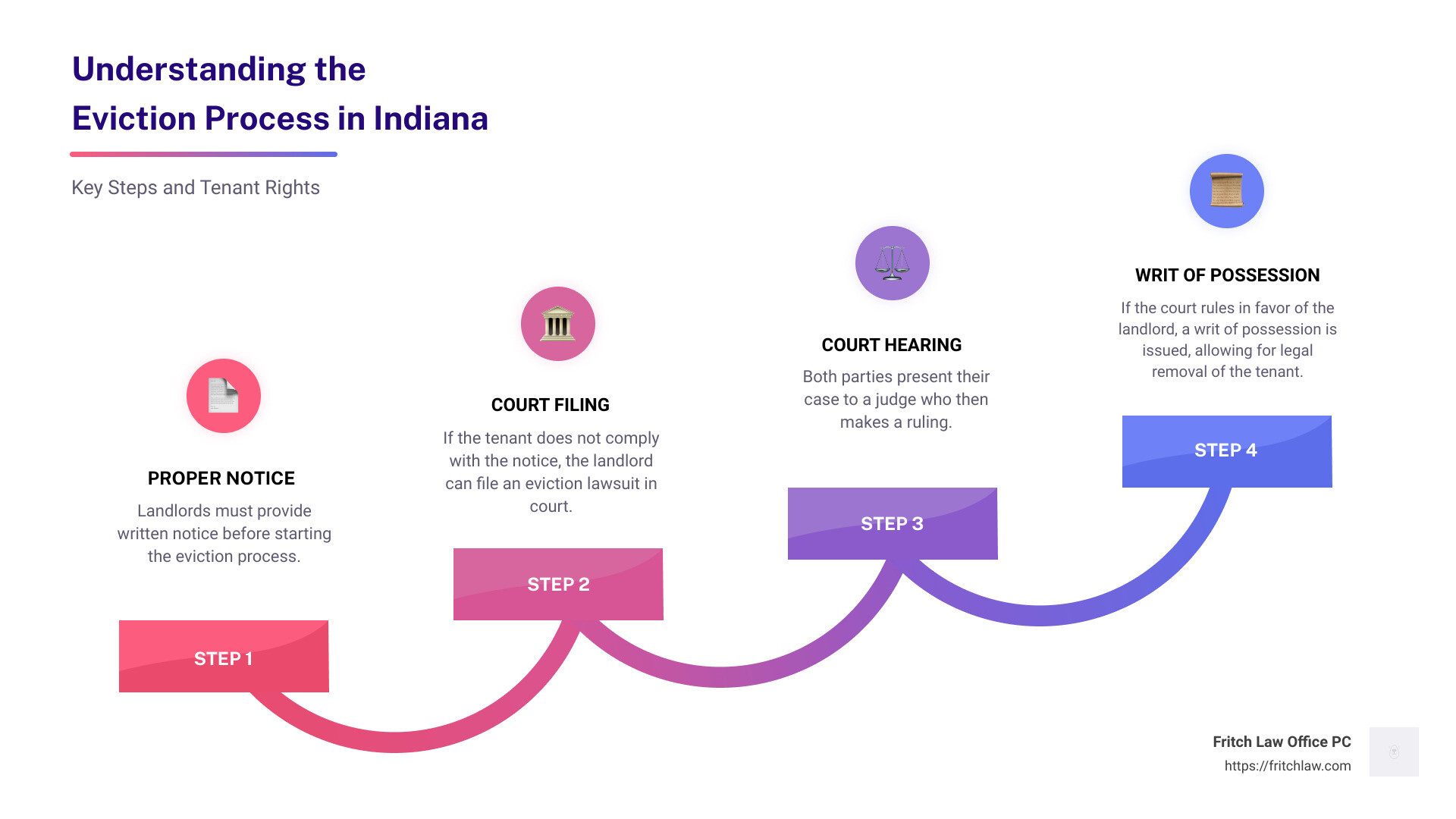
Understanding the Eviction Process in Indiana
Types of Eviction Notices
In Indiana, landlords must issue a written eviction notice before taking any legal action. The type of notice depends on the reason for eviction:
- 10-Day Notice: Used for nonpayment of rent. Tenants have 10 days to pay the overdue rent to avoid eviction.
- 30-Day Notice: For lease violations such as unauthorized pets or property damage. Tenants have 30 days to correct the issue.
- Unconditional Quit Notice: For serious lease violations like illegal activities (e.g., drug use). Tenants must vacate immediately without an option to correct the violation.
Steps in the Eviction Process
Understanding the steps in the eviction process can help you prepare and protect your rights:
-
Notice to Quit
- The landlord issues a written notice to the tenant. Depending on the reason, this could be a 10-day, 30-day, or unconditional quit notice.
-
Filing a Complaint
- If the tenant does not comply with the notice, the landlord files an eviction lawsuit in the relevant county court. This includes paying filing fees and submitting necessary documents.
-
Court Hearing
- A court official serves a summons to the tenant, informing them of the hearing date. Both parties present their cases before a judge. If the tenant wins, they can stay. If the landlord wins, a Writ of Execution is issued.
-
Judgment and Writ of Possession
- The judge issues a judgment. If the landlord wins, they receive a Writ of Execution, giving the tenant a maximum of 72 hours to vacate the property.
-
Enforcement of Eviction
- If the tenant does not leave within the specified time, a sheriff appears to enforce the eviction. The landlord may need a court order to remove any belongings left behind, which can be stored for 90 days before disposal.
Understanding these steps ensures you know what to expect and how to respond effectively. Keep detailed records of all interactions, payments, and notices to support your case.
Next, let’s explore the legal reasons for eviction and how they apply to your situation.
Legal Reasons for Eviction
Nonpayment of Rent
One of the most common reasons for eviction in Indiana is nonpayment of rent. If you miss a rent payment, your landlord can issue a 10-Day Notice to Pay. This notice gives you ten days to pay the overdue rent. If you manage to pay within this period, the eviction process stops. However, if you don’t pay, the landlord can file a complaint in court.
Court Filing: If the rent remains unpaid after the notice period, the landlord can then file an eviction lawsuit. They will need to submit necessary documents and pay filing fees.
Judgment of Possession: If the court rules in favor of the landlord, they will issue a judgment of possession. This means you must vacate the property. If you fail to move out, a sheriff will enforce the eviction.
Lease Violations
Lease violations are another common reason for eviction. These can include:
- Pet Restrictions: If your lease specifies no pets and you have one, your landlord can issue a 30-Day Notice to correct the violation.
- Property Damage: Significant damage to the property can also result in a 30-Day Notice. You will need to repair the damage to avoid eviction.
- Other Violations: This can include anything from unauthorized occupants to noise complaints.
Court Filing: Similar to nonpayment, if you don’t resolve the issue within the notice period, the landlord can file a complaint.
Judgment of Possession: The court will then decide whether to grant the landlord possession of the property. If they do, you must vacate.
Illegal Activity
Engaging in illegal activities on the property is a serious violation. This includes:
- Drug Activity: Any involvement in drug-related activities can lead to immediate eviction.
- Vandalism: Damaging the property intentionally is another serious offense.
For such severe violations, landlords can issue an Unconditional Quit Notice. This means you must leave the property immediately, without any chance to correct the violation.
Immediate Eviction: Given the gravity of the situation, the court process for illegal activities is often expedited. The landlord can quickly file a complaint, and the court is likely to issue a judgment of possession swiftly.
Understanding these legal reasons for eviction can help you know what to expect and how to respond. Always keep detailed records and seek legal advice if you find yourself facing eviction.
Next, let’s discuss your rights as a tenant during the eviction process.
Tenant Rights During Eviction
When facing eviction, knowing your rights as a tenant can make a significant difference. Here, we’ll cover your right to proper notice, right to a court hearing, and available legal assistance and resources.
Right to Proper Notice
In Indiana, landlords must give tenants proper notice before starting the eviction process. The type of notice depends on the reason for eviction:
- 10-Day Notice: For nonpayment of rent. You have ten days to pay overdue rent to avoid eviction.
- 30-Day Notice: For lease violations like having unauthorized pets or causing property damage. You have 30 days to correct the issue.
- Unconditional Quit Notice: For severe violations such as illegal drug activity or vandalism. You must vacate immediately without the chance to correct the violation.
Understanding the type of notice you receive is crucial. It tells you how much time you have to respond and what actions you need to take.
Right to a Court Hearing
If you do not comply with the notice, the landlord can file an eviction lawsuit. You have the right to a court hearing where both parties present their cases:
- Hearing Schedule: The court will schedule a hearing, usually no earlier than 10 days after the complaint is filed.
- Presenting a Defense: You can present your defense, such as proving rent payments or showing evidence that you corrected a lease violation.
- Summary Judgment: If the case is clear-cut, the judge may issue a summary judgment. This means the decision is made quickly without a full trial.
It is essential to attend the hearing and present any evidence that supports your case. Missing the hearing can result in an automatic judgment against you.
Legal Assistance and Resources
Facing eviction can be overwhelming, but several organizations offer help:
- Indiana Legal Services: Provides free legal assistance to low-income residents.
- Indianapolis Legal Aid Society: Offers legal aid for various issues, including eviction.
- Neighborhood Christian Legal Clinic: Provides free legal services to those in need.
These organizations can help you understand your rights, prepare for court, and even represent you in legal proceedings. It’s crucial to seek help as soon as you receive an eviction notice.
Next, we’ll discuss what steps you should take if you receive an eviction notice.
What to Do If You Receive an Eviction Notice
Receiving an eviction notice can be stressful, but knowing what steps to take can help you steer the process more effectively. Here’s what you should do:
Preparing for Court
1. Read the Notice
First, carefully read the eviction notice. Understand the reason for the eviction and the type of notice you received. This will inform you how much time you have to respond and what actions are needed.
2. Understand the Reason
Identify why the eviction notice was issued. Is it for nonpayment of rent, a lease violation, or something else? Knowing the reason will help you prepare your defense.
3. Gather Evidence
Collect all relevant documents and evidence that support your case:
- Lease Agreement: This will help clarify your rights and obligations.
- Payment Records: Show proof of rent payments to counter claims of nonpayment.
- Communication Logs: Keep records of all communications with your landlord, including emails, texts, and letters.
- Photographs or Videos: If the eviction is due to property damage, photos or videos can help prove your innocence or show repairs.
4. Prepare for Court
Organize your evidence and be ready to present your case. Make sure you understand the court process and what to expect during the hearing.
Seeking Legal Help
1. Contact Local Legal Aid
Reach out to organizations that provide free legal assistance:
- Indiana Legal Services: Offers help to low-income residents.
These organizations can help you understand your rights, prepare your defense, and may even represent you in court.
2. Visit Your Township Trustee’s Office
Your local township trustee’s office can provide rental and utility assistance. It’s important to seek help before your court date, as a judgment against you may make you ineligible for assistance.
3. Explore Rental Assistance Programs
Look into rental assistance programs that can help you catch up on overdue rent or cover future payments. These programs can provide temporary financial relief and help you stay in your home.
Being proactive and seeking help early can make a significant difference in the outcome of your eviction case. Next, we’ll address some frequently asked questions about tenant rights during the eviction process in Indiana.
Frequently Asked Questions about Indiana Tenant Rights Eviction
How long does it take to evict a tenant in Indiana?
The eviction process in Indiana can vary widely, typically taking anywhere from 2 weeks to 4 months. The timeline depends on several factors, including how quickly the court schedules a hearing and whether the tenant contests the eviction.
Here’s a breakdown of the steps involved:
- Eviction Notice Period: 10-45 days, depending on the type of notice.
- Court Hearing: Scheduled 3-20 days after the tenant is served a summons.
- Judgment of Possession: If the court rules in favor of the landlord, they can request a writ of possession.
- Writ of Possession: The tenant usually gets 48 hours to 5 days to vacate after the writ is posted.
How many days does a landlord have to give you to move out in Indiana?
The amount of notice a landlord must give you depends on the type of tenancy and the reason for eviction:
- Month-to-Month Tenancy: Requires a 30-day notice to quit.
- Year-to-Year Tenancy: Requires a 3-month notice to quit.
- Nonpayment of Rent: The landlord must provide a 10-day notice to pay rent or move out.
- Unconditional Quit Notice: For severe lease violations, such as illegal activity or property damage, landlords can issue this notice immediately, requiring you to leave without an opportunity to cure the violation.
Can a landlord in Indiana kick you out without notice?
In most cases, no, a landlord cannot evict you without notice. However, there are exceptions for severe lease violations. Here’s what you need to know:
-
Unconditional Quit Notice: For serious issues like illegal drug activity or significant property damage, landlords can issue an unconditional quit notice. This means you must leave immediately, with no chance to correct the issue.
-
Lease End Date: If your lease has a specific end date and you haven’t moved out or renewed the lease, the landlord doesn’t need to give additional notice beyond the lease expiration.
-
Eviction Proceedings: Regardless of the notice type, the landlord must still go through the court process to legally evict you. Self-help evictions (changing locks, shutting off utilities) are illegal in Indiana.
Understanding your rights during the eviction process can help you better steer this challenging situation. If you find yourself facing eviction, it’s crucial to seek legal assistance and prepare your defense. Continue reading to learn more about your options and resources available to help you.
Conclusion
Facing eviction in Indiana can be a stressful and overwhelming experience. It’s crucial to understand your rights and the proper legal procedures to ensure you’re treated fairly.
Summary: In Indiana, tenants have specific rights during eviction, including the right to proper notice, a court hearing, and the opportunity to present a defense. Landlords must follow strict legal procedures, and self-help evictions are illegal.
Importance of Understanding Rights: Knowing your rights can make a significant difference in the outcome of an eviction case. It can prevent unlawful eviction practices and give you the time needed to find a new home or resolve the issue with your landlord.
Fritch Law Office PC: At Fritch Law Office PC, we are dedicated to helping tenants understand and protect their rights. Our experienced lawyers are here to guide you through the eviction process, provide legal representation, and ensure you receive fair treatment.
If you’re facing eviction, don’t steer this challenging time alone. Contact Fritch Law Office PC today for expert legal assistance and representation. We’re here to help you understand your rights and explore your options.
Understanding your rights and seeking legal help can be the key to a more favorable outcome in an eviction case. Stay informed and take action to protect yourself.