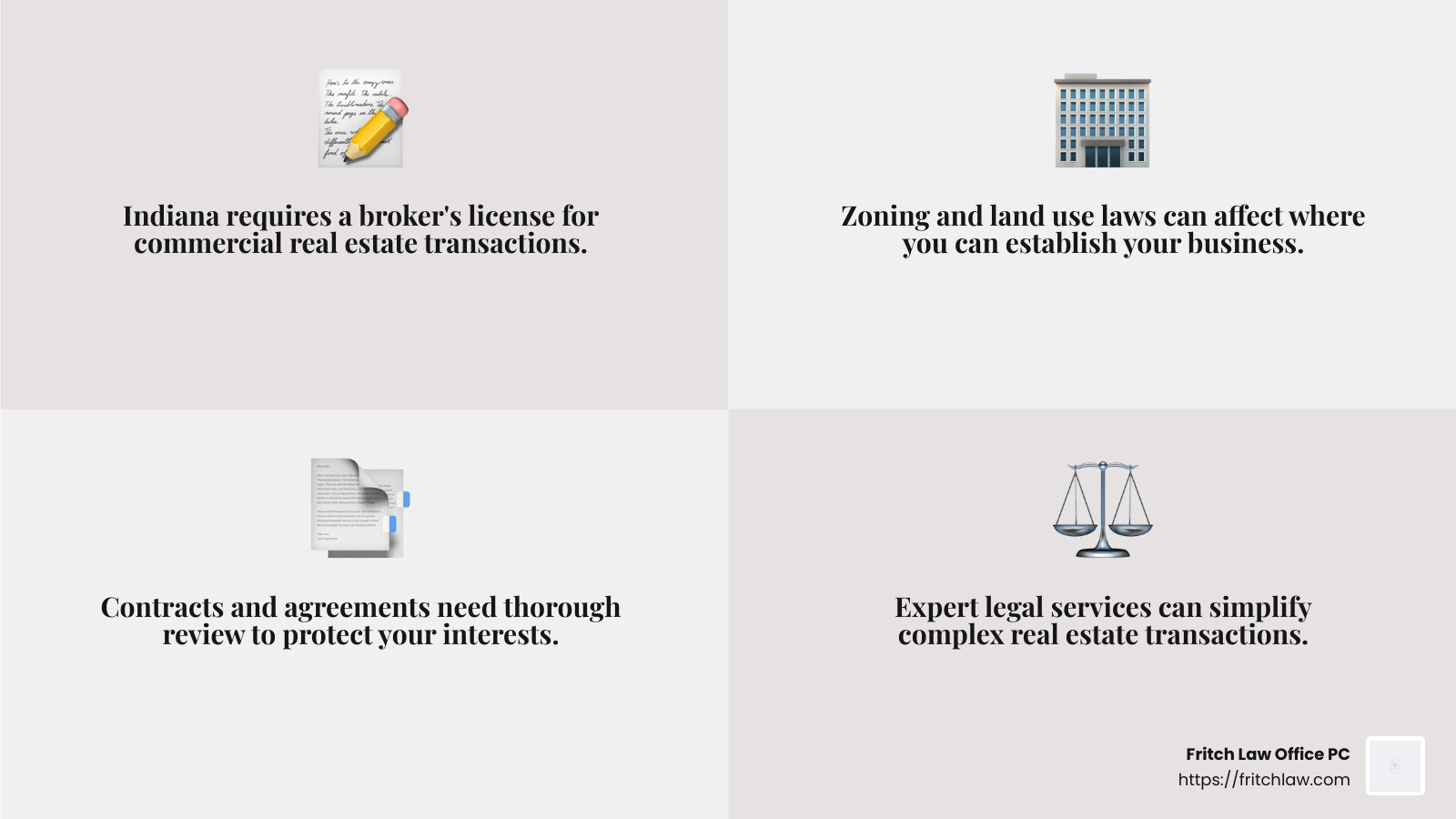
Indiana commercial real estate law: Complete 2026 Guide
Fritch Law Office handles indiana commercial real estate law cases for Indiana residents every day. First, our attorneys examine your situation carefully. Next, we identify your strongest legal options. Furthermore, we explain every step in plain language. Therefore, you make confident decisions from day one.
Key Facts About Indiana commercial real estate law in Indiana
Indiana courts apply strict 2026 rules to indiana commercial real estate law matters. Moreover, experienced attorneys win better outcomes for clients. Additionally, early legal advice prevents costly mistakes. Consequently, clients who hire Fritch Law gain a clear advantage. However, waiting too long weakens your position significantly.
Take Action on Indiana commercial real estate law Today
Do not delay your indiana commercial real estate law case. First, call our Jasper office directly. Next, we schedule your free consultation immediately. Then, we build a winning strategy for you. Additionally, we represent you at every court hearing. Finally, we resolve your case as fast as possible.

Visit the Indiana Courts website for official legal information. Contact Fritch Law for your free consultation today.
Why Understanding Indiana Commercial Real Estate Law Matters

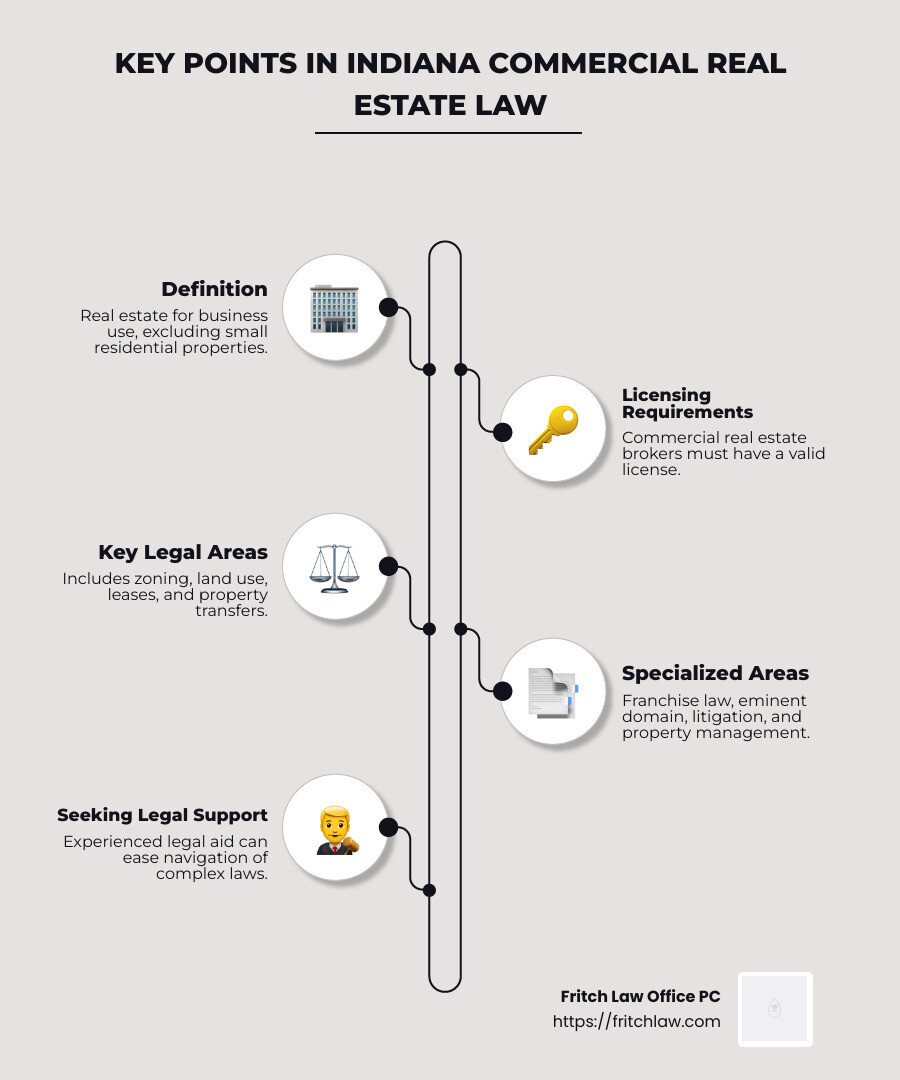
Indiana commercial real estate law governs the sale, lease, and use of property for business purposes within the state. Having a thorough understanding of these regulations can save investors, landlords, and business owners time, money, and potential legal headaches. Here are the key points you need to know:
- Definition: Real estate meant for business use, excluding residential properties under four units or single-family homes sold unit-by-unit.
- Licensing Requirements: Commercial real estate brokers in Indiana must have a valid real estate license.
- Key Legal Areas: Zoning, land use, leases, property transfers, and more.
- Specialized Areas: Franchise law, eminent domain, litigation, and property management.
Navigating Indiana’s commercial real estate law may seem daunting, but with the right legal support, it can be a smooth process.
I’m David Fritch, and I bring over 40 years of experience in Indiana commercial real estate law. My goal is to help you manage and grow your valuable investments efficiently.
Indiana Commercial Real Estate Law
Licensing Requirements
To operate as a commercial real estate broker in Indiana, you must hold a valid real estate broker’s license. This license is issued by the Indiana Professional Licensing Agency (PLA) and regulated by the Indiana Real Estate Commission. Obtaining this license involves completing pre-licensing education, passing a state exam, and fulfilling continuing education requirements.
The licensing process ensures that commercial real estate agents have the necessary knowledge and skills to steer the complexities of Indiana commercial real estate law. This includes understanding contracts, negotiations, property management, and compliance with state regulations.
Zoning and Land Use
Zoning and land use regulations are critical aspects of Indiana commercial real estate law. These rules determine how land can be used and what types of structures can be built. Zoning laws are established by local governments—either at the city or county level—and can significantly impact commercial real estate transactions.
Key Points to Consider:
– Zoning Categories: Commercial, residential, industrial, and mixed-use zones each have specific guidelines.
– Land Use Permits: Before developing or converting a property, you may need to obtain permits or approvals from local authorities.
– Residential Conversion: Converting a commercial property to residential use (or vice versa) requires city or county approval. This process often involves public hearings and compliance with zoning codes.
Understanding these regulations can help avoid costly delays and ensure that your property development plans proceed smoothly. If you’re unsure about the zoning or land use regulations affecting your property, consulting an experienced lawyer can provide clarity and guidance.
Navigating these licensing and zoning requirements is crucial for anyone involved in Indiana commercial real estate. Proper compliance ensures smoother transactions and mitigates potential legal issues.
Key Legal Services in Indiana Commercial Real Estate
Navigating the complexities of Indiana commercial real estate law requires expert legal services. At Fritch Law Office PC, we offer a range of services to help you manage your commercial real estate transactions effectively.
Contract Drafting and Review
Contracts are the backbone of any commercial real estate transaction. Whether you’re a buyer, seller, or lender, having a well-drafted contract is essential.
Services We Offer:
– Drafting Contracts: We create clear, legally binding agreements custom to your needs.
– Reviewing Agreements: Our attorneys carefully review contracts to ensure they are fair and enforceable.
– Negotiations: We assist in negotiating terms to protect your interests and avoid future disputes.
Property Management Law
Property management involves more than just collecting rent. It includes navigating legal issues such as leases, ownership transfers, foreclosures, and evictions.
Key Areas We Handle:
– Leases: We draft and review commercial leases to ensure compliance and protect your rights.
– Ownership Transfers: Our team manages the legal intricacies of transferring property ownership.
– Foreclosures and Evictions: We represent landlords in foreclosure and eviction proceedings, ensuring all actions comply with Indiana law.
Franchise Law
Franchising adds another layer of complexity to commercial real estate. From franchise agreements to litigation, our attorneys are well-versed in franchise law.
Our Expertise Includes:
– Franchise Agreements: We draft and review agreements to ensure they meet legal standards and protect your interests.
– Litigation: Our attorneys represent franchisors and franchisees in disputes, including condemnation and eminent domain cases.
– Eminent Domain: We handle cases involving government acquisition of private property, ensuring fair compensation and legal compliance.
By offering these comprehensive legal services, Fritch Law Office PC aims to make your commercial real estate transactions as seamless as possible. Whether you need help with contracts, property management, or franchise law, our experienced attorneys are here to guide you every step of the way.
Commercial Real Estate Transactions
Navigating commercial real estate transactions in Indiana involves several key steps. Whether you’re buying, selling, leasing, or managing property, understanding these steps is crucial for a smooth process.
Sales and Purchases
Negotiation is the first step in any real estate sale or purchase. Both parties must agree on the terms, including price, closing date, and contingencies. Skilled negotiation can save you time and money.
Purchase Agreements are essential. These legally binding contracts outline all terms of the sale, including the price, property condition, and any included fixtures. An experienced lawyer can draft and review these agreements to ensure they are fair and enforceable.
Closing is the final step. This is when the property officially changes hands. Both parties sign the necessary documents, and the buyer pays the agreed-upon amount. Lawyers ensure all legal requirements are met and that the transaction complies with Indiana law.
Financing is often required in commercial real estate transactions. Whether you’re securing a loan or refinancing an existing one, understanding the terms and conditions is crucial. Legal advice can help you steer complex financing arrangements and avoid potential pitfalls.
Leasing and Property Management
Commercial Leases differ from residential leases. They are often more complex and include terms specific to business operations. Our attorneys draft and review commercial leases to protect your interests and ensure compliance with Indiana law.
Property Management involves more than just maintaining the property. It includes handling leases, collecting rent, and addressing tenant issues. Legal guidance can help you steer these responsibilities and avoid disputes.
Landlord-Tenant Relations are a critical aspect of property management. Disputes can arise over rent, maintenance, and lease terms. Experienced lawyers can help resolve these issues through negotiation, mediation, or litigation.
By understanding these key aspects of Indiana commercial real estate law, you can make informed decisions and protect your investments. Whether you’re buying, selling, leasing, or managing property, Fritch Law Office PC is here to provide the legal support you need.
Frequently Asked Questions about Indiana Commercial Real Estate Law
Do you need a commercial real estate license in Indiana?
Yes, you need a broker’s license to engage in commercial real estate transactions in Indiana. This license is required for anyone who wants to buy, sell, or lease commercial properties on behalf of others. The licensing process is overseen by the PLA/IN Real Estate Commission.
To obtain a broker’s license, you must complete pre-licensing education, pass an exam, and meet other requirements such as a background check. Once licensed, continuing education is required to maintain your license.
Can you live on commercial property in Indiana?
Living on commercial property in Indiana is subject to zoning and land use regulations. These regulations determine what activities are allowed on a piece of property. If the property is zoned for commercial use, you generally cannot live there without special permission.
To convert a commercial property to residential use, you must get approval from the city or county zoning board. This process may involve public hearings and compliance with local building codes. It’s essential to consult with an experienced lawyer to steer these regulations and ensure you meet all requirements.
What is the commercial real estate transfer tax in Indiana?
Indiana does not impose a specific commercial real estate transfer tax. However, there are other costs associated with property transfers, such as recording fees and potential local taxes. The property transfer process includes these administrative costs, which vary depending on the county.
It’s crucial to understand all the fees involved in a property transfer to budget accordingly. An experienced lawyer can help you steer these costs and ensure all legal requirements are met during the transaction.
Conclusion
Navigating Indiana commercial real estate law can be complex, but you don’t have to do it alone. At Fritch Law Office PC, we are committed to providing personalized, client-focused legal representation. Our experienced lawyers understand the nuances of commercial real estate transactions and are dedicated to protecting your interests.
Whether you need help with contract drafting and review, property management law, or franchise law, our team is here to support you every step of the way. We understand that every client has unique needs, and we tailor our services to meet those needs effectively.
If you have questions or need assistance with your commercial real estate matters in Indiana, contact Fritch Law Office PC today. Let us help you steer the complexities of commercial real estate law with confidence and ease.