

Probate court indiana: Complete 2026 Guide
Fritch Law Office handles probate court indiana cases for Indiana residents every day. First, our attorneys examine your situation carefully. Next, we identify your strongest legal options. Furthermore, we explain every step in plain language. Therefore, you make confident decisions from day one.
Key Facts About Probate court indiana in Indiana
Indiana courts apply strict 2026 rules to probate court indiana matters. Moreover, experienced attorneys win better outcomes for clients. Additionally, early legal advice prevents costly mistakes. Consequently, clients who hire Fritch Law gain a clear advantage. However, waiting too long weakens your position significantly.
Take Action on Probate court indiana Today
Do not delay your probate court indiana case. First, call our Jasper office directly. Next, we schedule your free consultation immediately. Then, we build a winning strategy for you. Additionally, we represent you at every court hearing. Finally, we resolve your case as fast as possible.

Visit the Indiana Courts website for official legal information. Contact Fritch Law for your free consultation today.
Probate court Indiana is a unique legal entity that plays a crucial role in managing the affairs of deceased individuals, ensuring that their assets are distributed as per their wishes or state laws. This court, particularly in St. Joseph County — the only Indiana county with a dedicated Probate Court — is a court of limited jurisdiction tasked with overseeing matters related to estates, wills, trusts, and other similar legal frameworks. Here’s a quick breakdown of what to expect:
- Probate Process: The court handles the filing of wills, management of estates, and distribution of assets.
- Jurisdiction: It covers estates, trusts, adoptions, guardianships, and more.
- Court Functions: Beyond typical probate functions, it deals with family court matters like paternity disputes and juvenile cases.
Navigating the probate process in Indiana can be complex, but understanding its core functions can help ease the journey.
I’m David Fritch, a lawyer with 40 years of experience owning and managing Fritch Law Office. I’ve dedicated much of my career to understanding and simplifying complex legal processes like those seen in Probate court Indiana. My background in tax and business management complements the legal services I provide, helping clients handle their probate concerns effectively.
Simple Probate court Indiana glossary:
– Indiana probate law
– Probate lawyer fees
What is Probate?
Probate is a legal process that occurs after someone passes away. It’s a court-supervised procedure to ensure a deceased person’s assets are distributed correctly. Here’s how it works:
-
Court-Supervised Process: Probate involves the court overseeing the management and distribution of the deceased person’s estate. This process helps validate the will (if there is one), pays off debts, and ensures that the remaining assets go to the rightful heirs.
-
Deceased Person’s Assets: The assets of the deceased include everything they owned, such as property, bank accounts, and personal belongings. During probate, these assets are collected, inventoried, and appraised.
-
Rightful Heirs: One of the main goals of probate is to identify and distribute the assets to the rightful heirs. If there is a will, the court ensures that the distribution aligns with the deceased’s wishes. If there is no will, Indiana’s intestacy laws determine the heirs.
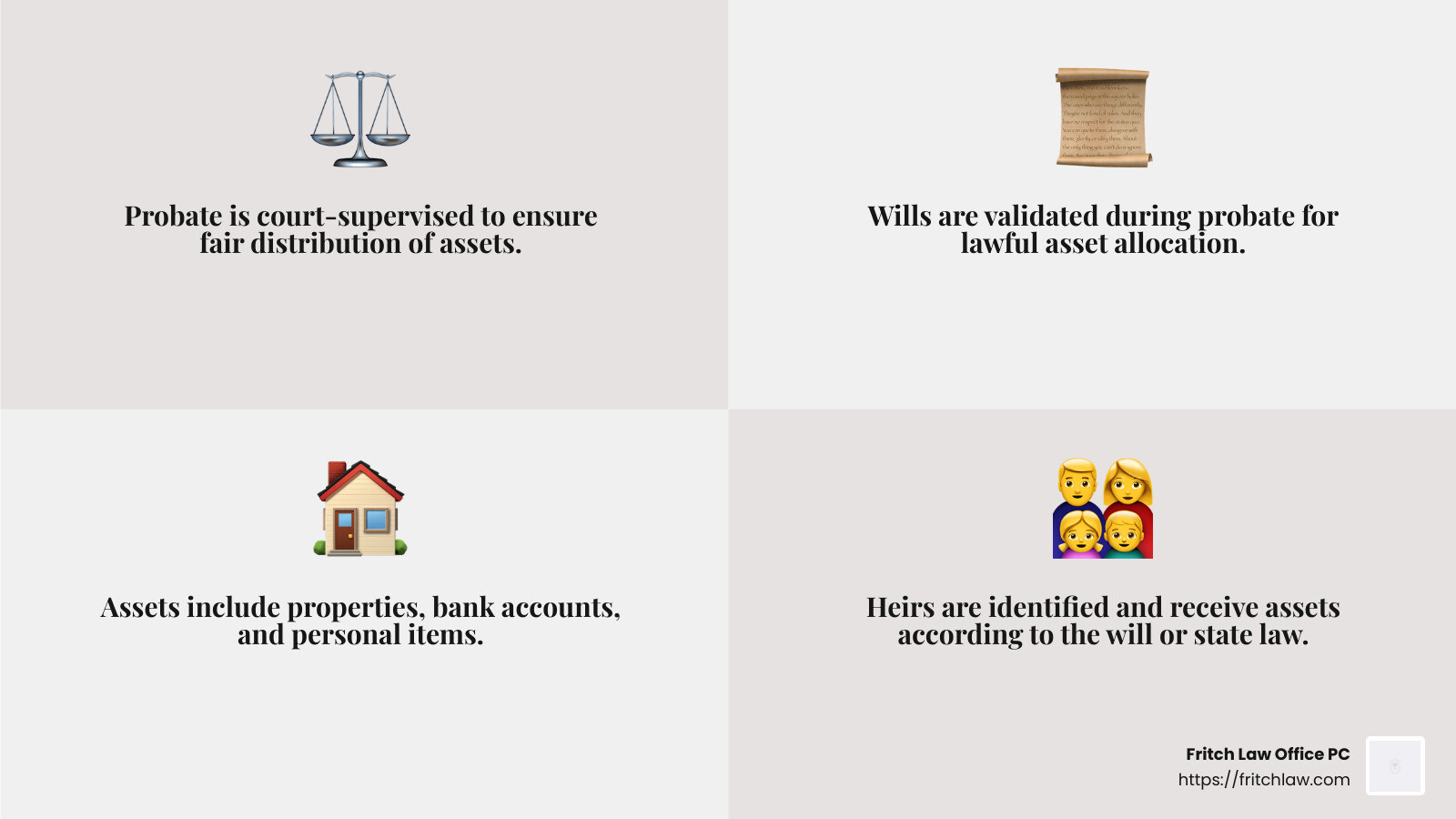
Understanding probate is crucial because it ensures that the deceased’s financial affairs are settled properly. It protects both the deceased’s wishes and the heirs’ rights. Even though probate can seem daunting, it’s a necessary step to ensure fair distribution of assets in Probate court Indiana.
Next, we’ll explore how the probate court functions in Indiana, including the specific roles of Circuit Courts, Superior Courts, and the unique St. Joseph County Probate Court.
How Does the Probate Court Work in Indiana?
In Indiana, probate courts play a crucial role in managing and overseeing the distribution of a deceased person’s estate. This process involves several courts, including Circuit Courts, Superior Courts, and a unique court for St. Joseph County. Let’s explore the types of cases these courts handle and their jurisdiction and authority.
Types of Cases Handled by Probate Courts
Probate courts in Indiana manage a variety of cases. Here’s a quick look at what they cover:
-
Estate Administration: This involves managing and distributing a deceased person’s assets, ensuring debts and taxes are paid, and distributing the remaining assets to heirs.
-
Guardianship Administration: Probate courts oversee the appointment and management of guardians for minors or individuals who cannot care for themselves.
-
Adoptions and Paternity Disputes: These courts handle legal processes related to adoption and disputes over paternity, ensuring the best interests of children are prioritized.
-
Mental Health Cases: Probate courts are involved in cases that require mental health hearings, ensuring individuals receive the care they need.
-
Wills and Trusts: The court validates wills and oversees the administration of trusts, ensuring they align with the deceased’s wishes.
-
Domestic Relations: This includes handling matters like divorce, child visitation rights, and child support.
-
Civil and Criminal Cases: Some probate courts handle civil matters where the amount in controversy does not exceed $6,000 and minor criminal cases.
-
Juvenile Matters: In St. Joseph County, the probate court has exclusive jurisdiction over juvenile delinquency cases and children in need of services.
Jurisdiction and Authority
The jurisdiction and authority of Indiana’s probate courts vary:
-
Original Concurrent Jurisdiction: This means probate courts in Indiana share authority with Circuit and Superior Courts over matters like estate administration and guardianship. They can handle these cases independently or alongside other courts.
-
Limited Jurisdiction: In certain counties, probate courts have specific limitations on the types of cases they can oversee. For example, St. Joseph County’s Probate Court handles certain civil and criminal cases but with restrictions.
-
De Novo Appellate Jurisdiction: In St. Joseph County, the probate court can hear appeals from Indiana Town and City Courts. This means they can review cases anew if parties are dissatisfied with previous rulings.
Indiana’s probate system is designed to ensure that all matters related to a deceased person’s estate are handled fairly and efficiently. By understanding the roles of the different courts and their jurisdictions, families can steer the probate process more smoothly.
Next, we’ll explore the steps involved in the Indiana probate process, including how to open a probate estate, present a will to the court, and appoint an executor.
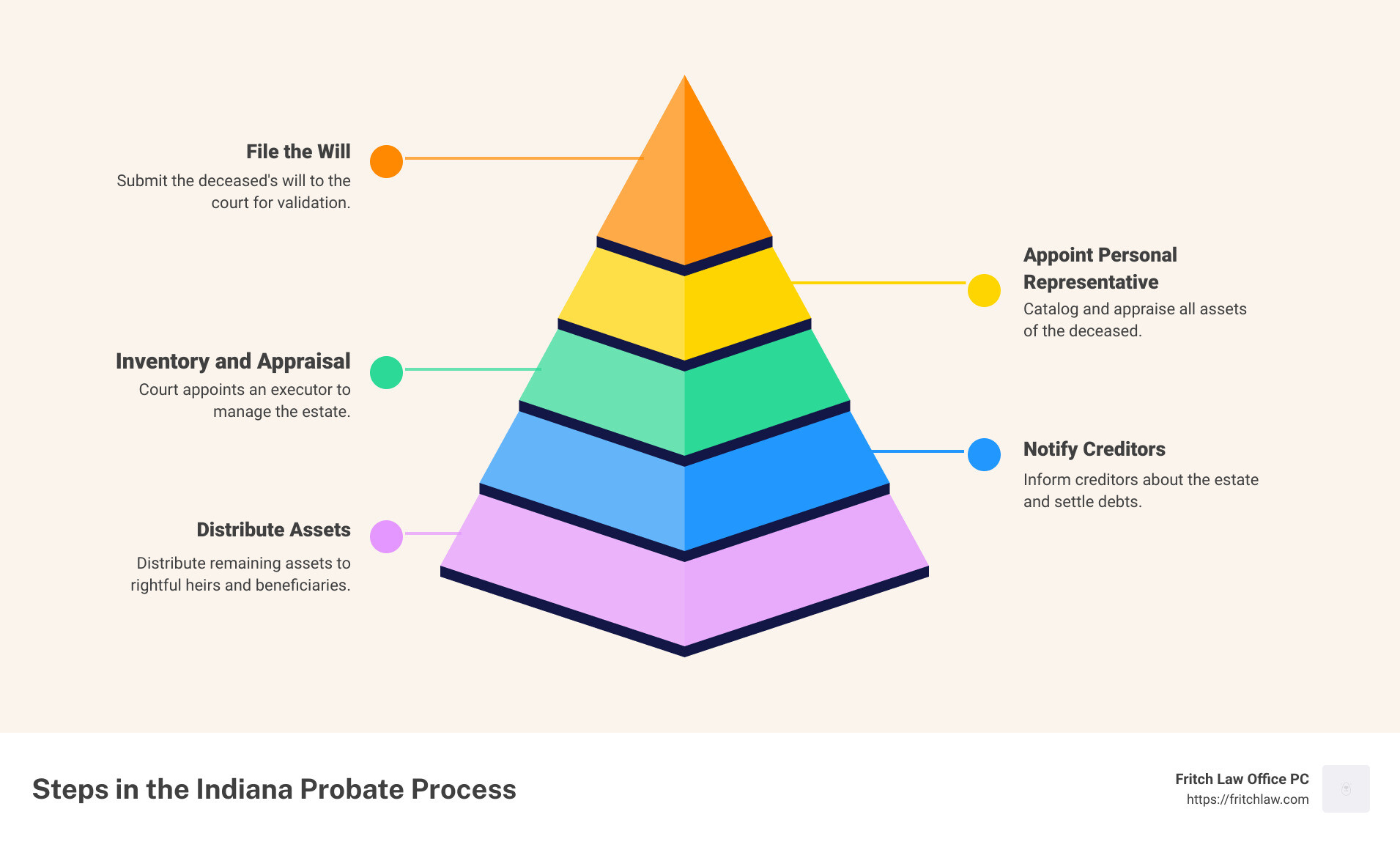
Steps in the Indiana Probate Process
Navigating the probate process in Indiana can seem daunting, but understanding the steps involved can make it more manageable. Here’s a straightforward look at what to expect:
Opening the Probate Estate
The first step is to open the probate estate. This involves filing the deceased person’s will with the local probate court. If there isn’t a will, the estate is managed according to Indiana’s intestacy laws. This step is crucial as it officially starts the legal process of managing the deceased’s assets.
Presenting the Will to the Court
Once the estate is opened, the next step is to present the will to the court. The court’s role is to verify the validity of the will and ensure it aligns with legal standards. This ensures that the deceased’s wishes are respected and followed.
Appointing an Executor
After the will is validated, the court appoints an executor, also known as a personal representative. If the will names an executor, the court usually honors this choice. The executor is responsible for managing the estate, which includes gathering assets, paying debts, and distributing remaining assets to beneficiaries.
Distributing Assets
Once debts and taxes are settled, the executor distributes the remaining assets to the beneficiaries as outlined in the will. If there is no will, assets are distributed according to Indiana’s intestacy laws. This step ensures that the deceased’s wishes are fulfilled, or, in the absence of a will, that distribution follows state law.
Small Estate Exceptions
Indiana offers a streamlined process for small estates valued at less than $50,000. These estates can often avoid the full probate process, saving time and reducing costs. Instead, they may qualify for a simplified procedure known as a Voluntary Administration, which allows for quicker asset distribution without extensive court oversight.
Letters of Testamentary
To act officially, the executor receives Letters of Testamentary from the court. This document grants the executor the authority to manage the estate’s affairs. It’s essential for handling various tasks, such as accessing bank accounts, selling property, and settling debts. The executor’s responsibilities are significant, requiring careful attention to detail to ensure all legal and financial obligations are met.
Understanding these steps can help you steer Indiana’s probate process more effectively. Next, we’ll discuss how some people choose to avoid probate altogether and the tools available to make that possible.
Avoiding Probate in Indiana
Many people want to avoid probate in Indiana because it can be time-consuming and costly. Fortunately, there are ways to bypass this process, with living trusts being a popular choice.
Living Trust
A living trust is a legal document that allows you to transfer your assets into a trust during your lifetime. You maintain control over the trust and can make changes as needed. When you pass away, the assets in the trust are distributed to your beneficiaries without going through probate. This saves time and keeps your estate details private, as trusts are not public records.
Trust Document
Creating a living trust involves drafting a trust document. This document outlines the terms of the trust, including who will manage it and who the beneficiaries are. It’s important to ensure this document is legally valid to avoid any disputes later on. Once the trust is established, you’ll need to transfer ownership of your assets into the trust. This means changing the title of your property, bank accounts, or other assets to the trust’s name.
Successor Trustee
You will also need to appoint a successor trustee. This person will manage the trust after your death and ensure that your assets are distributed according to your wishes. The successor trustee plays a crucial role in maintaining the trust and carrying out your instructions. It’s important to choose someone you trust and who is capable of handling these responsibilities.
By setting up a living trust, you can effectively avoid probate in Indiana. This not only simplifies the process for your heirs but also ensures that your estate is managed according to your wishes.
Next, we’ll address some frequently asked questions about probate court in Indiana to further clarify this complex topic.
Frequently Asked Questions about Probate Court Indiana
How does probate court work in Indiana?
In Indiana, the probate court process ensures that a deceased person’s assets are distributed to the rightful heirs. When someone passes away, their estate goes through probate to validate the will and settle debts. This process is overseen by a local court, typically the Circuit or Superior Courts, and in St. Joseph County, the Probate Court.
The court appoints an executor to manage the estate. The executor’s job is to gather the probate assets, pay off any debts, and distribute the remaining assets to the heirs. This process ensures that everything is done legally and according to the decedent’s wishes.
How much does an estate have to be worth to go to probate in Indiana?
Not all estates in Indiana need to go through probate. If an estate is valued at less than $50,000, it qualifies for small estate exceptions, which can simplify the process. This means that smaller estates can avoid the full probate process, saving time and expenses for the heirs.
For estates valued over $50,000, probate is typically required. This includes assets solely in the decedent’s name, such as real estate, bank accounts, and vehicles.
Who must file probate in Indiana?
In Indiana, the person responsible for filing probate is usually the executor named in the will. If there is no will, a close family member or interested party can petition the court to become the administrator. They are responsible for presenting the will to the court and initiating the probate process.
The executor or administrator must identify and manage the probate assets, which include any assets held solely in the decedent’s name. This ensures that the estate is properly managed and distributed according to the law.
How can I avoid probate in Indiana?
Avoiding probate in Indiana can be beneficial for those who want to save time and maintain privacy. One of the most effective ways to avoid probate is by setting up a living trust. By transferring assets like real estate, bank accounts, and vehicles into a trust, you ensure that these assets bypass the probate process.
Another option is to designate beneficiaries for certain accounts, such as retirement accounts or life insurance policies, which can also avoid probate. By taking these steps, you can simplify the distribution of your estate and ensure your assets are passed on according to your wishes.
Conclusion
Navigating the probate process in Indiana can be complex and emotionally challenging. That’s where Fritch Law Office PC comes in. We are committed to offering personalized legal representation, focusing on each client’s unique needs and circumstances.
Our experienced lawyers understand the intricacies of Indiana’s probate laws. We provide guidance and support throughout the entire probate process, from opening the estate to distributing assets to rightful heirs. Whether dealing with estate administration, guardianship, or other probate matters, we ensure that everything is handled efficiently and according to the law.
At Fritch Law Office PC, we pride ourselves on our client-centered approach. We strive to make the probate process as smooth and stress-free as possible, offering clear and compassionate guidance.
If you need assistance with probate or estate planning in Indiana, contact us today. Our experienced team is ready to provide the legal support and guidance you need to steer this challenging time with confidence and peace of mind.