
Special needs trust attorney: Complete 2026 Guide
Fritch Law Office handles special needs trust attorney cases for Indiana residents every day. First, our attorneys examine your situation carefully. Next, we identify your strongest legal options. Furthermore, we explain every step in plain language. Therefore, you make confident decisions from day one.
Key Facts About Special needs trust attorney in Indiana
Indiana courts apply strict 2026 rules to special needs trust attorney matters. Moreover, experienced attorneys win better outcomes for clients. Additionally, early legal advice prevents costly mistakes. Consequently, clients who hire Fritch Law gain a clear advantage. However, waiting too long weakens your position significantly.
Take Action on Special needs trust attorney Today
Do not delay your special needs trust attorney case. First, call our Jasper office directly. Next, we schedule your free consultation immediately. Then, we build a winning strategy for you. Additionally, we represent you at every court hearing. Finally, we resolve your case as fast as possible.

Visit the Indiana Courts website for official legal information. Contact Fritch Law for your free consultation today.
If you’re looking for a special needs trust attorney, you likely have questions about how to protect government benefits while ensuring financial security through estate planning. Special needs trusts offer a legal mechanism to support individuals with disabilities without jeopardizing their eligibility for essential government aid like Medicaid or Supplemental Security Income (SSI).
Key Points:
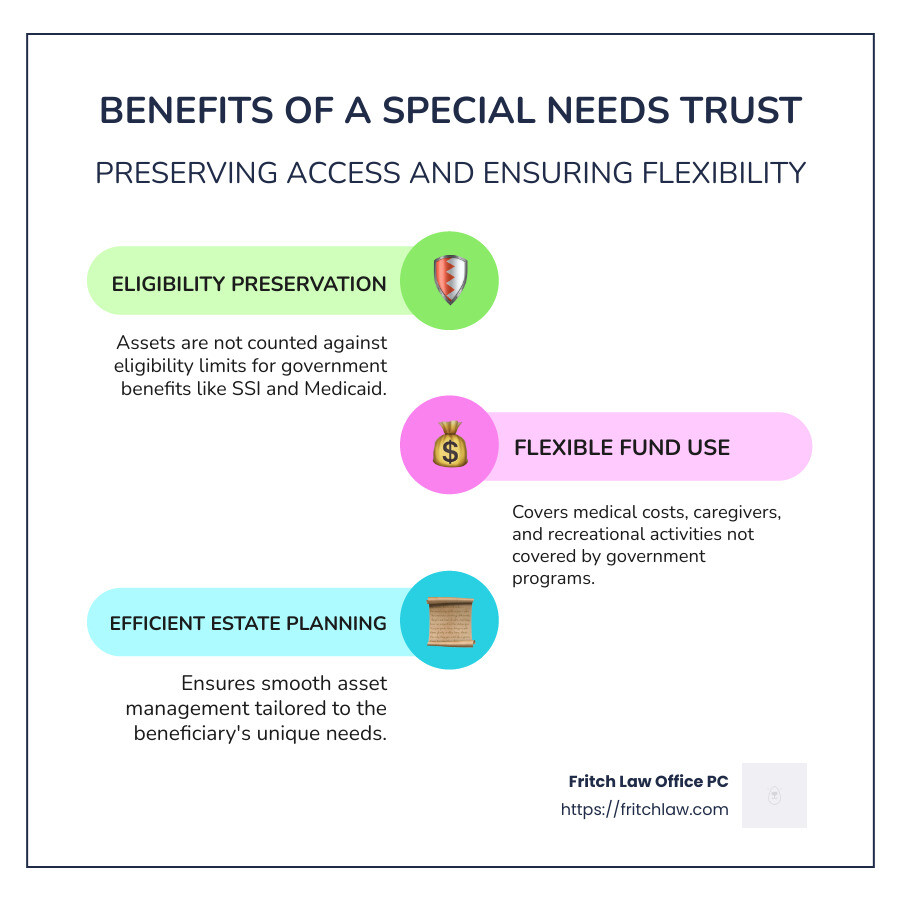
- Preserves Eligibility: A special needs trust helps safeguard access to government benefits by ensuring assets are not counted against eligibility limits.
- Flexible Use of Funds: These trusts can cover expenses not covered by government programs, like certain medical costs, caregivers, and recreational activities.
- Estate Planning Efficiency: Properly structured, these trusts ensure smooth asset management while accommodating the beneficiary’s unique needs.
In today’s complex legal landscape, having a special needs trust attorney can make this critical planning process less daunting. As someone who has dedicated years to owning and managing legal and financial practices, I’ve seen the impact of well-executed estate planning, offering peace of mind to beneficiaries and their families alike.
Understanding Special Needs Trusts
A special needs trust is a vital legal tool for those who need to maintain eligibility for government benefits like Medicaid and Supplemental Security Income (SSI). These programs are crucial for many individuals with disabilities, as they provide income-sensitive aid that covers basic living and medical expenses.
Legal Arrangement
At its core, a special needs trust is a legal arrangement designed to manage and protect assets for someone with disabilities. This setup ensures that the assets are not considered when determining eligibility for government benefits. By doing so, it helps maintain access to essential services and support.
Medicaid and SSI
Medicaid and SSI are two key programs that individuals with disabilities often rely on. Both have strict income and asset limits. If a person exceeds these limits, they risk losing their benefits. This is where a special needs trust becomes invaluable. It allows individuals to receive additional financial support without affecting their eligibility for these programs.
Income-Sensitive Aid
Special needs trusts are specifically designed to address the challenges of income-sensitive aid. They allow for the allocation of funds for expenses not covered by government assistance, such as specialized therapies, education, and recreational activities. This flexibility ensures that beneficiaries can enjoy a better quality of life while still receiving necessary public aid.
How It Works
The trust is managed by a trustee who oversees the funds and ensures they are used appropriately. The trustee’s role is crucial, as they must steer complex SSI and Medicaid laws to ensure compliance. They are responsible for maintaining records and making sure that disbursements align with the trust’s purpose.
In summary, a special needs trust provides a secure way to support individuals with disabilities financially while preserving their access to essential government benefits. By understanding the intricacies of these trusts, families can make informed decisions that safeguard their loved one’s future.
The Role of a Special Needs Trust Attorney
When it comes to special needs trusts, the role of a special needs trust attorney is pivotal. These legal professionals bring a wealth of expertise to the table, ensuring that everything from setting up the trust to its ongoing management is handled correctly.
Trustee Responsibilities
A special needs trust attorney guides the trustee, who is the person responsible for managing the trust. The trustee’s job is to oversee the trust’s assets and ensure they are used for the beneficiary’s needs. This involves understanding complex SSI and Medicaid laws to avoid jeopardizing the beneficiary’s government benefits. The attorney’s guidance is crucial here, as they help steer these intricate rules.
Estate Planning
Estate planning is another area where a special needs trust attorney shines. They help families plan for the future, ensuring that their loved ones with disabilities are provided for without losing eligibility for essential benefits. This planning includes drafting the trust document, selecting a trustworthy trustee, and ensuring that the trust aligns with the family’s goals.
Legal Expertise
The legal expertise of a special needs trust attorney is invaluable. They ensure that the trust complies with all relevant laws and regulations, which can be quite complex. For example, a special needs trust must be carefully structured to ensure it doesn’t count as a resource for the beneficiary, which could impact their eligibility for government programs. The attorney’s role is to ensure that the trust is legally sound and serves its intended purpose.
In summary, a special needs trust attorney plays a critical role in establishing and maintaining a trust that meets the beneficiary’s needs while preserving access to vital government benefits. Their expertise ensures that the trust is set up correctly and managed in compliance with all applicable laws.
How to Set Up a Special Needs Trust
Setting up a special needs trust requires careful planning and attention to detail. Here’s a straightforward guide to help you through the process.
Consult an Attorney
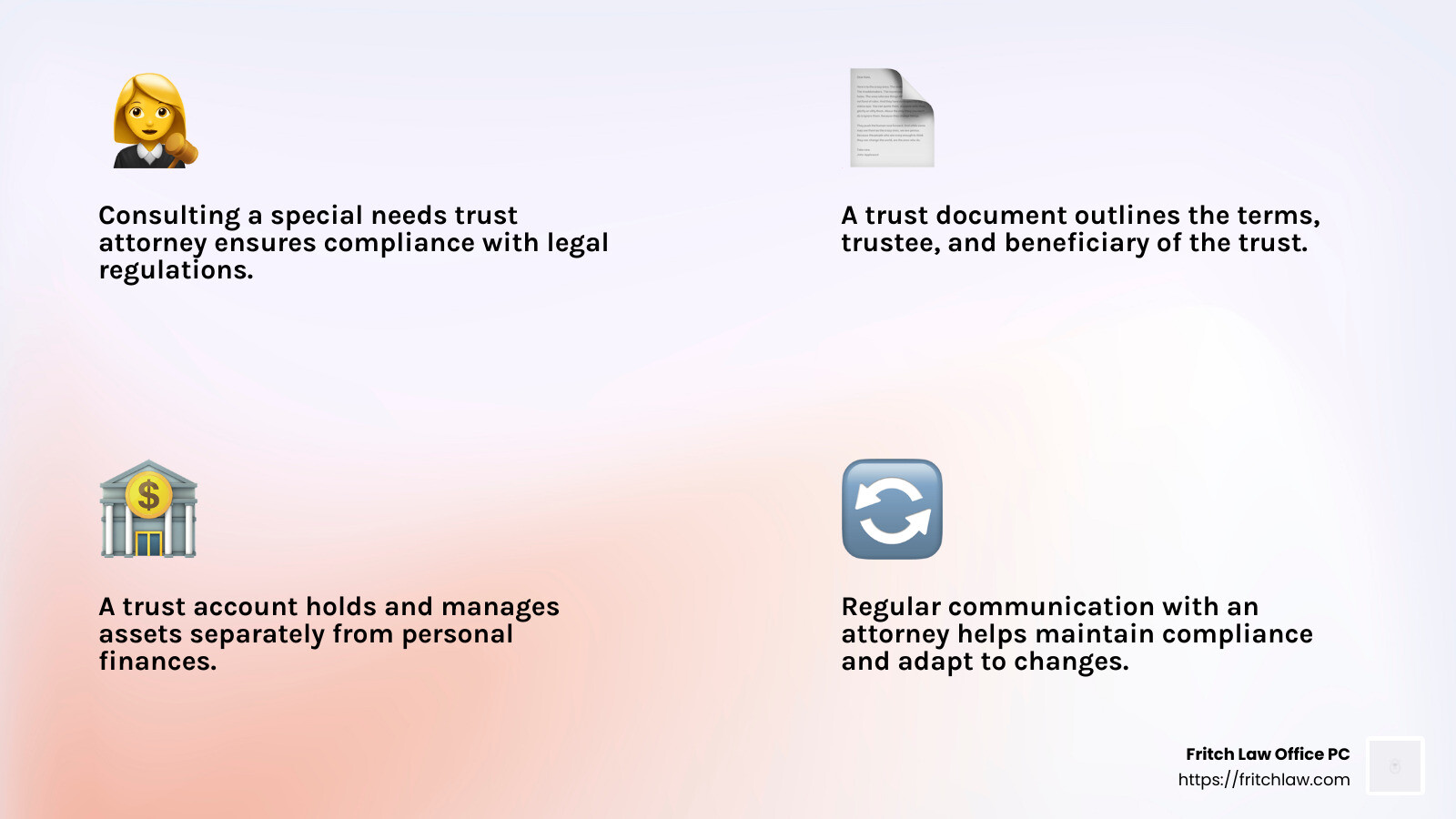
First and foremost, consult with an experienced special needs trust attorney. Their expertise is crucial in navigating the complexities of trust law and ensuring compliance with SSI and Medicaid regulations. An attorney will help you understand the different types of special needs trusts and determine which one best suits your situation.
Establish a Trust Account
Once you’ve consulted with an attorney, the next step is to establish a trust account. This account will hold the assets intended for the beneficiary. The trust account ensures that these funds are managed separately from personal finances, which is essential for maintaining eligibility for government benefits.
Logistics of Setting Up the Trust
-
Draft the Trust Document: With your attorney, draft a trust document that outlines the terms and conditions of the trust. This document will specify the trustee, the beneficiary, and how the funds should be used.
-
Choose a Trustee: Select a reliable trustee who will manage the trust. This person should have a good understanding of financial management and the specific needs of the beneficiary. Your attorney can provide guidance on selecting the right trustee.
-
Fund the Trust: Transfer the assets into the trust account. These assets can include cash, investments, or property. It’s important that the trust is funded correctly to ensure it serves its purpose.
-
Notify Relevant Parties: Inform relevant parties, such as family members and financial institutions, about the trust. This ensures everyone involved is aware of the trust’s existence and its intended use.
Final Steps
After setting up the trust, maintain regular communication with your attorney to ensure ongoing compliance with legal requirements. The trust may require periodic reviews to adapt to changes in the beneficiary’s needs or legal landscape.
By following these steps and working closely with a special needs trust attorney, you can create a trust that provides for your loved one without jeopardizing crucial benefits.
Types of Special Needs Trusts
When establishing a special needs trust, it’s important to understand the different types available. Each has unique features and purposes. Here’s a breakdown of the main types:
First-Party Trust
A first-party trust is designed for individuals with disabilities who receive funds from their own assets. This could be from an inheritance, a personal injury settlement, or savings.
- Purpose: To keep the individual eligible for government benefits like Medicaid and SSI.
- Funding: The assets used to fund this trust originally belong to the beneficiary.
- Payback Requirement: Upon the beneficiary’s death, any remaining funds must be used to reimburse the state for Medicaid benefits received.
Third-Party Trust
A third-party trust is set up by someone other than the beneficiary, usually a family member.
- Purpose: To supplement the beneficiary’s needs without affecting their eligibility for government benefits.
- Funding: Typically funded through gifts, inheritances, or life insurance policies.
- No Payback Requirement: Unlike first-party trusts, there is no requirement to reimburse Medicaid upon the beneficiary’s death. Remaining funds can be distributed to other family members or beneficiaries as specified in the trust document.
Payback Trust
The payback trust is another term often used to refer to a first-party trust, emphasizing the requirement to reimburse Medicaid.
- Common Use: This term highlights the obligation to repay the state for benefits received.
- Legal Requirement: It’s essential to follow specific legal guidelines when setting up this type of trust to ensure compliance with state and federal laws.
Understanding these types of trusts and their nuances is crucial. Consulting with a special needs trust attorney can help you choose the right option that best fits your family’s needs and ensures your loved one’s financial security without jeopardizing their benefits.
Frequently Asked Questions about Special Needs Trusts
What is a Special Needs Trust?
A special needs trust is a legal tool that helps individuals with disabilities receive financial support without losing eligibility for government benefits like Medicaid and Supplemental Security Income (SSI). These trusts are designed to protect assets and provide for the beneficiary’s needs beyond basic living expenses.
-
Eligibility: To qualify, the beneficiary must have a disability and rely on income-sensitive aid. The trust ensures that their personal assets don’t count against them when applying for or receiving benefits.
-
Asset Protection: Assets placed in a special needs trust are not considered when determining eligibility for public assistance. This allows the beneficiary to maintain access to essential benefits while receiving additional financial support for other needs.
How Does a Trustee Manage a Special Needs Trust?
Managing a special needs trust requires careful attention to laws and regulations. The trustee plays a key role in ensuring the trust operates smoothly and legally.
-
Trust Funds: The trustee oversees the disbursement of trust funds. These funds can be used for a wide range of expenses, such as medical care, education, and recreation, but must not cover basic needs like food or housing to avoid affecting SSI benefits.
-
SSI Laws: Trustees must understand SSI laws to avoid jeopardizing the beneficiary’s eligibility. They ensure that distributions from the trust do not count as income.
-
Record Maintenance: Keeping detailed records is crucial. Trustees must track all transactions and distributions to show compliance with legal requirements and provide annual reports if needed.
Can the Government Seek Reimbursement from a Special Needs Trust?
Whether the government can claim reimbursement from a special needs trust depends on the type of trust established.
-
First-Party Trust: These trusts require reimbursement to the state upon the beneficiary’s death for Medicaid benefits received. This payback rule is a key feature of first-party trusts.
-
Third-Party Trust: No reimbursement is required for third-party trusts. These trusts are funded by someone other than the beneficiary, such as a parent or grandparent, and any remaining funds can be passed on to other family members.
Understanding these distinctions is vital when setting up a trust. A special needs trust attorney can guide you through the process, ensuring compliance with legal requirements and helping you make informed decisions about asset protection and government reimbursements.
Conclusion
Choosing the right legal partner for your estate planning needs is crucial, especially when it comes to setting up a special needs trust. At Fritch Law Office PC, we pride ourselves on offering personalized legal representation that focuses on your unique circumstances and goals.
Our team understands that navigating the complexities of special needs trusts can be challenging. That’s why we’re committed to providing client-focused services custom to your family’s needs. We take the time to listen to your concerns, answer your questions, and guide you through every step of the process.
Our experienced attorneys are here to help you protect your assets and secure a brighter future for your loved ones. Whether you’re setting up a first-party or third-party trust, our expertise ensures that your trust complies with all legal requirements, while safeguarding the beneficiary’s eligibility for essential government benefits.
Ready to take the next step in securing your family’s future? Contact Fritch Law Office PC today to schedule a consultation and learn how we can assist you with your estate planning needs.