

Charitable trust attorney: Complete 2026 Guide
Fritch Law Office handles charitable trust attorney cases for Indiana residents every day. First, our attorneys examine your situation carefully. Next, we identify your strongest legal options. Furthermore, we explain every step in plain language. Therefore, you make confident decisions from day one.
Key Facts About Charitable trust attorney in Indiana
Indiana courts apply strict 2026 rules to charitable trust attorney matters. Moreover, experienced attorneys win better outcomes for clients. Additionally, early legal advice prevents costly mistakes. Consequently, clients who hire Fritch Law gain a clear advantage. However, waiting too long weakens your position significantly.
Take Action on Charitable trust attorney Today
Do not delay your charitable trust attorney case. First, call our Jasper office directly. Next, we schedule your free consultation immediately. Then, we build a winning strategy for you. Additionally, we represent you at every court hearing. Finally, we resolve your case as fast as possible.

Visit the Indiana Courts website for official legal information. Contact Fritch Law for your free consultation today.
Charitable trust attorney services play a crucial role in ensuring that your passion for charitable giving aligns seamlessly with your estate planning and legacy. When considering how to make the most significant impact through charitable donations, many people have questions. Here’s what you need to know:
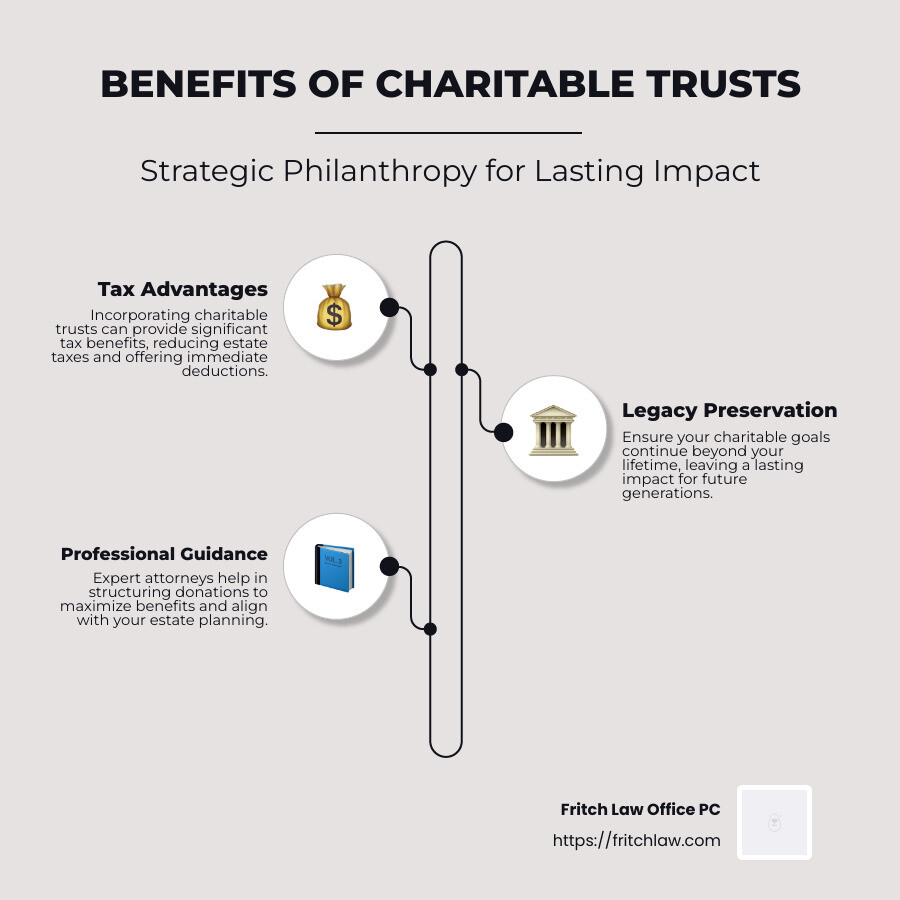
- Tax Benefits: By incorporating charitable trusts into your estate plan, you can enjoy significant tax advantages.
- Legacy: Establishing charitable trusts ensures your commitment to helping others continues after you’re gone.
- Professional Guidance: A charitable trust attorney assists in structuring these donations effectively.
Charitable giving can take on many forms, but tying it to your estate planning offers a great way to weave your philanthropic goals into a lasting legacy that benefits future generations. Whether through reducing tax liabilities or providing income to your heirs, charitable trusts provide a strategic and impactful approach to giving.
I’m David Fritch, an experienced lawyer with years of assisting individuals in coordinating their charitable giving through effective planning. With a solid foundation in estate planning and a focus on creating custom solutions, I strive to help you leave a lasting impact.
Key terms for charitable trust attorney:
– irrevocable trust lawyer
– special needs trust attorney
Understanding Charitable Trusts
A charitable trust is a powerful tool in estate planning that allows you to support causes you care about while also reaping tax benefits. It’s a win-win for both donors and charities.
What is a Charitable Trust?
A charitable trust is a legal arrangement where assets are set aside to benefit a charitable organization. These trusts can offer tax advantages, making them an attractive option for those looking to give back while managing their estate efficiently.
Tax Benefits
One of the main reasons people establish charitable trusts is for the tax benefits. When you set up a charitable trust, you can reduce estate taxes. This means more of your wealth goes to the causes you care about, rather than to taxes.
-
Income Tax Deductions: Contributions to a charitable trust can qualify for income tax deductions. This reduces your taxable income, potentially saving you a significant amount of money.
-
Estate Tax Reduction: By transferring assets into a charitable trust, you can remove them from your taxable estate. This can lower the estate taxes owed after your passing, allowing more of your estate to benefit your heirs and chosen charities.
Estate Taxes
Estate taxes can take a big bite out of the wealth you intend to leave behind. Charitable trusts help mitigate this by reducing the size of your taxable estate. This is especially beneficial if you have substantial assets that would otherwise incur high estate taxes.
In summary, charitable trusts offer a strategic way to support your favorite causes while providing tax benefits and reducing estate taxes. By incorporating these trusts into your estate plan, you can ensure that your legacy of giving continues and that your assets are used in the most efficient way possible.
Next, we’ll explore the different types of charitable trusts and how they can be custom to meet your specific goals.
Types of Charitable Trusts
When it comes to charitable trusts, two main types stand out: charitable lead trusts (CLTs) and charitable remainder trusts (CRTs). Each serves a unique purpose and offers different benefits, especially when it comes to income for beneficiaries and tax planning.
Charitable Lead Trust (CLT)
A charitable lead trust is designed to provide immediate benefits to a charity. Here’s how it works:
-
Income to Charity First: In a CLT, the charity receives income from the trust for a set period. This could be a fixed amount each year or a percentage of the trust’s value.
-
Remainder to Beneficiaries: After the designated term, the remaining assets in the trust go to your non-charitable beneficiaries, like your children or grandchildren.
-
Tax Benefits: You might get a gift or estate tax deduction for the present value of the income paid to the charity. Plus, the appreciation of the assets can pass to your heirs with reduced tax consequences.
This setup is particularly useful for those who want to support a charity now while planning to transfer wealth to their heirs later.
Charitable Remainder Trust (CRT)
On the flip side, a charitable remainder trust flips the order of benefits:
-
Income to Non-Charitable Beneficiaries First: With a CRT, you or your named beneficiaries receive income first. This income can be fixed (as in a charitable remainder annuity trust) or variable (as in a charitable remainder unitrust).
-
Remainder to Charity: After the income period ends, the remaining assets in the trust are donated to one or more charities.
-
Tax Advantages: You receive an immediate income tax deduction based on the present value of the remainder interest that will eventually go to charity. Plus, CRTs can help you avoid capital gains taxes on appreciated assets transferred to the trust.
CRTs are ideal if you want to ensure an income stream for yourself or your family while still planning a significant future gift to a charity.
Income Beneficiaries
In both types of trusts, the concept of income beneficiaries is central. These are the individuals or entities that receive income from the trust during its term. In a CLT, the charity is the income beneficiary during the trust term. In a CRT, you or your family members are the income beneficiaries.
Choosing between a CLT and a CRT depends on your financial goals, tax situation, and philanthropic desires. Each type provides a unique way to balance giving with financial planning, making them powerful tools in estate planning.
Next, we’ll dig into the crucial role a charitable trust attorney plays in setting up and managing these trusts.
The Role of a Charitable Trust Attorney
Setting up a charitable trust can feel like navigating a maze. That’s where a charitable trust attorney comes in. They guide you through the complexities, ensuring your wishes are honored and your financial benefits are maximized.
Legal Advice
First, a charitable trust attorney provides essential legal advice. They help you understand the legal requirements and implications of establishing a trust. This includes explaining the differences between trust types, like charitable lead trusts and charitable remainder trusts, and advising on which might best suit your goals.
Attorneys also ensure that the trust complies with state and federal laws, avoiding potential legal pitfalls. This is crucial because any misstep could jeopardize the trust’s validity or lead to unwanted tax consequences.
Trust Setup
Once you’ve decided on the type of trust, the next step is trust setup. A charitable trust attorney drafts the necessary documents, tailoring them to your specific needs. They ensure the language is precise, reflecting your intentions clearly and protecting your interests.
Setting up a trust involves more than just paperwork. Attorneys also help you choose the right assets to fund the trust. Whether it’s cash, stocks, or real estate, the selection impacts both the trust’s performance and your tax situation.
Tax Planning
One of the most significant advantages of charitable trusts is their potential tax benefits. However, navigating these benefits requires careful tax planning. A charitable trust attorney works with tax advisors to structure your trust in a way that maximizes deductions and minimizes liabilities.
For example, donating appreciated assets to a charitable remainder trust can help you avoid capital gains taxes. Meanwhile, a charitable lead trust might offer estate tax reductions. Your attorney ensures these benefits are optimized based on your overall financial picture.
In summary, a charitable trust attorney plays a pivotal role in changing your philanthropic vision into reality. They offer legal expertise, handle the intricacies of trust setup, and provide strategic tax planning. With their help, you can confidently establish a trust that supports your favorite causes and secures your legacy.
Next, we’ll explore the numerous benefits charitable trusts offer, from tax deductions to asset protection.
Benefits of Charitable Trusts
Charitable trusts offer a range of benefits that can improve both personal financial planning and philanthropic efforts. Let’s explore the key advantages: tax deductions, income stream, and asset protection.
Tax Deductions
One of the most appealing aspects of charitable trusts is the potential for tax deductions. When you contribute assets to a charitable trust, you might qualify for a deduction on your income taxes. This can significantly reduce your taxable income, especially if you donate appreciated assets like stocks or real estate.
For example, contributing to a charitable remainder trust allows you to bypass capital gains taxes on appreciated assets. Additionally, it provides a partial tax deduction based on the value of the donated assets and the anticipated income stream. This means you can support your favorite causes while also benefiting your bottom line.
Income Stream
Charitable trusts can also provide a reliable income stream. With a charitable remainder trust, you or your designated beneficiaries receive income generated from the trust’s assets for a specified period. This can be a fixed amount or a percentage of the trust’s value, offering flexibility to match your financial needs.
This setup not only supports your charitable goals but also ensures you have a steady income during your lifetime. It’s a win-win scenario where you can enjoy financial security while planning for a future gift to a charity.
Asset Protection
Finally, asset protection is a crucial benefit of charitable trusts. By transferring assets into a trust, you shield them from certain legal claims and creditors. This is because once assets are in a charitable trust, they are no longer considered part of your personal estate.
This protection can be particularly valuable if you’re concerned about potential financial liabilities or want to ensure your assets are preserved for charitable purposes. Moreover, the irrevocable nature of many charitable trusts means that once assets are transferred, they are safeguarded for the long term, providing peace of mind and financial security.
In conclusion, charitable trusts offer substantial benefits, including tax deductions, a steady income stream, and asset protection. These advantages make them an attractive option for those looking to support charitable causes while also securing their financial future.
Next, we’ll address some frequently asked questions about charitable trusts, helping you gain a deeper understanding of how they work and how they can fit into your estate planning strategy.
Frequently Asked Questions about Charitable Trusts
Understanding how charitable trusts work can sometimes be a bit tricky. Let’s clear up some common questions.
What is the difference between a charitable trust and a purpose trust?
A charitable trust is designed to benefit the public or a segment of it, often providing tax advantages for the donor. These trusts support causes like education, healthcare, or the arts. The key here is the public benefit.
In contrast, a non-charitable purpose trust serves a specific purpose that doesn’t necessarily benefit the public. For example, it might be set up to maintain a family grave or care for a pet. These trusts don’t offer the same tax benefits as charitable trusts since they aren’t aimed at public good.
Who controls a charitable trust?
A charitable trust is generally overseen by trustees who manage the assets and ensure the trust’s goals are met. However, there’s a unique aspect to their oversight.
In many jurisdictions, the attorney general plays a role in overseeing charitable trusts. This ensures that the trust operates in line with its stated charitable purposes. The attorney general acts as a watchdog, providing an extra layer of accountability and preventing misuse of funds.
Can you make money from a charitable trust?
Yes, it’s possible to receive income from a charitable trust. This is where the concept of income beneficiaries comes into play.
In a charitable remainder trust, for instance, you or your designated beneficiaries can receive an annuity or a percentage of the trust’s value as income. This income is provided for a set period, which can be for your lifetime or a specific number of years.
While the primary goal of a charitable trust is to benefit a charity, the income component can offer a financial advantage to the donor or their family, making it a flexible tool in estate planning.
These FAQs cover the basics, but there’s much more to explore when it comes to charitable trusts. Understanding these details can help you make informed decisions about incorporating charitable trusts into your estate planning.
Next, we’ll dig into how Fritch Law Office PC can provide personalized legal representation to assist with your charitable planning needs.
Conclusion
At Fritch Law Office PC, we believe in creating personalized legal solutions that align with your unique goals and values. Charitable planning is not just about giving; it’s about crafting a legacy that reflects what you care about most.
Our experienced lawyers are here to guide you through the process, ensuring your charitable trusts are set up to maximize both the impact on the causes you love and the benefits to your estate. We know that every client’s situation is different, and we take pride in our client-centered approach. This means we listen to your needs and tailor our services to fit your specific objectives.
A well-structured charitable trust can offer significant tax advantages, provide a steady income stream, and protect your assets for future generations. By working with us, you can feel confident that your charitable giving plan will be both effective and efficient.
If you’re ready to explore how charitable planning can be a part of your estate strategy, contact us today. Let us help you create a comprehensive estate plan that provides peace of mind and preserves your legacy for future generations.
Learn more about our estate planning services at Fritch Law Office PC.