
Renter rights indiana: Complete 2026 Guide
Fritch Law Office handles renter rights indiana cases for Indiana residents every day. First, our attorneys examine your situation carefully. Next, we identify your strongest legal options. Furthermore, we explain every step in plain language. Therefore, you make confident decisions from day one.
Key Facts About Renter rights indiana in Indiana
Indiana courts apply strict 2026 rules to renter rights indiana matters. Moreover, experienced attorneys win better outcomes for clients. Additionally, early legal advice prevents costly mistakes. Consequently, clients who hire Fritch Law gain a clear advantage. However, waiting too long weakens your position significantly.
Take Action on Renter rights indiana Today
Do not delay your renter rights indiana case. First, call our Jasper office directly. Next, we schedule your free consultation immediately. Then, we build a winning strategy for you. Additionally, we represent you at every court hearing. Finally, we resolve your case as fast as possible.

Visit the Indiana Courts website for official legal information. Contact Fritch Law for your free consultation today.
Renter rights indiana are designed to ensure a fair and safe rental experience for both tenants and landlords. Understanding these rights is crucial for anyone renting in the Hoosier state. Here are some key points:
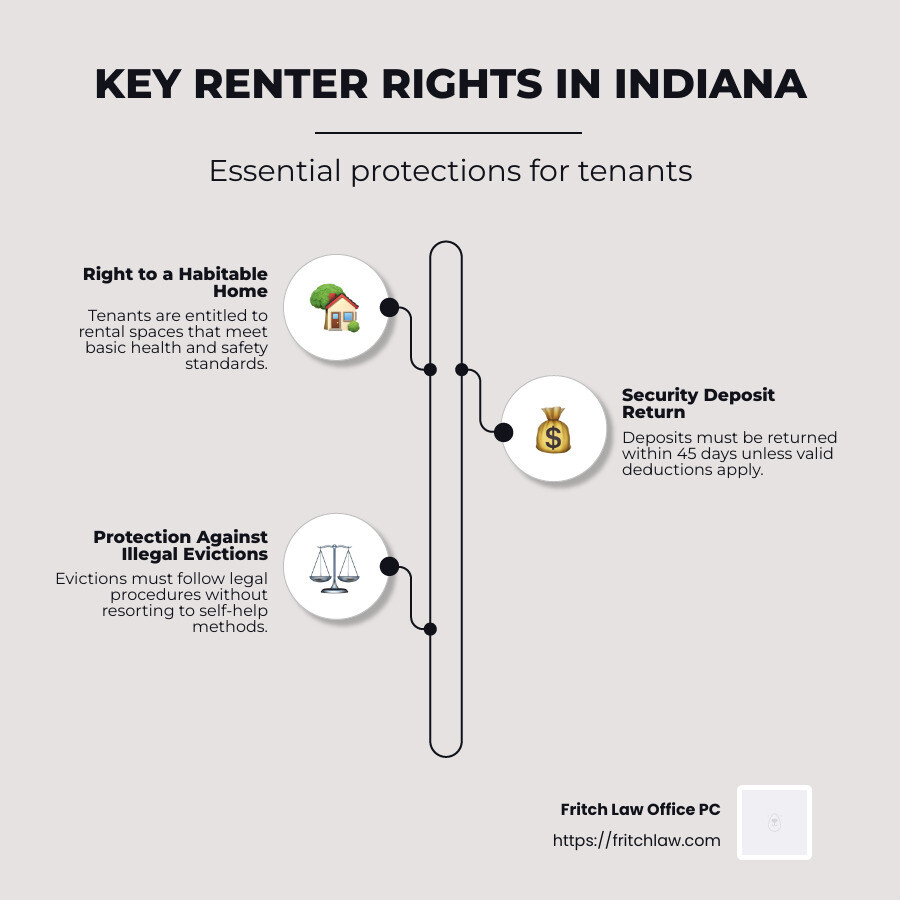
- Right to a Habitable Home: Every tenant is entitled to a rental space that meets basic health and safety standards.
- Security Deposit Return: Indiana law mandates the return of the deposit within 45 days, barring any legal deductions.
- Protection Against Illegal Evictions: Landlords must follow specific legal procedures to evict a tenant and cannot resort to self-help methods like changing locks.
- Discrimination Protections: Discrimination based on race, color, national origin, familial status, or disability is prohibited.
My name is David Fritch, and with 40 years in the legal field, I bring a wealth of experience handling matters related to renter rights indiana. I have helped numerous clients steer these laws, ensuring their rights are protected.
Understanding Renter Rights in Indiana
Understanding your renter rights in Indiana is key to ensuring a safe and fair rental experience. Let’s break down some of the essential rights you have as a tenant in Indiana:
Right to a Habitable Home
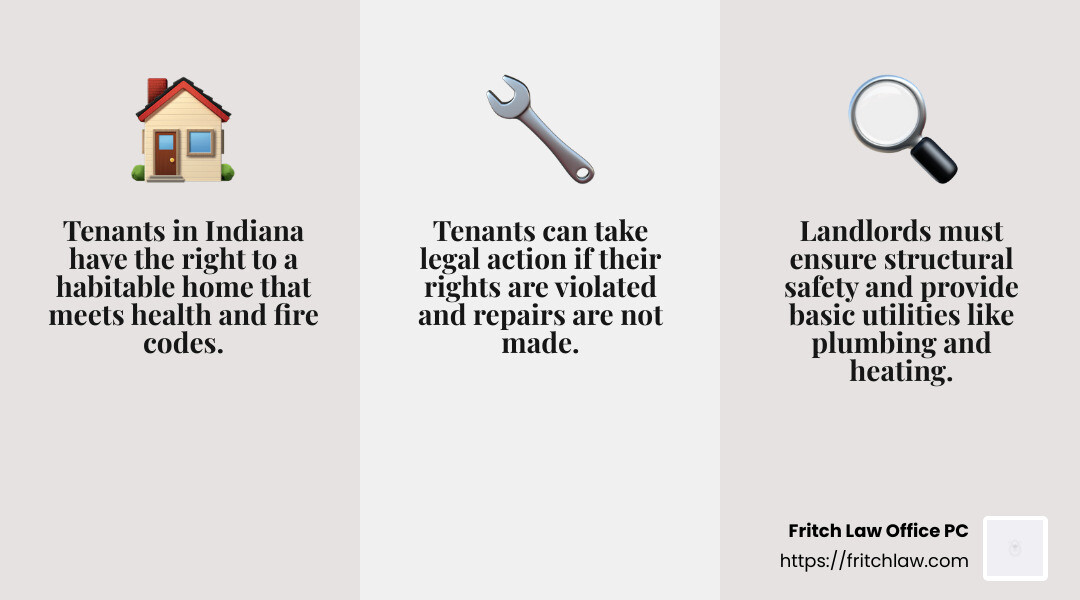
In Indiana, every tenant has the right to live in a habitable environment. This means your rental unit should be safe, clean, and meet local health and fire codes. The concept of an “implied warranty of habitability” ensures that even if it’s not written in your lease, your landlord must keep your home livable. This includes:
- Structural Safety: Your home should be structurally sound and weatherproofed to protect you from the elements.
- Basic Utilities: Essential services like plumbing, heating, and electricity should be in good working condition.
If these conditions are not met, you have the right to request repairs. If your landlord fails to act within a reasonable time, you may have grounds for legal action.
Right to Privacy
Your landlord must respect your privacy. They cannot enter your rental unit without giving you advance notice, except in emergencies. This right ensures that you have the space and privacy to live without unwarranted intrusions.
Legal Action
If your landlord does not uphold their responsibilities, you have the right to take legal action. This can include:
- Filing a Complaint: You can report violations to local housing authorities.
- Seeking Legal Help: Consulting with an experienced lawyer can help you understand your options and protect your rights.
In some cases, you might need to go to court to resolve disputes. It’s important to keep records of all communications and issues with your landlord to support your case.
By knowing your renter rights in Indiana, you can better steer any issues that arise and ensure your living space remains safe and comfortable.
Next, let’s explore the responsibilities that landlords have to ensure these rights are upheld.
Responsibilities of Landlords
Landlords in Indiana have several responsibilities to ensure tenants enjoy a safe and pleasant living environment. Let’s explore these key duties:
Upkeep
Landlords must keep rental properties in a safe, clean, and livable condition. This means they have to comply with health and housing codes, ensuring that basic utilities like plumbing, electrical systems, and HVAC are working properly. If these systems break down, landlords are responsible for repairs. They must also provide adequate heating and cooling to maintain a comfortable living environment.
Common Areas
If you live in a building with shared spaces, your landlord must maintain these common areas. This includes hallways, parking lots, and recreational spaces. These areas should be clean, well-lit, and safe for all tenants. Proper maintenance of common areas is crucial to prevent accidents and ensure everyone feels comfortable using them.
Smoke Detectors
Smoke detectors are a critical safety feature in any rental unit. Indiana law requires landlords to install functional smoke detectors in all rental properties. It’s not just about installation; landlords must also ensure these devices are in good working order before a new tenant moves in. Tenants, on their part, must acknowledge in writing that the smoke detectors are present and operational. If a smoke detector needs repair or replacement, landlords have seven working days to address the issue after being notified by the tenant.
By fulfilling these responsibilities, landlords help create a safe and comfortable environment for their tenants. This not only upholds tenants’ rights but also fosters a positive landlord-tenant relationship.
Next, let’s discuss what tenants need to do to maintain their rental homes and comply with local regulations.
Tenant Responsibilities
As a tenant in Indiana, you have certain responsibilities to ensure your rental home remains a pleasant and safe place to live. Let’s explore what you need to do:
Cleanliness
Keeping your rental unit clean is crucial. Regular cleaning helps prevent pests and keeps the property in good condition. This isn’t just about tidiness; it’s about maintaining a healthy living space for everyone. A clean home is a happy home!
Property Preservation
Treat the rental property as if it were your own. Avoid causing any damage, and if something breaks, let your landlord know right away. This helps prevent small issues from becoming big problems. Property preservation is key to a harmonious rental experience.
Code Compliance
In Indiana, tenants must follow local health and housing codes. This means ensuring your living space meets safety standards. For example, you should use facilities like plumbing and electrical systems responsibly to prevent damage or hazards. Compliance with these codes is not just a legal requirement; it’s about contributing to a safe community.
By meeting these responsibilities, you help maintain a positive relationship with your landlord and ensure a safe, clean, and comfortable home for yourself and others.
Now, let’s move on to understanding the legal remedies available for tenants in Indiana.
Legal Remedies for Tenants
In Indiana, renters have several options if they encounter issues with their rental property. Understanding these legal remedies can help protect your rights and ensure a fair living environment.
Repair Requests
If something in your rental unit needs fixing, the first step is to notify your landlord. It’s important to do this in writing and give them a reasonable time to make the repairs. For minor issues, this might be a few weeks, but for urgent problems like no heat or water, it should be much quicker.
If the landlord fails to address the repairs, tenants can consider further actions. Always keep a record of your communication and any promises made by the landlord.
Legal Action
When repairs are not made in a timely manner, tenants can seek legal remedies. This might include filing a lawsuit for damages or requesting a court order for repairs. It’s crucial to consult with an experienced lawyer before taking legal action, as this can help you understand the risks and benefits involved.
Legal action can be a powerful tool, but it’s also a serious step. Make sure you have all the facts and documentation in order before proceeding.
Security Deposits
Security deposits are another common area of concern for renters. Indiana law requires landlords to return the deposit within 45 days after you move out, assuming you’ve left the property in good condition. If there are any deductions, landlords must provide an itemized list detailing the reasons and the costs.
If a landlord fails to return the deposit or provide a list, you may have grounds to take legal action to recover your money. Again, having an experienced lawyer can be invaluable in navigating these situations.
By understanding these legal remedies, you can better protect your rights as a renter. Keep records, communicate clearly, and don’t hesitate to seek legal advice if needed.
Next, let’s explore some frequently asked questions about renter rights in Indiana.
Frequently Asked Questions about Renter Rights Indiana
What rights do tenants have in Indiana?
In Indiana, tenants have the right to a habitable living space. This means your home should be safe and clean, following local health and housing codes. Landlords must ensure that essential services like heat, water, and plumbing are in good working order. If these conditions are not met, tenants can take action to protect their rights.
Beyond basic habitability, tenants also have the right to privacy. Landlords must provide notice before entering your rental unit unless there’s an emergency. This ensures you can enjoy your home without unexpected intrusions.
How much notice does a landlord have to give a tenant to move out in Indiana?
The notice period a landlord must give depends on the situation. For a month-to-month lease, a landlord is required to provide a 30-day notice to terminate the lease. If you’re being evicted for a lease violation, like not paying rent, the landlord must give a 10-day notice to resolve the issue or vacate the property.
Immediate eviction can occur if there are criminal activities involved. Always check your lease terms and the specific reasons for any eviction notice to understand your rights and responsibilities.
Can you withhold rent for repairs in Indiana?
In Indiana, tenants cannot withhold rent for repairs. Unlike some states, Indiana law does not allow this practice. If your landlord fails to make necessary repairs, you should notify them in writing and give them reasonable time to fix the issue.
If the problem persists, you may need to seek legal action. This could involve suing for damages or asking the court to order repairs. It’s wise to consult with an experienced lawyer before taking any legal steps, as navigating these situations can be complex and carry certain risks.
Understanding these aspects of renter rights Indiana can help you make informed decisions and protect your living situation. Always keep communication open with your landlord and seek legal advice when necessary.
Conclusion
Navigating the complexities of renter rights in Indiana can feel overwhelming, but you don’t have to do it alone. At Fritch Law Office PC, we are committed to providing personalized and client-focused legal representation. Our experienced lawyers are here to help you understand and protect your rights as a renter.
Whether you’re dealing with lease agreements, maintenance issues, or eviction procedures, our team is dedicated to guiding you through every step. We believe in clear communication and practical solutions custom to your unique needs.
If you have questions or need legal assistance regarding your rights as a tenant, don’t hesitate to contact us. By working with us, you’ll gain a partner who is committed to ensuring your peace of mind and the security of your living environment.
Understanding your rights is the first step to protecting them. We’re here to help you achieve a fair and lawful rental experience.