
Tenant rights indiana eviction: Complete 2026 Guide
Fritch Law Office handles tenant rights indiana eviction cases for Indiana residents every day. First, our attorneys examine your situation carefully. Next, we identify your strongest legal options. Furthermore, we explain every step in plain language. Therefore, you make confident decisions from day one.
Key Facts About Tenant rights indiana eviction in Indiana
Indiana courts apply strict 2026 rules to tenant rights indiana eviction matters. Moreover, experienced attorneys win better outcomes for clients. Additionally, early legal advice prevents costly mistakes. Consequently, clients who hire Fritch Law gain a clear advantage. However, waiting too long weakens your position significantly.
Take Action on Tenant rights indiana eviction Today
Do not delay your tenant rights indiana eviction case. First, call our Jasper office directly. Next, we schedule your free consultation immediately. Then, we build a winning strategy for you. Additionally, we represent you at every court hearing. Finally, we resolve your case as fast as possible.

Visit the Indiana Courts website for official legal information. Contact Fritch Law for your free consultation today.
Tenant rights indiana eviction laws are designed to ensure a fair and structured eviction process. Here’s a brief rundown to quickly address your concerns:
- Proper Notice Requirement: Before starting eviction proceedings, landlords must provide written notice.
- Court Involvement is Mandatory: Tenants can only be evicted with a court order.
- Protection Against Retaliation: Requesting repairs or reporting violations cannot legally lead to eviction.
Evictions in Indiana have several steps, so having a basic understanding of these rights can help protect you from illegal practices.
My name is David Fritch. With over 40 years of experience in tenant rights indiana eviction cases, I’m here to guide you through these complex legal maters. My journey in law has been driven by a dedication to ensuring fair treatment for all parties involved.
Understanding Tenant Rights in Indiana Eviction
When facing an eviction in Indiana, it’s crucial to understand your tenant rights. Indiana’s laws are set up to ensure a fair process for everyone involved.
Types of Eviction Notices
In Indiana, landlords must provide a written eviction notice before taking any legal action. There are three main types:
- 10-Day Notice: This is used when rent is overdue. Tenants have ten days to pay the back rent or face eviction proceedings.
- 30-Day Notice: This applies to lease violations, like having unauthorized pets or damaging the property. Tenants have 30 days to rectify the issue.
- Unconditional Quit Notice: This is for severe lease violations, such as illegal activities on the property. Tenants must vacate immediately and cannot fix the violation.
Legal Grounds for Eviction
Landlords must have legal grounds to evict a tenant. The most common reasons include:
- Nonpayment of Rent: If rent is late, landlords can issue a 10-Day Notice. Paying within this period stops the eviction process.
- Lease Violations: These can range from noise complaints to unauthorized alterations to the property. A 30-Day Notice is typically given to correct these issues.
- Illegal Activities: If illegal activities are conducted on the premises, an Unconditional Quit Notice may be issued. This requires immediate vacating of the property.
Court Involvement
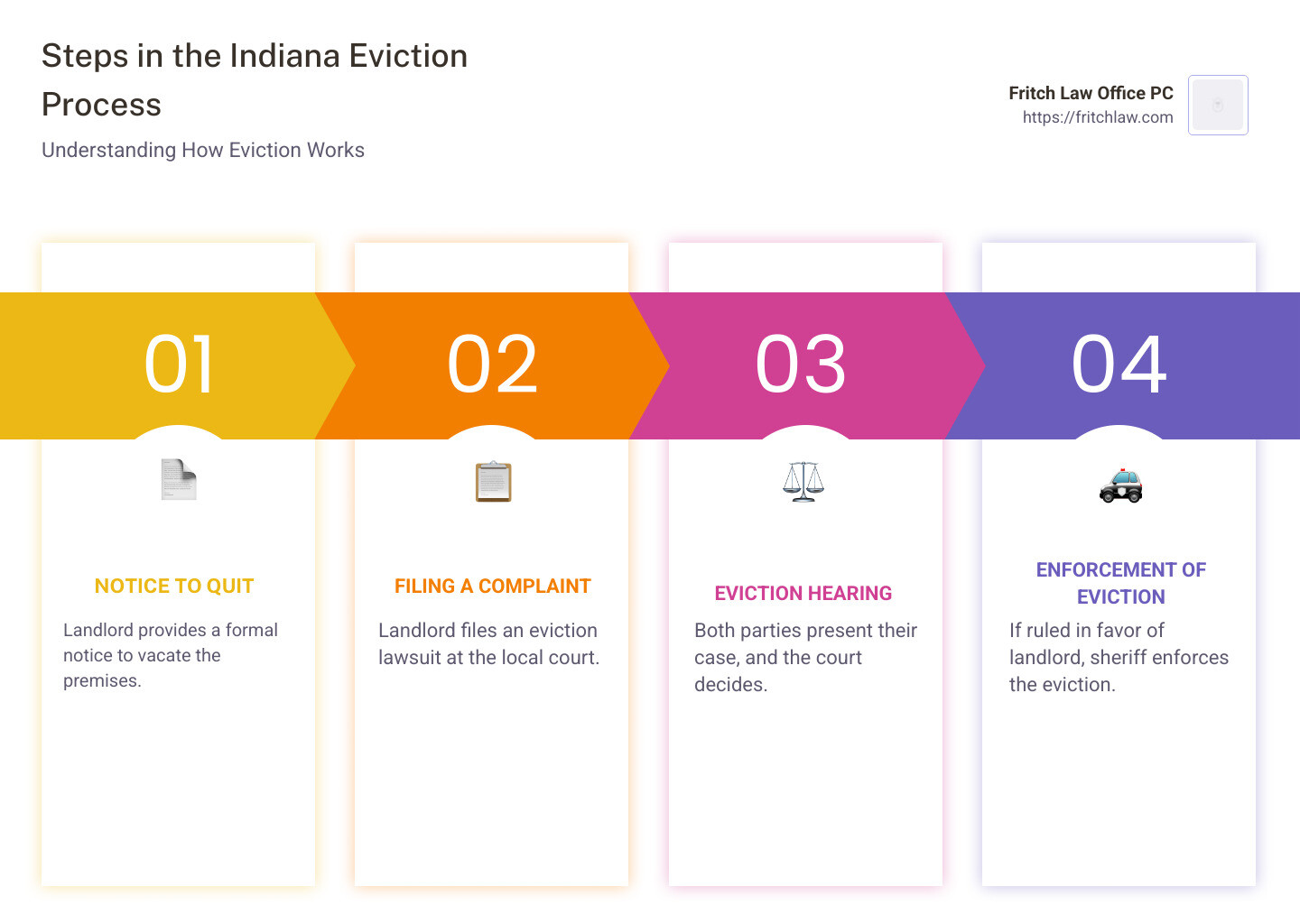
Evictions in Indiana require court involvement. A landlord cannot forcibly remove you without a court order. Once an eviction notice is given and the tenant fails to comply, the landlord must file a lawsuit. Both parties will then present their cases in court. If the landlord wins, a Writ of Possession is issued, allowing eviction enforcement by the sheriff.
Knowing these steps and your rights can help you steer the eviction process more effectively. It’s essential to be aware of your tenant rights to protect yourself from illegal eviction practices.
The Eviction Process in Indiana
Navigating the eviction process in Indiana can be challenging, but knowing the steps involved can help tenants better understand their rights and responsibilities. Here’s a breakdown of the process:
Filing an Eviction Lawsuit
Once a tenant receives an eviction notice and fails to comply, the landlord can proceed with filing a lawsuit. This involves several key steps:
- Notice to Quit: Before any legal action, the landlord must provide a valid notice to quit, such as a 10-Day or 30-Day Notice, depending on the situation. This notice is crucial as it gives tenants a chance to address the issue.
- Filing a Complaint: If the tenant does not comply with the notice, the landlord can file a complaint with the local justice court. This officially starts the eviction lawsuit. Each court may have different filing fees, which the landlord must pay when submitting the complaint.
- Summons and Complaint: After filing, the tenant will receive a summons and complaint. This document outlines the reasons for eviction and notifies the tenant of the upcoming court date.
- Court Hearing: The eviction hearing is where both landlord and tenant present their cases. The tenant has the right to defend against the eviction, presenting evidence and arguments. In some areas, like Marion County, hearings are scheduled no earlier than 10 days after the filing.
Enforcement of Eviction
If the court rules in favor of the landlord, the eviction moves into the enforcement phase:
- Writ of Possession: The court issues a writ of possession, granting the landlord the legal right to reclaim the property. This document is essential for the sheriff to carry out the eviction.
- Sheriff Involvement: The sheriff’s office is responsible for enforcing the writ of possession. They will schedule a time to remove the tenant from the property if they have not vacated by the possession date.
- Tenant Belongings: If the tenant leaves belongings behind, the landlord is allowed to remove them. However, they must inform the tenant of the location where their belongings are stored. It’s crucial for tenants to clear out personal items before the sheriff’s involvement to avoid additional complications.
Understanding these steps can help tenants prepare for each phase of the process, ensuring they know their rights and what to expect. The key is to stay informed and seek assistance when needed to protect your tenant rights during an Indiana eviction.
Tenant Rights Indiana Eviction: Protecting Yourself
Facing eviction can be stressful, but understanding your tenant rights in Indiana eviction can help you protect yourself. Knowing what to expect and how to respond can make a big difference.
Right to Proper Notice
In Indiana, landlords must give tenants proper notice before starting the eviction process. The type of notice depends on the reason for eviction:
- 10-Day Notice: This is issued for nonpayment of rent. You have ten days to pay the overdue rent to avoid eviction.
- 30-Day Notice: If there’s a lease violation, such as having unauthorized pets or causing property damage, you’ll receive a 30-day notice to correct the issue.
- Unconditional Quit Notice: For severe violations like illegal activities, you must vacate the property immediately without the chance to fix the problem.
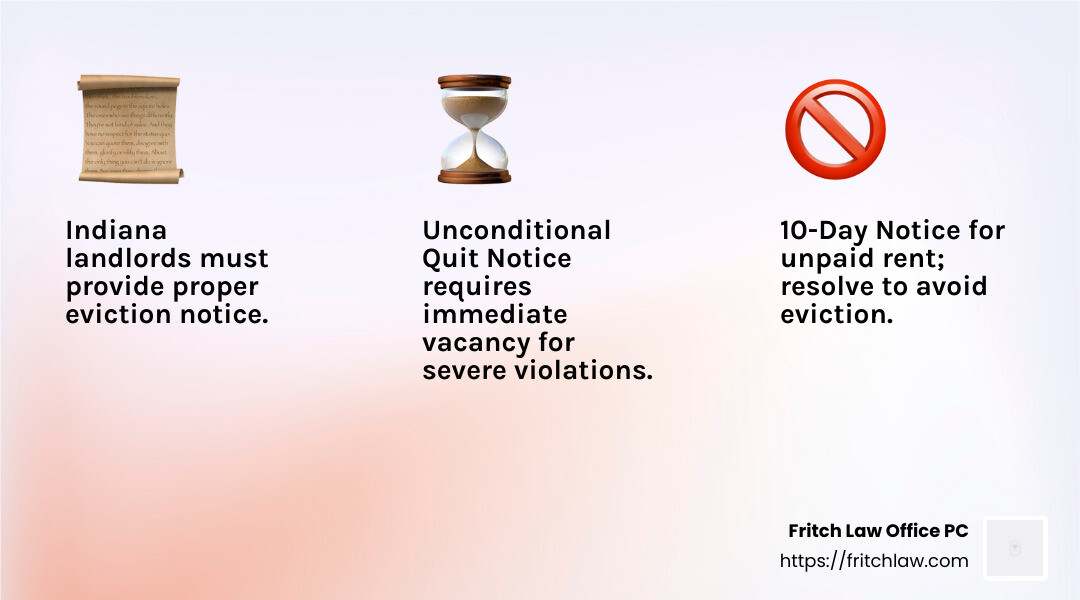
Understanding the type of notice is crucial. It tells you how much time you have to respond and what actions you need to take.
Right to a Court Hearing
If you don’t comply with the notice, the landlord can file an eviction lawsuit. You have the right to a court hearing where both sides present their cases:
- Hearing Schedule: The court will schedule a hearing, usually no earlier than 10 days after the complaint is filed.
- Presenting a Defense: You can present your defense, such as showing proof of rent payments or evidence that you corrected a lease violation.
- Summary Judgment: If the case is straightforward, the judge may issue a summary judgment, making a quick decision without a full trial.
It’s essential to attend the hearing and present any evidence supporting your case. Missing the hearing can result in an automatic judgment against you. Keep detailed records and gather all necessary documentation, such as lease agreements and payment records, to support your defense.
Legal Assistance
Facing eviction can be overwhelming, but there are resources available to help:
- Indiana Legal Services: Provides free legal assistance to low-income residents.
- Indianapolis Legal Aid Society: Offers aid for various issues, including eviction.
- Neighborhood Christian Legal Clinic: Provides free legal services to those in need.
These organizations can help you understand your rights, prepare for court, and even represent you in legal proceedings. It’s crucial to seek help as soon as you receive an eviction notice.
Knowing your rights and taking proactive steps can significantly affect the outcome of your eviction case. Next, let’s discuss what to do if you receive an eviction notice.
What to Do If You Receive an Eviction Notice
Facing an eviction notice can be daunting, but knowing what steps to take can help you steer the process with more confidence. Here’s a simple guide to help you prepare for court and seek the legal help you need.
Preparing for Court
- Read the Notice Carefully
The first step is to understand the eviction notice. Check the type of notice you received and the reason behind it. This will tell you how much time you have to respond and what actions are needed. For example, a 10-Day Notice usually means you need to pay overdue rent, while a 30-Day Notice could relate to lease violations like unauthorized pets or property damage.
- Gather Evidence
Collecting the right documents can strengthen your defense. Here’s what you should gather:
- Lease Agreement: This outlines your rights and obligations. It can clarify terms and conditions related to your eviction.
- Payment Records: Keep proof of all rent payments. This can counter claims of nonpayment.
- Communication Logs: Save all communication with your landlord, including emails, texts, and letters. These can prove that you’ve tried to resolve issues.
- Photographs or Videos: If property damage is the issue, photos or videos can help demonstrate your side of the story.
- Organize Your Evidence
Make sure all your documents are organized and easy to access. Understand the court process and what to expect during the hearing. Being prepared can make a significant difference.
Seeking Legal Help
- Contact Local Legal Aid
It’s crucial to seek legal assistance as soon as you receive an eviction notice. Several organizations offer free legal help:
- Indiana Legal Services: They provide assistance to low-income residents and can help you understand your rights and prepare your defense.
- Indianapolis Legal Aid Society: Offers help with eviction cases and other legal issues.
- Neighborhood Christian Legal Clinic: Provides free legal services to those in need.
- Explore Rental Assistance Programs
If you’re struggling with rent, look into rental assistance programs. These can help you catch up on overdue payments or cover future rent, providing temporary relief.
- Visit Your Township Trustee’s Office
Your local township trustee’s office might offer rental and utility assistance. It’s important to seek help before your court date, as a judgment against you may affect your eligibility for assistance.
Being proactive and seeking help early can greatly impact the outcome of your eviction case. Next, we’ll address some frequently asked questions about tenant rights during the eviction process in Indiana.
Frequently Asked Questions about Indiana Tenant Rights Eviction
How long does it take to evict a tenant in Indiana?
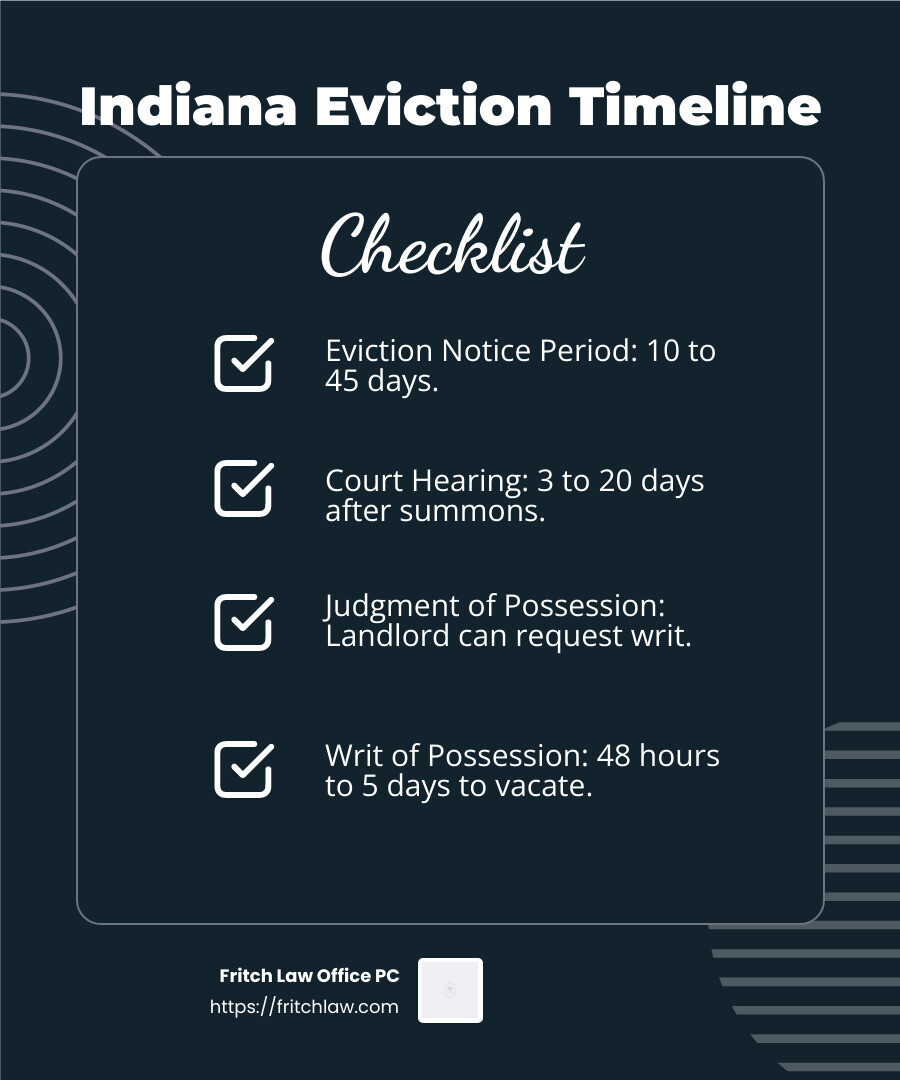
The eviction process in Indiana can vary in length, typically ranging from 2 weeks to 4 months. This timeline depends on several factors, such as how quickly the court schedules the hearing and if the tenant contests the eviction.
Here’s a quick breakdown of the steps involved:
- Eviction Notice Period: Depending on the type of notice, this can range from 10 to 45 days.
- Court Hearing: Usually scheduled 3 to 20 days after the tenant receives a summons.
- Judgment of Possession: If the court rules in favor of the landlord, they can request a writ of possession.
- Writ of Possession: Typically, the tenant is given 48 hours to 5 days to vacate after the writ is issued.
How many days does a landlord have to give you to move out in Indiana?
The amount of notice required depends on the type of eviction notice:
- 10-Day Notice: Used for nonpayment of rent. Tenants have 10 days to pay overdue rent to avoid eviction.
- 30-Day Notice: For lease violations, such as unauthorized pets or property damage. Tenants have 30 days to address the issue.
- Unconditional Quit Notice: For severe lease violations, such as illegal activities. Tenants must leave immediately without an option to correct the violation.
Can a landlord in Indiana kick you out without notice?
No, landlords in Indiana cannot evict tenants without proper notice. Eviction must follow a legal process, which includes providing a written notice and obtaining a court order. Self-help evictions, like changing locks or cutting off utilities, are illegal and can result in legal consequences for the landlord.
If you find yourself in this situation, it’s important to know your rights and seek legal assistance. Organizations like Indiana Legal Services can provide guidance and help protect your rights during the eviction process.
Conclusion
Understanding tenant rights during an eviction in Indiana is crucial. It ensures you’re treated fairly and that the process follows legal procedures. In Indiana, landlords must provide proper notice and follow the legal eviction process, which includes a court hearing.
Tenant rights include:
- Proper Notice: Landlords must issue the correct notice based on the situation, whether it’s a 10-day, 30-day, or unconditional quit notice.
- Court Hearing: Tenants have the right to a court hearing where they can present their defense.
It’s essential to know that self-help evictions are illegal in Indiana. Landlords cannot change locks, cut off utilities, or force tenants out without a court order. If you’re facing eviction, remember you have the right to seek legal help.
At Fritch Law Office PC, we are committed to helping tenants steer these challenging times. Our experienced lawyers provide personalized, client-focused legal representation to ensure your rights are protected. If you need assistance or have questions about your situation, don’t hesitate to contact us. We’re here to help you understand your rights and explore your options.
Facing eviction is stressful, but knowing your rights and having the right support can make a significant difference in the outcome. Stay informed, seek help, and take action to protect yourself.