

Estate planning attorney consultation: Complete 2026 Guide
Fritch Law Office handles estate planning attorney consultation cases for Indiana residents every day. First, our attorneys examine your situation carefully. Next, we identify your strongest legal options. Furthermore, we explain every step in plain language. Therefore, you make confident decisions from day one.
Key Facts About Estate planning attorney consultation in Indiana
Indiana courts apply strict 2026 rules to estate planning attorney consultation matters. Moreover, experienced attorneys win better outcomes for clients. Additionally, early legal advice prevents costly mistakes. Consequently, clients who hire Fritch Law gain a clear advantage. However, waiting too long weakens your position significantly.
Take Action on Estate planning attorney consultation Today
Do not delay your estate planning attorney consultation case. First, call our Jasper office directly. Next, we schedule your free consultation immediately. Then, we build a winning strategy for you. Additionally, we represent you at every court hearing. Finally, we resolve your case as fast as possible.

Visit the Indiana Courts website for official legal information. Contact Fritch Law for your free consultation today.
Understanding the Estate Planning Consultation Process
If you’re considering an estate planning attorney consultation, here’s what you need to know:
- Duration: Most initial consultations last 45-60 minutes
- Cost: 63% of estate planning attorneys offer a free initial consultation
- What to bring: Asset list, family information, existing estate documents
- Questions to ask: Fee structure, communication style, specialization areas
- Next steps: Document preparation, review process, signing ceremony
The thought of meeting with an attorney to discuss your estate plan might seem intimidating, especially if you’ve never consulted with a legal professional before. However, an estate planning attorney consultation is a straightforward process designed to help you protect your assets and provide for your loved ones after you’re gone.
During this initial meeting, you’ll discuss your family situation, financial assets, and goals for the future. Your attorney will explain various estate planning tools like wills, trusts, powers of attorney, and healthcare directives that can help achieve your objectives.
The consultation is also your opportunity to evaluate whether the attorney is a good fit for your needs. You should feel comfortable discussing personal matters and confident in their expertise.
I’m David Fritch, an experienced estate planning attorney with decades of experience helping clients steer the estate planning attorney consultation process at Fritch Law Office PC, where we’ve simplified complex legal matters for families across Indiana.

Pre-Consultation: Do You Need a Lawyer and How to Prepare
Wondering if you really need an attorney for your estate plan? It’s a common question. While DIY options exist, certain life situations clearly call for professional guidance. Before you schedule that estate planning attorney consultation, let’s explore when you need professional help and how to make the most of your meeting.
Red-Flag Scenarios Requiring an Estate Planning Attorney Consultation
While simple estates might work with online platforms, several situations strongly suggest professional legal help is worth the investment:
Do you have minor children? Establishing guardianship and creating appropriate trusts requires careful legal consideration to ensure your children are protected exactly as you intend.
Are you in a blended family? Second marriages with children from previous relationships create inheritance complexities that off-the-shelf solutions simply can’t address properly.
If you’re a business owner, succession planning involves nuances far beyond basic will preparation. Your life’s work deserves thoughtful transfer strategies.
Families with special needs members face unique challenges. Proper trusts must be carefully structured to maintain government benefits eligibility while providing support.
Living in tax-heavy states or having an estate exceeding federal exemption limits (currently $13.61 million per person in 2024) significantly increases the value of professional guidance with your estate planning.
As Michael Christy, a vice president of advanced planning, wisely notes: “Getting organized and having a system is half the battle in estate planning. The more organized you are, the more efficient and effective your attorney can be.”

Home Checklist Before Your Estate Planning Attorney Consultation
Make your estate planning attorney consultation truly productive by gathering these essential documents beforehand:
Start with the basics: your identification documents (driver’s license, Social Security card) and property deeds for real estate and vehicles. Gather recent financial account statements including bank accounts, investments, and retirement funds.
Don’t forget your insurance policies – especially life insurance with its important beneficiary designations. If you have existing estate documents like previous wills or powers of attorney, these provide crucial context for your attorney.
Business ownership documents are essential if you’re an entrepreneur. Also compile a list of debts (mortgages, loans, credit cards) and create a digital asset inventory covering online accounts and digital property.
At Fritch Law Office PC, we typically provide clients with intake forms before their consultation. This preparation allows us to focus on developing your strategy rather than just collecting information during our time together. Complete these forms thoughtfully – they’re the foundation of your plan.
Smart Questions to Bring to the Estate Planning Attorney Consultation
Building the right relationship with your attorney matters. Consider asking these questions to determine if they’re the right fit:
How would you describe your communication style? Some attorneys provide detailed explanations while others are more direct. Finding someone whose approach matches your preferences makes the process smoother.
What’s your fee structure – hourly or flat fee? Understanding costs upfront prevents surprises. Also ask about their update policy – how often they recommend reviewing your plan and what those reviews cost.
What specialization areas do you focus on? Estate planning encompasses many subspecialties from business succession to special needs planning. An attorney with experience in your specific situation provides better guidance.
As one of our clients shared: “Don’t be afraid to shop around. You’ve got to have a good rapport with your attorney. This is someone who will know intimate details about your family and finances.”
The right preparation makes all the difference in creating an effective estate plan. At Fritch Law Office PC, we’re committed to making this process as smooth and productive as possible. Learn more about Estate Planning Lawyer Greenwood Indiana options if you’re in our service area.
Inside the Estate Planning Attorney Consultation
When you walk through the door for your estate planning attorney consultation, you’ll find it’s much less intimidating than you might expect. We’ve designed these meetings to be conversational yet structured – helping us understand your unique situation while making you feel comfortable discussing personal matters.
Our consultation begins with friendly introductions and a brief explanation of attorney-client privilege. This legal protection ensures everything we discuss stays completely confidential, which creates a safe space for you to openly share information about your family dynamics and financial situation without worry.

What to Bring to Your Estate Planning Attorney Consultation
Walking in prepared makes our time together so much more valuable. Think of your consultation as a collaborative strategy session rather than a simple Q&A.
Arriving with an organized folder containing your completed intake forms (which we send in advance) allows us to dive right into meaningful planning. Your detailed asset list helps us understand what you own and what needs protection. For blended families, a simple family tree or relationship diagram can be incredibly helpful in visualizing inheritance paths.
Many clients tell us they appreciate having a notepad with their questions written down – it ensures nothing important gets forgotten in the moment. Also jotting down specific concerns (like that family heirloom you want to go to a particular niece) helps us address your unique priorities.
Questions to Ask During the Estate Planning Attorney Consultation
Beyond asking about my background and approach, I encourage clients to dig into the practical aspects of how we’ll work together. Ask me about my fee structure – whether I charge hourly or offer flat-fee packages. This transparency helps avoid surprises down the road.
It’s also good to ask about the timeline for completing your plan. At Fritch Law Office PC, I can typically guide you from consultation to signed documents within a few weeks, depending on complexity. You might also want to know specifically who drafts your docs – will it be me personally or a paralegal? Understanding my approach to document storage, future amendments, and interstate issues can give you peace of mind about the long-term viability of your plan.
Key Decisions Your Lawyer Helps You Make
The heart of our consultation involves guiding you through several important decisions that will shape your estate plan:
First, we’ll discuss whether a will or revocable trust makes more sense for your situation. While a will is simpler and less expensive initially, it means your estate will go through probate. A properly funded trust avoids probate entirely and provides privacy, but requires more upfront work and expense.
Your power of attorney decisions are equally important – selecting who will handle your finances if you become incapacitated requires careful thought. I’ll explain the different types and help you choose what’s right for your circumstances.
We’ll also address your healthcare directive, discussing various medical scenarios so your wishes are clearly documented. If you have minor children, I’ll help you thoughtfully select guardians and alternates.
Finally, we’ll talk about who should serve as your executor or trustee – the person responsible for carrying out your wishes. This role requires someone organized, trustworthy, and willing to take on the responsibility.
| Feature | Will | Revocable Living Trust |
|---|---|---|
| Probate | Required | Avoided if properly funded |
| Privacy | Public record | Private |
| Effective | After death only | During life and after death |
| Contestability | Easier to contest | More difficult to challenge |
| Complexity | Simpler to create | More complex to establish |
| Cost | Less expensive initially | More expensive initially |
| Guardianship | Can name guardians | Requires pour-over will for guardians |
| Incapacity planning | None | Included |
As I often tell my clients at Fritch Law Office PC, “A will is like leaving instructions for someone to handle your affairs after you’re gone. A trust is like creating a system that can work both during your lifetime and afterward.” Understanding this fundamental difference helps guide many of our planning conversations.
Costs, Choosing an Attorney & Plan Maintenance
Understanding costs and selecting the right attorney are crucial aspects of the estate planning attorney consultation process. Let’s walk through what you need to know to make informed decisions about this important relationship.
Understanding Estate Planning Attorney Fee Structures
When it comes to paying for estate planning services, attorneys typically structure their fees in one of three ways:
Estate planning attorneys generally charge using hourly rates, flat fees, or a combination of both. The average hourly rates typically fall between $250-$310, with less experienced attorneys (under 10 years) charging $210-$265 and more seasoned professionals commanding $280-$350 per hour.
Many clients prefer the predictability of flat fee packages, which typically range from $1,000 to $2,500 for basic plans that include a will, power of attorney, and healthcare directive. More complex plans involving trusts often start around $5,000.

During your estate planning attorney consultation at Fritch Law Office PC, we believe in complete transparency about costs. We’ll clearly explain our fee structure upfront and provide a written agreement before beginning any work. No one likes surprise bills, especially when planning something as important as your estate.
Don’t forget to ask about additional costs that might not be included in the base fee, such as document notarization, deed recording fees, costs for transferring assets to trusts, and any charges for future updates to your plan.
Vetting and Selecting Your Attorney
Finding the right estate planning attorney is a bit like finding a good family doctor – you need someone with the right credentials who also makes you feel comfortable. Here’s how to approach this important decision:
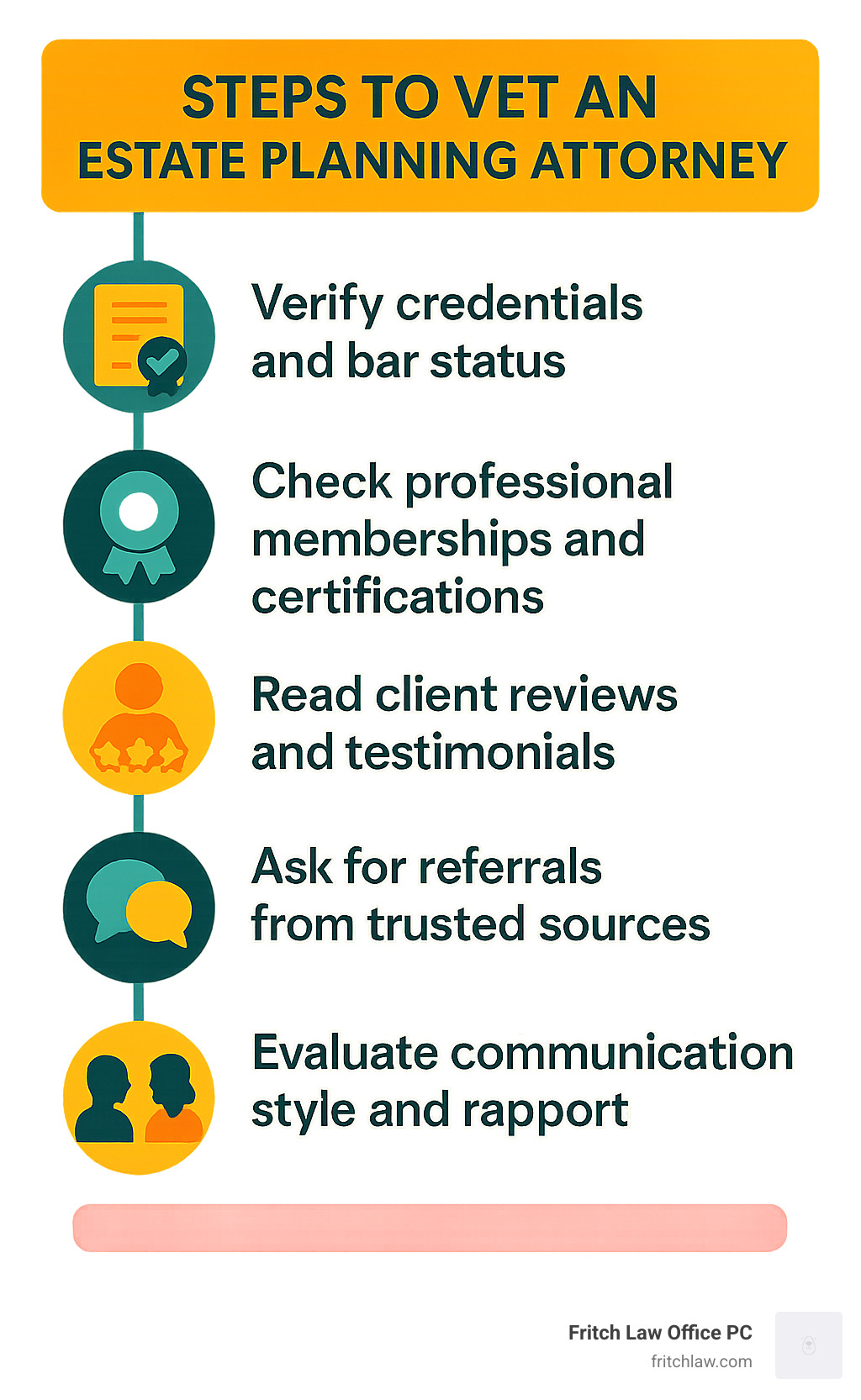
Beyond the formal credentials, trust your gut feeling about rapport and communication style. As one of our clients wisely noted, “You should feel that your attorney respects you and takes your concerns seriously. Comfort and rapport are key factors in selecting the right estate planning attorney.”
Estate planning involves discussing sensitive family dynamics and financial matters, so feeling comfortable with your attorney is essential. At Fritch Law Office PC, we encourage you to use your estate planning attorney consultation as an opportunity to evaluate not just our legal expertise but also how well we listen and respond to your unique concerns.
You can check attorney credentials through resources like Martindale Hubbell lawyer ratings, which provides peer reviews of attorneys, or by verifying their bar status through your state’s bar association website.
Updating Your Plan After the Estate Planning Attorney Consultation
Creating your estate plan is just the beginning of a journey, not a one-time event that you can check off your list forever. Life changes, and your estate plan should evolve with it.
Major life events like marriage, divorce, births, deaths, or significant changes in your financial situation should trigger a review of your plan. Even without these major changes, most experienced attorneys recommend reviewing your estate plan every 2-3 years to ensure it still reflects your wishes and complies with current laws.
“Getting organized and having a system is half the battle in estate planning,” notes Michael Christy. “The more organized you are, the more efficient and effective your attorney can be.”
At Fritch Law Office PC, we believe in building ongoing relationships with our clients. We offer annual review reminders and keep you informed about relevant legal changes that might affect your plan. This approach ensures your estate plan remains effective as your life evolves and laws change.
If you’re curious about typical costs for estate planning services, our article on the Average Cost of Estate Planning Attorney provides more detailed information about what you can expect to invest in this important protection for your family.
Frequently Asked Questions about Estate Planning Attorney Consultation
How long does the average consultation take and is it free?
When scheduling your estate planning attorney consultation, you’ll likely wonder about the time commitment and cost. Most consultations last between 45-60 minutes—just enough time to discuss your situation without overwhelming you with information.
About two-thirds of estate planning attorneys (around 63%) offer free initial consultations, typically lasting 30-60 minutes. At Fritch Law Office PC, we believe in providing a thorough initial meeting to understand your unique needs and explain our approach in a pressure-free environment.
Some attorneys do charge for the initial consultation but will credit this fee toward future services if you decide to work with them. It’s always a good idea to ask about the consultation fee policy when you call to schedule your appointment—this avoids any awkward surprises when you arrive.
What information is confidential during an estate planning attorney consultation?
Rest assured that everything you share during your estate planning attorney consultation remains protected by attorney-client privilege—even if you ultimately decide not to hire that attorney. This legal protection covers all aspects of your discussion, including:
Your family relationships and any potential conflicts that concern you, your complete financial picture including assets and debts, business interests and succession plans, healthcare wishes and end-of-life preferences, specific concerns about certain beneficiaries, and any tax planning strategies you’re considering.
This blanket of confidentiality creates a safe space for you to speak openly about sensitive family and financial matters. Many clients tell us they find relief in being able to discuss family dynamics or concerns that they wouldn’t feel comfortable sharing elsewhere.
How often should I meet my attorney after the initial estate planning attorney consultation?
Your relationship with your estate planning attorney shouldn’t end after documents are signed. Life changes, and your estate plan should evolve accordingly. After your initial estate planning attorney consultation and document execution, we typically recommend:
A general review every 2-3 years to ensure your plan still reflects your wishes, a check-in after significant life events like marriages, divorces, births, or deaths in the family, a consultation when tax laws change in ways that might impact your plan, and a review if you relocate to another state since estate laws vary significantly across state lines.
At Fritch Law Office PC, we value building ongoing relationships with our clients. We’ll reach out periodically with reminders about reviews and keep you informed about legal developments that might affect your plan. Many clients appreciate these gentle nudges, as life gets busy and estate plan maintenance can easily slip off the radar.
The best estate plan is one that accurately reflects your current life situation—not one that’s sitting in a drawer gathering dust since it was created years ago.
Conclusion
Taking that first step toward an estate planning attorney consultation is like planting a seed for your family’s future. While thinking about these matters might feel a bit uncomfortable at first, I’ve seen how working with a knowledgeable attorney transforms this process into something not just manageable, but genuinely enlightening.
After your initial consultation, here’s what you can expect:
Your attorney will draft documents custom to your specific situation and goals. You’ll have the opportunity to review these drafts and suggest any changes that better align with your wishes. Then comes the signing ceremony – a formal yet meaningful meeting where your documents are officially signed and notarized.
If your plan includes a trust, the next crucial step is funding it by transferring your assets. Without this step, even the best-crafted trust won’t function as intended. Finally, we’ll discuss secure storage options and ensure your documents remain accessible to the right people when needed.
At Fritch Law Office PC, we walk alongside our clients through each of these steps. We believe everyone deserves to understand their plan thoroughly – not just have a folder of legal documents. Based in Jasper, Indiana, we take pride in creating personalized estate plans that address the specific needs and concerns of Indiana residents.
Comprehensive estate planning goes far beyond distributing assets after death. It’s about protecting yourself and your loved ones throughout your lifetime with thoughtful incapacity planning, healthcare decision documents, and proper guardianship arrangements for minor children.
The time you invest in preparing for your estate planning attorney consultation pays dividends in creating a plan that truly reflects your wishes. There’s a special kind of peace that comes from knowing you’ve put proper protections in place for yourself and those you love.
For more information about creating a personalized estate plan or to schedule your consultation, visit our Estate Planning page. We look forward to helping you build a secure future for the people and causes that matter most to you.