Free eviction lawyers for tenants: Complete 2026 Guide
Fritch Law Office handles free eviction lawyers for tenants cases for Indiana residents every day. First, our attorneys examine your situation carefully. Next, we identify your strongest legal options. Furthermore, we explain every step in plain language. Therefore, you make confident decisions from day one.
Key Facts About Free eviction lawyers for tenants in Indiana
Indiana courts apply strict 2026 rules to free eviction lawyers for tenants matters. Moreover, experienced attorneys win better outcomes for clients. Additionally, early legal advice prevents costly mistakes. Consequently, clients who hire Fritch Law gain a clear advantage. However, waiting too long weakens your position significantly.
Take Action on Free eviction lawyers for tenants Today
Do not delay your free eviction lawyers for tenants case. First, call our Jasper office directly. Next, we schedule your free consultation immediately. Then, we build a winning strategy for you. Additionally, we represent you at every court hearing. Finally, we resolve your case as fast as possible.

Visit the Indiana Courts website for official legal information. Contact Fritch Law for your free consultation today.
Finding Help When Facing Housing Insecurity
If you’re searching for free eviction lawyers for tenants, here are the quickest ways to find help:
- Legal Aid Organizations – Contact your local Legal Aid Society (most serve low-income residents)
- Bar Association Pro Bono Programs – Call your state or county bar association for referrals
- ABA Free Legal Answers – Visit freelegalanswers.org to ask questions online
- LawHelp.org – Search this directory by state to find nearby services
- 211 Helpline – Call this number for immediate referrals to local eviction resources
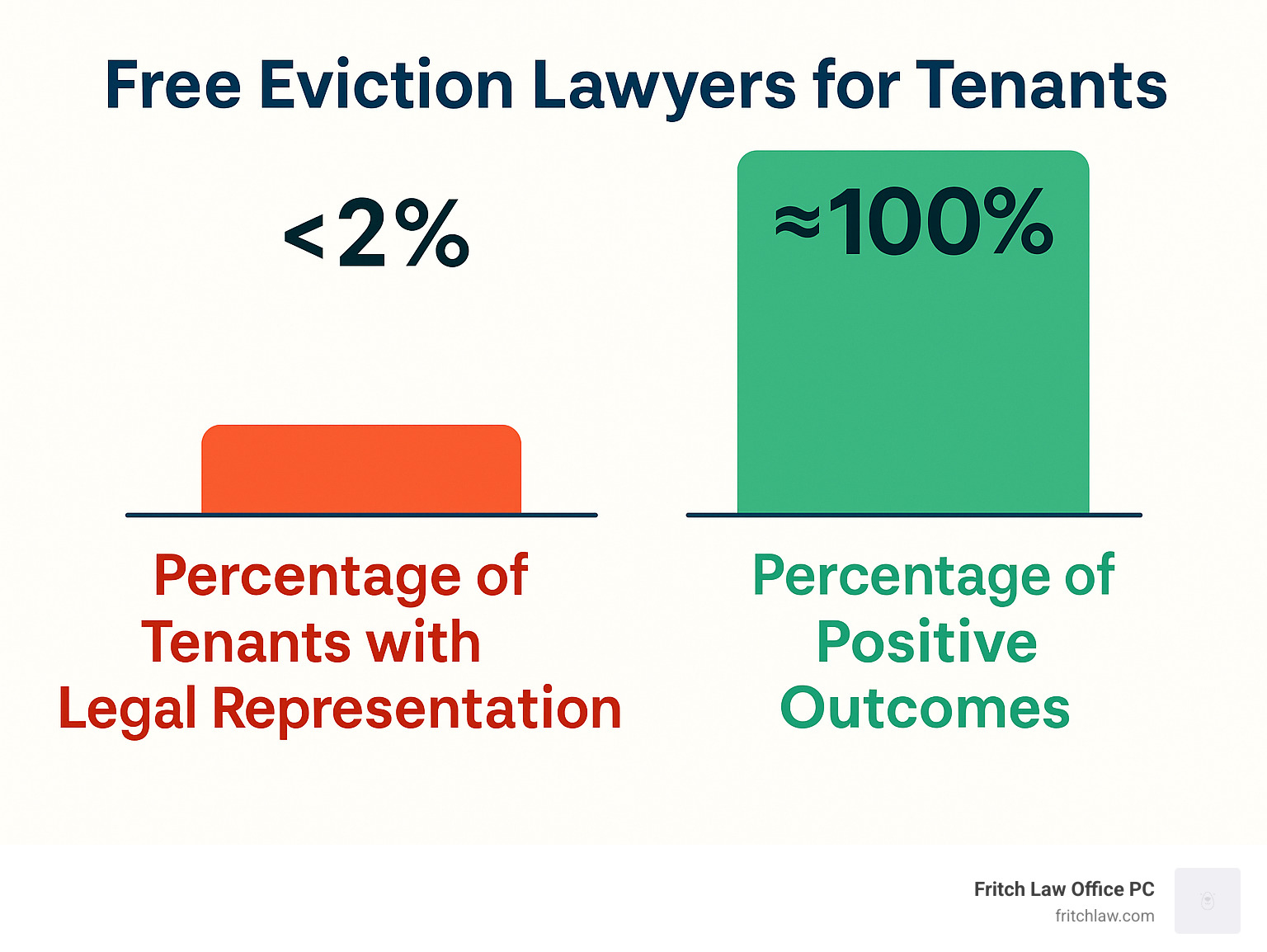
Facing eviction is one of the most stressful situations a tenant can experience. With court dates often scheduled within days of receiving notice, and less than 2% of tenants having legal representation at hearings, the process can feel overwhelming. However, you don’t have to steer this crisis alone.
Free eviction lawyers for tenants are available through numerous programs nationwide, with many organizations achieving positive outcomes for nearly 100% of the clients they represent. These services exist specifically to level the playing field and ensure your rights are protected during this difficult time.
My name is David Fritch, and as an attorney with decades of experience in landlord-tenant matters, I’ve helped countless individuals understand their legal options when facing housing instability, including connecting them with free eviction lawyers for tenants when they qualify for assistance.
Understanding Evictions & Tenant Rights
When you receive that dreaded eviction notice, it can feel like the ground is shifting beneath your feet. But understanding what an eviction actually is—and isn’t—can help you regain your footing.
An eviction isn’t simply your landlord telling you to leave. It’s a formal legal process with specific steps that must be followed. Your landlord cannot legally change your locks, remove your belongings, or shut off your utilities to force you out. These “self-help” evictions are illegal in virtually every state.
Instead, for an eviction to be legal, your landlord must:
– Provide you with proper written notice (with specific time periods)
– File a formal eviction lawsuit (often called an “unlawful detainer”)
– Obtain a court judgment in their favor
– If successful, have law enforcement—not the landlord—carry out the actual eviction
Throughout this process, you have important legal rights that serve as the foundation for your defense, especially when working with free eviction lawyers for tenants.
Common Reasons Tenants Face Eviction
Understanding why you’re facing eviction is the first step in determining your options.
Non-payment of rent is the most common reason landlords seek eviction. If you’ve fallen behind on payments, this will be clearly stated in your notice. In fact, statistics from Fulton County show that of the approximately 40,000 evictions filed annually, the vast majority cite non-payment as the reason.
Lease violations can also trigger eviction proceedings. This might include having unauthorized pets, exceeding occupancy limits, or causing damage to the property beyond normal wear and tear.
Holdover tenancy occurs when you stay in the property after your lease has expired without your landlord’s permission. Even if you’ve been paying rent, your landlord may have the right to ask you to leave once your lease term ends.
Criminal activity on the premises can lead to expedited eviction procedures in many jurisdictions, giving you less time to prepare a defense.
Nuisance complaints may also lead to eviction if your actions consistently disturb neighbors or interfere with their peaceful enjoyment of their homes.
Your Core Rights During the Process
No matter why you’re facing eviction, you have fundamental rights that free eviction lawyers for tenants can help you protect:
Your right to proper notice means landlords must provide written notification with specific time periods that vary by state and eviction reason—typically ranging from 3 to 30 days.
Your right to a court hearing ensures you cannot be evicted without a court order and the opportunity to present your side of the story. This is your chance to explain your circumstances to a judge.
The right to habitable housing means your landlord must maintain the property in a livable condition. If they’ve failed to make necessary repairs or address serious issues like mold or pest infestations, this may serve as a defense against eviction.
You also have protection against retaliation. Your landlord cannot legally evict you for exercising your rights, such as reporting code violations, requesting necessary repairs, or forming a tenant union.
Your right to due process means all procedural requirements must be followed exactly. Any deviation from proper legal procedure can potentially invalidate the eviction—something an experienced attorney will immediately recognize.
The right to repair and deduct in many states allows you to fix essential problems yourself and deduct the cost from your rent if your landlord fails to make timely repairs after proper notification.
These rights form the backbone of tenant protections and often serve as the basis for effective legal defense strategies when working with free eviction lawyers for tenants.
Why Having a Lawyer Changes the Game
The representation gap in eviction courts is staggering. Research consistently shows that less than 2% of tenants have legal representation during eviction proceedings, while the vast majority of landlords have attorneys. This imbalance creates a fundamentally unfair playing field.

The impact of having legal representation cannot be overstated. According to data from the Atlanta Volunteer Lawyers Foundation (AVLF), their eviction defense program secures positive outcomes for nearly 100% of clients they represent. This isn’t magic – it’s the power of having someone who understands the system fighting on your side.
When you’re facing eviction alone, the courtroom can feel intimidating. Judges speak in legal terms, deadlines are strict, and without proper knowledge, you might miss crucial opportunities to defend yourself. Scientific research from the Consumer Financial Protection Bureau confirms that legal representation significantly improves tenant outcomes across the board.
How Lawyers Improve Outcomes
Free eviction lawyers for tenants transform your experience in several important ways. They know how to properly file answers to eviction complaints, ensuring your side of the story is legally documented. Many tenants don’t realize that simply showing up to court isn’t enough – formal responses must be submitted within strict timeframes.
These attorneys also spot defenses you might miss. Perhaps your landlord didn’t maintain the property properly, or they’re retaliating against you for requesting repairs. Maybe they didn’t follow proper notice procedures. A trained legal eye catches these issues that can potentially dismiss your case entirely.
Settlement negotiations become much more productive with legal help. Your attorney can often work out payment plans, move-out agreements with more time, or even rent reductions based on property conditions. They speak the language of landlord attorneys and know what’s reasonable to ask for.
If your case does go before a judge, having someone who understands courtroom procedures makes an enormous difference. They know how to present evidence effectively, object to improper testimony, and make compelling arguments on your behalf.
Cost vs. Benefit Analysis
When weighing whether to seek legal help, the math strongly favors representation – especially when it’s free. Court filing fees can often be waived through applications your attorney helps prepare, saving you immediate out-of-pocket expenses.
The long-term benefits are even more significant. An eviction judgment on your record can haunt you for years, making future housing applications extremely difficult. Landlords routinely screen for eviction history, and a single case can lead to dozens of rejected applications.
Beyond housing stability, the peace of mind that comes with professional guidance is invaluable. Instead of lying awake wondering what will happen next, you’ll have clear information about your options and likely outcomes. Your attorney can help you prepare for different scenarios, reducing the overwhelming stress that comes with housing uncertainty.
Even in cases where moving is inevitable, free eviction lawyers for tenants can negotiate for more time, giving you precious weeks to find new housing rather than days. This difference can prevent a housing emergency from becoming a homelessness crisis.
The bottom line is clear: having legal representation dramatically levels the playing field and provides you with options you might never know existed. With resources available at no cost to qualifying individuals, connecting with these services should be your immediate priority when facing eviction.
Where to Find Free Eviction Lawyers for Tenants
When you’re facing eviction, finding legal help quickly can make all the difference. The good news is that there are many resources specifically designed to connect tenants with free eviction lawyers for tenants. Here’s where you can turn for help:
Nationwide Directories of Free Eviction Lawyers for Tenants
Finding legal help doesn’t have to be complicated. Several trusted national organizations maintain easy-to-use databases that can connect you with the right resources in your area.
LawHelp.org is a fantastic starting point. This user-friendly website lets you simply select your state to find local legal aid organizations near you. Many of these organizations have specialized housing teams who focus exclusively on preventing evictions. Their find help tool makes the process straightforward, even when you’re stressed.
If you have specific legal questions but aren’t ready for full representation, the American Bar Association’s Free Legal Answers program might be perfect. Through their website freelegalanswers.org, you can submit questions about your eviction situation and receive responses from volunteer attorneys who want to help. While this isn’t the same as having a lawyer represent you in court, it can help you understand your options and next steps.
For those looking for community-based support, JustShelter.org maintains a directory of more than 600 organizations working on housing justice issues nationwide. Many of these groups provide direct legal services or can quickly connect you with local providers who offer free eviction lawyers for tenants.
In emergencies, don’t forget about 211. By simply dialing this number or visiting 211.org, you’ll be connected with a specialist who can refer you to local eviction prevention resources, including legal aid programs in your community.

Local Programs Connecting Free Eviction Lawyers for Tenants
While national directories are helpful, many regions have specialized eviction defense programs with remarkable success rates that are worth seeking out directly.
The Atlanta Volunteer Lawyers Foundation (AVLF) serves tenants in Fulton County, Georgia with impressive results. Their dedicated housing team achieves positive outcomes for nearly 100% of the clients they represent. In urgent situations, they’ve been known to mobilize attorneys within hours of receiving a case—exactly the kind of rapid response that can save your housing.
If you’re in Louisiana, the Louisiana Fair Housing Action Center (LaFHAC) offers free legal representation to people facing eviction in Orleans Parish. They also maintain referral systems for surrounding areas to ensure no one falls through the cracks.
Residents in Texas and parts of Arkansas can turn to Lone Star Legal Aid (LSLA), which provides comprehensive eviction defense services across 72 Texas counties and 4 Arkansas counties. Beyond direct representation, they offer specialized self-help tools and instructional videos for tenants who need immediate guidance.
The Massachusetts Eviction Legal Help program demonstrates how some states are taking proactive approaches to the eviction crisis. This state-funded initiative provides free legal assistance to income-eligible tenants and even helps owner-occupant landlords facing eviction issues.
These are just examples of what’s available—similar programs exist in virtually every state, though availability and eligibility criteria vary. You can learn more about these types of programs through our detailed guide on Legal Aid for Evictions.
If you’re looking for help closer to home, we also offer guidance on finding a Tenant Rights Attorney Near Me that can connect you with local resources specifically suited to your situation.
How to Qualify & Apply for No-Cost Representation
Let’s face it – finding free eviction lawyers for tenants is only helpful if you can actually qualify for their services. Most programs have specific eligibility requirements, but don’t let that discourage you! Understanding these criteria and knowing how to steer the application process can make all the difference in securing help when you need it most.
Step-by-Step Application Process
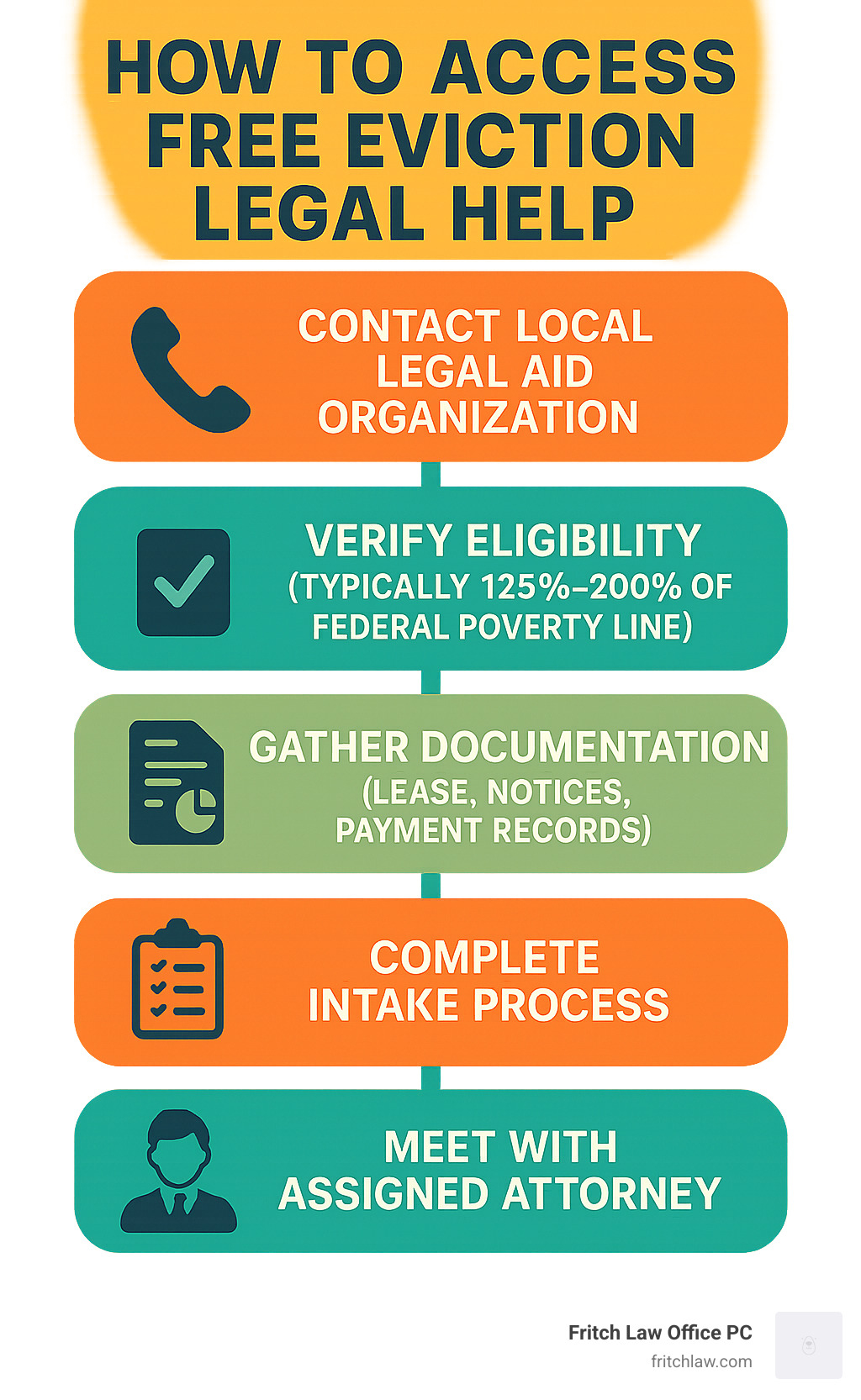
The moment you receive an eviction notice, the clock starts ticking. Don’t wait until the day before your court date to seek help! While many legal aid organizations can respond quickly (sometimes within 24 hours), they need adequate time to review your situation and prepare your defense.
First, reach out to the appropriate organization using the directories mentioned earlier. Most offer several ways to connect – online intake forms for those who prefer digital communication, telephone hotlines if you’d rather speak with someone directly, or walk-in hours if you’re able to visit their offices in person.
When you make contact, be prepared for a screening process. You’ll typically need to share details about your household income, the specific reason for your eviction, whether a court date has been scheduled, and general information about your rental situation. This helps the organization determine if you qualify for their services and how urgent your case is.
If you pass the initial screening, you’ll need to gather and submit important documentation. This usually includes your eviction notice or court papers, your lease or rental agreement, proof of income, identification, and any relevant correspondence with your landlord. Having these documents organized and ready to go can significantly speed up the process.
Once you qualify, you’ll be connected with an attorney who will review your case details, explain your legal options in clear language, develop a defense strategy custom to your situation, and represent you in court or during negotiations with your landlord. As the Atlanta Volunteer Lawyers Foundation has noted, they can sometimes get attorneys working on cases “within hours of receiving a case” when the situation is urgent.
Typical Timelines & What Happens Next
Eviction cases move quickly through the legal system, so understanding the timeline is crucial:
The notice period typically ranges from 3-30 days, depending on your state and the reason for eviction. Once this period expires, landlords can file an eviction lawsuit, with hearings usually scheduled within 6-10 days after filing. Most legal aid organizations aim to respond to your application within 24-48 hours, though attorney assignment may take 1-3 days depending on availability.
In Texas, for example, eviction hearings typically occur within 6-10 days after a Notice to Vacate is served. If you receive an unfavorable judgment, you generally have only five days to file an appeal. This compressed timeline makes immediate action absolutely essential.
The income thresholds for qualifying vary by program, but many use the federal poverty guidelines as a benchmark – typically serving those at 125-200% of the poverty level. Some programs offer priority access for vulnerable populations, including seniors, people with disabilities, families with children, and veterans.
When applying online through portals like Louisiana’s legal aid intake system, be prepared to complete the entire form in one sitting, as your information may not be saved if you exit before finishing. If you’re calling a hotline, try during off-peak hours (early morning or late afternoon) for shorter wait times.
Free eviction lawyers for tenants are in high demand, so persistence pays off. If one organization can’t help, they can often refer you to another program that might be a better fit for your situation. The important thing is to act quickly and keep trying until you connect with the assistance you need.
Preparing for Your Free Consultation
Meeting with free eviction lawyers for tenants can feel overwhelming, but with proper preparation, you’ll make the most of this valuable time. Think of this consultation as your opportunity to share your story and get expert guidance during a challenging time.

Documents to Gather Before Meeting
Walking into your consultation with organized paperwork makes a world of difference. Your attorney can help you much more effectively when they can see the full picture of your situation.
Start by finding your lease agreement – this is the foundation of your landlord-tenant relationship and contains crucial information about your rights and responsibilities. Place this at the top of your folder.
Next, gather all notices received from your landlord, especially the eviction notice itself. These documents establish timelines and show exactly what claims are being made against you.
Your payment history speaks volumes in eviction cases. Collect any rent receipts, canceled checks, money order stubs, or screenshots of electronic payments. If you pay by cash, bank withdrawal records can help verify your story.
Don’t forget about maintenance requests you’ve submitted. These can be particularly important if you’re dealing with habitability issues or if you’ve withheld rent because of repair problems. Text messages, emails, or written notes documenting these requests can strengthen your case.
Visual evidence matters too. Include photos or videos of any property conditions that might be relevant, especially if you’re claiming the unit isn’t habitable or if there’s a dispute about damages.
Your communication history with your landlord tells an important story. Print out emails, screenshot text messages, and note phone conversations with dates and times. This timeline of interactions often reveals important details that might help your case.
If you’ve already received court documents, bring these along as they contain critical information about hearing dates and specific claims. Your attorney needs to see these right away.
Consider who might support your version of events. Write down witness information for neighbors, maintenance workers, or others who can verify your claims if needed.
Finally, bring recent financial information like pay stubs or benefit statements. This not only helps verify your eligibility for free services but might also be relevant if you’re negotiating a payment plan.
Taking the time to organize these documents chronologically in a simple folder will help your consultation run smoothly and ensure no important details are missed.
Questions to Ask Free Eviction Lawyers for Tenants
Coming prepared with thoughtful questions helps you gain clarity and peace of mind. Your attorney is there to guide you, so don’t hesitate to ask about things that concern you.
Be direct about your chances: “What are my chances of successfully fighting this eviction?” An honest assessment helps you set realistic expectations and plan accordingly.
Ask about specific defenses that might apply to your situation. Your attorney might spot legal issues you weren’t aware of, like improper notice or retaliation claims that could significantly strengthen your position.
Understanding the timeline for your case is crucial for planning your next steps. Eviction cases often move quickly, and knowing exactly what happens when helps reduce anxiety.
While the legal representation is free, clarify if there might be other costs involved. Some programs can help with court filing fees, but it’s important to know what expenses you might face.
Explore your negotiation options with your landlord. Sometimes a payment plan, repair agreement, or dignified exit strategy is the most practical solution, and your attorney can help facilitate these conversations.
It’s also wise to understand what happens if you lose your case. Know your appeal options, how much time you’d have to move, and whether the judgment would affect your credit or ability to rent in the future.
Finally, get specific guidance on how to prepare for your court date – what to wear, what to say (and not say), and how the proceedings typically unfold. Being prepared helps calm nerves and presents you in the best possible light.
Attorney-client privilege protects your conversations, so be completely honest about your situation. Even facts you think might hurt your case should be shared upfront so your attorney can properly prepare.
For more detailed information about what to expect during your initial consultation, you can visit our page on Free Consultation for Tenants.
Legal Defenses & Alternative Resources to Stay Housed
When you’re working with free eviction lawyers for tenants, you’ll find there’s more than one path to maintaining your housing stability. Your attorney will explore both legal defenses and practical solutions that can keep a roof over your head.
Common Legal Defenses
The strength of your case often depends on the specific circumstances surrounding your eviction notice. Your attorney might build your defense around several powerful legal arguments:
Improper notice can be your first line of defense. If your landlord didn’t provide the legally required notice period or used incorrect forms, the entire case might be dismissed. I’ve seen many evictions thrown out simply because a landlord didn’t follow the proper notification procedures.
Habitability violations offer substantial protection when landlords haven’t maintained livable conditions. That leaking roof or broken heating system isn’t just inconvenient—it might be your legal shield against eviction, especially for non-payment cases where you’ve withheld rent due to these issues.
Retaliation claims protect tenants who’ve exercised their legal rights. If your eviction notice arrived shortly after you reported code violations or joined a tenant organization, the timing alone might suggest illegal retaliation.
Procedural errors in filing or serving eviction papers can lead to case dismissal. The legal process has specific requirements, and landlords who cut corners often find their cases thrown out.
Discrimination based on protected characteristics like race, religion, family status, or disability violates fair housing laws and provides strong grounds for fighting an eviction.
| Defense Type | When It Applies | Potential Outcome |
|---|---|---|
| Improper Notice | Landlord didn’t provide required notice period or format | Case dismissal, requiring landlord to restart process |
| Habitability Issues | Property has serious repair problems affecting livability | Rent abatement, case dismissal, or time to remedy |
| Retaliation | Eviction follows tenant exercising legal rights | Case dismissal with potential damages |
| Procedural Errors | Mistakes in filing or serving eviction papers | Case dismissal, requiring landlord to correct errors |
| Discrimination | Eviction based on protected class status | Case dismissal with potential fair housing claims |
Emergency Rental & Utility Assistance
Sometimes the most straightforward solution is financial help to catch up on payments. Your free eviction lawyers for tenants can often connect you with resources like:
The Consumer Financial Protection Bureau’s Rental Assistance Finder helps locate programs in your area that might cover back rent or future payments. This tool has become invaluable during recent housing crises, connecting thousands of families with funds specifically designated for preventing evictions.
The National Low Income Housing Coalition Database tracks assistance programs nationwide, making it easier to find help regardless of where you live. Many of these programs can provide emergency funds within days when eviction is imminent.
Local Emergency Rental Assistance Programs (ERAP) exist in most communities, funded through federal initiatives to prevent housing instability. These programs can sometimes cover up to 18 months of rent and utilities for qualifying households.
Faith-based organizations in your community may offer emergency rental assistance without the paperwork and delays of government programs. Many churches maintain special funds to help neighbors facing housing emergencies.

Mediation & Payment Plans
Sometimes the most practical approach isn’t fighting the eviction but negotiating better terms. Your lawyer can help facilitate these conversations:
Court-annexed mediation provides a neutral setting where you and your landlord can work toward mutually beneficial solutions. Many housing courts offer these services free of charge, with trained mediators who understand landlord-tenant issues.
Structured payment plans give you breathing room to catch up on past-due rent. Your attorney can help negotiate realistic terms based on your financial situation, often convincing landlords that a payment plan is preferable to the uncertainty of an eviction proceeding.
Move-out agreements can be valuable when staying isn’t realistic. Your lawyer might negotiate additional time to find new housing and terms that keep an eviction judgment off your record—protecting your ability to rent in the future.
The statistics from the Atlanta Volunteer Lawyers Foundation tell a powerful story: when tenants have legal representation, positive outcomes happen in nearly 100% of cases. This doesn’t always mean staying in your current home forever—sometimes a dignified exit that preserves your rental history and gives you time to relocate is the best possible outcome.
Combining legal representation with financial assistance often provides the most complete solution to housing instability. Your free eviction lawyers for tenants can help you steer both the courtroom and the maze of assistance programs available in your community.
For more information about rental assistance, visit the Rental Assistance Finder maintained by the Consumer Financial Protection Bureau.
Frequently Asked Questions about Free Eviction Help
What if I can’t find a free lawyer in my area?
When you’re frantically searching but can’t seem to locate free eviction lawyers for tenants in your community, don’t lose hope. This happens more often than you might think, especially in rural areas or regions with limited legal aid resources.
Your first step might be contacting your state bar association’s lawyer referral service. These programs often offer reduced-fee consultations that can give you critical guidance without breaking the bank. Many attorneys also provide “unbundled” legal services – think of it as ordering à la carte instead of a full-course meal. You might pay for help with just drafting documents or preparing for your hearing rather than full representation.
Court self-help centers can be lifesavers too. Most housing courts provide free eviction answer forms with clear instructions. Websites like LawHelp Interactive offer step-by-step guidance for completing legal documents on your own. While not ideal, having properly filed paperwork puts you miles ahead of walking in unprepared.
If your court date is looming and you’re still searching for help, don’t be afraid to ask the judge for a continuance. Simply explain that you’re actively seeking legal representation and need additional time. Many judges understand the importance of legal counsel and may grant your request.
Law school clinics and community legal workshops can also provide brief but valuable consultations. Even limited legal advice can help you identify your strongest defenses and avoid common pitfalls when representing yourself.
How do I appeal if I lose my eviction case?
Receiving an unfavorable judgment feels devastating, but it’s not necessarily the end of the road. Appeals are possible, but timing is absolutely critical.
The appeal window for eviction cases is shockingly brief – often just 5 days from the judgment date. This isn’t business days, but calendar days, meaning weekends count! Free eviction lawyers for tenants know these deadlines intimately and can help you steer them, but if you’re handling this yourself, you need to act immediately.
Your first stop should be the court clerk’s office. They can provide the specific appeal forms required in your jurisdiction. These forms must be completed with absolute precision – even small errors can result in your appeal being rejected. If filing fees present a hardship, ask about “in forma pauperis” applications, which can waive these costs based on financial need.
Be aware that in most jurisdictions, filing an appeal doesn’t automatically stop the eviction process. You may need to pay rent into the court registry (called a “supersedeas bond” in legal terms) during the appeal period to prevent immediate removal. This can be challenging if financial hardship caused your eviction in the first place.
Even if you represented yourself in the initial hearing, make another attempt to find legal assistance specifically for the appeal. Appeals involve complex procedural rules that even experienced non-lawyers find challenging to steer. As Lone Star Legal Aid notes, “You can appeal an eviction judgment even if you missed the first hearing, and you may qualify for a fee waiver based on financial hardship.”
How can I avoid an illegal “self-help” eviction?
It’s a scenario that plays out far too often – a frustrated landlord changes the locks, removes your belongings, or shuts off utilities to force you out without going through proper legal channels. These “self-help” evictions aren’t just unfair – they’re illegal in virtually every jurisdiction.
If you find yourself facing these tactics, start documenting everything immediately. Take clear photos and videos of any changed locks, removed doors, disconnected utilities, or belongings placed outside. Keep detailed notes about every interaction with your landlord, including dates, times, and exactly what was said or done.
Don’t hesitate to call local police if you’re locked out or your utilities are disconnected. While some officers mistakenly view these as “civil matters,” most departments understand that illegal evictions violate criminal statutes in many jurisdictions. Having a police report strengthens your case tremendously.
Contact legal aid organizations right away – many prioritize emergency cases involving illegal evictions, sometimes providing same-day assistance. Be clear about the urgency when you call, using phrases like “emergency lockout” or “illegal eviction in progress” to ensure your situation is properly categorized.
Remember this fundamental truth: in most states, only law enforcement officers with a court order can physically remove you or your belongings from your home. Your landlord cannot legally take these actions on their own, regardless of what your lease might say or how far behind on rent you might be.
If illegal actions continue, free eviction lawyers for tenants can help you seek emergency injunctions – court orders preventing your landlord from taking further illegal steps. Landlords who attempt these shortcuts often face significant legal penalties, including damages payable directly to affected tenants.

Conclusion
Securing free eviction lawyers for tenants can truly transform what seems like an inevitable loss of housing into a situation with real options and hope. The numbers tell a powerful story – while less than 2% of tenants have legal representation during eviction proceedings, those fortunate enough to have an advocate by their side achieve positive outcomes in nearly 100% of cases. That’s not just a statistical difference – it represents thousands of families who kept their homes or found better alternatives because they had proper legal help.
If you’re currently holding an eviction notice, please remember that time is absolutely critical. The moment that paper arrives in your hands, the clock starts ticking on your opportunity to mount an effective defense. The good news is that you’ve already taken an important first step by seeking information about your options.
Here’s what you should do next:
Act quickly to contact the resources we’ve discussed in this guide – from Legal Aid organizations to bar association pro bono programs. Gather all your documents before your consultation – your lease, payment records, correspondence with your landlord, and any evidence of property conditions will help your attorney understand your situation completely. Be completely honest with your lawyer about your circumstances, even parts that might seem embarrassing or unhelpful. And remember to explore both legal defenses and financial assistance programs that might help address the underlying causes of your housing instability.
For our neighbors facing eviction in Indiana, particularly in the Jasper area, we at Fritch Law Office PC understand the overwhelming stress and uncertainty you’re experiencing. While our practice encompasses various areas of law with a focus on personalized, client-focused representation, we’re deeply committed to helping connect tenants with the resources they need – whether through our services or appropriate referrals to free eviction lawyers for tenants when you qualify.
Housing stability forms the foundation of so many aspects of our lives – from employment to education, from physical health to emotional wellbeing. Everyone deserves the opportunity to assert their legal rights when facing eviction, and with proper guidance, you can steer this challenging situation toward the best possible outcome for you and your family.
You don’t have to face this alone. The right legal help can make all the difference, and resources are available to connect you with free eviction lawyers for tenants who can help protect your rights and your home.
More info about our tenant lawyers