
Why Understanding Tenant Legal Protection Is Essential
Legal protection for tenants includes a set of rights and safeguards designed to ensure fair treatment in rental housing. These protections exist at federal, state, and local levels to prevent discrimination, guarantee habitable living conditions, and establish proper procedures for evictions and rent increases.
Key Legal Protections for Tenants:
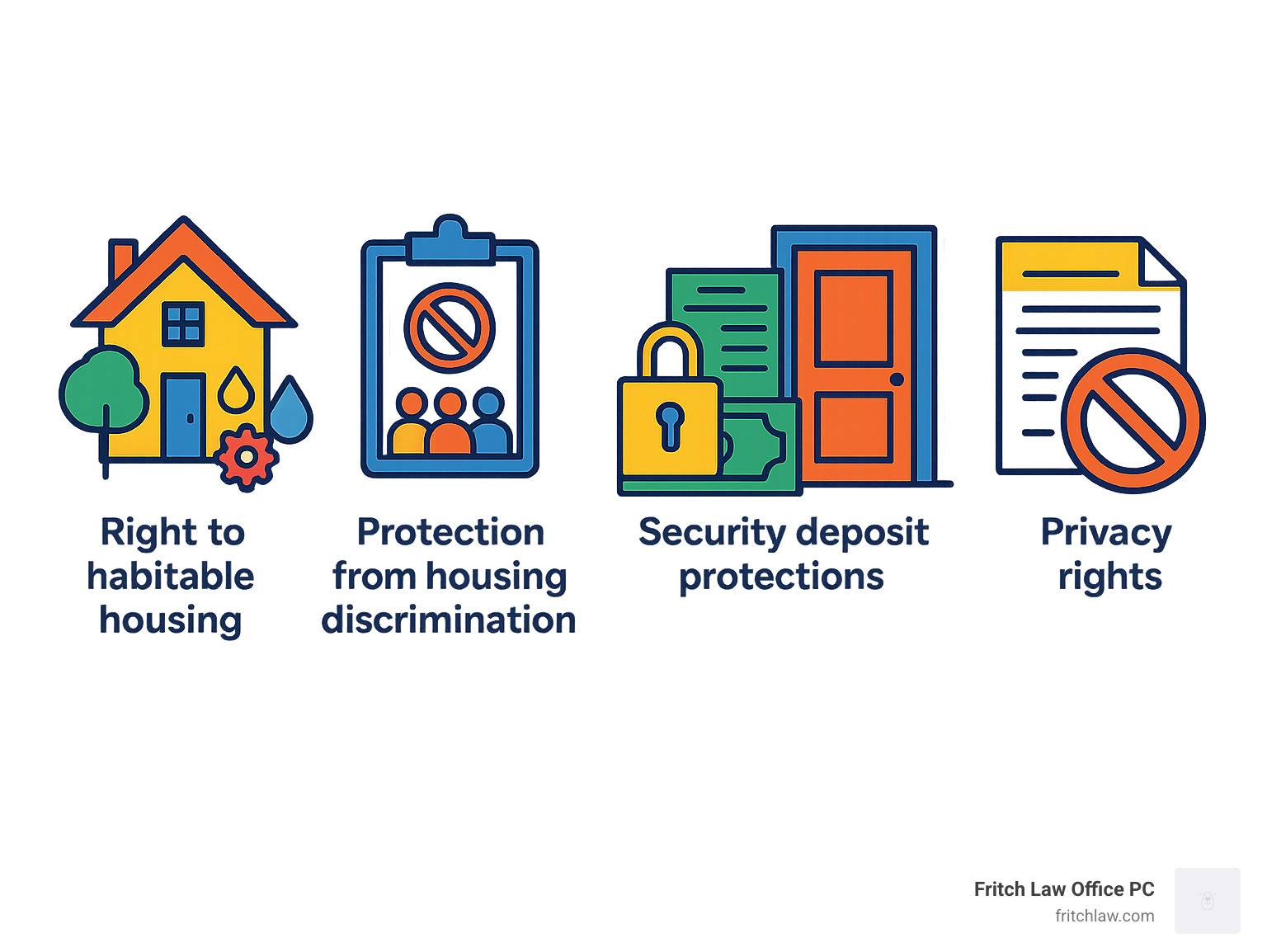
- Right to a habitable home: Landlords must maintain safe, clean living conditions with working utilities.
- Protection from discrimination: The federal Fair Housing Act prohibits discrimination based on race, color, religion, sex, national origin, familial status, and disability.
- Security deposit protections: State laws limit deposit amounts and require itemized deductions for damages beyond normal wear and tear.
- Privacy rights: Landlords must provide advance notice (typically 24 hours) before entering rental units.
- Eviction protections: Landlords must follow legal procedures and cannot use “self-help” methods like changing locks.
- Anti-retaliation safeguards: Protection from landlord retaliation when tenants exercise their legal rights.
Almost one in five people worry about losing their home if they can’t pay rent or mortgage, making it crucial to understand your rights. These protections vary by state—for example, California caps annual rent increases at 5% plus inflation under AB 1482, while Maryland requires landlords to return security deposits within 45 days.
About the Author: I’m David Fritch, an experienced lawyer with 40 years of practice. At Fritch Law Office, I help tenants understand their legal protection for tenants and effectively resolve disputes with landlords.
Your Right to a Safe and Habitable Home
When you rent a home, you are legally entitled to a property that is safe, clean, and fit for human living. This fundamental aspect of legal protection for tenants is backed by the “implied warranty of habitability,” a legal promise that exists in every rental agreement, whether written or not.
This means your landlord is promising you a livable home with working utilities like electricity and running water, functional plumbing, adequate heating, and proper electrical systems. Your landlord is also responsible for pest control, maintaining the building’s structural integrity, and making necessary repairs to keep your home and common areas safe.
If something in your rental makes it unsafe or unlivable, your landlord has a legal duty to fix it. For specific concerns like mold, our guide on Indiana Landlord Tenant Law Mold can help you understand your rights in detail.
What to Do When Your Landlord Won’t Make Repairs
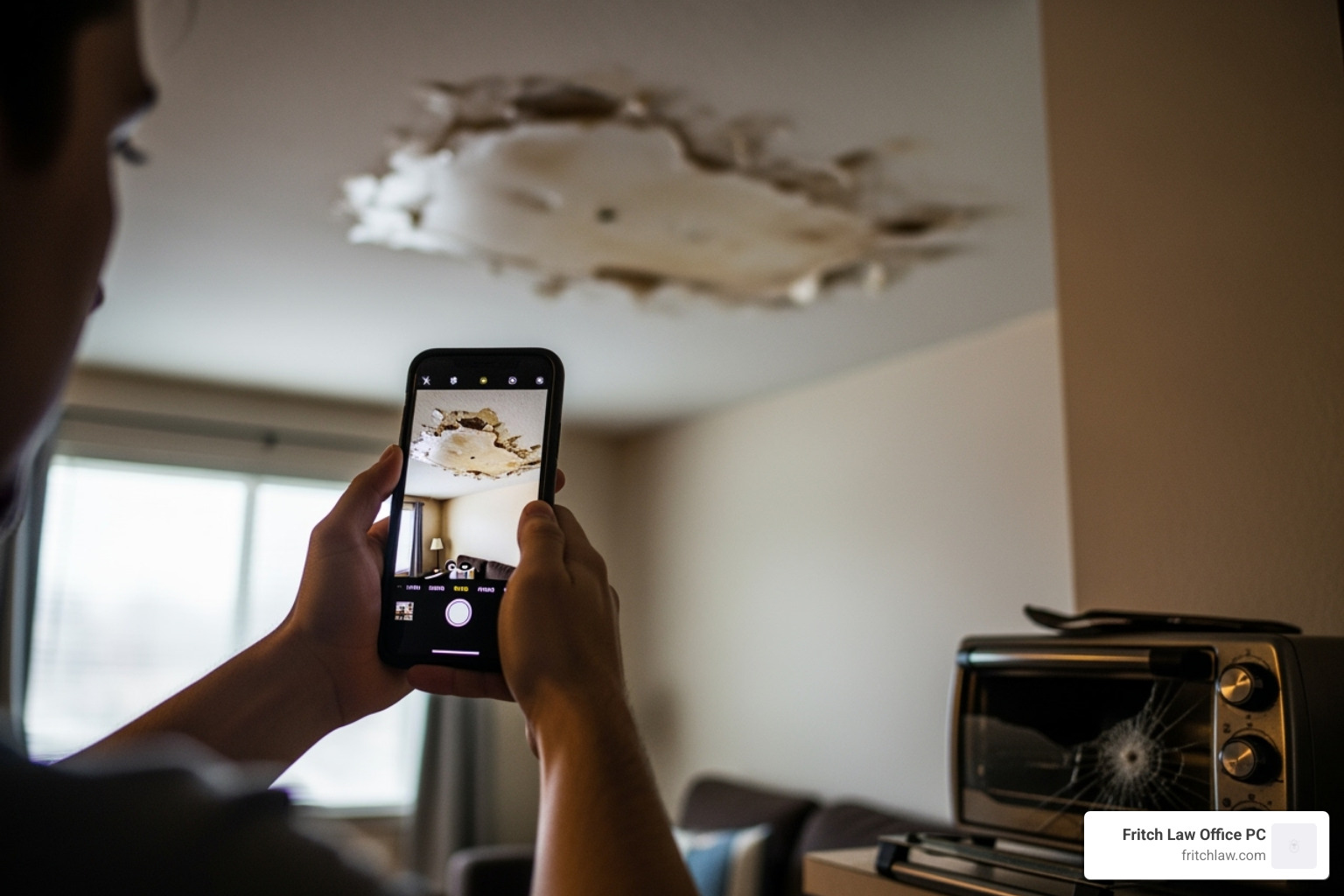
If your landlord fails to make necessary repairs, you need to take specific steps to protect yourself. Documentation is your best friend. Start by taking photos and videos of the problem. Then, send your landlord a written notice about the issue. A phone call is not enough for legal protection. Send a dated letter by certified mail with a return receipt requested, and keep a copy for your records. This proves your landlord received your notice.
Give your landlord a reasonable time to fix the problem after they receive your notice. What’s “reasonable” can vary, but many states consider seven days appropriate for most repairs. You must allow your landlord reasonable access to your home to make these repairs.
If the problem persists, contacting code enforcement or the health department can be effective for serious health and safety violations. These agencies can inspect your property and may order your landlord to make repairs.
You might also consider legal action. However, it’s crucial to remember that in Indiana, you cannot withhold rent because your landlord won’t make repairs. Doing so can lead to your eviction. The repair and deduct remedy (where tenants arrange repairs and deduct costs from rent) is also not available in Indiana. Your best course of action is proper documentation, written notices, and working with local authorities or the courts if necessary.
Protections Against Housing Discrimination
Your legal protection for tenants includes safeguards against unfair treatment. The federal Fair Housing Act prohibits discrimination based on race, color, religion, sex, national origin, familial status (having children under 18), and disability.
This means landlords cannot reject your application, charge you different rent, or treat you differently based on these protected characteristics. They cannot steer you toward certain units or make discriminatory comments during the rental process.
Many states and cities have expanded these protections to include characteristics like source of income, age, or sexual orientation. It’s worth checking the laws in your specific area.
Landlords must also make reasonable accommodations for tenants with disabilities. This might mean allowing a service animal despite a no-pets policy or permitting modifications like installing grab bars. Refusing reasonable accommodations can be a form of discrimination.
If you believe you’ve experienced housing discrimination, you can file a complaint with HUD (the U.S. Department of Housing and Urban Development) or pursue legal action through the courts.
Understanding Your Core Legal Protection for Tenants
Understanding your lease agreement is essential to your legal protection for tenants. This document outlines the terms of your tenancy, from rent payments to security deposits. While verbal agreements can exist, we always recommend a written lease to prevent future misunderstandings.
Beyond your lease, key protections are defined by state and local laws regarding security deposits, rent increases, and your rights to privacy and quiet enjoyment.

Navigating Security Deposits and Rent Regulations
Security deposits protect landlords from property damage or unpaid rent, but there are strict rules on how they are handled. Security deposit limits vary by state. Maryland caps them at two months’ rent, while California allows one to three months’ rent. In Indiana, there’s no specific cap, but the amount must be reasonable.
When you move out, landlords can make itemized deductions for unpaid rent, cleaning beyond normal wear and tear, and repairs for tenant-caused damage. If any part of your deposit is kept, you are entitled to a written, itemized breakdown of all deductions.
Understanding normal wear and tear is crucial. This is the expected deterioration from everyday living, like faded paint or worn carpets from foot traffic. Your landlord cannot charge you for this. However, damage from negligence or accidents, like a large hole in the wall, is your responsibility.
Deposit return deadlines are set by state law. Maryland and Indiana require landlords to return deposits within 45 days of move-out, assuming you left the unit in good condition and provided a forwarding address. California gives landlords 21 days. If your deposit isn’t returned or explained within this timeframe, you can take legal action.
Rent increases also have regulations. Landlords must typically provide 30 days’ advance written notice, though some states like California require 60 days for increases over 10%. Some areas have rent control laws that limit how much rent can be raised. For example, California’s Tenant Protection Act caps increases at 5% plus inflation or 10% of the lowest rent paid in the last 12 months, whichever is lower.
Your Right to Privacy and Quiet Enjoyment
Your legal protection for tenants guarantees your right to privacy and “quiet enjoyment,” meaning you can live peacefully without constant landlord interference.
Landlord entry rules generally require advance notice. Most states, including California, require at least 24 hours’ written notice unless your lease specifies otherwise. The main exception is for emergency entry. In true emergencies like fires or burst pipes, landlords can enter immediately to ensure safety and prevent damage. They may also enter if they reasonably believe you’ve abandoned the property.
Protection from harassment is a vital part of your privacy rights. Landlords cannot abuse their right of entry. Repeated, unnecessary visits or entering without proper notice violate your rights and can be grounds for legal action. In California, tenants can sue for actual damages or $2,000, whichever is greater, for such violations.
What is the legal protection for tenants regarding their responsibilities?
As a tenant, you have important responsibilities. Fulfilling these obligations is essential for maintaining your legal protection for tenants and a positive landlord relationship.
Common Tenant Responsibilities Under a Lease:
- Pay rent on time
- Keep the unit clean and sanitary
- Avoid property damage beyond normal wear and tear
- Comply with all lease terms (e.g., regarding pets, guests)
- Not disturb neighbors
- Report needed repairs promptly in writing
- Ensure smoke detectors work (in Indiana, tenants must maintain them)
- Allow landlord access for repairs with proper notice
- Leave the unit clean upon moving
By fulfilling these responsibilities, you strengthen your legal position and show you are upholding your end of the agreement.
The Eviction Process and Protection from Retaliation
Understanding the eviction process is a crucial part of your legal protection for tenants. Landlords cannot simply throw you out; they must follow specific legal procedures. Knowing these rules is vital if you face an eviction.

A lawful eviction must begin with proper notice and, if necessary, proceed through the courts to obtain a court order. Your landlord cannot use “self-help” methods like changing your locks, shutting off your utilities, or removing your belongings. These are unlawful eviction tactics, and you have strong legal grounds to fight them.
The only lawful way to evict a tenant is through a court process. For detailed information on procedures in our state, see our guide on Eviction Laws in Indiana.
Understanding Lawful Evictions
Landlords need a legally valid reason, or “just cause,” to evict you. These reasons fall into two main categories.
At-fault evictions occur when you violate your lease or the law. The most common reason is non-payment of rent. Other causes include lease violations (like unauthorized pets), creating a nuisance, criminal activity, or causing significant property damage.
No-fault evictions happen even if you’ve been a model tenant. Reasons can include an owner move-in (the landlord or family will occupy the unit), a substantial remodel that makes the unit uninhabitable, or removing the property from the rental market.
Before going to court, landlords must give you a notice to quit. This notice provides a specific timeframe to either fix the problem (cure) or move out. The timeline varies by state and the reason for eviction.
Here’s an example of eviction notice periods in California:
| Reason for Eviction | Notice Period (California) |
|---|---|
| Non-payment of Rent | 3-day notice to Pay or Quit |
| Lease Violation | 3-day notice to Cure or Quit |
| Criminal Activity / Nuisance | 3-day notice to Quit |
| End of Fixed-Term Lease | 30-day (month-to-month), 60-day (1+ year tenancy) |
| Owner Move-In (No-Fault) | 30/60-day notice, with relocation assistance |
| Substantial Remodel (No-Fault) | 30/60-day notice, with relocation assistance |
What legal protection for tenants exists against landlord retaliation?
Your landlord cannot legally punish you for exercising your rights. This protection from retaliation is a fundamental part of your legal protection for tenants.
Exercising your rights includes requesting repairs, reporting violations to a health department, filing a discrimination complaint, or joining a tenants’ union. These are legally protected activities.
Prohibited landlord actions that may be considered retaliation include suddenly raising your rent, trying to evict you without cause, reducing services like cutting off utilities, or harassment. Timing is often a key factor. In California, for example, there’s a 180-day presumption: if a landlord takes adverse action within 180 days of you exercising a right, the law presumes it was retaliation unless the landlord can prove otherwise.
If you believe you’re facing retaliation, document everything. Save emails, take photos, and keep detailed records of all interactions. This evidence is crucial if you need to take legal action. For more state-specific information, see our guide: What is Considered Landlord Retaliation in Indiana?.
When Your Rights Are Violated: Seeking Legal Help
If your rights as a tenant are violated, you have avenues for seeking resolution. You don’t have to face disputes over security deposits, ignored repairs, or unfair evictions alone.
Dispute resolution can range from direct communication with your landlord to formal legal action. For monetary disputes, small claims court is often accessible without an attorney. In California, for instance, it handles cases up to $10,000, making it ideal for security deposit issues.
Legal aid resources and tenant organizations are lifelines for many renters. They often provide free or low-cost legal advice. The key to any resolution is documenting all violations with detailed records, photos, and emails to build a strong case.
For more guidance on finding support, our Legal Help for Renters resource provides detailed information.
Steps to Take if You Believe Your Rights Were Violated
If you believe your rights were violated, follow these steps to build your case:
- Review your lease agreement. Understand the terms to identify the specific violation.
- Send a formal letter. Outline the issue, reference your rights, and request action by a specific deadline. Send it via certified mail to create a paper trail.
- Gather evidence. Collect copies of your lease, all written communications, photos or videos of the issue, and relevant receipts.
- Contact local housing authorities. For issues like unsafe conditions or discrimination, code enforcement or fair housing centers can intervene.
- Seek mediation. A neutral third party can help you and your landlord reach an agreement without going to court.
- File a formal complaint. This could mean contacting a government agency like HUD or filing a case in small claims court.
- Consider legal consultation. An experienced tenant lawyer can provide insight and guide you on the best course of action. You can explore options for a Tenant Lawyer Free Consultation to get started.
Finding the Right Legal Assistance
Navigating landlord-tenant disputes can be overwhelming, but legal help is available in many forms.
- Legal aid organizations, like Indiana Legal Services, offer free or low-cost legal services to eligible individuals.
- Pro bono services from private attorneys provide free legal assistance. Your local bar association can often connect you with these attorneys.
- Lawyer referral services, maintained by bar associations, can match you with lawyers specializing in landlord-tenant law.
- Tenant organizations serve as advocates and resource centers, offering guidance and connections to legal aid.
Knowing when you need an attorney is crucial. If you receive an eviction notice, face an unlawful eviction, have your security deposit improperly withheld, or are experiencing discrimination or retaliation, professional legal representation is essential. An experienced lawyer can help you understand your options and represent you effectively. Our Tenant Lawyers page provides more information.
For further self-education, resources like the Guide to Residential Tenants’ and Landlords Rights and Responsibilities offer comprehensive overviews.
Frequently Asked Questions about Tenant Legal Protections
Here are answers to some of the most common questions about legal protection for tenants.
Can a landlord enter my apartment without notice in an emergency?
Yes, but only in a genuine emergency like a fire, burst pipe, or gas leak. In these situations, immediate entry is necessary to prevent serious damage or ensure safety. For non-emergency situations like routine inspections or repairs, your landlord must provide reasonable written notice. Most states require 24 hours’ notice, but Indiana law specifies “reasonable advance notice” without a strict timeframe. If your landlord enters frequently without notice for non-emergencies, it may be a violation of your privacy rights.
What is the difference between “normal wear and tear” and “damage”?
This is a common source of security deposit disputes. Normal wear and tear is the natural decline of a property from everyday use, such as faded paint or minor scuffs on walls. Landlords cannot deduct costs for normal wear and tear from your security deposit.
Damage, however, is caused by negligence, accidents, or abuse. Examples include large holes in walls, broken windows, or pet stains on the carpet. The cost to repair this type of damage can be deducted from your security deposit.
Can my landlord evict me for having a guest stay over?
This depends on your lease’s guest policy. Many leases limit how long a guest can stay, such as for 14 consecutive days. If your guest overstays this limit, you could be in violation of your lease. Your landlord would typically issue a notice to fix the issue (by having the guest leave) before starting eviction proceedings. If your lease has no guest policy, your landlord generally cannot evict you for having visitors unless they are causing other problems. Always review your lease carefully.
Conclusion
Understanding your legal protection for tenants provides a clear path for navigating your tenancy. These protections are real safeguards that can prevent a peaceful home from becoming a stressful situation.
The key takeaway is to know your rights and your responsibilities. Being a good tenant strengthens your position. Pay rent on time, document everything in writing, and communicate clearly with your landlord. Think of documentation as an insurance policy—you hope you never need it, but you’ll be glad it’s there if you do.
Proactive communication can prevent small issues from escalating. When landlords see you as a responsible tenant, they are more likely to work with you. Keep records of all interactions and send important requests in writing.
State and local laws vary dramatically. What is true in California may not apply in Indiana. Indiana’s landlord-tenant laws have specific rules renters must understand. For example, withholding rent for repair issues can lead to eviction in Indiana, even if the landlord is at fault.
Indiana landlord-tenant law provides solid protections, such as requiring landlords to return security deposits within 45 days and maintain habitable homes. However, navigating these laws can be overwhelming.
At Fritch Law Office PC in Jasper, Indiana, we provide personalized, client-focused legal representation. We believe that Understanding Indiana landlord laws is your first step to empowerment, and we are here to help you take that step.
Seek personalized legal advice before a crisis hits. Whether you have a security deposit dispute or are facing eviction, an experienced legal advocate can make all the difference. Your home should be your sanctuary, and we’re here to help it stay that way.