

Indiana landlord-tenant law mold: Complete 2026 Guide
Fritch Law Office handles indiana landlord-tenant law mold cases for Indiana residents every day. First, our attorneys examine your situation carefully. Next, we identify your strongest legal options. Furthermore, we explain every step in plain language. Therefore, you make confident decisions from day one.
Key Facts About Indiana landlord-tenant law mold in Indiana
Indiana courts apply strict 2026 rules to indiana landlord-tenant law mold matters. Moreover, experienced attorneys win better outcomes for clients. Additionally, early legal advice prevents costly mistakes. Consequently, clients who hire Fritch Law gain a clear advantage. However, waiting too long weakens your position significantly.
Take Action on Indiana landlord-tenant law mold Today
Do not delay your indiana landlord-tenant law mold case. First, call our Jasper office directly. Next, we schedule your free consultation immediately. Then, we build a winning strategy for you. Additionally, we represent you at every court hearing. Finally, we resolve your case as fast as possible.

Visit the Indiana Courts website for official legal information. Contact Fritch Law for your free consultation today.
The Reality of Mold in Indiana Rental Properties
Finding mold in your rental home can be alarming and frustrating. If you’re dealing with this issue in Indiana, you might be wondering what rights you have and what your landlord is required to do.
Indiana landlord-tenant law mold situations exist in a bit of a gray area. Unlike some states, Indiana doesn’t have specific laws that address mold in rental properties. But that doesn’t mean you’re without protection or that your landlord can simply ignore the problem.
Here’s what you need to know about how Indiana handles mold issues in rentals:
While there’s no dedicated “mold law” on the books, Indiana tenants are protected under what’s called the “implied warranty of habitability.” This legal principle means your landlord must provide a living space that’s safe and suitable for human occupancy. Significant mold growth definitely challenges that standard!
Landlords generally bear responsibility for mold remediation, especially when it stems from structural issues like leaky pipes or poor ventilation. However, if your actions caused the problem (like repeatedly leaving windows open during rainstorms), you might be on the hook for the cleanup costs.
The absence of specific mold laws also means there are no official testing requirements or threshold levels that define when mold becomes a legal problem. This can make these situations more complicated to steer.
| Legal Aspect | Indiana’s Position |
|---|---|
| Specific Mold Laws | No state statutes specifically addressing mold in rentals |
| Tenant Protections | Covered under implied warranty of habitability |
| Remediation Responsibility | Generally landlord’s duty unless tenant caused the problem |
| Testing Requirement | No mandatory testing thresholds established |
| Rent Withholding | Not explicitly permitted by law (high risk strategy) |
| Security Deposits | Landlords can deduct for tenant-caused mold damage |
| Timeline for Deposit Return | 45 days after lease termination with itemized statement |
If you find mold in your rental, taking immediate action is crucial. Document everything with photos, notify your landlord in writing (and keep a copy), and give them a reasonable timeframe to address the issue. If they don’t respond within 1-2 weeks, you may need to contact your local health department. When all else fails, speaking with an attorney familiar with Indiana landlord-tenant law mold cases can help protect your rights.
I’m David Fritch, and I’ve been practicing law in Indiana for over 40 years. Through Fritch Law Office PC, I’ve helped many tenants and landlords steer these tricky situations. Mold issues can impact your health, your property, and your peace of mind—understanding your rights is the first step toward resolution.
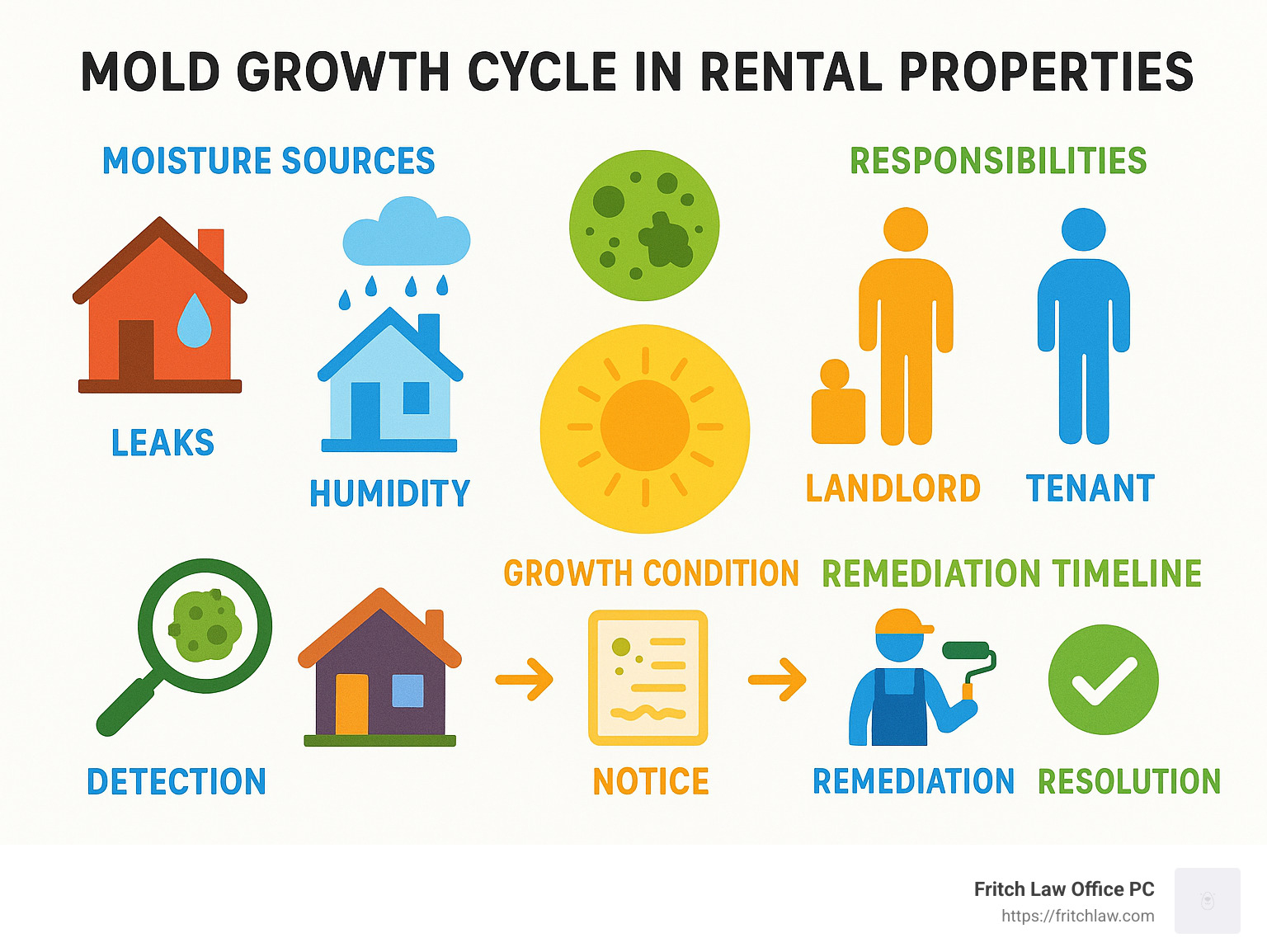
Want to learn more about related rental property topics? Check out our resources on Indiana rental property management and Indiana landlord tenant law abandoned property.
Indiana Mold Law 101: Rights & Duties
Looking for clear answers about Indiana landlord-tenant law mold issues? You might be surprised to learn that Indiana has no specific state law addressing mold in rental properties. This legal gap often leaves both landlords and tenants confused about their rights and responsibilities.
But don’t worry – you’re not without protection. Even without explicit mold legislation, Indiana law provides several important safeguards through general habitability requirements.
The cornerstone of tenant protection comes from the “implied warranty of habitability” – a legal doctrine requiring landlords to maintain their properties in livable condition. Put simply, regardless of what your lease says, your landlord must provide a safe, habitable home. Along with this, every Indiana lease includes an “implied covenant of quiet enjoyment,” meaning you have the right to peacefully enjoy your rental without substantial interference – including health hazards like significant mold growth.
While state law might be silent on mold specifically, your local county health department likely has regulations addressing mold as a health concern, though their enforcement abilities vary widely across the state.
Interestingly, Indiana creates an unusual situation: property sellers must disclose known mold problems under Indiana Code Ann. § 32-21-5-7, but landlords don’t face the same requirement when renting the same property.
What the Law Says (and Doesn’t)
When it comes to Indiana landlord-tenant law mold issues, it’s crucial to understand what’s missing from the legal framework:
There are no maximum thresholds for acceptable mold levels in indoor air. No required testing protocols exist for landlords to follow. You won’t find specific remediation standards or timelines in state law. And perhaps most importantly for tenants, there’s no explicit right to withhold rent due to mold problems.
The Indiana State Department of Health (ISDH) takes a hands-off approach, stating clearly on their website: “Unfortunately, there are no regulations on mold in Indiana in residential settings.” They don’t inspect or test for mold in homes.
This aligns with federal policy – neither the EPA nor CDC has established standards for indoor mold levels. The EPA even notes that mold sampling rarely helps answer health-related questions.
Your county health department might become involved in severe cases, especially if a doctor links your illness to mold exposure. But don’t expect testing – as Porter County Health Department plainly states, “PCHD does not test for mold.” Their role typically limits to education and referrals.
Landlord Obligations Under Habitability
Despite the lack of specific mold legislation, Indiana landlords still have significant responsibilities to maintain habitable living conditions – which includes addressing serious mold issues.
Under Indiana’s implied warranty of habitability, your landlord must:
Fix leaks promptly – Water intrusion causes most mold problems. Your landlord needs to repair roof leaks, plumbing issues, window leaks, and other moisture sources within a reasonable time after you notify them.
Maintain HVAC systems – Proper ventilation and humidity control are essential for preventing mold. Your landlord is responsible for ensuring heating, cooling, and ventilation systems work properly.
Remove existing mold – When mold is finded and reported, your landlord must address it if it affects habitability. This typically means finding and fixing the moisture source and removing the mold.
Return the unit to habitable condition – The bottom line is ensuring your rental remains in a condition that doesn’t threaten your health or safety.
Provide itemized accounting – If mold remediation costs come out of your security deposit, your landlord must provide an itemized statement within 45 days after your lease ends, according to Indiana Code §§ 32-31-3-12 and 32-31-3-14.
Simply put, “habitable” means a safe and clean place to live that complies with local housing codes. Mold that poses a health risk clearly violates this standard.
Tenant Duties to Prevent Mold
While landlords bear primary responsibility for structural and systemic issues leading to mold, you as a tenant also have important obligations under Indiana landlord-tenant law mold considerations:
Maintain proper ventilation by using bathroom and kitchen exhaust fans when showering or cooking. This simple habit significantly reduces humidity and moisture buildup that leads to mold.
Practice good housekeeping with regular cleaning, particularly in moisture-prone areas like bathrooms and kitchens. Promptly clean up spills and avoid allowing standing water to accumulate.
Provide timely notice when you find leaks, moisture problems, or mold growth. This is perhaps your most crucial responsibility – Indiana law requires written notice for repair requests.
Maintain smoke detectors by replacing batteries as needed. While not directly mold-related, this responsibility demonstrates the shared nature of maintaining safe living conditions.
Indiana Code § 32-31-7-5 outlines these and other tenant obligations, noting that tenants must “comply with all obligations primarily imposed upon tenants by applicable provisions of health and housing codes.”
Understanding these responsibilities helps maintain a positive landlord-tenant relationship while ensuring a healthy living environment. For more information about your rights as a tenant, check out our Tenant Rights Indiana resource.
Wondering about broader landlord requirements in our state? Our comprehensive Indiana Landlord Laws guide covers everything you need to know about rental property regulations beyond just mold issues.
Indiana Landlord-Tenant Law Mold: Action Steps & Documentation
Facing mold in your Indiana rental can feel overwhelming, but having a clear plan makes all the difference. I’ve seen many tenants struggle with this issue, and proper documentation truly is your best friend in these situations.
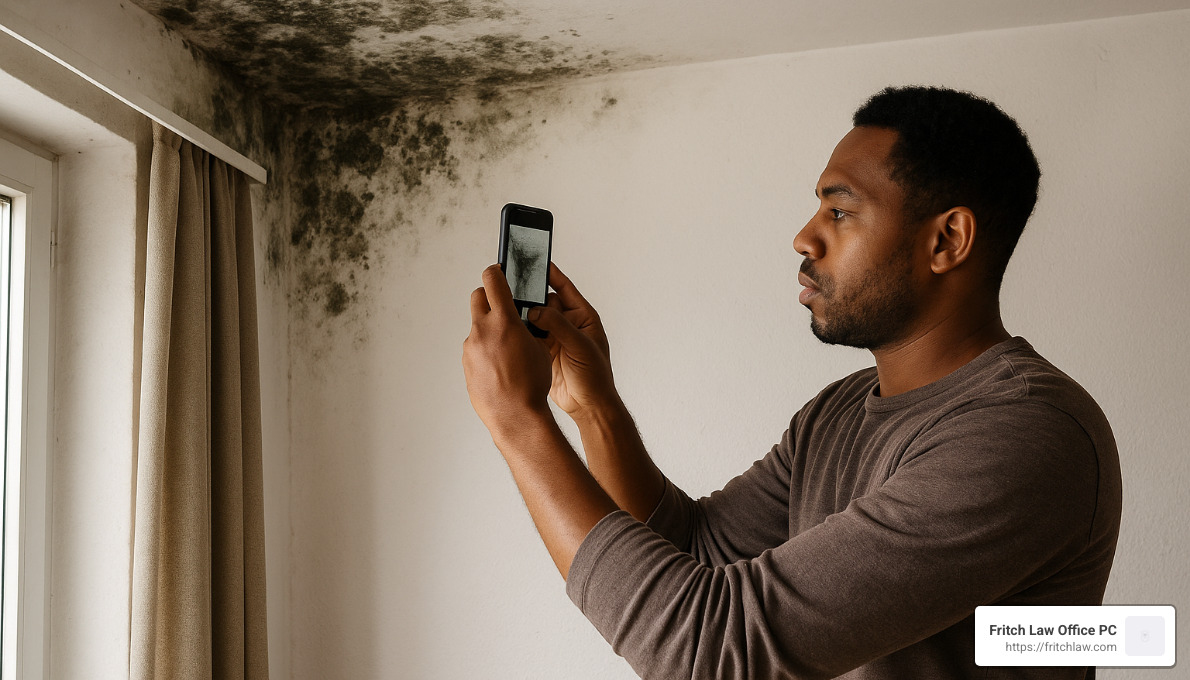
Let’s walk through exactly what to do when you find mold in your Indiana rental home:
Step 1: Notify Your Landlord in Writing
Always start with proper written notice—this isn’t just good advice, it’s a legal requirement in Indiana before you can pursue any remedies.
Your notice should be clear and specific: “I’ve finded black mold growing on the bathroom ceiling and around my bedroom window frames. This appears to be caused by the leaking roof we discussed last month.” Date it, sign it, and keep a copy for yourself.
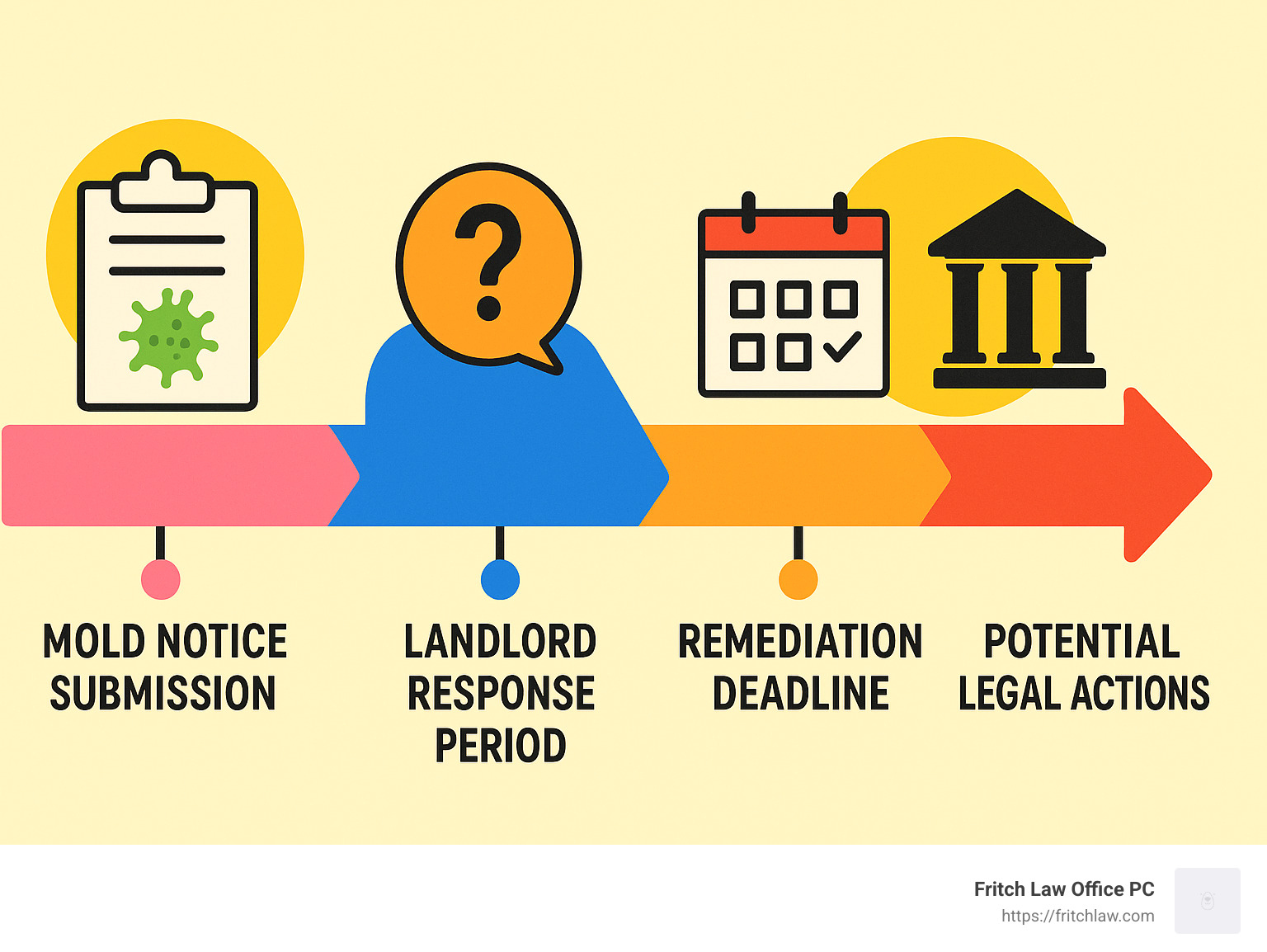
Send this notice via certified mail with return receipt requested. This small step creates proof of delivery that could prove invaluable later. Give your landlord a reasonable timeframe to respond—typically 14-30 days is fair for most mold issues.
Without this written notice, your legal options become severely limited. As we often tell clients, this first step lays the foundation for everything that follows.
Step 2: Document Everything (The Paper Trail)
When it comes to Indiana landlord-tenant law mold issues, the person with the best documentation usually wins. Think of yourself as a detective building a case.
Take clear, dated photos of all visible mold—both close-ups and wider shots showing location and context. Videos can be helpful too, especially for showing the full extent of the problem. If there’s water damage or active leaks causing the mold, document those as well.
Go beyond just visuals. Use a humidity meter (available at most hardware stores for under $20) to record moisture levels—mold thrives above 60% relative humidity. These readings can help prove that conditions in the apartment support mold growth.
Keep meticulous records of all communications. Save emails, text messages, and make notes after phone conversations: “Spoke with property manager Jim on Tuesday at 2pm. He said he would send someone to look at the mold by Friday.”
If you’ve experienced health issues, medical documentation connecting your symptoms to mold exposure can be powerful evidence. Ask your doctor to note any potential connection to mold in your medical records.
Step 3: Call in Backup if Ignored
If your properly submitted notice goes unanswered after a reasonable time, it’s time to bring in reinforcements.
Your local county health department should be your first call. While they typically don’t test for mold directly, they can inspect for code violations related to moisture, ventilation, or other conditions that contribute to mold growth. Having an official document these issues adds significant weight to your case.
For serious situations where a doctor has linked illness to mold exposure, you might request air quality monitoring through the Indiana State Department of Health via your local health department.
Don’t forget about building code enforcement. Local building inspectors can cite landlords for violations related to water intrusion or structural issues that create mold-friendly environments.
If these steps don’t resolve the issue, it’s probably time for legal help. At Fritch Law Office, we’ve guided many tenants through Indiana landlord-tenant law mold cases and can help you understand your specific options. You can learn more about our approach on our Legal Help for Renters page.
Step 4: Understand Self-Help Limits
Indiana law places some significant guardrails around what tenants can do on their own, and this is where many well-intentioned renters get into trouble.
Withholding rent is risky business in Indiana. Unlike some states, Indiana doesn’t have clear statutes allowing tenants to withhold rent for habitability issues. As attorney Peter Agostino notes: “Withholding rent is probably not the best strategy but in extreme cases it does make sense.”
Similarly, the “repair-and-deduct” approach (fixing the problem yourself and deducting the cost from rent) exists in a legal gray area in Indiana. While some courts have recognized this remedy, it carries substantial risk.
The harsh reality is that tenants who withhold rent or make unauthorized repairs often face eviction proceedings—even when their mold complaints are legitimate. I’ve seen this happen to good people who simply didn’t understand the legal landscape.
The safest path forward is following proper notification procedures, building a solid documentation file, involving appropriate authorities when necessary, and consulting with an attorney before taking any action that might jeopardize your housing stability.
By following these steps carefully, you’ll be in the strongest possible position to address Indiana landlord-tenant law mold issues while protecting your rights and your health.
Health Risks, Testing, Costs, and Prevention
Living with mold isn’t just a headache for your rental situation—it can be a genuine threat to your wellbeing. Whether you’re a landlord or tenant dealing with Indiana landlord-tenant law mold concerns, understanding the health implications, testing options, and prevention strategies is essential for everyone’s safety and peace of mind.
Mold exposure affects different people in different ways. For many, it might cause annoying but manageable symptoms like a stuffy nose, scratchy throat, coughing, or eye irritation. But for others—especially children, elderly individuals, and people with existing respiratory conditions or compromised immune systems—mold can trigger serious health problems.
“Some people show immediate reactions to mold, while others develop issues gradually over time,” explains one health department representative. “It really depends on the level of exposure and individual sensitivity.”
More severe reactions can include intense allergic responses, asthma attacks, breathing difficulties, and even fungal infections in those with weakened immune systems. That’s why addressing mold problems quickly isn’t just about property maintenance—it’s about protecting health.
When to Test (and When to Skip It)
Many people’s first instinct when finding mold is to test it—but is that always necessary? Both the EPA and most health departments suggest otherwise.
The simple truth is this: if you can see or smell mold, you already have a problem that needs fixing, regardless of what type it is or how much is present. As the Porter County Health Department bluntly puts it: “Money is better spent fixing mold and moisture sources than on expensive testing.”
Testing makes the most sense in specific situations, particularly after remediation to verify that cleanup efforts were successful. This “clearance testing” is especially important for large-scale mold problems or when vulnerable individuals will be occupying the space.
Consider the cost-benefit reality, too. Professional mold testing typically runs between $300-$800—funds that might serve you better by going directly toward fixing the underlying moisture problem and removing visible mold. Before spending money on testing, ask yourself: “Will knowing the exact type of mold change how I address this problem?”
DIY Cleanup vs. Professional Remediation
When facing a mold situation, one of the biggest decisions is whether to tackle it yourself or call in the professionals. The answer largely depends on the scope of the problem.
| Aspect | DIY Cleanup | Professional Remediation |
|---|---|---|
| Appropriate for | Small areas (<10 sq ft) | Larger areas, hidden mold, black mold |
| Materials needed | Detergent, water, scrub brush, gloves, N95 mask | Professional equipment, containment systems, industrial-grade cleaners |
| Average cost | $50-$100 for supplies | $500-$6,000+ depending on severity |
| Time required | A few hours | 1-5 days typically |
| Effectiveness | Good for surface mold | Better for structural issues |
| Landlord liability | May not fully resolve issue | More likely to completely address problem |
| Documentation | Limited | Professional report and clearance testing |
For smaller mold problems—think an area less than about 10 square feet—DIY cleanup can be perfectly appropriate. The EPA recommends scrubbing mold off hard surfaces with detergent and water, drying completely within 24-48 hours, and replacing any absorbent materials that have become moldy, like carpeting or ceiling tiles. Always wear proper protection: gloves and an N95 mask at minimum.
But for larger problems, hidden mold, or situations involving black mold, professional remediation is the safer choice. Professionals bring specialized equipment, containment systems, and the expertise to fully address structural issues that may be contributing to the problem.
For landlords especially, professional remediation offers an additional benefit: documentation. Having a professional report and clearance testing can provide valuable protection if disputes arise later about whether the problem was adequately addressed.
Proactive Prevention for Both Sides
The old saying that “an ounce of prevention is worth a pound of cure” couldn’t be more true when it comes to mold. Both landlords and tenants play important roles in keeping rental properties mold-free.
For landlords, preventative maintenance is key. This means keeping the building envelope secure to prevent water intrusion, promptly repairing any leaks, ensuring proper ventilation (especially in moisture-prone areas like bathrooms and kitchens), and maintaining gutters and downspouts. Regular inspections of areas prone to moisture problems can catch issues before they become expensive headaches.
Tenants also have crucial prevention responsibilities. Maintaining indoor humidity below 60% (ideally between 30-50%) is perhaps the single most important step. Using exhaust fans during showers and while cooking, reporting leaks immediately, and keeping furniture slightly away from exterior walls in humid climates all help reduce mold risk.
“Maintain relative humidity between 20–40% in winter and under 60% at other times,” advises the EPA. A simple humidity gauge (hygrometer) can be purchased for under $15 and provides valuable information about your indoor environment.
Smart landlords often include mold prevention information in their move-in materials. This not only helps prevent problems but demonstrates good faith efforts to maintain healthy living conditions—something that can be important if disputes arise later.
For comprehensive guidance on mold prevention and cleanup strategies, the Environmental Protection Agency (EPA) Mold resource offers excellent, science-based recommendations that both landlords and tenants can trust.
When it comes to Indiana landlord-tenant law mold issues, prevention isn’t just about avoiding property damage—it’s about creating and maintaining healthy living spaces where everyone can breathe easier.
Legal Remedies, Security Deposits, and FAQs
When mold issues persist despite your best efforts, it might be time to explore legal options. Navigating Indiana landlord-tenant law mold situations can feel overwhelming, but understanding your rights can help you move forward with confidence.
Legal Remedies for Mold Issues
If you’re facing a stubborn mold problem that your landlord won’t address, several legal pathways exist:
Mold issues often qualify as a breach of contract when your lease promises a habitable living space. Your landlord has a responsibility to maintain the property in a safe condition, and failing to address mold problems may violate this fundamental agreement.
In more serious cases, you might consider a negligence claim. If your landlord knew about a mold problem but didn’t take reasonable steps to fix it, they could be liable for any resulting harm to you or your belongings.
For disputes involving damages under $10,000, Indiana’s small claims courts offer a more accessible and faster option. These courts typically resolve cases within 2-4 months and don’t require you to hire an attorney, making them a practical choice for many tenants.
Just remember that time is of the essence. Indiana has a two-year statute of limitations for premises liability cases, including mold issues. This means you must file your lawsuit within two years of finding the mold problem or related injury.
As one legal resource puts it: “A landlord can be sued for negligence if they created or allowed a mold problem to persist and a court awards damages.”

Indiana Landlord-Tenant Law Mold: Can I Break My Lease?
“Can I just move out?” This is perhaps the most common question we hear at Fritch Law Office PC when tenants find serious mold problems. The answer isn’t simple, but in certain circumstances, you may have grounds to terminate your lease early.
When mold makes your apartment truly uninhabitable, the legal doctrine of “constructive eviction” may apply. As one legal expert explains: “In Indiana, there’s an implied covenant of quiet enjoyment that’s put into every lease by law so if mold gets to a point where you can’t continue to live there, you can leave – terminate the lease.”
If severe mold forces you to temporarily relocate, you might be able to recover those costs from your landlord, though this typically requires legal action. Even if you properly terminate your lease due to mold, your landlord has a legal duty to make reasonable efforts to re-rent the unit, which could limit your liability for remaining rent.
Breaking a lease is a serious step with potential financial and legal consequences. Before making this decision, it’s wise to consult with an attorney experienced in Indiana landlord-tenant law mold cases who can evaluate your specific situation.
Withholding & Repair-and-Deduct — What the Courts Have Said
While Indiana doesn’t have laws explicitly allowing tenants to withhold rent or repair problems themselves and deduct the costs, Indiana courts have sometimes sided with tenants who took these measures in extreme situations.
In some cases, courts have ruled in favor of tenants who withheld rent after providing proper notice and giving landlords reasonable time to address serious habitability issues, including dangerous mold growth. However, these strategies still carry significant legal risk, including potential eviction.
If you’re considering withholding rent or making repairs yourself, proceed with extreme caution. At minimum, you should:
- Provide detailed written notice with specific repair requests
- Allow your landlord ample time to respond (typically 30 days)
- Document all communications and conditions thoroughly
- Consider setting up an escrow account for any withheld rent
- Consult with an attorney before taking action
Attorney Peter Agostino offers this measured advice: “It’s probably not the best strategy but in extreme cases, it does make sense to do that.”
Security Deposit Battles Over Mold
Security deposit disputes related to mold happen frequently in Indiana rentals. Understanding the rules can help protect your financial interests:
Your landlord can’t deduct for normal wear and tear, but they can deduct for mold caused by tenant negligence – like not using bathroom fans, failing to report leaks, or creating excessive humidity. The key distinction is between normal living conditions versus neglect or damage.
Indiana law requires landlords to provide an itemized list of damages within 45 days after you move out. If they miss this deadline, you may be entitled to your full deposit regardless of any mold issues they claim you caused.
Documentation is your best protection. Take detailed photos during both move-in and move-out inspections to document the presence or absence of mold. These visual records can be invaluable if disputes arise later.
The burden of proof falls on your landlord if they claim you caused mold damage. They must demonstrate that your actions, rather than structural or maintenance issues, led to the problem.
For more information on property disputes, visit our page on Indiana Landlord Tenant Law: Abandoned Property.
Frequently Asked Questions about Mold & Indiana Rentals
Is my landlord legally required to disclose past mold?
Unlike some states, Indiana doesn’t have a specific law requiring landlords to disclose past mold problems to prospective tenants. Interestingly though, when selling residential properties with up to four units, sellers must disclose known mold issues under Indiana Code Ann. § 32-21-5-7.
While not legally required for rentals, trustworthy landlords should disclose significant past mold issues, especially those that might affect tenant health. If you find your landlord concealed a known, serious mold problem, this could potentially strengthen your case if legal issues arise later.
Who pays for temporary relocation during remediation?
Indiana law doesn’t specifically address who should pay for temporary housing during mold remediation. If the mold problem is severe enough to make your unit uninhabitable and resulted from your landlord’s negligence or failure to maintain the property, you may have grounds to request they cover your relocation costs.
This often comes down to negotiation. Some landlords will voluntarily cover these expenses to maintain good relations and avoid potential lawsuits. Others may resist, potentially requiring mediation or legal action to resolve the dispute.
What evidence do I need for a mold-related injury claim?
Building a successful mold-related injury claim requires thorough documentation. You’ll typically need:
Medical documentation linking your symptoms directly to mold exposure. This might include doctor’s notes, test results, and specialist opinions.
Proof the landlord knew about the mold through your written notices, maintenance requests, or other communications.
Evidence showing the landlord failed to act within a reasonable timeframe after being notified.
Thorough documentation of the mold condition including dated photos, videos, and potentially professional test results.
Expert testimony from medical professionals and/or industrial hygienists who can verify the connection between the mold and your health issues.
As one legal resource notes: “Proving a mold case requires evidence gathering, mold testing, and medical expert testimony.” These cases can be complex and typically benefit from professional legal assistance.
Can my landlord charge me for mold cleanup when I move out?
Your landlord can only charge for mold cleanup at move-out under specific conditions:
First, the mold must have been caused by your negligence or damage – not by structural issues or maintenance problems that were the landlord’s responsibility.
Second, the charge must be itemized in a written statement provided within 45 days of your move-out date.
Finally, the amount must be reasonable and reflect actual costs – not inflated charges or estimates.
If the mold resulted from issues outside your control – like a leaking roof, faulty plumbing, or inadequate ventilation – these costs should not be your responsibility.
What if my landlord blames me for causing the mold?
If your landlord tries to pin mold problems on you, don’t panic. Document the conditions that led to the mold growth and maintain records of all maintenance requests and your landlord’s responses.
Mold resulting from structural issues, water intrusion from external sources, or inadequate ventilation systems are typically the landlord’s responsibility, not yours. Take photos of any leaks, water damage, or other conditions that might have contributed to the mold problem.
If the dispute continues and significant money or your health is at stake, consulting with an attorney who understands Indiana landlord-tenant law mold issues can help protect your rights and potentially save you from unfair charges.
Conclusion
Navigating Indiana landlord-tenant law mold issues requires understanding both the limitations of state law and the protections that exist through implied warranties and common law principles. While Indiana lacks specific mold statutes, tenants are not without recourse when facing mold problems in their rental homes.
Key Takeaways:
-
Act quickly: Mold problems worsen over time. Prompt reporting and documentation are essential.
-
Document thoroughly: Photos, written notices, and health records create the foundation for any successful mold claim.
-
Follow proper procedures: Written notice to your landlord is the essential first step before pursuing any other remedies.
-
Know the limits: Self-help remedies like rent withholding carry significant risks under Indiana law.
-
Prevention matters: Both landlords and tenants share responsibility for preventing the conditions that lead to mold growth.
At Fritch Law Office PC, we understand the complexities of Indiana landlord-tenant law mold issues. Our experienced attorneys can help you understand your rights and options when facing mold problems in your rental property. Whether you’re a tenant seeking remediation or a landlord working to maintain healthy properties, we provide personalized, client-focused legal representation.
For tenants facing mold issues, we recommend:
– Document everything
– Provide proper written notice
– Understand your lease terms
– Consult with an attorney before taking actions like withholding rent
For landlords managing properties:
– Address moisture issues promptly
– Respond to tenant concerns about mold quickly
– Document all remediation efforts
– Consider adding mold prevention guidance to tenant materials
Mold issues in rental properties affect both the physical and legal health of all parties involved. By understanding your rights and responsibilities under Indiana law, you can better steer these challenging situations.
For more information about landlord-tenant services, visit our comprehensive guide to Indiana Landlord Laws.
Contact Fritch Law Office PC today to discuss your specific situation and how we can help you resolve your Indiana landlord-tenant law mold concerns.