
Estate planning for pets: Complete 2026 Guide
Fritch Law Office handles estate planning for pets cases for Indiana residents every day. First, our attorneys examine your situation carefully. Next, we identify your strongest legal options. Furthermore, we explain every step in plain language. Therefore, you make confident decisions from day one.
Key Facts About Estate planning for pets in Indiana
Indiana courts apply strict 2026 rules to estate planning for pets matters. Moreover, experienced attorneys win better outcomes for clients. Additionally, early legal advice prevents costly mistakes. Consequently, clients who hire Fritch Law gain a clear advantage. However, waiting too long weakens your position significantly.
Take Action on Estate planning for pets Today
Do not delay your estate planning for pets case. First, call our Jasper office directly. Next, we schedule your free consultation immediately. Then, we build a winning strategy for you. Additionally, we represent you at every court hearing. Finally, we resolve your case as fast as possible.

Visit the Indiana Courts website for official legal information. Contact Fritch Law for your free consultation today.
Why Estate Planning for Pets Is More Critical Than You Think
Estate planning for pets is a crucial step that many owners overlook. Surveys show 45% of pet owners haven’t considered it, and only 7% have made formal arrangements. Without a plan, your pet could end up in a shelter with only a 45-60% chance of adoption.
Quick options for your pet’s future include:
- Simple Will Provision: Name a guardian and leave money (not legally binding for fund use).
- Pet Trust: A legally enforceable arrangement with trustee oversight.
- Power of Attorney: Covers pet care if you become incapacitated.
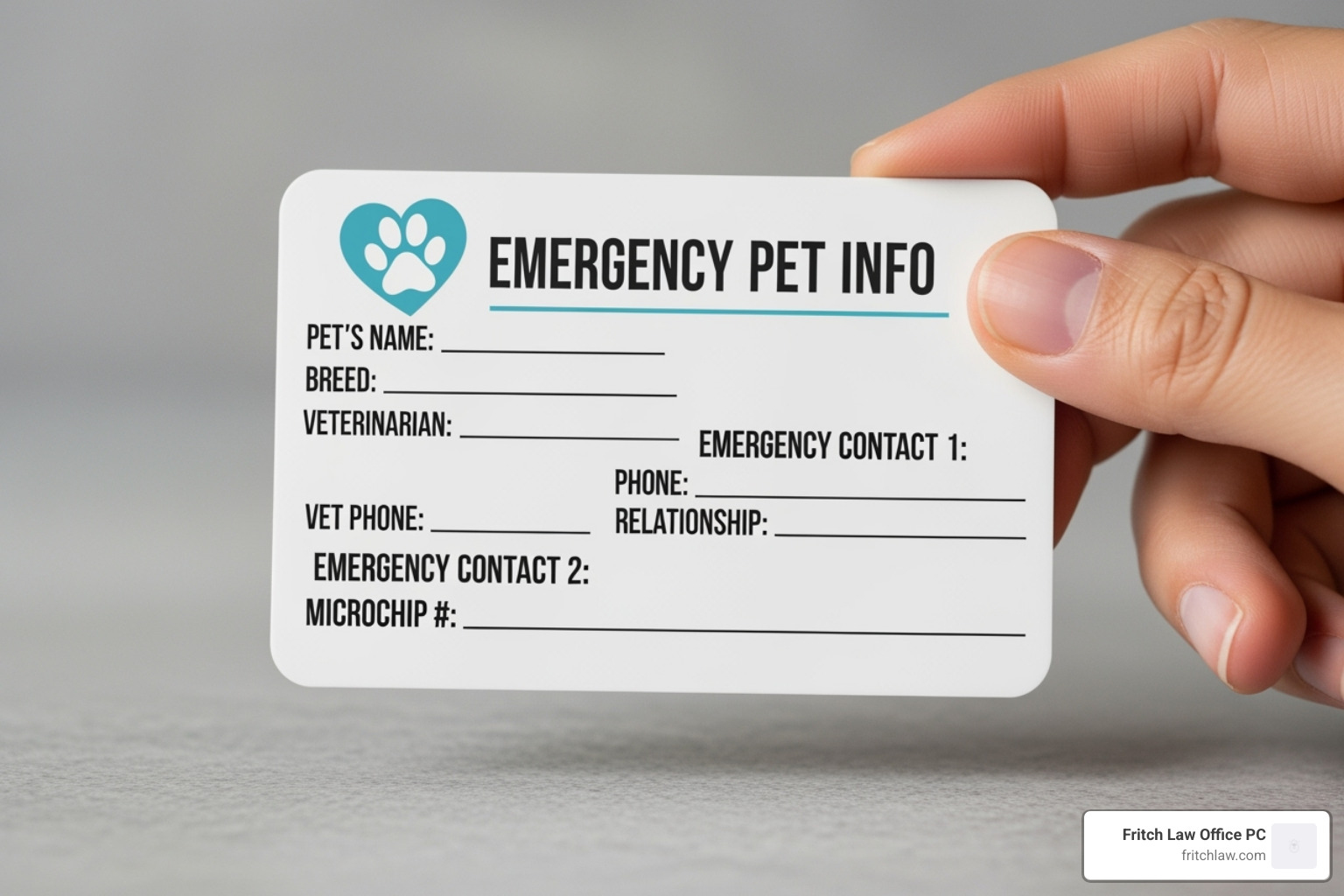
- Emergency Planning: Wallet cards and immediate care instructions.
With 70% of owners considering pets family, the impact of poor planning is devastating. The lifetime cost of a dog can exceed $30,000, an unfair burden to place on others without financial provisions. While you can’t leave money directly to a pet (they are legally property), you can create a solid plan to ensure their well-being.
As an experienced lawyer, I help families protect what matters most through comprehensive estate planning for pets. My background in law and financial planning provides unique insight into creating practical, affordable solutions.

Why Your Pet Can’t Be a Direct Heir: Understanding the Law
Legally, pets are considered personal property, much like a car or furniture. This classification is a surprise to many owners, but it has significant implications for estate planning for pets.
As property, pets cannot directly inherit money or assets. A will provision leaving $10,000 to your cat, Whiskers, is invalid because pets lack the legal capacity to be a beneficiary. This is a fundamental concept in estate law in Indiana and across North America.
Without a plan, your pet becomes part of your general estate. If you die without a will (intestate), state law dictates who inherits your property. Your companion could end up with a relative who doesn’t want them or, worse, in an animal shelter. Statistics show pets in this situation have only a 45-60% chance of adoption.
This is why proactive estate planning for pets is vital. It ensures your pet’s continued well-being and avoids distress for them and your loved ones. You must designate a trusted caregiver and provide the necessary financial support to avoid having your pet treated like an item to be discarded.
For more information on the legal process after a loved one passes, you can visit our page on Probate.

Choosing and Preparing a Guardian for Your Pet
Choosing a guardian is the most heartfelt part of estate planning for pets. You are selecting someone to provide love and stability for your pet’s remaining life. It’s crucial to name both a primary guardian and at least one alternate guardian in case your first choice cannot fulfill the role.
Never assume someone will accept this responsibility. Have an open conversation with potential guardians before naming them in legal documents. Discuss key factors to ensure they are a good fit:
- Lifestyle: Can they meet your pet’s energy and social needs?
- Other Pets: Will your pet get along with their existing animals?
- Financial Stability: Can they handle upfront costs before estate funds are available?
- Experience: Are they familiar with your pet’s species or breed?
- Long-Term Commitment: Do they understand the full commitment, especially for long-lived pets like parrots?
Once you have an enthusiastic “yes,” create a comprehensive care instruction manual. This guide ensures a seamless transition for your pet. Include the following:
- Daily Routine: Feeding schedules, walk times, and play preferences.
- Dietary Information: Food brands, portions, allergies, and favorite treats.
- Medical Records: Vet contact info, medications, health conditions, and vaccination history.
- Personality and Habits: Fears (like thunderstorms), favorite toys, and sleeping spots.
- Emergency Contacts: Your vet, an emergency clinic, and other pet services (groomers, sitters).
If you don’t have a suitable person, consider a pet stewardship program. Some animal sanctuaries and humane societies commit to finding loving, pre-screened homes for pets whose owners have passed away. These programs offer peace of mind when friends or family aren’t an option.
Keep your care instructions updated and accessible to your chosen guardians. For more information about legal guardianship arrangements, visit our Guardianship page.
Your Toolkit for Pet Estate Planning
You have several practical tools for estate planning for pets, each fitting different situations and budgets. The two main approaches are a simple will provision, which relies on trust, and a pet trust, a formal, enforceable contract. Financially, pet ownership is a major commitment. The cost of pet ownership can exceed $30,000 over a dog’s lifetime, so a small bequest may not be enough.
Here’s how these options stack up:
| Feature | Simple Will Provision (Bequest) | Pet Trust |
|---|---|---|
| Legal Basis | Part of your Last Will and Testament | Separate, legally binding trust document |
| Enforceability | Relies on goodwill; not legally enforceable for fund usage by caretaker | Legally enforceable; trustee ensures funds are used as intended |
| Cost | Generally lower upfront cost; part of standard will drafting | Higher upfront cost due to complexity and ongoing administration |
| Control | Limited control over fund usage once given to caretaker | High control over how funds are spent and pet cared for |
| Incapacity | Only takes effect upon death; no provision for incapacitation | Can take effect immediately upon incapacitation or death |
| Probate | Subject to probate, which can cause delays in care | Bypasses probate; immediate access to funds and care |
| Oversight | None | Trustee provides oversight and accountability |
| Flexibility | Less flexible; a lump sum might not cover long-term needs | More flexible; funds can be released as needed for unexpected expenses |
Simple Will Provisions
The simplest approach is a “pet clause” in your will, gifting your pet and a sum of money for their care to a chosen person. This method is simple and cost-effective but has a major drawback: the money is a gift to the caretaker with no legal requirement that it be spent on the pet. It relies entirely on their goodwill. This approach also only takes effect after you die and is subject to probate, which can delay care.
For comprehensive information on how wills work, visit our Estate Planning page.
What is a Pet Trust in Estate Planning for Pets?
A pet trust is the gold standard for estate planning for pets. Recognized in all 50 states, including Indiana, it’s a legally enforceable arrangement. You appoint a trustee to manage funds and oversee care, ensuring your detailed instructions are followed. The trust is funded with assets and can be structured to bypass probate, providing immediate funds for care.
You include detailed instructions for everything from diet to medical needs and personality quirks. You also name a remainder beneficiary to receive any leftover funds after your pet passes. The trust terminates upon your pet’s death. Setting up a pet trust requires careful legal drafting to comply with state laws. For detailed guidance, consult with a Pet Trust Attorney.
Planning for Incapacity, Not Just Death
Many owners overlook planning for incapacity. If an accident or illness leaves you unable to care for your pet, your will is ineffective. This is where a Power of Attorney is crucial. This document lets you designate an agent to make decisions and spend your money on your pet’s behalf, covering vet bills and arranging care if you become incapacitated.
A living trust can also provide for your pet during incapacity. Since the trust is already funded, the trustee can immediately access funds and direct care according to your instructions, with no probate delays. Without these tools, your family may face legal problems accessing your funds, leaving your pet’s care in limbo. To learn more, check out our insights from an Asset Protection Lawyer.
Finalizing Your Plan: Emergency Prep and Common Pitfalls
A solid estate planning for pets strategy requires emergency preparation and avoiding common mistakes. A plan is useless if no one knows about your pets in an emergency.

Key Considerations for Emergency Preparedness
If you are in an accident, how will anyone know your pets are home alone? Prepare for emergencies with these steps:
- Emergency Wallet Card: Carry a card in your wallet stating you have pets at home, with contact information for at least two emergency caregivers. You can buy an emergency pet care card online to streamline this.
- Notify First Responders: Place a removable sticker on your door or window alerting emergency personnel to the number and types of pets inside.
- Keep Documents Accessible: Ensure your caregivers know where to find your pet’s care manual, vet records, and legal documents. Use a fireproof safe and secure digital copies.
Avoiding Common Mistakes
Even the best intentions can be undermined by simple oversights. Avoid these common pitfalls in your estate planning for pets:
- Assuming Someone Will Step Up: Never assume. Have explicit conversations with potential guardians and get their enthusiastic agreement before naming them.
- Not Funding the Plan Adequately: Be realistic about costs. The lifetime expense for a dog can exceed $30,000. Underfunding creates a burden on your guardian.
- Forgetting an Alternate Guardian: Your primary choice’s life can change. Always name a backup to prevent your pet from ending up in a shelter.
- Failing to Communicate: Your guardian needs to know your pet’s specific needs, your care expectations, and the financial support you’ve provided.
- Not Updating the Plan: Life changes. Review your pet plan annually and after major events like adopting a new pet, a guardian moving, or a change in your pet’s health.
Frequently Asked Questions about Pet Estate Planning
Here are answers to common questions about estate planning for pets.
How much money should I leave for my pet’s care?
There is no magic number, but you can calculate a realistic amount. Start with annual costs—a dog can cost around $4,000 per year—and multiply by your pet’s life expectancy. Then, factor in:
- Your Pet’s Unique Needs: Consider their age, health, special diets, medications, and grooming requirements.
- Inflation and Emergencies: Build in a cushion for rising costs and unexpected veterinary bills.
- Guardian Compensation: You may wish to include funds to thank your guardian for their time and effort.
It’s better to overfund the plan (leftover money can go to a remainder beneficiary) than to leave your guardian with a financial burden.
What happens if my chosen guardian can no longer care for my pet?
This is why naming at least one alternate guardian is critical. Your legal documents should specify who takes over if your primary choice cannot. This ensures a seamless transition.
If you don’t have trusted individuals, consider a pet stewardship program. Reputable humane societies and animal welfare organizations can, in exchange for a donation from your estate, commit to finding a carefully screened, loving home for your pet. Research these organizations thoroughly to ensure their values align with yours.
Can I create a pet plan without a lawyer?
While DIY templates exist, estate planning for pets involves legal complexities that they cannot address. Simple will provisions, pet trusts, and Powers of Attorney must comply with specific Indiana statutes to be valid and enforceable. An error in a DIY document could render it invalid.
Online services can’t account for your unique family dynamics, your pet’s specific needs, or the nuances of Indiana law. Investing in professional legal guidance ensures your plan is customized and legally sound, providing true peace of mind that your pet will be protected.
Conclusion: Secure Your Pet’s Future Today
Your pet is family. Estate planning for pets is not about being pessimistic; it’s the ultimate act of devotion, extending the love and protection you provide every day into the future. It ensures that no matter what happens, your companion will continue to receive the care they deserve.
Without a plan, your pet could become one of the many that end up in shelters. You can prevent this. Whether you choose a simple will provision, a comprehensive pet trust, or a Power of Attorney for incapacity, you have options to secure their future. The most important step is to start.
At Fritch Law Office PC in Jasper, Indiana, we understand that every pet and family is unique. Our experienced lawyers can help you create a customized plan that protects your cherished companion and provides you with peace of mind.
Your pet trusts you for everything. Don’t let that trust end with poor planning. Take action today to ensure their future is as secure as the love you share.
Ready to get started? Contact an experienced Pet Trust Attorney to get started and give yourself and your pet the gift of a secure future.