

Pet trust attorney: Complete 2026 Guide
Fritch Law Office handles pet trust attorney cases for Indiana residents every day. First, our attorneys examine your situation carefully. Next, we identify your strongest legal options. Furthermore, we explain every step in plain language. Therefore, you make confident decisions from day one.
Key Facts About Pet trust attorney in Indiana
Indiana courts apply strict 2026 rules to pet trust attorney matters. Moreover, experienced attorneys win better outcomes for clients. Additionally, early legal advice prevents costly mistakes. Consequently, clients who hire Fritch Law gain a clear advantage. However, waiting too long weakens your position significantly.
Take Action on Pet trust attorney Today
Do not delay your pet trust attorney case. First, call our Jasper office directly. Next, we schedule your free consultation immediately. Then, we build a winning strategy for you. Additionally, we represent you at every court hearing. Finally, we resolve your case as fast as possible.

Visit the Indiana Courts website for official legal information. Contact Fritch Law for your free consultation today.
Pet trust attorney can be a vital ally in securing the future of your beloved furry family members. When considering your estate planning, it’s important not to overlook the loyal companions who provide you with unconditional love every day. Safeguarding their care through a pet trust ensures they receive the attention and resources they need in your absence. A pet trust attorney can help you:
- Set up a legally sound plan for your pet’s care.
- Allocate funds to cover your pet’s food, shelter, and medical needs.
- Designate a trusted caregiver to look after your pet.
Proper planning today can prevent your pets from ending up in uncertain situations tomorrow. In fact, over 500,000 pets per year face euthanasia following the death or incapacitation of their owners due to a lack of planning. This reality underscores the importance of proactive legal arrangements to ensure that your companions continue to enjoy a high quality of life.
My name is David Fritch. I’ve had the privilege of guiding many clients through the complex world of estate planning as an experienced lawyer, and I am dedicated to helping you secure the best possible future for your pets. Let’s explore how a pet trust attorney can assist you in crafting a lasting care plan for your furry family members.
Simple pet trust attorney glossary:
– charitable trust attorney
– family trust attorney
– special needs trust attorney
Understanding Pet Trusts
A pet trust is a legal arrangement that ensures your pet is cared for after you’re no longer able to do so. Think of it as a special plan that allocates resources and sets guidelines for your pet’s well-being. Unlike a simple will, a pet trust offers more detailed and enforceable instructions for your pet’s care.
What is a Pet Trust?
A pet trust is a legal entity designed to provide for the care of your pet. It allows you to set aside funds specifically for your pet’s needs and designate a caregiver. This ensures your pet’s lifestyle doesn’t change even if you can’t be there for them.
Components of a Pet Trust
-
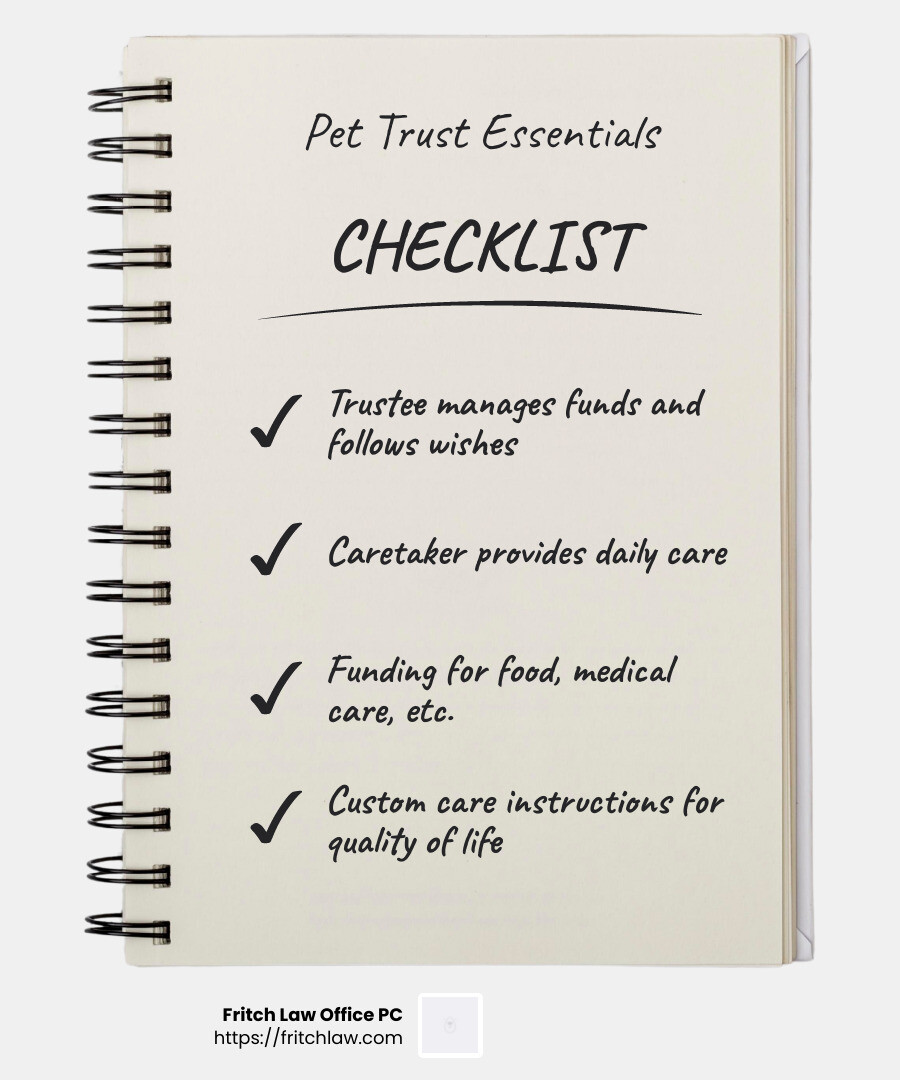
Trustee: This is the person who manages the trust. They handle the money and ensure it’s used according to your wishes.
-
Caretaker: The individual who will look after your pet. You can specify who this person will be and provide them with detailed care instructions.
-
Funding: The trust must have money or assets set aside to cover your pet’s expenses. This can include food, medical care, and even boarding if necessary.
-
Care Instructions: You can include specific details about your pet’s habits, preferences, and medical needs. This ensures the caretaker knows exactly how to maintain your pet’s quality of life.
-
Duration: The trust remains in effect for the pet’s lifetime or until the funds are depleted.
Why Choose a Pet Trust?
- Legal Enforceability: A pet trust is legally binding, meaning the trustee must follow your instructions.
- Immediate Effect: Unlike a will, which can take time to go through probate, a pet trust takes effect as soon as it’s needed.
- Customized Care: You can tailor the trust to fit your pet’s unique needs and lifestyle.
By creating a pet trust, you can provide peace of mind knowing your pet will be cared for according to your wishes. This legal tool ensures that your beloved companions continue to receive the love and care they deserve.
Steps to Create a Pet Trust
Creating a pet trust involves several key steps. These steps ensure your pet is well taken care of if you’re no longer able to do so. Let’s break down the process:
Designate a Trustee
First, you need to choose a trustee. This person will manage the funds and ensure they’re used as you wish. Anyone aged 18 or older can be a trustee in Illinois. It’s important to pick someone responsible and trustworthy.
- Considerations: The trustee can also be the pet’s caretaker, but it’s wise to avoid conflicts of interest. For example, if the trustee inherits leftover funds after your pet’s passing, ensure they’re committed to your pet’s welfare first.
Allocate Funds
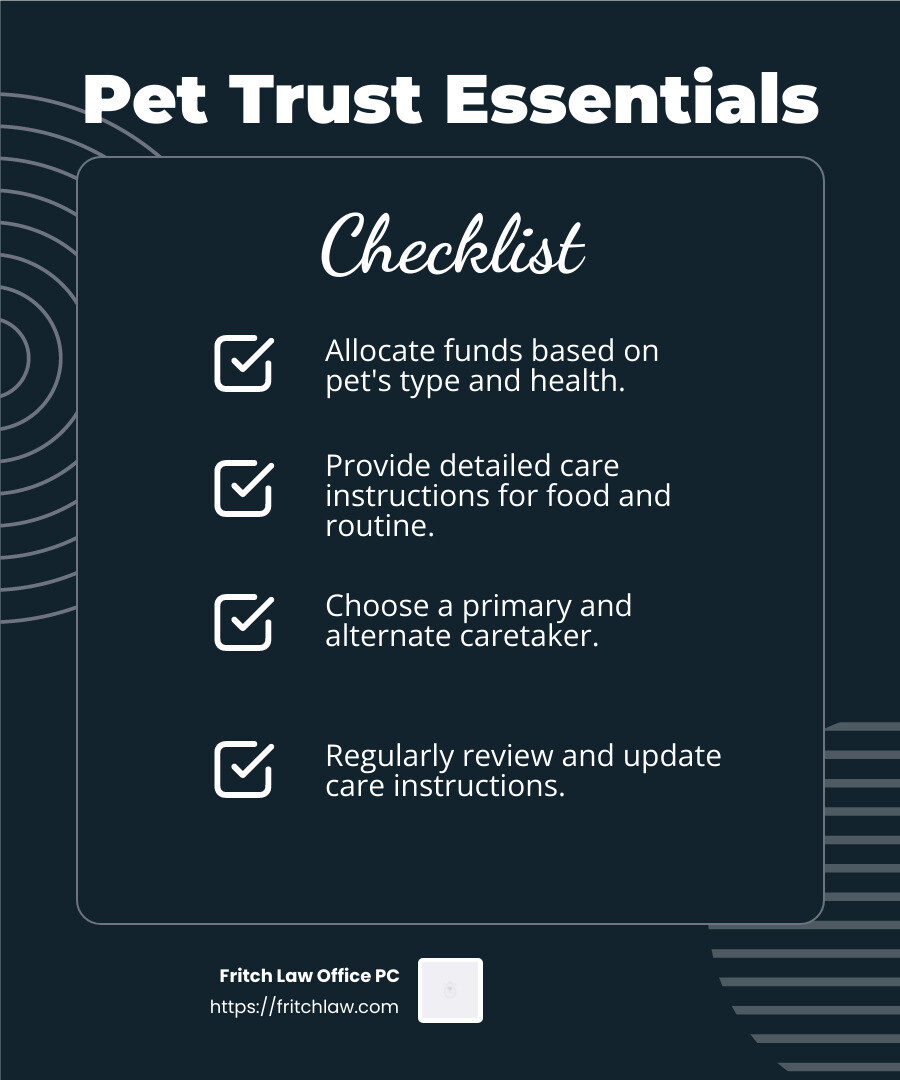
Next, decide how much money to set aside for your pet’s care. This should cover everything your pet needs for its lifetime, like food, medical care, and grooming.
- Factors to Consider:
- Type of Pet: Different animals have different care costs. A horse may require more funds than a cat.
- Age and Health: Older pets or those with health issues might need more financial support.
- Lifestyle: Consider your pet’s lifestyle and any special needs.
A pet trust attorney can help you calculate a reasonable amount to allocate based on these factors.
Provide Care Instructions
Include detailed care instructions in the trust. This helps the caretaker understand exactly how to care for your pet.
- Details to Include:
- Dietary Needs: Specify brands or types of food your pet prefers.
- Medical Care: List any medications or preferred veterinarians.
- Routine: Outline daily routines, favorite activities, and any special quirks.
You can revise these instructions as your pet’s needs change. Regular reviews ensure they remain up-to-date.
Choose a Caretaker
Finally, designate a caretaker who will look after your pet. This can be the same person as the trustee, or someone else entirely.
- Primary and Alternate: It’s smart to name a primary caretaker and an alternate, just in case the first choice is unavailable.
By following these steps, you can create a pet trust that provides for your pet’s well-being and ensures their care continues seamlessly. This proactive planning offers peace of mind and security for your beloved companion.
With these steps complete, you’ll have a robust plan in place to protect your pet’s future. Next, we’ll explore the role of a pet trust attorney in guiding you through this process.
Role of a Pet Trust Attorney
Setting up a pet trust might seem straightforward, but the legal nuances can be complex. This is where a pet trust attorney becomes invaluable. They provide essential legal guidance, ensure your trust complies with state laws, and help with the overall setup.
Legal Guidance
A pet trust attorney helps you steer the legal landscape of setting up a trust. They ensure you understand your options and make informed decisions. This includes advising on the selection of a trustee and the allocation of funds. For instance, in Illinois, they can explain how the Illinois Pet Trust Act affects your trust and what legal rights your pet has.
Trust Setup
The setup process involves several detailed steps. An experienced attorney will help draft the trust document, ensuring it includes all necessary elements. They will:
- Draft Clear Instructions: Ensure your pet’s care instructions are clear and legally enforceable. This includes dietary needs, medical care, and daily routines.
- Allocate Funds Properly: Help you determine a reasonable amount to allocate for your pet’s care. This prevents overfunding or underfunding, which could lead to legal issues or inadequate care.
Compliance with State Laws
Each state has its own laws governing pet trusts. A knowledgeable attorney ensures your trust complies with these laws, avoiding potential legal pitfalls. For example, the California Probate Code recently amended its pet trust provisions, requiring trustees to honor all terms. An attorney can help you understand such changes and incorporate them into your trust.
By engaging a pet trust attorney, you benefit from their expertise and experience, ensuring your pet trust is set up correctly and legally sound. This provides peace of mind, knowing your pet’s future is secure.
In the next section, we’ll explore the benefits of having a pet trust and how it ensures ongoing care for your beloved companion.
Benefits of a Pet Trust
Creating a pet trust offers several advantages that ensure your pet is well cared for, even after you’re gone. Let’s explore some key benefits, including legal enforceability, pet care assurance, and financial management.
Legal Enforceability
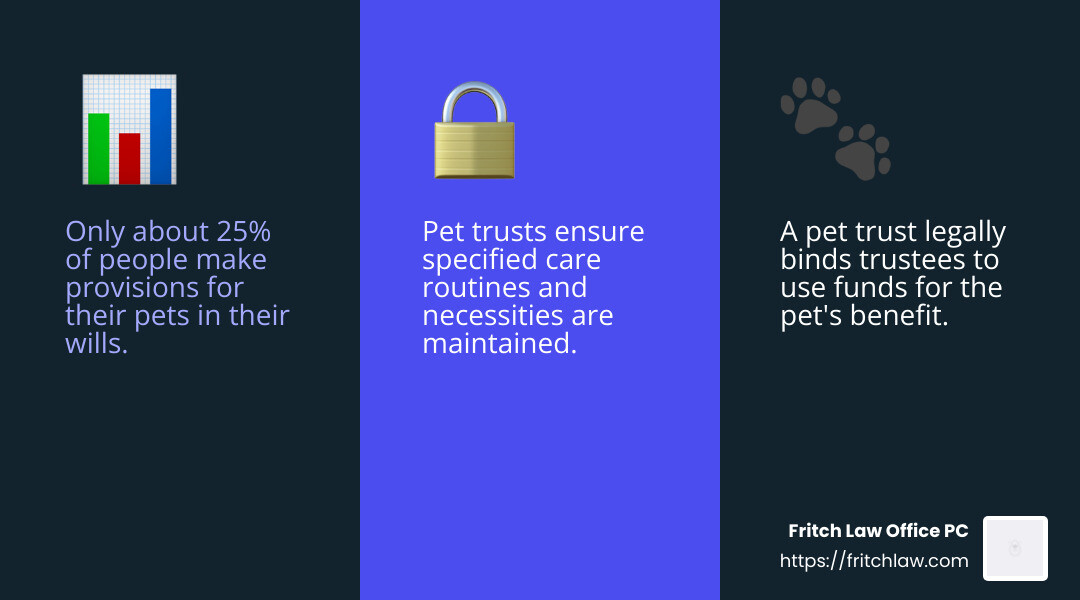
A pet trust is not just a promise—it’s a legally enforceable arrangement. Unlike informal agreements where you might leave funds to a friend with the hope they’ll care for your pet, a pet trust legally binds the trustee to use the funds solely for your pet’s benefit. This means you can rest easy knowing your pet’s needs will be met as specified in the trust.
Did you know? Only about 25% of people make provisions for their pets in their wills, often leaving their care uncertain. A pet trust provides clarity and legal backing.
Pet Care Assurance
A pet trust allows you to detail your pet’s care requirements. You can specify everything from dietary preferences and medical care to daily routines and grooming needs. This ensures your pet continues to receive the care they’re accustomed to, maintaining their quality of life.
For example, if your dog requires a specific type of food or regular vet visits, you can include these details in the trust. This way, the caregiver knows exactly what to do, and the trustee is obligated to allocate funds for these purposes.
Financial Management
Managing the finances for your pet’s care can be complex, especially if your pet has special needs or requires long-term medical attention. A pet trust helps you allocate funds appropriately. You can work with a pet trust attorney to estimate the cost of your pet’s care over their lifetime, ensuring there’s enough money to cover all expenses.
Moreover, any residual funds after your pet’s passing can be directed according to your wishes, such as returning to your estate or being donated to a charity. This level of control over financial distribution is a significant benefit of setting up a pet trust.
In summary, a pet trust provides a structured and reliable way to ensure your pet’s well-being, backed by legal force. It gives you peace of mind, knowing your beloved companion will be cared for as you intended.
Next, we’ll address some frequently asked questions about pet trusts to further clarify how they work and their advantages.
Frequently Asked Questions about Pet Trusts
What is the Illinois Pet Trust Act?
The Illinois Pet Trust Act is a law that allows pet owners to create a legal arrangement specifically for their pets’ care after the owner’s death or incapacitation. This law recognizes pets as part of your estate plan, ensuring they receive care as intended. Under this act, a pet trust is a legally enforceable entity, meaning the trustee must follow the trust’s instructions to provide for your pet’s needs.
Fact: Over 1.3 million pets enter shelters annually due to the owner’s death, highlighting the importance of legal protections like the Illinois Pet Trust Act.
Can you leave a trust to a dog?
While you can’t leave a trust directly to a dog or any pet, you can set up a pet trust that allocates funds for their care. Pets are considered property by law, so they can’t be direct beneficiaries. Instead, you designate a caretaker and a trustee. The trustee manages the funds in the trust, ensuring they are used according to your detailed care instructions for your pet.
Tip: Specify your pet’s likes, dislikes, and routines in the trust to maintain their quality of life.
How does a pet trust differ from a will?
A pet trust differs from a will in several key ways:
-
Immediate Effect: A pet trust takes effect immediately upon your death or incapacitation, ensuring uninterrupted care for your pet. In contrast, a will goes through the probate process, which can delay the distribution of assets and care instructions.
-
Probate Process: Wills must pass through probate, a public legal process that can be time-consuming and costly. Pet trusts bypass probate, providing a quicker and more private solution.
-
Care Instructions: In a pet trust, you can include specific care instructions, which are legally enforceable. This ensures that your pet receives the care you desire, something a will cannot guarantee with the same immediacy and legal backing.
Example: A testamentary trust, part of your will, doesn’t activate until probate is complete, potentially leaving your pet in limbo. A pet trust avoids this delay, offering seamless care.
Understanding these distinctions helps you make informed decisions about your pet’s future care. Up next, we’ll explore how Fritch Law Office PC can assist you in creating a personalized pet trust custom to your needs.
Conclusion
At Fritch Law Office PC, we understand that your pets are family. That’s why we offer personalized legal services to ensure your beloved companions are cared for if you’re no longer able to do so. Our experienced lawyers work closely with you to create a pet trust that aligns with your wishes and provides the peace of mind you deserve.
Our client-focused representation means we take the time to listen to your concerns and priorities. We guide you through each step of the estate planning process, ensuring that your pet trust is not only legally sound but also custom to meet the unique needs of your pet. Whether it’s designating a trustworthy caretaker or setting up funds for your pet’s lifelong care, we are here to help.
Creating a pet trust with us means you’re not just planning for the future; you’re ensuring that your pet continues to enjoy the life you’ve provided. Secure your pet’s future with the personalized legal services at Fritch Law Office PC.
Ready to take the next step in your estate planning journey? Contact Fritch Law Office PC today to schedule a consultation and let us help you protect your pet’s future with care and confidence.