

Can i sue my landlord for asbestos exposure: Complete 2026 Guide
Fritch Law Office handles can i sue my landlord for asbestos exposure cases for Indiana residents every day. First, our attorneys examine your situation carefully. Next, we identify your strongest legal options. Furthermore, we explain every step in plain language. Therefore, you make confident decisions from day one.
Key Facts About Can i sue my landlord for asbestos exposure in Indiana
Indiana courts apply strict 2026 rules to can i sue my landlord for asbestos exposure matters. Moreover, experienced attorneys win better outcomes for clients. Additionally, early legal advice prevents costly mistakes. Consequently, clients who hire Fritch Law gain a clear advantage. However, waiting too long weakens your position significantly.
Take Action on Can i sue my landlord for asbestos exposure Today
Do not delay your can i sue my landlord for asbestos exposure case. First, call our Jasper office directly. Next, we schedule your free consultation immediately. Then, we build a winning strategy for you. Additionally, we represent you at every court hearing. Finally, we resolve your case as fast as possible.

Visit the Indiana Courts website for official legal information. Contact Fritch Law for your free consultation today.
What to Do If You Suspect Asbestos Exposure in Your Rental Property
Can I sue my landlord for asbestos exposure? Yes, if you can prove that the asbestos in your rental property caused health issues and the landlord was negligent. Here’s what you need to know:
- Tenant Rights: Landlords must provide a safe and habitable living environment.
- Duty of Care: Landlords should identify and address asbestos hazards.
- Legal Action: You can take legal steps if you have solid evidence of negligence.
Asbestos is a dangerous material that can cause serious health issues like mesothelioma and lung cancer. If you’re a tenant and suspect that you have been exposed to asbestos in your rental property, you have rights and may be able to take legal action.
I’m David Fritch. With 40 years of experience in law, I’ve seen how crucial it is for tenants to know their rights when it comes to unsafe living conditions. Let’s dig into what you should do if you suspect asbestos exposure in your rental property.
Easy can i sue my landlord for asbestos exposure word list:
– indiana landlord laws
– indiana tenant rights eviction
Understanding Asbestos Exposure
Asbestos exposure is a serious health concern that can lead to debilitating diseases. It’s important to understand the risks and the types of illnesses associated with asbestos.
Health Risks
Asbestos fibers, when inhaled, can cause severe health issues. These tiny fibers can become lodged in the lungs and other tissues, leading to long-term damage. The health effects may not appear immediately but can take years or even decades to manifest.
Mesothelioma
Mesothelioma is a rare and aggressive cancer primarily caused by asbestos exposure. It affects the lining of the lungs, abdomen, or heart. Symptoms often include chest pain, shortness of breath, and fluid buildup. Unfortunately, mesothelioma is usually diagnosed at an advanced stage, making treatment difficult.
Lung Cancer
Lung cancer is another severe consequence of asbestos exposure. Unlike mesothelioma, which is specific to asbestos, lung cancer can be caused by various factors, including smoking. However, the risk significantly increases for individuals exposed to asbestos. Persistent cough, chest pain, and weight loss are common symptoms. If exposure occurred due to landlord negligence, the question can I sue my landlord for asbestos exposure? becomes critical in seeking compensation for damages.
Asbestosis
Asbestosis is a chronic lung disease resulting from prolonged exposure to asbestos. The condition causes lung tissue scarring and leads to symptoms such as shortness of breath, persistent cough, and chest tightness. Unlike cancer, asbestosis is not fatal but can severely impact the quality of life.

Understanding these health risks is crucial for anyone who suspects asbestos exposure in their living environment. If you believe you have been exposed, it is vital to seek medical evaluation and consider legal action to protect your health and rights.
Next, we will discuss the legal grounds for suing your landlord for asbestos exposure.
Legal Grounds for Suing Your Landlord
If you suspect asbestos exposure in your rental property, you might be wondering, “Can I sue my landlord for asbestos exposure?” The answer is yes, under certain conditions. Here’s what you need to know about the legal grounds for taking action against your landlord.
Landlord Liability
Landlords have a legal responsibility to ensure their properties are safe for tenants. This includes addressing any asbestos hazards. When they fail to do so, they can be held liable for any harm caused by asbestos exposure. If you’re asking, “Can I sue my landlord for asbestos exposure?” landlord liability is a key factor in determining your case.
Duty of Care
Landlords are required to provide a habitable living environment. This legal obligation, known as the duty of care, means they must maintain the property and address any health hazards, including asbestos. If a landlord knew or should have known about the asbestos and did nothing, they have breached this duty. This breach strengthens your claim if you’re considering, “Can I sue my landlord for asbestos exposure?”
Negligence
Negligence occurs when a landlord fails to take reasonable steps to prevent harm. In asbestos cases, this could mean not conducting proper inspections, ignoring known asbestos issues, or failing to inform tenants about the presence of asbestos. To prove negligence, you must show that the landlord’s inaction directly led to your exposure and subsequent health problems.
Breach of Contract
Most rental agreements include clauses that require landlords to maintain a safe living environment. If your lease explicitly states this responsibility and the landlord fails to address asbestos hazards, you may have grounds for a breach of contract claim. This means the landlord did not fulfill their contractual obligations, leading to your exposure.
Case Study: Successful Asbestos Lawsuit
Consider a case where a tenant, who was diagnosed with mesothelioma, sued their landlord. The tenant provided evidence that the landlord knew about the asbestos but did nothing to remove it or warn the tenants. The court found the landlord liable for negligence and breach of duty, awarding the tenant significant compensation for medical expenses and suffering. This real-life example highlights the importance of asking, “Can I sue my landlord for asbestos exposure?” and taking action when landlords neglect their duties.
Key Points to Remember
- Landlord Liability: Landlords can be held responsible for asbestos-related harm.
- Duty of Care: They must ensure the property is safe and habitable.
- Negligence: Failing to address asbestos hazards can be considered negligence.
- Breach of Contract: Not maintaining a safe living environment can breach the rental agreement.
Understanding these legal grounds is crucial if you plan to sue your landlord for asbestos exposure. In the next section, we will explore how to prove asbestos exposure and the evidence you will need to support your case.
How to Prove Asbestos Exposure
Proving asbestos exposure is a critical step in any lawsuit against your landlord. It requires gathering various pieces of evidence to establish a clear connection between the exposure and your health issues. Here’s what you need to know.
Medical Records
Medical records are essential for proving asbestos exposure. These documents should detail your diagnosis and link it to asbestos-related diseases such as mesothelioma, lung cancer, or asbestosis.
- Doctor’s notes: These should explain your symptoms and how they relate to asbestos exposure.
- Treatment history: Keep records of all treatments, including surgeries, chemotherapy, and medications.
- Medical bills: These help quantify the financial burden caused by the illness.
Employment History
Your employment history can also play a crucial role, especially if you were exposed to asbestos at work. This information can help establish a timeline of exposure.
- Job records: Include details about your job role, responsibilities, and work environment.
- Employer records: Documentation from your employer about the presence of asbestos in the workplace.
- Coworker statements: Testimonies from colleagues who also experienced asbestos exposure can strengthen your case.
Pathology Reports
Pathology reports provide scientific evidence linking your illness to asbestos. These reports come from tissue biopsies and other medical tests.
- Biopsy results: These should confirm the presence of asbestos fibers in your body.
- Lab reports: Detailed analysis from medical labs that support your diagnosis.
Imaging Scans
Imaging scans such as X-rays, CT scans, and MRIs are crucial for visualizing the damage caused by asbestos.
- X-rays: Can show lung abnormalities typical of asbestos exposure.
- CT scans: Provide detailed images of internal organs, highlighting any asbestos-related damage.
- MRIs: Useful for diagnosing the extent and location of asbestos-related tumors.
Documentation Tips
- Organize your records: Keep all documents in one place and make copies.
- Chronological order: Arrange your evidence in the order events occurred to create a clear timeline.
- Consult an experienced lawyer: They can help you gather and present your evidence effectively.
Key Points to Remember
- Medical Records: Essential for proving the link between your illness and asbestos.
- Employment History: Helps establish a timeline of exposure.
- Pathology Reports: Scientific evidence linking your illness to asbestos.
- Imaging Scans: Visual proof of asbestos-related damage.
Gathering this evidence is crucial for building a strong case. In the next section, we will discuss the steps to take if you suspect asbestos exposure in your rental property.
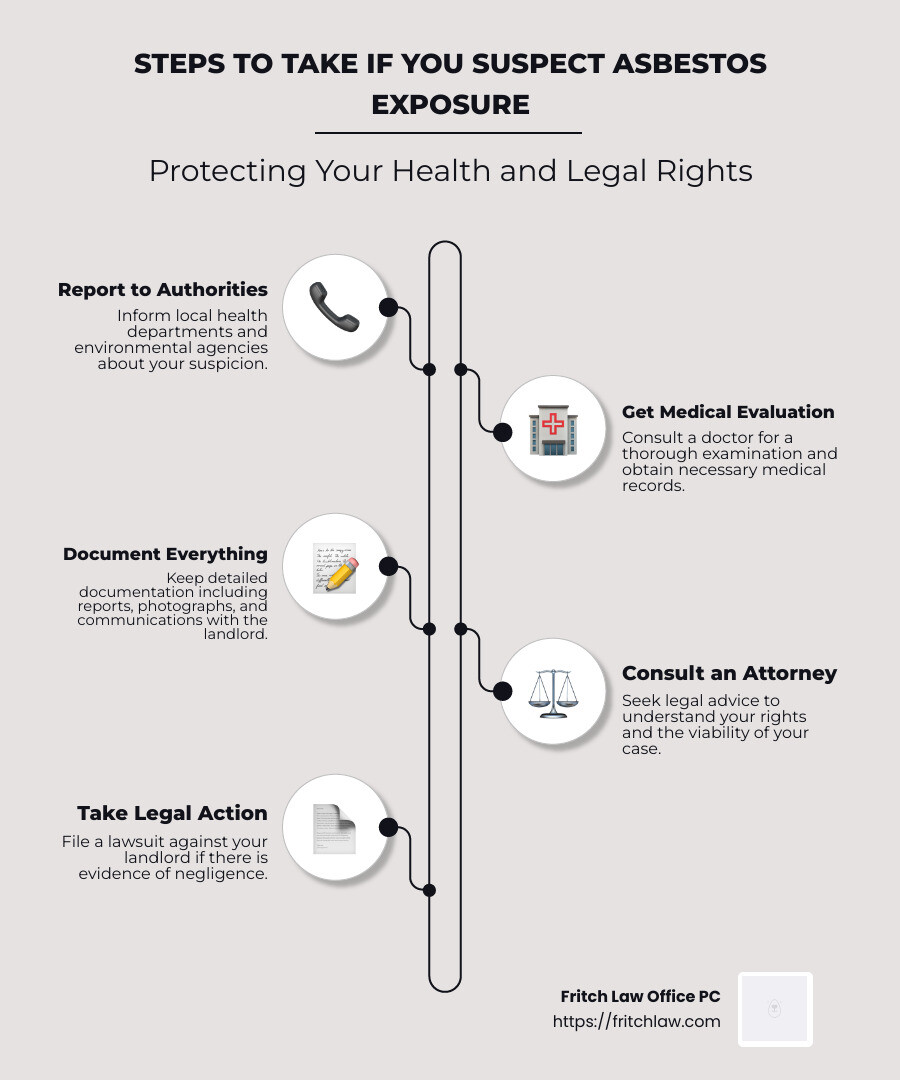
Steps to Take if You Suspect Asbestos Exposure
If you suspect asbestos exposure in your rental property, taking immediate action is crucial. Here are the steps you need to follow:
1. Reporting to Authorities
First, report your concerns to the relevant authorities:
- Local Health Department: Contact your local health department to report potential asbestos exposure. They can guide you on the next steps and may conduct an inspection.
- Environmental Protection Agencies: Agencies like the Environmental Protection Agency (EPA) can provide resources and support for dealing with asbestos. They can also enforce regulations to protect tenants.
2. Notify Your Landlord
Inform your landlord in writing about your concerns. Be specific about where you believe asbestos is present and any health issues you have experienced. Request an immediate inspection and remediation if necessary.
3. Document Everything
Keep detailed records of all communications and actions taken:
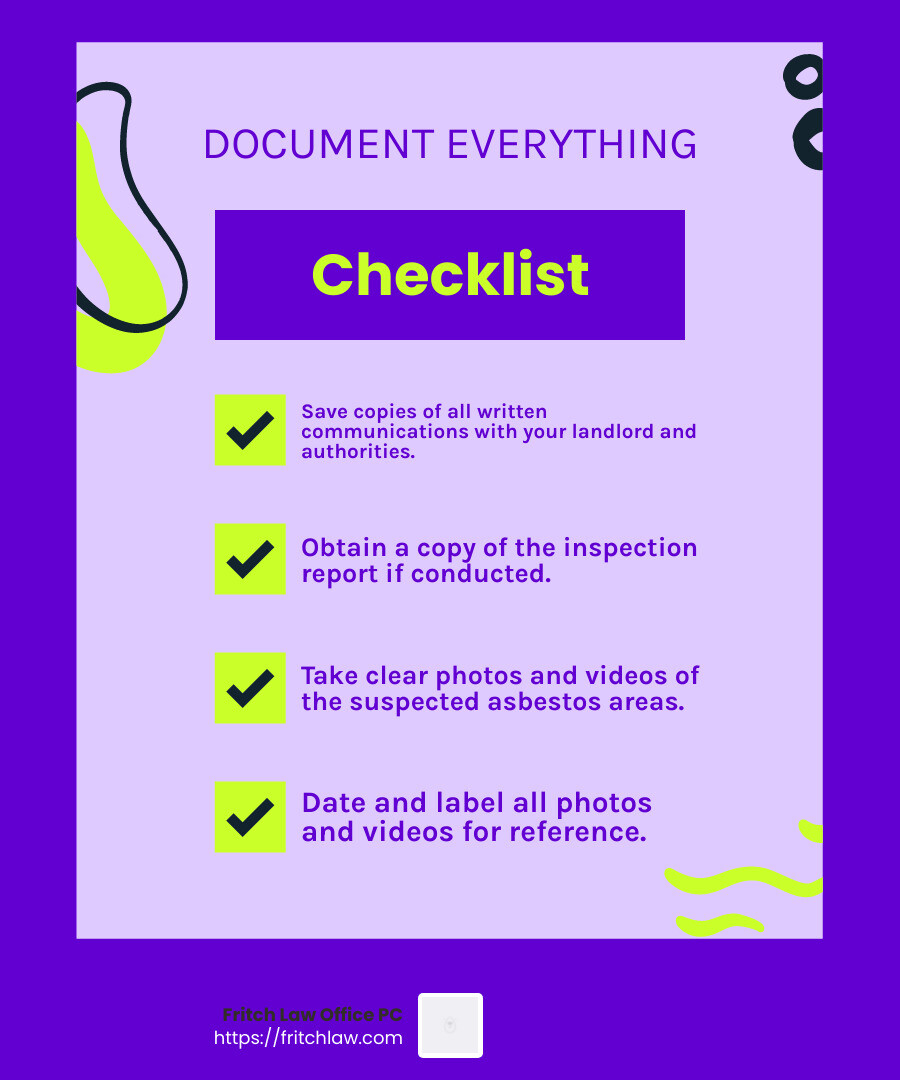
- Emails and Letters: Save copies of all written communications with your landlord and authorities.
- Inspection Reports: If an inspection is conducted, obtain a copy of the report.
- Photos and Videos: Take clear photos and videos of the suspected asbestos areas. Date and label them for reference.
4. Seek Medical Attention
If you experience symptoms related to asbestos exposure, see a doctor immediately. Your health is the top priority.
- Medical Records: Maintain detailed records of your diagnosis and treatment.
- Doctor’s Notes: Ask your doctor to document any links between your symptoms and potential asbestos exposure.
5. Consult an Experienced Lawyer
Get legal advice to understand your rights and options. A lawyer can help you steer the complexities of an asbestos exposure case and guide you on the best course of action.
- Gather Evidence: Your lawyer will help you collect and organize the necessary evidence.
- Legal Advice: They can advise you on whether you have a strong case and the potential outcomes.
Key Takeaways
- Report to Authorities: Contact health departments and environmental agencies.
- Notify Your Landlord: Inform them in writing and request action.
- Document Everything: Keep thorough records of all communications and inspections.
- Seek Medical Attention: Get a medical diagnosis and maintain detailed records.
- Consult a Lawyer: Get professional legal advice to protect your rights.
Taking these steps can help ensure your safety and strengthen your case if you decide to sue your landlord for asbestos exposure. In the next section, we’ll answer some frequently asked questions about suing for asbestos exposure.
Frequently Asked Questions about Suing for Asbestos Exposure
Can I sue my landlord for asbestos exposure?
Yes, you can sue your landlord for asbestos exposure if they knowingly or negligently failed to disclose the existence of asbestos in your rental property. Landlords have a legal duty to provide a safe living environment. If they breach this duty and you suffer harm as a result, you have the right to seek compensation.
What evidence do I need to prove asbestos exposure?
To successfully sue your landlord, you need solid evidence to support your claim. Here are the key types of evidence you should gather:
- Medical Documentation: Obtain medical records that diagnose asbestos-related diseases like mesothelioma, lung cancer, or asbestosis. These records should detail your symptoms, treatment, and any medical opinions linking your condition to asbestos exposure.
- Witness Statements: Collect statements from other tenants or workers who can confirm the presence of asbestos and the landlord’s knowledge of it.
- Expert Testimony: An expert, such as an industrial hygienist, can provide a professional opinion on the presence of asbestos and its potential health risks.
- Inspection Reports: If an inspection was conducted, secure a copy of the report that confirms the presence of asbestos.
- Photos and Videos: Take clear, dated photos and videos of the areas where you suspect asbestos is present.
What are the potential outcomes of an asbestos lawsuit?
The outcomes of an asbestos lawsuit can vary, but here are some common possibilities:
- Settlements: Many asbestos cases are settled out of court. A settlement can provide you with compensation for medical expenses, lost wages, and pain and suffering without the need for a lengthy trial.
- Court Rulings: If your case goes to trial, a judge or jury will decide the outcome. A favorable ruling could result in significant compensation, but the process is often more time-consuming and costly.
- Compensation Amounts: The amount of compensation can vary widely based on the severity of your illness, the extent of your exposure, and the landlord’s level of negligence. Compensation can cover medical bills, lost income, pain and suffering, and other related expenses.
Taking legal action against your landlord for asbestos exposure can be complex, but with the right evidence and legal support, you can seek the justice and compensation you deserve.
Conclusion
Taking legal action against your landlord for asbestos exposure is a serious step, but it can be necessary to protect your health and ensure your rights are upheld. Fritch Law Office PC is here to help you steer this challenging process.
We understand that dealing with asbestos exposure can be overwhelming. Our experienced attorneys offer personalized representation custom to your unique situation. We’ll guide you through each step, from gathering evidence to filing your lawsuit and seeking compensation.
Our team is dedicated to providing client-focused legal consultation. We listen to your concerns, answer your questions, and work tirelessly to achieve the best possible outcome for you.
If you suspect asbestos exposure in your rental property, don’t wait. Contact Fritch Law Office PC today to schedule a consultation. We’re committed to helping you get the justice and compensation you deserve.
Need help with your asbestos exposure case? Contact Fritch Law Office PC now for a personalized legal consultation!