

Can a business file in small claims court: Complete 2026 Guide
Fritch Law Office handles can a business file in small claims court cases for Indiana residents every day. First, our attorneys examine your situation carefully. Next, we identify your strongest legal options. Furthermore, we explain every step in plain language. Therefore, you make confident decisions from day one.
Key Facts About Can a business file in small claims court in Indiana
Indiana courts apply strict 2026 rules to can a business file in small claims court matters. Moreover, experienced attorneys win better outcomes for clients. Additionally, early legal advice prevents costly mistakes. Consequently, clients who hire Fritch Law gain a clear advantage. However, waiting too long weakens your position significantly.
Take Action on Can a business file in small claims court Today
Do not delay your can a business file in small claims court case. First, call our Jasper office directly. Next, we schedule your free consultation immediately. Then, we build a winning strategy for you. Additionally, we represent you at every court hearing. Finally, we resolve your case as fast as possible.

Visit the Indiana Courts website for official legal information. Contact Fritch Law for your free consultation today.
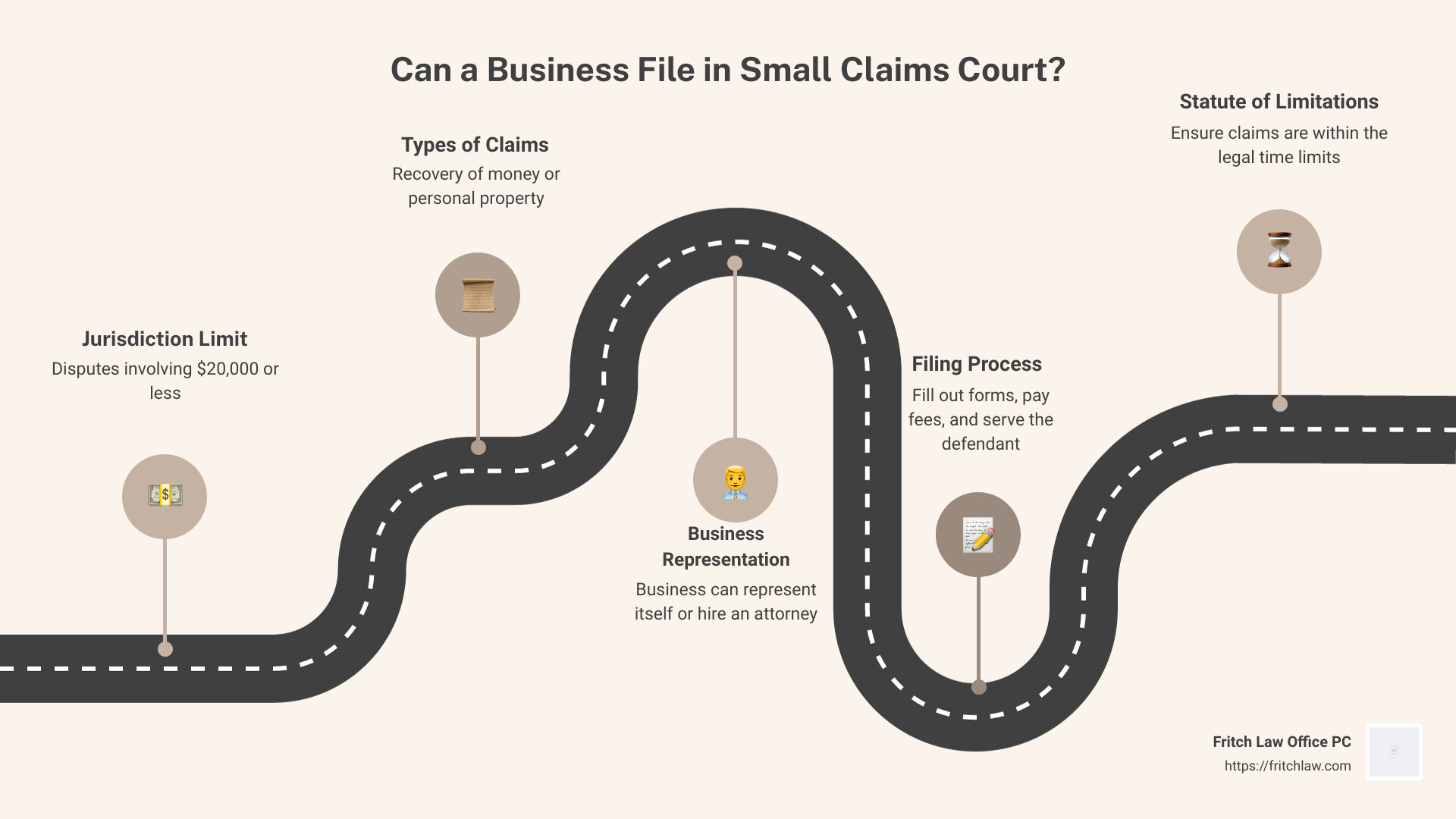
Can a business file in small claims court? Yes, a business can indeed file in small claims court. Here’s what you need to know, summarized simply:
- Jurisdiction Limit: Only for disputes involving $20,000 or less.
- Types of Claims: Must be for the recovery of money or personal property.
- Representation: A business can represent itself or hire an attorney.
Are you facing a business dispute over a small amount of money or personal property and wondering if you can take it to small claims court? This article will guide you through the essential details you need to know.
From filing the correct forms to knowing the types of claims you can make, we’ll break down the process and tell you what steps to follow.
I’m David Fritch, an experienced lawyer with over 40 years in legal practice, committed to helping businesses steer through legal complexities like “can a business file in small claims court”.
Terms related to can a business file in small claims court:
– business court cases
– business court rules
What is Small Claims Court?
Small Claims Court is a specialized court designed to handle minor disputes quickly and inexpensively. It allows individuals and businesses to resolve issues without the need for a lengthy legal process.
Definition
In Illinois, Small Claims Court operates under the Illinois Code of Civil Procedure. It is a part of the Circuit Court system and is presided over by a judge. The main goal is to provide an accessible way to resolve disputes involving relatively small amounts of money or personal property.
Jurisdiction
The jurisdiction of Small Claims Court in Illinois is limited to cases involving claims of $10,000 or less, excluding court costs. This means that if your business dispute involves an amount within this limit, Small Claims Court could be the right venue for you.
Before January 1, 2010, the jurisdiction was limited to $5,000. This increase in the jurisdiction limit allows more small businesses to use this court for resolving disputes.
Illinois Code of Civil Procedure
The Illinois Code of Civil Procedure outlines the creation and operation of Small Claims Court. It shares concurrent jurisdiction with the Circuit Court, meaning both courts can hear similar cases. The code also specifies who can and cannot file claims in this court. For example, assignees, money lenders, and collection agents are generally not allowed to bring actions in Small Claims Court.
Circuit Court
Each judge in the Circuit Court serves as the judge in Small Claims Court. This setup ensures that cases are handled by experienced legal professionals familiar with local laws and regulations.
Small Claims Court is designed to be user-friendly, allowing individuals to represent themselves if they choose. Businesses, too, can represent themselves or opt to hire an attorney. This flexibility makes it easier for small businesses to pursue legal action without incurring significant legal fees.

Understanding these basics can help you decide if Small Claims Court is the right venue for your business dispute. Next, we’ll dive into the specifics of how businesses can file claims in this court.
Yes, a business can file in Small Claims Court. This type of court provides a streamlined process, making it easier for businesses to resolve disputes without the high costs and complexities of traditional litigation.
Types of Businesses Eligible
Corporations, sole proprietorships, and partnerships are all eligible to file claims in Small Claims Court. Each type of business has unique requirements for filing, but the overall process is designed to be straightforward.
- Corporations: Corporations can file claims and represent themselves without needing an attorney. However, the person appearing on behalf of the corporation must show they have the authority to act for the business.
- Sole Proprietorships: As the sole owner, you can file a claim directly. This is often simpler since you are both the business owner and the representative.
- Partnerships: Any partner can file a claim on behalf of the partnership. Like corporations, the partner must show they have the authority to represent the business.
Businesses Not Allowed to File
Not all businesses can use Small Claims Court. Assignees, money lenders, and collection agents are generally prohibited from bringing actions in this court. This rule helps ensure that Small Claims Court is used for its intended purpose: resolving genuine disputes between parties.
- Assignees: If a claim has been assigned to you, you cannot file in Small Claims Court. This prevents businesses from buying claims and using the court to collect debts.
- Money Lenders: Businesses primarily engaged in lending money with interest cannot file claims. This rule is in place to prevent the court from being used for debt collection by financial institutions.
- Collection Agents: Similar to money lenders, collection agencies and agents are not allowed to file claims. This ensures that the court remains a venue for resolving disputes rather than collecting debts.
Filing Process and Rules
The filing process is designed to be user-friendly. Here are the key steps:
- Identify the Right Party to Sue: Determine whether you need to sue an individual or a business entity. If you are suing a business, you may need to serve the registered agent.
- Prepare Your Forms: Use the appropriate forms, such as the Petition to start your case. If you can’t afford the fees, you can fill out a Statement of Inability.
- File Your Case: Submit your forms to the appropriate Justice Court. Make sure you file in the correct county and precinct.
- Serve the Defendant: Serve the papers to the individual or the business’s registered agent. This step is crucial for your case to proceed.
For more detailed guidance, Fritch Law Office PC can help you steer the process and ensure you meet all legal requirements. They offer expertise in business law and can provide the support you need to file your claim successfully.
Understanding these rules and the filing process can help you decide if Small Claims Court is the right venue for your business dispute. Next, we’ll explore the steps involved in filing a small claims case.
How to File a Small Claims Case
Identifying the Right Party to Sue
Before filing a small claims case, it’s crucial to identify the correct party to sue. This could be an individual, a business entity, or a registered agent.
- Individuals: If you are suing an individual, you need their full legal name and an address where they can be served. This is essential for notifying them about the lawsuit.
- Business Entities: For businesses, determine if they are a corporation, LLC, partnership, or sole proprietorship. Each type of business may have different requirements for who can be served.
- Registered Agents: If you are suing a corporation or LLC, you may need to serve their registered agent. You can find this information on the Texas Secretary of State’s website. This step ensures that the correct legal representative of the business is notified.
Serving the Defendant
Once you have identified the right party to sue, the next step is serving the defendant. This process involves officially notifying them that they are being sued.
- Service of Process: After you file your case, the court will generate a citation. This is an official document that states when the hearing will be. You need to serve this citation to the defendant.
- Methods of Service: Service can be done in several ways, including in-person delivery, certified mail, or through a professional process server. Ensure you follow the method accepted by the court.
- Registered Agent: If you are suing a business, you will likely need to serve the registered agent. This individual is designated to receive legal documents on behalf of the business. You can find the registered agent’s information through the Texas Secretary of State’s SOSDirect database.
Filing Steps, Required Forms, and Filing Fees
Here’s a step-by-step guide to filing a small claims case:
-
Prepare Your Lawsuit: Fill out the necessary forms provided by the court. The primary form is the Small Claims Petition. If you cannot afford the filing fees, complete the Statement of Inability form.
-
File the Lawsuit: You can file your forms in person, online, or by mail, depending on the court’s accepted methods. Check with your local Justice Court for specific filing instructions and payment methods.
-
Serve the Lawsuit: After filing, the court will issue a citation. Serve this citation to the defendant using an approved method. Ensure you follow the proper procedure to avoid delays.
Costs and Fees
- Filing Fees: These vary by county and precinct but generally range from $30 to $100. Confirm the exact amount with your local Justice Court.
- Service Fees: Costs for serving the defendant can also vary. If using a process server, expect to pay additional fees.
Understanding these steps and requirements can make the process smoother and increase your chances of a successful claim. For expert guidance, Fritch Law Office PC can assist you in navigating the complexities of filing a small claims case, ensuring you meet all legal obligations and deadlines.
Next, we’ll discuss the costs and fees associated with filing a small claims case.
Costs and Fees
When considering filing a small claims case for your business, it’s important to understand the associated costs and fees. Below, we break down the typical expenses you might encounter.
Filing Fees
The initial cost to file a small claims case in Texas is relatively low:
- Filing Fee: The standard filing fee for small claims cases in Texas is $54. This fee is set by the Texas Local Government Code under sections 135.103 and 133.151(a-1).
If you cannot afford the filing fees, you can apply for a waiver by submitting a Statement of Inability to Afford Payment of Court Costs. This form is available through the court and must be filed along with your petition.
Service Fees
Once your case is filed, you must serve the defendant with a citation. The costs for this service can vary:
- In-Person Delivery: Using a professional process server can cost between $50 to $100, depending on the service provider and the distance they need to travel.
- Certified Mail: This is a cheaper alternative, usually costing around $10 to $15. However, it may not be as reliable as using a process server.
- Sheriff or Constable: In some counties, you can request the sheriff or constable to serve the papers. Fees for this service can range from $75 to $100.
Additional Costs
Beyond filing and service fees, there may be other expenses:
- Subpoena Request: If you need to summon a witness, there is a fee for issuing a subpoena. This can range from $10 to $20.
- Motion Fees: Filing motions such as a Motion for New Trial or a Motion to Reinstate Your Case may incur additional costs, typically around $15 to $30.
- Appeal Bond: If you wish to appeal the court’s decision, you will need to pay for an appeal bond. The cost varies based on the judgment amount but can be substantial.
It’s crucial to budget for these expenses to avoid any surprises. If your business is low on funds, consider consulting with an experienced lawyer to explore options for fee waivers or reduced costs. For more detailed information on filing fees and associated costs, you can visit the Texas Justice Court website.
Next, we’ll look at the statute of limitations for filing small claims cases in Texas.
Statute of Limitations
When filing a small claims case for your business, understanding the statute of limitations is crucial. This refers to the time limit within which you must file your lawsuit. If you miss this deadline, you may lose the right to pursue your claim in court.
Time Limits
In Illinois, the statute of limitations varies depending on the type of claim:
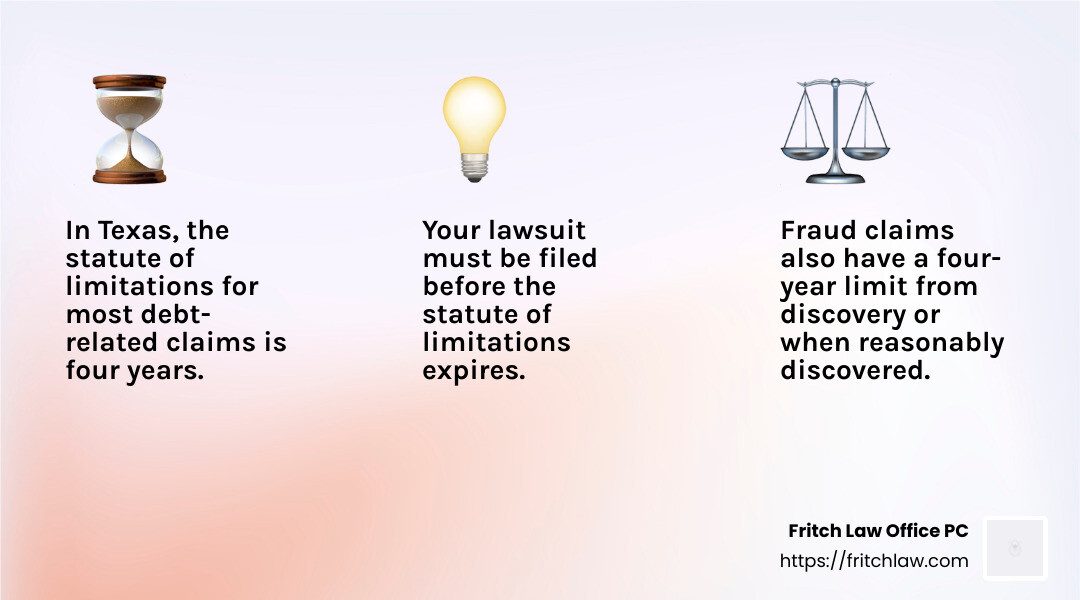
- Debt Claims: For most debt-related claims, the statute of limitations is five years. This means you have five years from the date the debt became due to file your lawsuit. Refer to the Illinois Compiled Statutes 735 ILCS 5/13-205 for more details.
- Fraud Claims: For claims involving fraud, the statute of limitations is also five years. The clock starts ticking either when the fraud was discovered or should have been discovered with reasonable diligence.
Filing Before the Deadline
Your case must be filed before the statute of limitations expires. Your hearing does not need to occur within this timeframe, but the filing date is critical.
What Happens if You Miss the Deadline?
If you file your case after the statute of limitations has passed, you can still proceed with filing. However, the judge will determine whether the statute of limitations has expired. If it has, the judge will dismiss your case at the hearing.
Getting Certainty
To ensure you’re within the legal timeframe, you can:
- Consult a Lawyer: An experienced lawyer can provide clarity and confirm the applicable statute of limitations for your specific case.
- Review the Law: Check the Illinois Compiled Statutes for the relevant sections.
- Court’s Decision: The judge will make the final call at your hearing.
Why File Right Away?
Filing your lawsuit promptly can benefit your case in several ways:
- Avoid Mistakes: If you file incorrectly, you’ll have time to correct it.
- Preserve Evidence: Important evidence may be lost if you wait too long.
- Credibility: The longer you wait, the more you’ll need to explain why you delayed, which can affect your credibility.
Next, let’s dive into the Frequently Asked Questions about Small Claims Court for Businesses.
Frequently Asked Questions about Small Claims Court for Businesses
What is the maximum amount I can sue for in small claims court?
In Illinois, the maximum amount you can sue for in small claims court is $10,000, excluding court costs. This limit allows businesses to resolve smaller disputes efficiently without the need for more complex legal proceedings. This cap includes claims for money owed, property damage, or breach of contract.
Do I need a lawyer for my small claims case?
While you do not need a lawyer to file or handle a small claims case, having one can be beneficial. Representing yourself is an option, especially since small claims courts are designed to be more accessible and less formal. However, an experienced lawyer can help you steer the legal system, prepare your case, and increase your chances of success.
Can I file my small claims case online?
Yes, in Illinois, you can file your small claims case online. Many counties offer online filing services through their Circuit Court Clerk websites. This can save you time and make the process more convenient. Be sure to check the specific requirements for the county where you are filing, as procedures can vary.
For more detailed information on how to file, including required forms and fees, you can visit the Illinois Courts website or contact your local Circuit Court Clerk’s office.
Conclusion
Navigating the small claims court process can seem daunting, especially for businesses. But understanding the basics can make it much more manageable.
Summary
Small claims court is an accessible way for businesses to resolve disputes involving amounts up to $20,000. It’s designed to be straightforward, allowing you to handle cases without the need for extensive legal knowledge. Whether you’re dealing with unpaid invoices, property damage, or a breach of contract, small claims court provides a venue to seek justice efficiently.
Legal Representation
While you do not need a lawyer to file a small claims case, having one can be advantageous. An experienced lawyer can help you understand the nuances of the law, prepare your case effectively, and represent you in court. This can significantly increase your chances of winning, especially if the other party is also well-prepared.
Experienced Lawyer at Fritch Law Office PC
At Fritch Law Office PC, we specialize in providing personalized, client-focused legal representation. Our team is dedicated to helping businesses steer the complexities of small claims court. Whether you need help filing your case, serving the defendant, or representing you in court, we’re here to support you every step of the way.
Don’t let legal disputes hinder your business operations. Contact us today to learn how we can help you resolve your issues efficiently and effectively.