

Tenant rights indiana: Complete 2026 Guide
Fritch Law Office handles tenant rights indiana cases for Indiana residents every day. First, our attorneys examine your situation carefully. Next, we identify your strongest legal options. Furthermore, we explain every step in plain language. Therefore, you make confident decisions from day one.
Key Facts About Tenant rights indiana in Indiana
Indiana courts apply strict 2026 rules to tenant rights indiana matters. Moreover, experienced attorneys win better outcomes for clients. Additionally, early legal advice prevents costly mistakes. Consequently, clients who hire Fritch Law gain a clear advantage. However, waiting too long weakens your position significantly.
Take Action on Tenant rights indiana Today
Do not delay your tenant rights indiana case. First, call our Jasper office directly. Next, we schedule your free consultation immediately. Then, we build a winning strategy for you. Additionally, we represent you at every court hearing. Finally, we resolve your case as fast as possible.

Visit the Indiana Courts website for official legal information. Contact Fritch Law for your free consultation today.
Understanding tenant rights Indiana is crucial for both renters and landlords to maintain a fair and lawful rental experience. Renters in Indiana are entitled to the following key rights:
- Habitable Housing: Landlords must ensure the rental property is livable and safe.
- Repair Requests: Tenants can request repairs, and landlords must address them in a reasonable time.
- Fair Treatment: Tenants cannot face discrimination based on race, gender, or other protected categories.
- Legal Representation: Access to legal avenues if disputes arise.
Navigating these rights can sometimes seem daunting, but knowing them empowers renters to seek fair treatment, maintenance, and respect from their landlords. You have the right to live in a safe and healthy environment.
I am David Fritch, an experienced lawyer with extensive knowledge in guiding tenants through their legal rights in Indiana. My focus is on helping individuals understand and exercise their rights efficiently in various tenancy matters.

Easy tenant rights indiana glossary:
– can i sue my landlord for asbestos exposure
– indiana landlord laws
– indiana tenant rights eviction
Understanding Tenant Rights in Indiana
Navigating the rental landscape in Indiana requires a solid understanding of your rights as a tenant. Let’s break down the essentials.
Habitable Housing
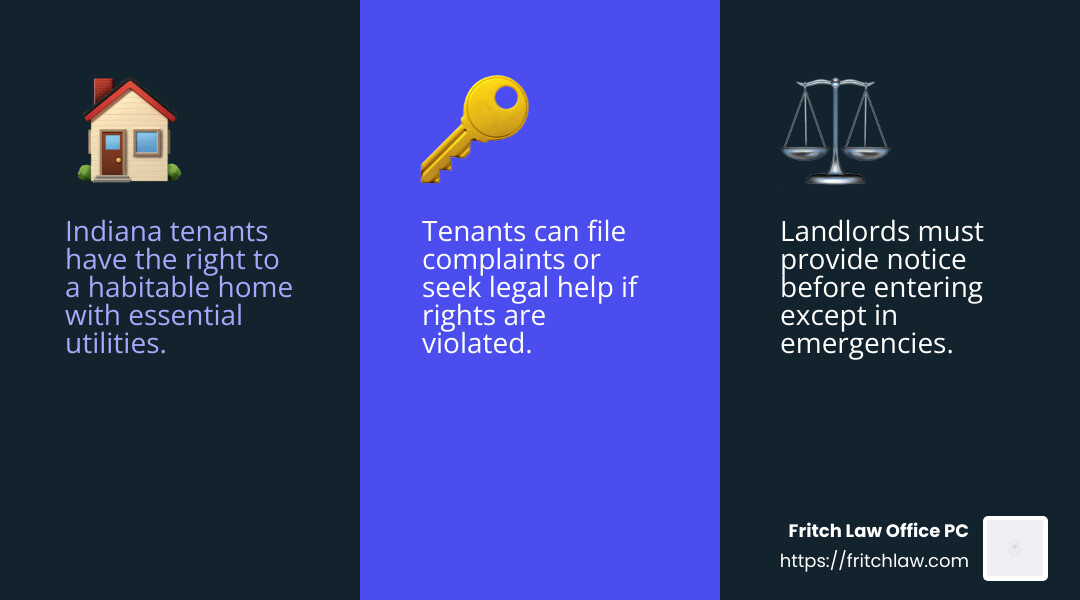
One of your primary rights as a tenant in Indiana is to live in a habitable home. This means your rental unit must meet basic living standards, such as:
- Safety and Cleanliness: Your home should be free from hazards like broken windows or faulty locks.
- Functional Utilities: Access to essential services like plumbing, heating, and electricity.
- Structural Integrity: The building should be weatherproof and structurally sound.
Landlords are responsible for maintaining these standards. If your home isn’t up to par, you can request repairs. According to Indiana law, landlords must address critical issues promptly, typically within three to seven days.
Privacy
Your right to privacy is also protected. Landlords can’t just barge into your home unannounced. They must provide advance notice unless there’s an emergency. This ensures you have a private space where you can feel secure.
Legal Action
If your rights as a tenant are violated, you have the right to take legal action. This could involve:
- Filing a Complaint: If your landlord isn’t meeting their responsibilities, you can file a complaint with local authorities or housing agencies.
- Seeking Legal Help: You might need legal assistance if disputes arise. An experienced lawyer can guide you through the process.
Understanding these rights empowers you to live comfortably and confidently in your rental home. It’s not just about knowing the law—it’s about ensuring a safe and respectful living environment.
Responsibilities of Landlords and Tenants
When it comes to renting in Indiana, both landlords and tenants have specific responsibilities to ensure a smooth and fair rental experience. Let’s break these down.
Landlord Duties
1. Providing a Habitable Home
Landlords in Indiana must maintain their properties in a habitable condition. This means ensuring that the home is safe, clean, and meets all health and safety codes. Key responsibilities include:
- Regular Maintenance: Keeping plumbing, heating, and electrical systems in working order.
- Structural Repairs: Fixing any issues that affect the building’s integrity, like leaks or broken windows.
- Pest Control: Addressing infestations that compromise living conditions.
2. Respecting Tenant Privacy
Landlords must also respect tenant privacy. They are required to give advance notice before entering the rental property, except in emergencies. This notice is typically 24 hours, ensuring tenants have control over their living space.
3. Handling Security Deposits Properly
Security deposits must be managed according to Indiana law. Landlords can use these funds to cover damages beyond normal wear and tear or unpaid rent. However, they must return the deposit within 45 days of the lease ending, along with an itemized list of any deductions.
Tenant Responsibilities
1. Maintaining the Property
Tenants have a duty to keep their rental unit clean and undamaged. This includes:
- Routine Cleaning: Keeping the home tidy and free from hazards.
- Reporting Issues: Informing the landlord promptly about any repairs needed.
- Using Fixtures Properly: Ensuring that appliances and installations are used correctly and not damaged.
2. Complying with Lease Terms
Tenants must adhere to the terms outlined in their lease agreement. This includes paying rent on time and following any rules set by the landlord, such as noise restrictions or pet policies.
3. Allowing Access for Repairs
Tenants should provide access to the property for necessary repairs and maintenance. Cooperation with landlords in this regard helps maintain a safe and functional living environment.
Maintenance and Repairs
Shared Responsibility
Both landlords and tenants play a role in property maintenance. While landlords must address major repairs, tenants should handle minor issues and report significant problems promptly.
Legal Recourse
If a landlord fails to make necessary repairs, tenants can take legal action. However, Indiana law does not permit tenants to withhold rent or make repairs themselves and deduct the cost from their rent. Instead, they should seek legal advice or file a complaint with local housing authorities.
By understanding and fulfilling these responsibilities, both landlords and tenants can foster a positive rental experience. It’s all about mutual respect and clear communication.
Lease Agreements and Termination
Navigating rental agreements in Indiana is crucial for both landlords and tenants. These agreements lay out the rules and expectations for both parties, helping to prevent misunderstandings and disputes.
Rental Agreements
A rental agreement in Indiana should always be in writing, especially for leases longer than three years, as required by state law. Key elements include:
- Property Description: Clearly describe the rental unit.
- Contact Information: Include details for both landlord and tenant.
- Rent Details: Specify the amount, due date, and payment method.
- Security Deposit Terms: Outline the amount and conditions for return.
- Maintenance Responsibilities: Define who handles repairs and upkeep.
- Additional Clauses: Any other agreed-upon terms.
It’s vital for both parties to understand these terms before signing. A well-drafted agreement is a safety net, providing clarity and legal backing if disagreements arise.
Lease Termination
Ending a lease can happen for various reasons, but follow legal procedures to avoid issues.
Tenant-Initiated Termination
Tenants can terminate their lease early under specific conditions:
- Military Duty: If called to active duty.
- Unsafe Living Conditions: When the property is uninhabitable.
- Domestic Violence: With a court order.
- Breach of Lease: If the landlord violates terms significantly.
In these situations, tenants must provide the landlord with notice, typically 30 days, unless otherwise specified in the lease.
Landlord-Initiated Termination
Landlords can terminate a lease if the tenant breaches the agreement. Common reasons include:
- Nonpayment of Rent: Requires a 10-day notice to pay or quit.
- Lease Violations: Such as unauthorized pets or subleasing.
- Criminal Activity: Allows for immediate eviction.
Landlords must follow the proper legal process, including giving the tenant written notice and, if necessary, filing for eviction through the court.
Eviction Process
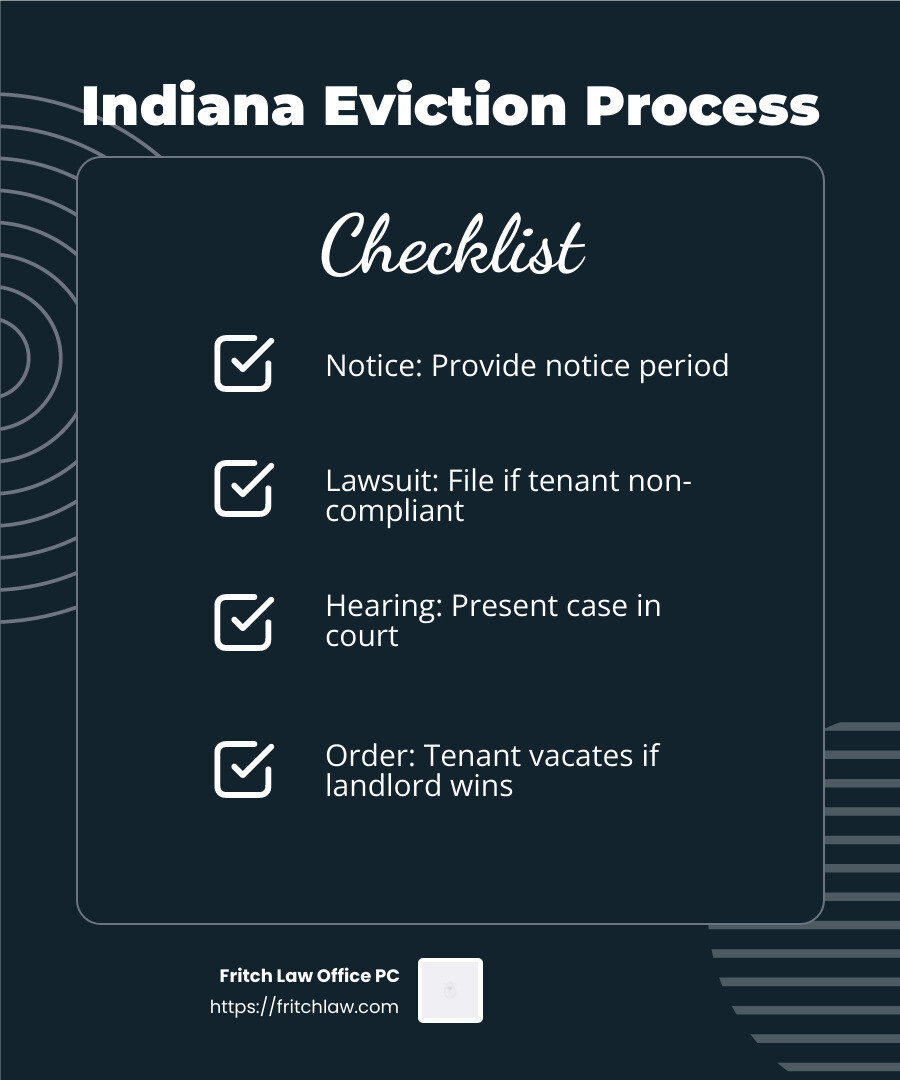
Eviction is a legal procedure that must be handled with care. Indiana law prohibits “self-help” evictions, like changing locks or removing doors, without a court order. The process involves:
- Notice: Providing the tenant with the required notice period.
- Filing a Lawsuit: If the tenant doesn’t comply, the landlord must file an eviction lawsuit.
- Court Hearing: Both parties present their case, and the judge decides.
- Eviction Order: If the court rules in favor of the landlord, the tenant must vacate.
Understanding these steps ensures that both landlords and tenants act within their rights and obligations. For tenants, knowing your rights can help you avoid unlawful eviction, while landlords can ensure compliance with the law, avoiding costly mistakes.
Tenant Rights in Special Circumstances
Domestic Violence
In Indiana, tenants who are victims of domestic violence have special rights to ensure their safety and well-being. If you find yourself in this situation, you can legally terminate your lease early without penalty. You must provide your landlord with a court order, like a restraining order, to support your claim. Once you do this, you also have the right to change the locks on your rental unit. However, notify your landlord and provide them with a copy of the new key.
These rights are in place to help protect you from further harm and allow you to find a secure environment. It’s crucial to know that the law is on your side during such difficult times, ensuring you have the support needed to make necessary changes to your living situation.
Discrimination
Discrimination in housing is illegal under both federal and state laws. The Fair Housing Act protects tenants from being discriminated against based on race, color, religion, sex, disability, familial status, or national origin. In Indiana, additional protections may include citizenship, veteran status, and sexual orientation.
If you believe you have been discriminated against, you can file a complaint with the U.S. Department of Housing and Urban Development (HUD). It’s important to act quickly, as there are time limits for filing these complaints. Discrimination can manifest in various ways, such as being denied housing, facing different terms and conditions, or being subjected to harassment.
Legal Protection
Understanding your legal protection as a tenant is key to ensuring your rights are upheld. In Indiana, tenants have the right to a habitable living environment, privacy, and protection from unlawful evictions. If your landlord fails to meet these obligations, you have several options for legal recourse.
For instance, if your landlord doesn’t address necessary repairs, you can take legal action to enforce your rights. This might involve pursuing claims for damages or obtaining a court order for the required repairs. Documenting all communications and maintaining records of any issues can strengthen your case if legal intervention becomes necessary.
Being informed about your rights and the available legal protections can empower you to live in a safe and fair rental environment. Whether facing domestic violence, discrimination, or other challenges, knowing your rights is the first step in taking action.
Frequently Asked Questions about Tenant Rights in Indiana
What are the tenant laws in Indiana?
Indiana has specific laws to protect tenants and ensure fair rental practices. Tenant laws in Indiana are primarily outlined in the Indiana Code (Title 32, Article 31). These laws cover everything from the responsibilities of landlords to the rights of tenants. For example, tenants have the right to live in a habitable home, which means the property must meet basic health and safety standards. This includes functioning plumbing, heating, and electricity, as well as being free from pests and environmental hazards.
Tenants also have the right to privacy. Landlords must provide reasonable notice before entering the rental unit, except in emergencies. Understanding these laws helps tenants ensure their rights are respected and can prevent disputes with landlords.
How much notice does a landlord have to give a tenant to move out in Indiana?
In Indiana, the notice period a landlord must provide depends on the situation. For a lease termination without cause, such as ending a month-to-month tenancy, landlords typically must give a 30-day notice. However, if a tenant has violated the lease terms, such as not paying rent, the notice period can be much shorter—often just 10 days.
Eviction for cause requires specific legal steps, including serving a written notice. If the tenant does not correct the issue within the notice period, the landlord can proceed with eviction through the court system. It’s important for both landlords and tenants to follow these procedures to ensure compliance with Indiana’s eviction laws.
What makes a rental uninhabitable in Indiana?
A rental is considered uninhabitable in Indiana if it fails to meet certain health and safety standards. This includes issues like lack of heat, unsafe electrical systems, or severe pest infestations. The implied warranty of habitability requires landlords to maintain their properties so that they are safe and livable.
If a rental unit does not meet these standards, tenants have the right to request repairs. They should notify their landlord in writing and allow a reasonable time for the repairs to be made. If the landlord fails to address these issues, the tenant may have grounds to take legal action.
Understanding what constitutes uninhabitable conditions helps tenants advocate for themselves and ensures they live in a safe environment. Always keep records of any requests for repairs and document the conditions, as this can be crucial if legal action is needed.
Conclusion
At Fritch Law Office PC, we pride ourselves on providing personalized legal services to meet the unique needs of each client. Located in Jasper, Indiana, our experienced lawyers are dedicated to helping tenants and landlords steer the complexities of tenancy laws in Indiana.
Understanding tenant rights in Indiana can be challenging, but having the right legal guidance makes it easier. Whether you are dealing with a lease agreement dispute, maintenance issues, or facing eviction, our team is here to help. We focus on clear communication and client-focused representation, ensuring that you understand your rights and responsibilities.
Our goal is to make the legal process as straightforward as possible for you. By working with us, you are not just getting legal representation; you are gaining a partner committed to protecting your interests and ensuring a fair and just outcome. If you have questions or need assistance with tenant-related legal matters, don’t hesitate to reach out to us at Fritch Law Office PC for support custom to your situation.