

Probate avoidance strategies: Complete 2026 Guide
Fritch Law Office handles probate avoidance strategies cases for Indiana residents every day. First, our attorneys examine your situation carefully. Next, we identify your strongest legal options. Furthermore, we explain every step in plain language. Therefore, you make confident decisions from day one.
Key Facts About Probate avoidance strategies in Indiana
Indiana courts apply strict 2026 rules to probate avoidance strategies matters. Moreover, experienced attorneys win better outcomes for clients. Additionally, early legal advice prevents costly mistakes. Consequently, clients who hire Fritch Law gain a clear advantage. However, waiting too long weakens your position significantly.
Take Action on Probate avoidance strategies Today
Do not delay your probate avoidance strategies case. First, call our Jasper office directly. Next, we schedule your free consultation immediately. Then, we build a winning strategy for you. Additionally, we represent you at every court hearing. Finally, we resolve your case as fast as possible.

Visit the Indiana Courts website for official legal information. Contact Fritch Law for your free consultation today.
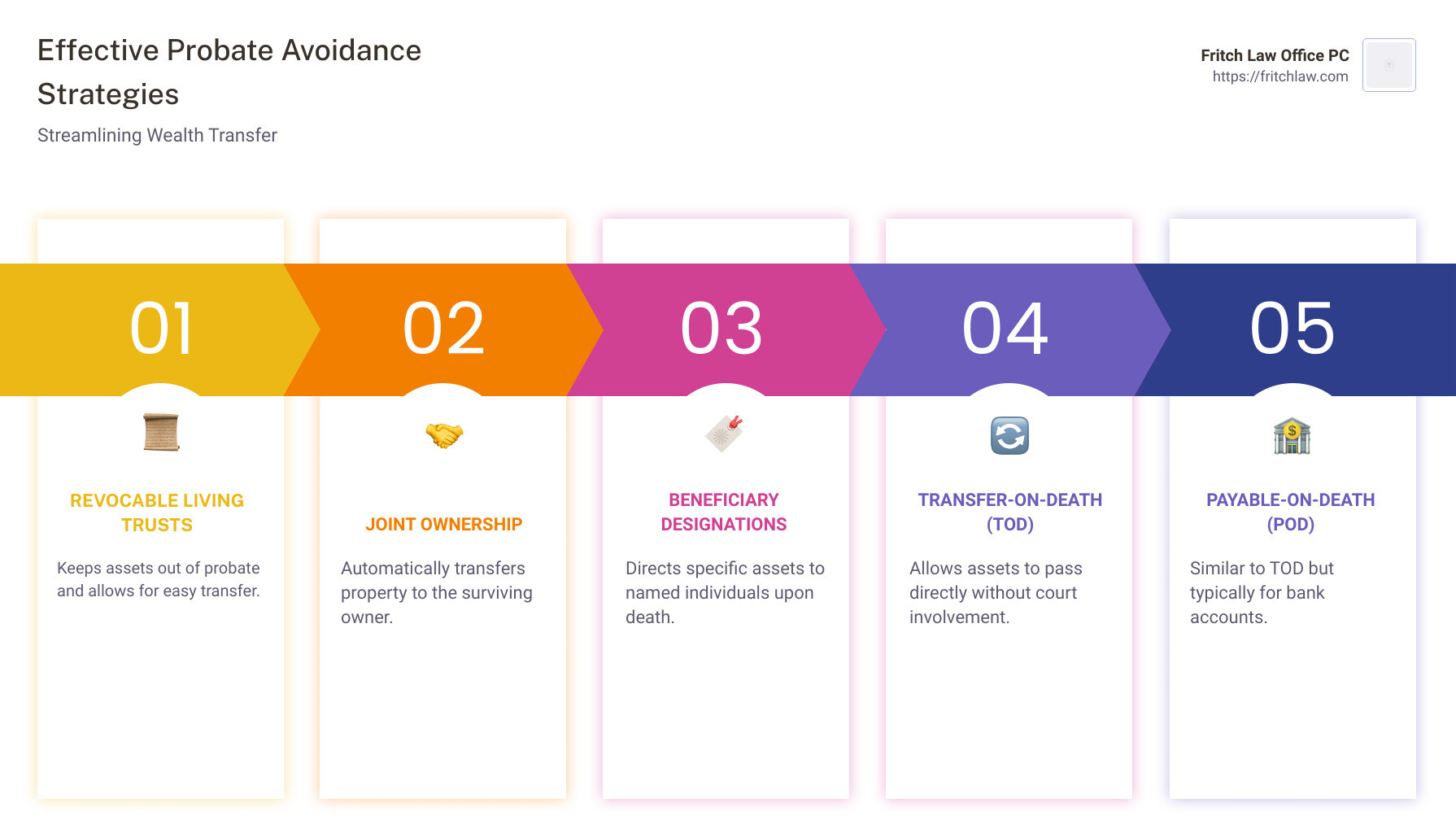
In estate planning, probate avoidance strategies can make the wealth transfer process faster and more efficient for families. These strategies are crucial for minimizing the time, costs, and stress involved in transferring assets after a loved one’s passing. Here’s a quick look at some effective probate avoidance strategies:
- Revocable Living Trusts: Keeps assets out of probate and allows for easy transfer.
- Joint Ownership: Automatically transfers property to the surviving owner.
- Beneficiary Designations: Directs specific assets to named individuals upon death.
- Transfer-on-Death (TOD) and Payable-on-Death (POD) Registrations: Allows assets to pass directly to beneficiaries without court involvement.
Probate is a legal process to validate a will and distribute assets. However, it can be time-consuming and costly. By exploring different strategies, families can streamline wealth transfers and preserve their loved ones’ assets.
I’m David Fritch, an experienced lawyer with experience in probate avoidance strategies. Over my 40-year career, I’ve guided countless families through these strategies, ensuring seamless and cost-effective wealth transfers.
Important probate avoidance strategies terms:
– advanced estate planning strategies
– family trust attorney
– living will attorney
Understanding Probate
Probate is a legal process that happens after someone dies. It involves the court overseeing the distribution of the deceased person’s assets, ensuring everything is done according to the law and the person’s will.
Legal Process
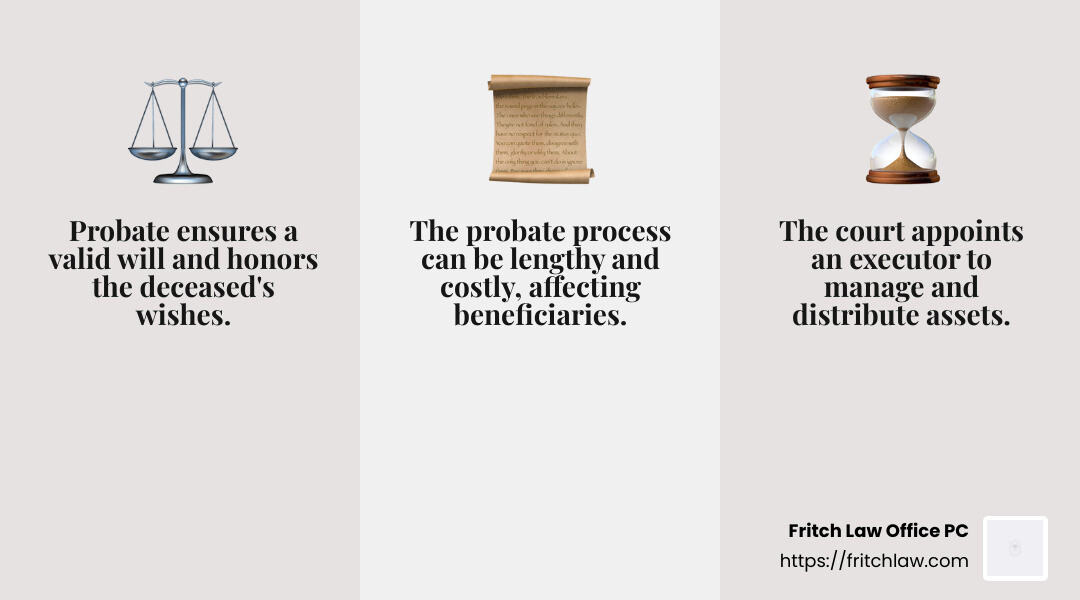
When a person passes away, their estate enters probate. This is the court’s way of making sure the will is valid and that the deceased’s wishes are honored. If there is no will, the court follows state laws to decide who gets what.
Court Oversight
The court plays a big role in probate. It appoints an executor to manage the estate. This person will identify and value all the assets, pay off debts and taxes, and then distribute the remaining assets to the beneficiaries.
Asset Distribution
During probate, the court ensures that assets are distributed fairly. This can involve selling property or dividing assets among heirs. The process can be slow, often taking months or even years. It can also be expensive due to court fees and legal costs.
Probate can be a lengthy and public process. This is why many people look for ways to avoid it. By understanding probate, you can better plan your estate to minimize delays and costs for your loved ones.
Probate Avoidance Strategies
Probate can be a slow and costly process, but there are probate avoidance strategies that can help you transfer your assets quickly and efficiently to your heirs.
Revocable Trust
A revocable living trust is a popular tool for avoiding probate. It allows you to manage your assets during your lifetime and specify how they should be distributed after your death. You can change or revoke the trust at any time, which gives you flexibility and control.
Here’s how it works: You (the grantor) transfer your assets into the trust and name a trustee to manage them. Often, you’d be the trustee while you’re alive, keeping control over your assets. Upon your death, a successor trustee takes over and distributes the assets according to your instructions, bypassing probate entirely.
Joint Ownership
Another strategy is to hold property in joint ownership with rights of survivorship. This means that when one owner dies, the other owner automatically inherits the property without going through probate.
There are a few types of joint ownership:
- Joint Tenancy: Common for real estate, where two or more people own the property equally.
- Tenancy by the Entirety: Similar to joint tenancy but available only to married couples.
- Community Property with Right of Survivorship: Available in some states, allowing married couples to own property that automatically transfers to the surviving spouse.
However, keep in mind that joint ownership means sharing control. For instance, if you add your child to your home’s title, they must agree to any future sale or mortgage.
Beneficiary Designations
Certain accounts, like retirement accounts and life insurance policies, allow you to name a beneficiary. This means that upon your death, the funds go directly to the named person, skipping probate.
- Payable-on-Death (POD) Accounts: You can designate beneficiaries for your bank accounts. Upon your death, the funds transfer directly to them.
- Transfer-on-Death (TOD) Designations: Similar to POD, but for securities and, in some states, vehicles and real estate.
Beneficiary designations take precedence over your will, so it’s crucial to keep them updated. For instance, if you name your ex-spouse as a beneficiary and forget to change it, they could still inherit the assets.
By using a combination of these strategies, you can minimize the time and costs associated with probate, ensuring your loved ones receive their inheritance more swiftly and privately.
Next, we’ll explore how to create a revocable living trust and the benefits it offers.
Creating a Revocable Living Trust
A revocable living trust is a powerful tool for managing your assets and ensuring they are distributed according to your wishes without the need for probate. Here’s why this strategy is worth considering:
Privacy
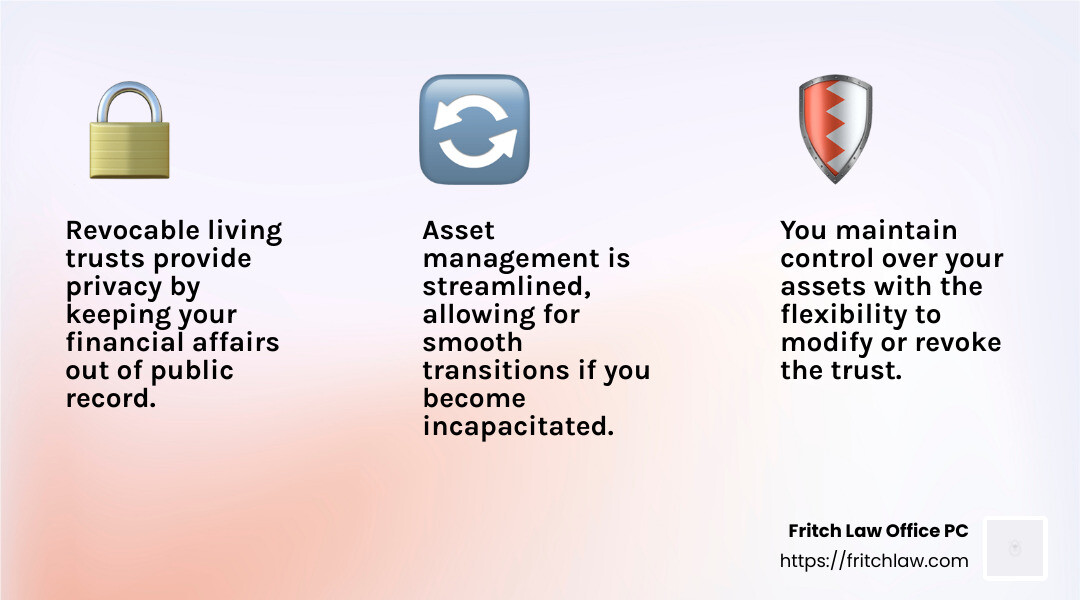
One of the biggest benefits of a revocable living trust is privacy. Unlike probate, which is a public process, the details of your trust remain confidential. This means that the distribution of your assets isn’t part of public record, keeping your financial affairs private and away from prying eyes.
Control
With a revocable living trust, you maintain control over your assets during your lifetime. You can act as the trustee, making decisions about your assets as you see fit. If your circumstances change, you can modify or even revoke the trust entirely. This flexibility allows you to adapt your estate plan to your evolving needs.
Asset Management
A revocable living trust also simplifies asset management. You can consolidate various assets into the trust, making them easier to manage. In the event you become incapacitated, your successor trustee can step in to manage the trust assets without the need for court intervention. This ensures your affairs continue to be handled smoothly according to your instructions.
Creating a revocable living trust involves drafting a trust document and transferring ownership of your assets to the trust. It’s a straightforward process, but work with an experienced lawyer to ensure everything is set up correctly and in line with your goals.
Next, we’ll explore joint ownership and beneficiary designations as additional strategies to simplify wealth transfers.
Joint Ownership and Beneficiary Designations
When it comes to probate avoidance strategies, joint ownership and beneficiary designations are simple yet effective methods to consider.
Joint Accounts
Joint accounts are a straightforward way to ensure assets transfer smoothly. By adding a joint owner to your bank account, you automatically grant them rights to the funds. If one owner passes away, the surviving owner gains full access without the need for probate. However, it’s important to note that the joint owner can access or withdraw funds even while you’re alive, which could be a potential risk.
Pay-On-Death (POD) Designations
A pay-on-death (POD) designation is a smart move for bank accounts. With a POD, you name a beneficiary who will receive the funds directly upon your death. This bypasses probate entirely. Setting up a POD is simple: just fill out a form at your bank. The beneficiary has no rights to the account while you’re alive, which keeps your assets secure until you pass.
Transfer-On-Death (TOD) Designations
Similar to POD, a transfer-on-death (TOD) designation applies to securities like stocks, bonds, and brokerage accounts. By filling out a TOD form, you specify who will receive these assets without the hassle of probate. In most states, you can even apply TOD to vehicles, allowing a seamless transfer of ownership. Like POD, the beneficiary has no control over the assets until your death, providing peace of mind.
These strategies are effective for avoiding probate, but each has its nuances. For instance, while POD and TOD allow for multiple beneficiaries, they don’t support contingent beneficiaries—meaning if your primary beneficiary predeceases you, the asset will still need to go through probate unless you update your designations.
By strategically using joint accounts, POD, and TOD designations, you can simplify the transfer of your assets, saving your loved ones time and hassle. Next, we’ll dig into gifting and retitling assets as another method to streamline wealth transfers.
Gifting and Retitling Assets
When it comes to probate avoidance strategies, gifting and retitling assets can be powerful approaches. They help ensure that your assets move smoothly to your heirs without getting stuck in probate court.
Property Transfer through Gifting
Gifting assets before you pass away is a straightforward way to reduce the size of your estate and avoid probate. When you gift property, you remove it from your estate, meaning it won’t need to go through probate.
But there’s a catch. Once you gift something, it’s no longer yours. The recipient has full control over it. So, only gift items you can part with permanently.
Tax Considerations: In 2024, you can gift up to $18,000 per person without triggering federal gift taxes. If your gift exceeds this amount, you might need to file a gift tax return. Consulting an experienced lawyer can help you steer these rules smoothly.
Retitling Assets for Joint Ownership
Retitling assets to include a joint owner with the right of survivorship is another way to avoid probate. This means that when one owner dies, the asset automatically passes to the surviving owner, bypassing probate.
Risks of Joint Ownership: While joint ownership can be effective, it comes with risks. Adding someone as a joint owner gives them equal control. For instance, if you add a child as a joint owner of your house, they must agree to any sale or mortgage decisions. Also, their creditors might claim an interest in the property.
Balancing Strategies
Gifting and retitling require careful consideration. Gifting can have tax implications, and joint ownership can introduce risks. Balancing these strategies with others like trusts or beneficiary designations can create a robust estate plan.
By understanding the benefits and potential pitfalls of gifting and retitling, you can make informed decisions to protect your assets and ensure they reach your heirs efficiently. Next, we’ll address some frequently asked questions about probate avoidance to help clarify these strategies further.
Frequently Asked Questions about Probate Avoidance
Which assets do not go through probate?
Certain assets can bypass the probate process entirely, making them ideal for those looking to streamline wealth transfers. Here’s a quick rundown:
-
Life Insurance: Proceeds from life insurance policies go directly to the named beneficiaries. They don’t pass through probate, making them a straightforward way to provide for loved ones.
-
Bank Accounts: Accounts with a payable-on-death (POD) designation allow the account holder to name a beneficiary who will receive the funds directly upon the account holder’s death.
-
Retirement Accounts: Similar to bank accounts, retirement accounts like IRAs or 401(k)s can have designated beneficiaries. This ensures that the funds transfer directly to the beneficiaries without probate.
What is the best way to avoid probate?
Multiple strategies exist to avoid probate, and often the best approach combines several methods:
-
Living Trust: A revocable living trust allows you to manage your assets during your lifetime and specify how they should be distributed after your death. Assets in the trust bypass probate, providing privacy and control.
-
Joint Ownership: Holding property in joint ownership with rights of survivorship means that when one owner dies, the property automatically transfers to the surviving owner, avoiding probate.
-
TOD/POD Designations: Using transfer-on-death (TOD) or payable-on-death (POD) designations for accounts or securities ensures they pass directly to the named beneficiaries, sidestepping probate.
What are common will substitutes?
While a will is an essential estate planning tool, there are alternatives that can also help streamline asset distribution:
-
Gifts: By gifting assets during your lifetime, you reduce the size of your estate, which can help avoid probate. However, be mindful of tax implications.
-
IRA Beneficiaries: Naming beneficiaries for your IRA ensures that the account transfers directly to them upon your death, bypassing probate.
-
Life Insurance: As mentioned earlier, life insurance policies with designated beneficiaries act as a substitute for a will, providing direct financial support to loved ones without probate delays.
By understanding these probate avoidance strategies, you can create a plan that ensures your assets are transferred quickly and efficiently to your heirs. Next, we’ll explore how these strategies fit into a broader estate planning framework.
Conclusion
Estate planning is a crucial step in ensuring your assets are managed and transferred according to your wishes. By incorporating probate avoidance strategies into your plan, you can save your loved ones time, stress, and money.
Probate can be costly, often consuming 3% to 7% of an estate’s value. These expenses, along with potential delays, make avoiding probate an attractive option for many. By using tools like revocable living trusts, joint ownership, and beneficiary designations, you can significantly reduce these costs and ensure a smoother transition of your wealth.
At Fritch Law Office PC, we understand the complexities of estate planning and are committed to providing personalized, client-focused legal representation. Our experienced lawyers will guide you through the process, helping you craft a comprehensive plan that meets your unique needs and protects your family’s future.
Don’t wait to secure your legacy. Reach out to us today to learn more about how we can help you implement effective probate avoidance strategies and achieve peace of mind for you and your loved ones.