

Living will attorney: Complete 2026 Guide
Fritch Law Office handles living will attorney cases for Indiana residents every day. First, our attorneys examine your situation carefully. Next, we identify your strongest legal options. Furthermore, we explain every step in plain language. Therefore, you make confident decisions from day one.
Key Facts About Living will attorney in Indiana
Indiana courts apply strict 2026 rules to living will attorney matters. Moreover, experienced attorneys win better outcomes for clients. Additionally, early legal advice prevents costly mistakes. Consequently, clients who hire Fritch Law gain a clear advantage. However, waiting too long weakens your position significantly.
Take Action on Living will attorney Today
Do not delay your living will attorney case. First, call our Jasper office directly. Next, we schedule your free consultation immediately. Then, we build a winning strategy for you. Additionally, we represent you at every court hearing. Finally, we resolve your case as fast as possible.

Visit the Indiana Courts website for official legal information. Contact Fritch Law for your free consultation today.
When you think about planning for the future, it’s hard to overstate the importance of having a living will attorney by your side. A living will is an essential legal document that spells out your medical care wishes if you can’t communicate them yourself. Here’s what you need to know to kickstart this crucial aspect of estate planning:
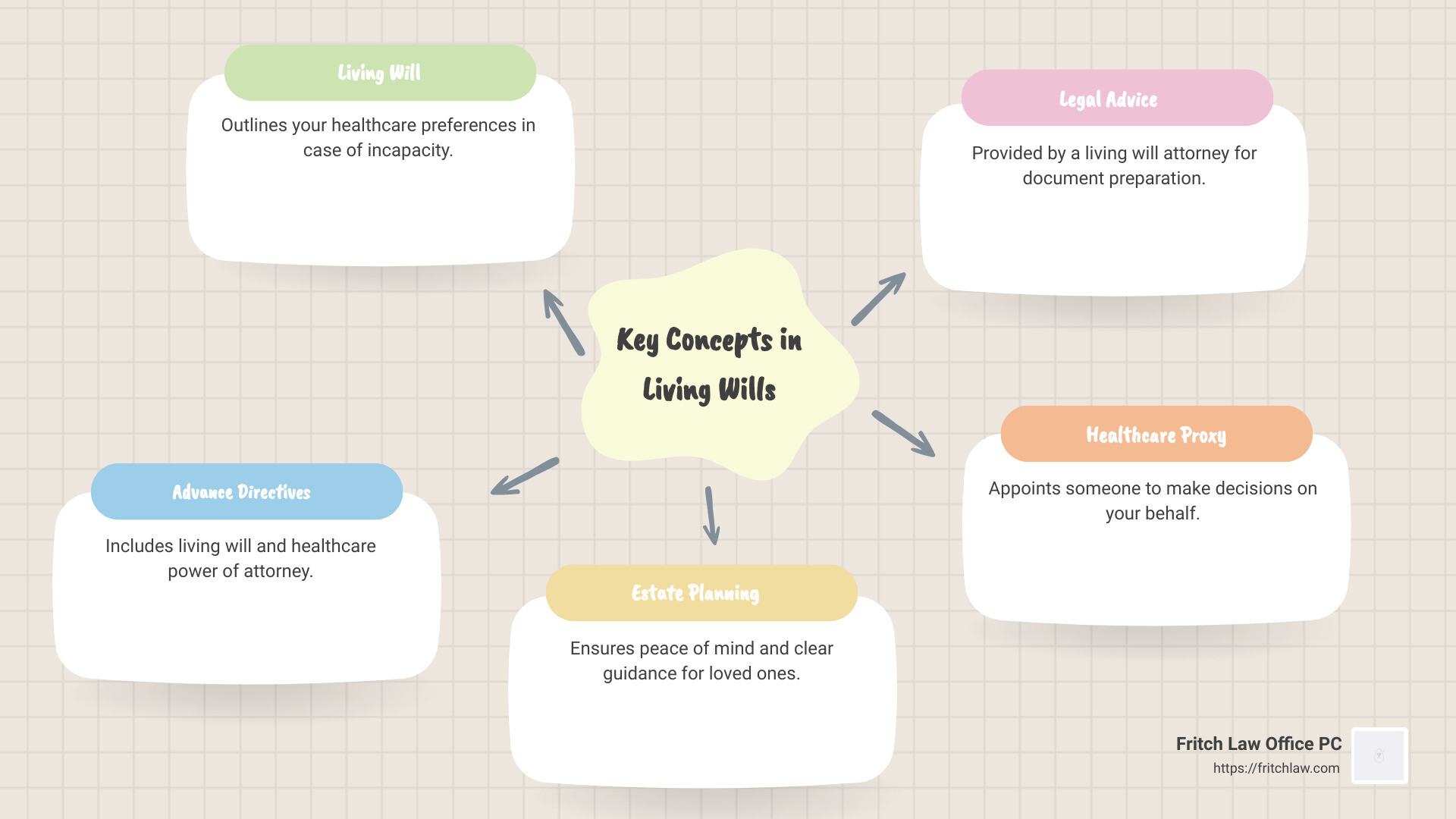
- A living will: Outlines your healthcare preferences in case of incapacity.
- Advance directives: These include both a living will and a healthcare power of attorney.
- Estate planning: A living will is part of a comprehensive estate plan.
Drafting a living will ensures peace of mind for you and clear guidance for your loved ones during challenging times.
I’m David Fritch, with decades of experience in legal and financial planning. My journey in estate planning, including advising as a living will attorney, has always been about helping you secure your future.
Handy living will attorney terms:
– charitable trust attorney
– family trust attorney
– special needs trust attorney
Understanding Living Wills
Imagine you’re in a situation where you can’t make medical decisions for yourself. What happens next? This is where a living will comes into play. It’s a type of advance directive, a legal document that outlines your preferences for medical care if you become incapacitated.
What is a Living Will?
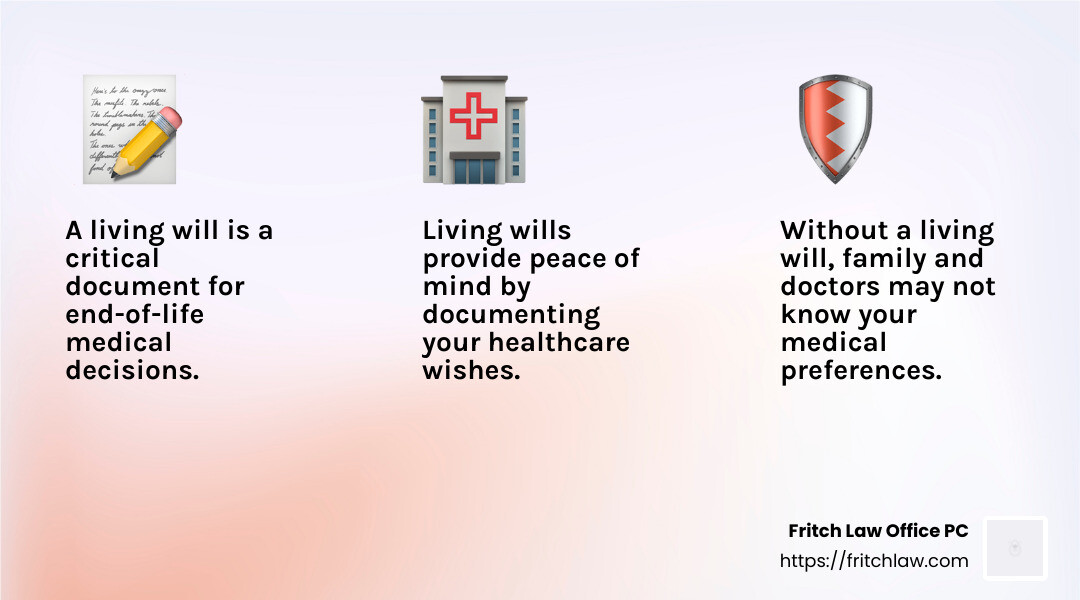
A living will is a statement of your end-of-life preferences. It tells doctors and family members what treatments you want—or don’t want—if you’re unable to speak for yourself. This might include preferences about life-support machines, resuscitation, or tube feeding.
Why is a Living Will Important?
Without a living will, your family might have to make difficult decisions without knowing your wishes. This can lead to stress and conflict during an already challenging time. By having a living will, you provide clear instructions that can help avoid misunderstandings.
Components of a Living Will
A well-drafted living will includes:
- Medical Care Preferences: Specify what kind of medical treatments you want in various situations.
- End-of-Life Preferences: State your wishes regarding life-sustaining treatments if you’re terminally ill or permanently unconscious.
Advance Directives
A living will is part of a larger set of documents known as advance directives. These documents ensure your healthcare wishes are known and respected. They often include a healthcare power of attorney, which designates someone to make medical decisions on your behalf.
In Indiana, creating a living will is straightforward, but it must meet certain legal requirements to be valid. Consulting with an experienced attorney can help ensure your living will accurately reflects your wishes and complies with state laws.
Understanding living wills can give you peace of mind, knowing that your medical care preferences are clearly documented. This clarity can be invaluable for both you and your loved ones.
The Role of a Living Will Attorney
Creating a living will is a crucial part of estate planning, and a living will attorney plays a key role in this process. Let’s explore how these legal professionals can help you.
Why You Need a Living Will Attorney
An estate planning attorney brings valuable expertise to the table. They provide legal advice custom to your specific needs and ensure that your living will is legally sound. This is vital because state laws, like those in Indiana, can have specific requirements for living wills.
Key Services Offered by Living Will Attorneys
-
Document Preparation: Drafting a living will involves more than just filling out a form. An attorney helps prepare a comprehensive document that reflects your medical care preferences and end-of-life wishes. They ensure that your living will meets all legal criteria, reducing the risk of future disputes.
-
Understanding Legal Requirements: Each state has its own rules. For example, in Indiana, a living will must be signed by two witnesses. An attorney makes sure your document complies with these rules, so it’s enforceable when needed.
-
Clarifying Complex Terms: Legal jargon can be confusing. An attorney explains complex terms in simple language, helping you understand exactly what you’re agreeing to.
-
Tailoring to Your Needs: Everyone’s situation is different. An attorney customizes your living will to match your unique medical and personal preferences, ensuring that your specific wishes are documented.
Peace of Mind Through Professional Guidance
Working with a living will attorney gives you peace of mind. You know your document is legally sound and accurately reflects your wishes. This assurance is invaluable, especially when it comes to making difficult medical decisions.
Involving an experienced attorney in drafting your living will is a wise choice. They provide the legal expertise and personalized guidance needed to create a robust document that safeguards your healthcare preferences.
Steps to Draft a Living Will
Drafting a living will involves several key steps. Let’s break it down into manageable parts to make sure your wishes are clearly documented and legally sound.
1. Choose a Healthcare Proxy
A healthcare proxy is someone you trust to make medical decisions on your behalf if you’re unable to do so. This person should be someone who understands your values and is willing to advocate for your wishes. It’s important to have a candid conversation with them about your preferences so they feel confident in their role.
2. Understand the Role of Power of Attorney
A power of attorney is a legal document that gives someone the authority to act on your behalf in various matters, not just healthcare. You can have different people for healthcare and financial matters, or one person for both. Make sure the individual you choose is responsible and willing to take on this role.
3. Meet Legal Requirements
Legal requirements for a living will can vary by state. In Indiana, for instance, your living will must be:
- In writing: It can’t be oral.
- Signed by you: Or by someone else in your presence and at your direction if you’re unable to sign.
- Witnessed by two individuals: These witnesses should not be beneficiaries and must be present when you sign the document.
Consulting with an experienced attorney ensures you meet all these requirements, which is crucial for the document’s validity.
4. Draft the Document
With the help of a living will attorney, draft the living will to include your medical care preferences. Consider scenarios like being in a vegetative state, and specify your wishes for life-sustaining treatments, pain management, and where you’d like to receive care (e.g., home, hospital, or hospice).
5. Review and Finalize
Once drafted, review the document with your attorney and healthcare proxy. Make sure everyone involved understands your wishes. This step is crucial to avoid confusion or disputes later.
6. Keep It Accessible
Store the original document in a safe but accessible place. Inform your healthcare proxy, family members, and your attorney where to find it. You may also want to provide copies to your physician and any healthcare facility you frequent.
By following these steps and involving a knowledgeable attorney, you can create a living will that clearly communicates your healthcare preferences and meets all legal standards. This process not only protects your wishes but also provides peace of mind for you and your loved ones.
Frequently Asked Questions about Living Wills
How much does a living will cost?
Creating a living will doesn’t have to break the bank. You have a few options depending on your needs and budget:
-
Hiring an Attorney: Working with an experienced lawyer can provide peace of mind, ensuring your living will is legally sound and customized to your needs. Legal fees can vary, but many firms offer comprehensive estate planning packages. For example, some attorneys might charge around $400 for a package that includes a living will, power of attorney, and other essential documents.
-
Do-It-Yourself Software: If you’re comfortable navigating legal documents on your own, several online platforms offer templates and guides for creating a living will. These services are generally more affordable, with prices ranging from free to about $199. However, keep in mind that while this option can save money, it might not address all your specific needs or state-specific legal requirements.
What are the requirements for a living will in Indiana?
In Indiana, setting up a living will involves meeting certain legal criteria to ensure it’s valid and enforceable:
-
Sound Mind: You must be of sound mind when creating your living will. This means you understand the document’s implications and are making the decision voluntarily.
-
Written Document: Your living will must be in writing. Verbal agreements won’t meet the legal requirements.
-
Signature and Witnesses: You need to sign the document, or have someone sign it on your behalf in your presence and at your direction. Additionally, two witnesses must be present at the signing. These witnesses should be at least 18 years old and not related to you or entitled to any part of your estate.
-
Physician Notice: The document should clearly state that your physician has determined you have a condition that will lead to death in a short period, and that life support would only prolong the dying process.
What is the difference between a living will and a power of attorney?
While both a living will and a power of attorney are crucial components of estate planning, they serve different purposes:
-
Living Will: This document outlines your preferences for medical treatment if you’re unable to communicate your wishes. It covers scenarios like life-sustaining treatments and pain management during terminal conditions.
-
Power of Attorney: This grants someone the authority to manage your affairs if you’re incapacitated. It can cover financial decisions, healthcare decisions, or both, depending on your needs. Unlike a living will, a power of attorney can extend beyond medical treatment to include managing your financial matters and other personal affairs.
Understanding these differences ensures you have a comprehensive plan that covers both medical and non-medical decisions, safeguarding your interests in various situations.
Conclusion
At Fritch Law Office PC, we understand that drafting a living will is a deeply personal and sometimes emotional process. Our approach is simple: we listen, understand, and guide you through every step with personalized legal representation. Our client-focused philosophy ensures that your unique needs and wishes are at the forefront of your estate planning journey.
We know that estate planning can feel overwhelming, but it doesn’t have to be. By working with our experienced attorneys, you gain a partner who is committed to protecting your assets and ensuring your end-of-life preferences are respected. Our team is dedicated to making the complex simple, with clear and practical solutions custom to align with your goals.
If you’re ready to take the next step in securing your legacy, we invite you to contact Fritch Law Office PC today. Let us help you create a living will that provides peace of mind for you and your loved ones.
A well-crafted living will is not just a legal document—it’s a gift to your family, sparing them difficult decisions during challenging times. Trust us to handle your estate planning needs with the care and attention they deserve.