How to understand indiana tenant eviction: Complete 2026 Guide
Fritch Law Office handles how to understand indiana tenant eviction cases for Indiana residents every day. First, our attorneys examine your situation carefully. Next, we identify your strongest legal options. Furthermore, we explain every step in plain language. Therefore, you make confident decisions from day one.
Key Facts About How to understand indiana tenant eviction in Indiana
Indiana courts apply strict 2026 rules to how to understand indiana tenant eviction matters. Moreover, experienced attorneys win better outcomes for clients. Additionally, early legal advice prevents costly mistakes. Consequently, clients who hire Fritch Law gain a clear advantage. However, waiting too long weakens your position significantly.
Take Action on How to understand indiana tenant eviction Today
Do not delay your how to understand indiana tenant eviction case. First, call our Jasper office directly. Next, we schedule your free consultation immediately. Then, we build a winning strategy for you. Additionally, we represent you at every court hearing. Finally, we resolve your case as fast as possible.

Visit the Indiana Courts website for official legal information. Contact Fritch Law for your free consultation today.
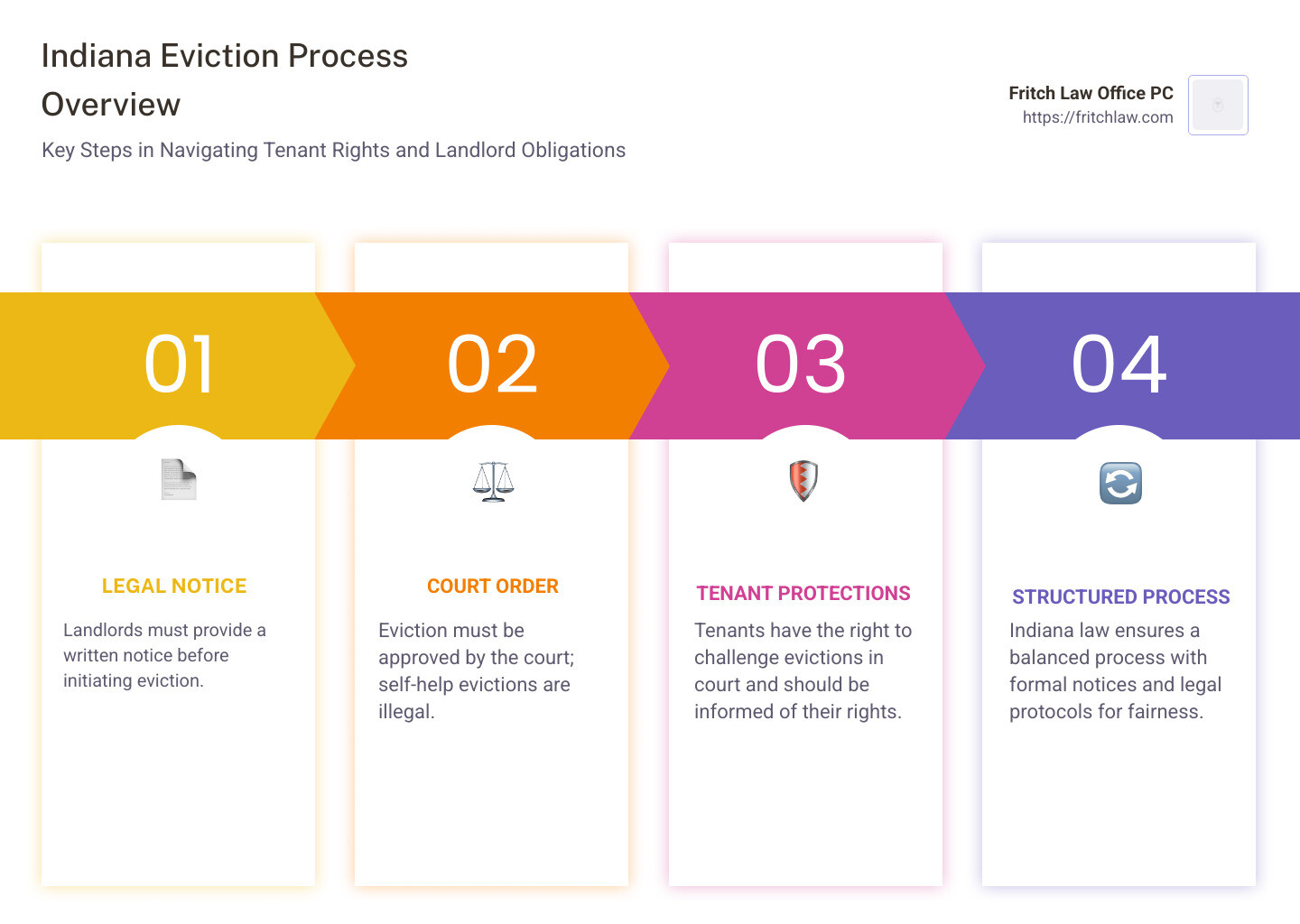
Understanding Indiana tenant rights eviction is crucial for both tenants and landlords navigating the legal landscape. Here’s a quick overview:
- Legal Notice: Landlords must provide a written notice before eviction.
- Court Involvement: Eviction requires a court order; self-help eviction is illegal.
- Tenant Protections: Tenants can challenge evictions in court and should be aware of their rights.
Indiana law outlines a structured eviction process that maintains a balance between landlords and tenants, ensuring fairness. This involves formal notices, court filings, and adherence to legal protocols.
I’m David Fritch, an experienced lawyer with over 40 years focusing on landlord-tenant law in Indiana. As we dig into the specifics of Indiana tenant rights eviction, my aim is to make the process clearer and more manageable.
Common Indiana tenant rights eviction vocab:
Step 1: Understanding the Grounds for Eviction
Evictions in Indiana can occur for several reasons, primarily revolving around three main issues: nonpayment of rent, lease violations, and illegal activity. Let’s explore these to help both tenants and landlords understand what might lead to an eviction.
Nonpayment of Rent
If a tenant fails to pay rent on time, the landlord can initiate the eviction process. Rent is typically considered late if it’s not paid the day after it’s due, unless a grace period is specified in the lease. In Indiana, landlords must provide a 10-Day Notice to Pay. This notice gives tenants ten days to pay the overdue rent or face eviction proceedings. If the tenant pays within this period, the eviction process stops.
Lease Violations
Lease agreements serve as a guideline for both tenants and landlords, outlining expectations for each party. Common violations include:
- Property Damage: Damaging the rental property beyond normal wear and tear.
- Unauthorized Pets: Keeping pets when the lease prohibits them.
- Smoking in Non-Smoking Areas: Ignoring established no-smoking policies.
For lease violations, landlords must issue a written notice. The law requires this notice to be “reasonable,” but it doesn’t specify an exact time frame. If the tenant resolves the issue within the notice period, the eviction process halts.
Illegal Activity
Illegal activities conducted on the rental property provide grounds for eviction. The type of notice given depends on the nature of the illegal activity. A 45-Day Notice to Vacate might be required if the situation is severe. Landlords should monitor their properties closely to ensure any illegal behavior is addressed promptly.
By understanding these grounds for eviction, tenants can better comprehend their responsibilities, and landlords can ensure they follow the law. Both parties should be aware of their rights and obligations to avoid conflicts.
Step 2: Notice Requirements in Indiana
Understanding the notice requirements is crucial for both landlords and tenants in Indiana. These notices are the first official step in the eviction process and vary depending on the reason for eviction. Let’s break down the key types of notices: the 10-day notice, 30-day notice, and unconditional quit notice.
10-Day Notice
The 10-Day Notice to Pay or Quit is used primarily for nonpayment of rent. When rent is overdue, landlords must give tenants this notice, which offers them ten days to either pay the full amount due or vacate the property. If the tenant pays the rent within this period, the eviction process stops. This notice is critical as it ensures tenants are given a fair chance to resolve the issue before further legal action is taken.
30-Day Notice
The 30-Day Notice to Quit is typically used for ending a month-to-month tenancy. This notice requires landlords to inform tenants that they must vacate the property within 30 days. It’s important for both parties to understand that this notice doesn’t necessarily imply any wrongdoing by the tenant; rather, it is a standard procedure for terminating a month-to-month lease agreement.
Unconditional Quit Notice
An unconditional quit notice is the most severe type of eviction notice. It is issued for serious lease violations or illegal activities, such as severe property damage or illegal drug use on the premises. Unlike other notices, tenants receiving an unconditional quit notice do not have the option to correct the violation. They must vacate the property immediately upon receiving the notice. This type of notice underscores the importance of adhering to lease agreements and maintaining lawful behavior on rental properties.
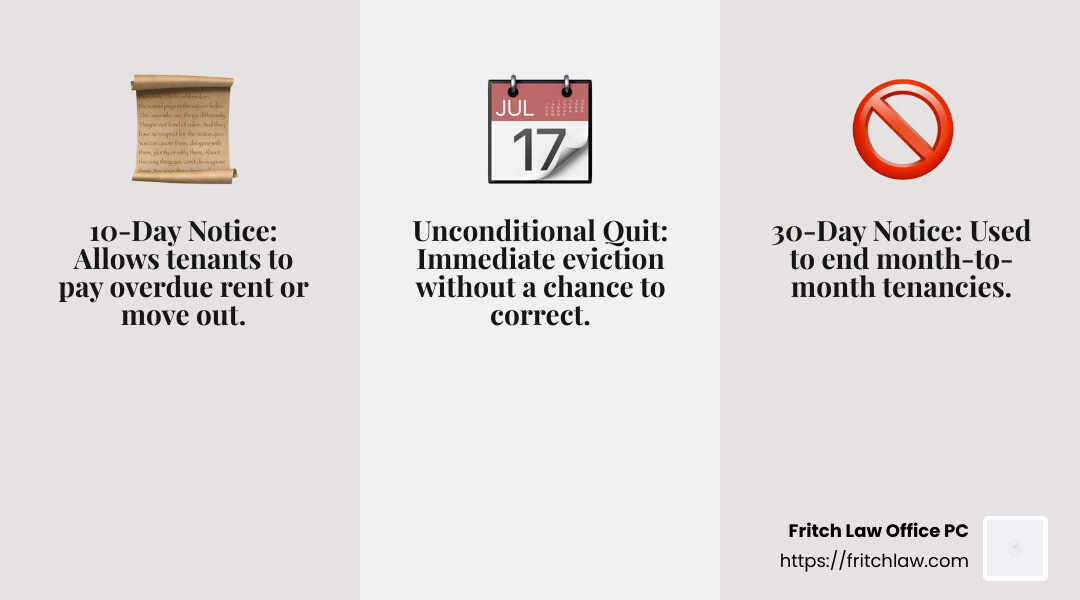
Key Takeaway: Notices are a vital part of the eviction process in Indiana. They provide tenants with the opportunity to address issues and landlords with a legal framework to follow. Both parties should be familiar with these notices to ensure the process is handled fairly and legally.
Step 3: The Court Process
Once the notice period ends and the tenant hasn’t complied, the next step is the court process. This involves filing a complaint, attending a court hearing, and potentially receiving a judgment of possession. Let’s walk through these steps.
Filing a Complaint
To start the court process, the landlord must file a complaint. This legal document outlines the reasons for eviction and is filed in the appropriate court. It’s crucial for landlords to provide detailed evidence supporting their claims. This could include lease agreements, rent receipts, and records of any communications with the tenant. Filing the complaint officially begins the court’s involvement in the Indiana tenant rights eviction process.
Court Hearing
After filing, the court schedules a hearing. This is where both parties present their case. The tenant has 3-20 days to prepare, depending on the eviction type. During the hearing, evidence is crucial. Landlords may present documents like bank statements and photos, while tenants can offer their own evidence and arguments. Even if a tenant doesn’t respond to the complaint, they should still attend the hearing to defend their rights.
Judgment of Possession
If the court sides with the landlord, a judgment of possession is issued. This ruling legally allows the landlord to reclaim their property. However, if the tenant disagrees with the judgment, they have the option to appeal. It’s important for tenants to know that until a judgment is made, the landlord cannot force them to leave the property. The judgment of possession marks the official end of the court process, but there are still steps to follow post-judgment.
In the next section, we’ll discuss what happens after the court’s decision, including the issuance of a writ of possession and the move-out timeline.
Step 4: Post-Judgment Procedures
After a judgment of possession is granted, the eviction process moves into the post-judgment phase. This involves several key steps: the issuance of a writ of possession, the move-out timeline, and the handling of tenant belongings.
Writ of Possession
Once the court grants a judgment of possession, the landlord receives a writ of possession. This legal document authorizes law enforcement to oversee the tenant’s removal from the property. Landlords cannot evict tenants themselves; only authorized officials can execute the writ. This ensures that evictions are conducted legally and safely.
Move-Out Timeline
In Indiana, after the writ of possession is issued, tenants generally have 48 to 72 hours to vacate the property. This short timeframe underscores the importance of tenants preparing to move once the court process begins. If tenants do not leave within this period, law enforcement will enforce the writ and oversee the eviction.
Tenant Belongings
Indiana law requires landlords to handle tenant belongings with care. If a tenant leaves items behind, landlords must obtain a court order before moving or disposing of them. These belongings can be stored in a unit or warehouse. The tenant must be notified and given 90 days to retrieve their items, during which they may need to cover storage costs. If the tenant fails to collect their belongings within this timeframe, the storage facility may sell them.
Understanding these post-judgment procedures helps both landlords and tenants steer the eviction process legally and effectively. In the next section, we’ll address common questions about tenant rights during eviction in Indiana.
Frequently Asked Questions about Indiana Tenant Rights Eviction
How long does the eviction process take in Indiana?
The eviction process in Indiana can vary greatly in length. On average, it takes anywhere from 2 weeks to 4 months to complete. This timeline depends on several factors, including the reason for eviction and court availability.
Here’s a general breakdown of the eviction timeline:
- Issuing an Official Notice: This can take 10 to 90 days, depending on the notice type.
- Issuance and Service of Summons and Complaint: Expect 5 to 20 days for this step.
- Court Hearing and Judgment: This can take 3 to 20 days.
- Return of Rental Property: Tenants usually have 48 to 72 hours to vacate after a judgment.
Understanding this timeline helps tenants and landlords prepare for each step of the process.
Can a landlord evict without a court order?
No, a landlord in Indiana cannot evict a tenant without a court order. This is known as “self-help eviction” and is illegal. Self-help eviction includes actions like changing locks, cutting off utilities, or removing a tenant’s belongings without court approval.
Landlords must follow the legal process, which involves filing a complaint and obtaining a judgment of possession from the court. Only then can a writ of possession be issued, allowing law enforcement to carry out the eviction. This ensures that the eviction is conducted fairly and legally.
What are tenants’ rights during eviction?
Tenants in Indiana have specific rights during the eviction process to ensure fair treatment. Here are some key tenant protections:
-
Right to Notice: Tenants must receive proper notice before an eviction can proceed. This includes a 10-day notice for nonpayment of rent, unless the lease specifies otherwise.
-
Right to a Court Hearing: Tenants have the right to attend a court hearing and present their case. This is an opportunity to dispute the eviction if they believe it is unjust.
-
Protection from Illegal Evictions: Landlords cannot use self-help eviction methods. Tenants can seek legal assistance if they face such actions.
-
Right to Retrieve Belongings: If evicted, tenants have 90 days to retrieve any belongings left behind, provided they pay any applicable storage fees.
For tenants facing eviction, seeking legal assistance can be crucial. Organizations like Indiana Legal Services and local legal aid societies offer support to help tenants understand and exercise their rights.
Conclusion
Navigating the eviction process in Indiana can be a daunting task, both for landlords and tenants. At Fritch Law Office PC, we understand the complexities involved and are dedicated to providing personalized legal representation to guide you every step of the way.
Our experienced lawyers are well-versed in Indiana tenant rights eviction laws. We aim to ensure that both landlords and tenants are treated fairly and that all legal procedures are followed correctly. Whether you’re a landlord seeking to protect your property interests or a tenant defending your rights, we’re here to offer the support and guidance you need.
Personalized Legal Representation
At Fritch Law Office PC, we pride ourselves on our client-focused approach. This means we take the time to understand your unique situation and tailor our services to meet your specific needs. Our goal is to make the legal process as smooth and stress-free as possible, providing clarity and peace of mind.
If you’re facing an eviction issue or need advice on landlord-tenant matters, don’t hesitate to reach out to us. Our team is ready to assist you with expert legal advice and representation, ensuring your rights and interests are protected throughout the process.
For more information or to schedule a consultation, please contact Fritch Law Office PC today. Let us help you steer the complexities of Indiana’s eviction laws with confidence and ease.