Indiana tenant rights attorney: Complete 2026 Guide
Fritch Law Office handles indiana tenant rights attorney cases for Indiana residents every day. First, our attorneys examine your situation carefully. Next, we identify your strongest legal options. Furthermore, we explain every step in plain language. Therefore, you make confident decisions from day one.
Key Facts About Indiana tenant rights attorney in Indiana
Indiana courts apply strict 2026 rules to indiana tenant rights attorney matters. Moreover, experienced attorneys win better outcomes for clients. Additionally, early legal advice prevents costly mistakes. Consequently, clients who hire Fritch Law gain a clear advantage. However, waiting too long weakens your position significantly.
Take Action on Indiana tenant rights attorney Today
Do not delay your indiana tenant rights attorney case. First, call our Jasper office directly. Next, we schedule your free consultation immediately. Then, we build a winning strategy for you. Additionally, we represent you at every court hearing. Finally, we resolve your case as fast as possible.

Visit the Indiana Courts website for official legal information. Contact Fritch Law for your free consultation today.
Navigating Your Rights: When You Need an Indiana Tenant Rights Attorney
Renting in Indiana can sometimes feel like you’re trying to solve a puzzle with missing pieces. As one of the more landlord-friendly states, Indiana’s rental laws often leave tenants wondering where to turn when problems arise. That’s where an Indiana tenant rights attorney comes into the picture—someone who can help you make sense of your situation and fight for your rights.
When landlord issues escalate beyond a simple phone call, it’s reassuring to know what legal help looks like. Most tenant attorneys offer free initial consultations to evaluate your case. This gives you a chance to explain your situation without worrying about an upfront cost. If you decide to move forward, expect to pay between $150-300 per hour for representation, though many lawyers offer flat-fee arrangements for specific services like security-deposit disputes.
Finding the right legal help can take time. Many tenants report contacting numerous attorneys before finding one who focuses on representing renters rather than landlords. Experience matters—an attorney who regularly handles landlord-tenant disputes will steer your case more efficiently than someone who only occasionally works in this area.
For tenants with limited income, Indiana Legal Services provides free legal assistance to those who qualify. This valuable resource helps bridge the justice gap for renters who might otherwise go without representation.
Most tenant–landlord disputes take 2-4 months to resolve, though complex cases can take longer. Having realistic timeline expectations helps you plan accordingly, especially if you’re dealing with immediate housing concerns.
Indiana law provides tenants with specific rights—the right to a habitable home, proper notice before landlord entry, and protection from discrimination. But when these rights are violated, knowing how to assert them effectively makes all the difference. Whether you’re facing an eviction notice, dealing with uninhabitable conditions, or fighting for your security-deposit return, an experienced tenant attorney can help level the playing field.
At Fritch Law Office, we’ve spent more than 40 years helping tenants steer housing disputes throughout Indiana’s court system. Our approach combines thorough legal knowledge with practical solutions custom to the unique challenges facing Indiana renters.
Understanding some key terminology can also help as you research your options:
- Indiana tenant rights eviction covers the specific processes landlords must follow
- Renter rights indiana explains the fundamental protections all tenants have
- Tenant rights indiana eviction details how to respond when facing removal from your home
Timing matters in tenant disputes. The sooner you consult with an Indiana tenant rights attorney, the more options you’ll typically have available to resolve your situation favorably.
Indiana Tenant Rights 101
Understanding your rights as an Indiana tenant is like having a shield in your rental relationship. While Indiana is often considered one of the more landlord-friendly states, you still have important legal protections under Indiana Code Title 32, Article 31.
Implied Warranty of Habitability
Even though Indiana law doesn’t explicitly spell it out, courts recognize that every rental comes with an implied promise of livability. This means your landlord must provide a safe, clean living space that meets health and housing codes—regardless of what your lease says.
I recently spoke with Maria from Indianapolis who shared: “I thought I had to live with black mold in my bathroom because my lease didn’t mention repairs. My Indiana tenant rights attorney explained that the implied warranty of habitability protected me regardless of what my lease said.”
Right to Privacy
Your home is your sanctuary, and Indiana law respects that. Landlords cannot barge in whenever they please—they must provide reasonable notice (typically 24 hours) before entering your rental, except in genuine emergencies. This protection ensures you can enjoy your space without unexpected intrusions.
Smoke Detector Requirements
Safety first! Indiana law requires landlords to install functioning smoke detectors in all rental units. As a tenant, you’ll need to acknowledge in writing that the detectors are present and working. If a smoke detector stops working, your landlord has seven working days after your notification to repair or replace it.
Protection Against Retaliation
Standing up for your rights shouldn’t come with punishment. Indiana law prohibits landlords from retaliating against you for exercising your legal rights, such as reporting code violations or joining a tenant organization. Retaliation might take the form of rent increases, service reductions, or eviction attempts.
Security Deposit Protection
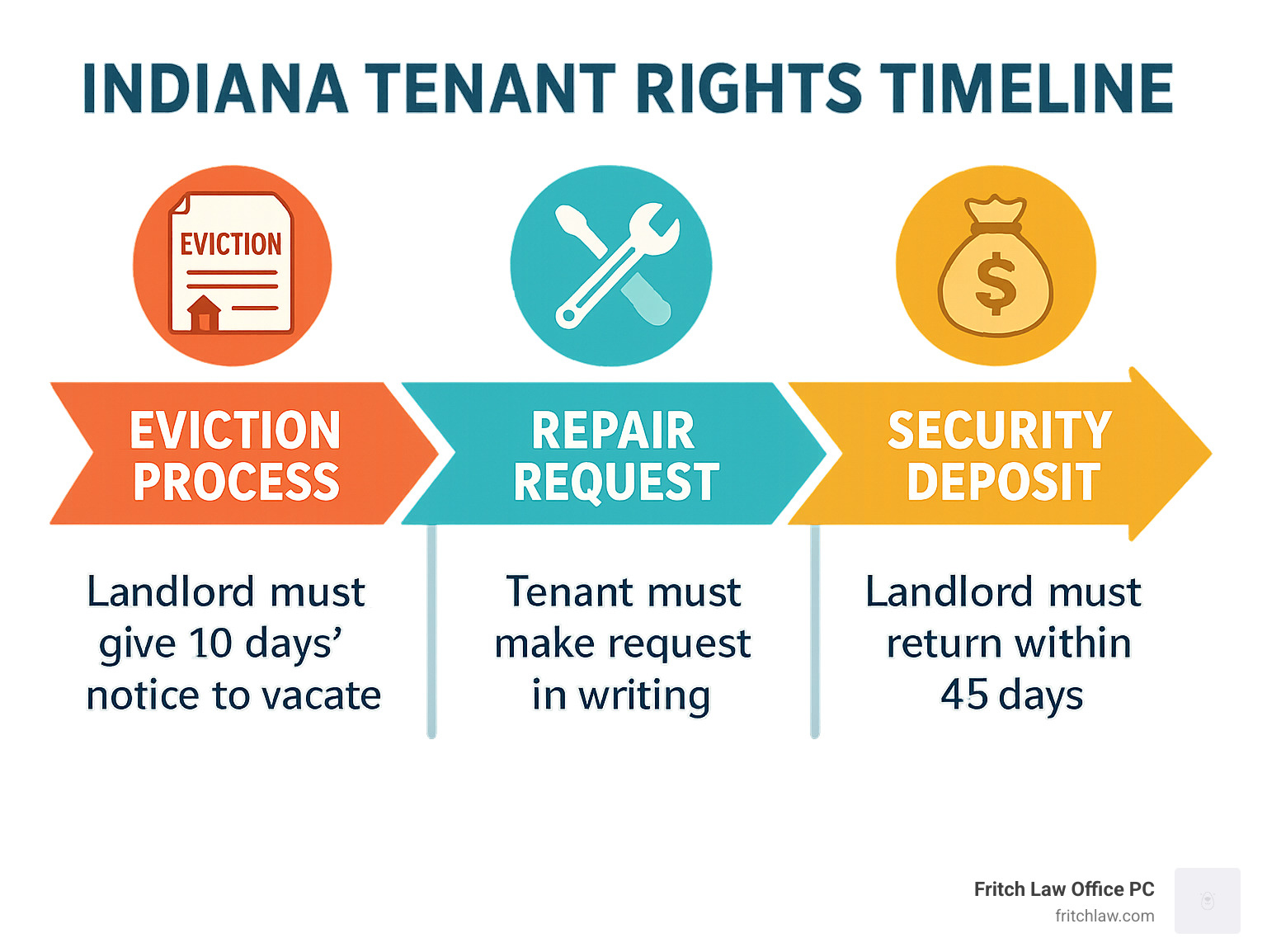
When you move out, your security deposit shouldn’t disappear into a black hole. Indiana law gives landlords 45 days to return your deposit after lease termination, provided you’ve left the property in reasonable condition and supplied a forwarding address.
| State | Security Deposit Return Deadline |
|---|---|
| Indiana | 45 days |
| Illinois | 30-45 days |
| Kentucky | 30-60 days |
| Ohio | 30 days |
| Michigan | 30 days |
As you can see, Indiana gives landlords more time than most neighboring states to return your money.
What Makes a Unit “Uninhabitable”?
Not every maintenance issue makes a place uninhabitable. However, certain conditions cross the line from inconvenient to illegal:
A rental becomes uninhabitable when it lacks basic necessities like functioning heat, water, or electricity. Significant structural problems, severe pest infestations, mold growth, faulty electrical systems, broken plumbing, and non-working exterior door locks also render a property uninhabitable.
Sarah from Fort Wayne came to us after enduring three weeks without heat in January. “My landlord kept saying he’d fix the furnace ‘soon,’ but temperatures were dropping below freezing inside my apartment,” she explained. “I didn’t know I had rights until I spoke with an Indiana tenant rights attorney.”
Security Deposit Rules in 45 Days
The 45-day countdown for your security deposit begins once you provide your forwarding address. If your landlord keeps any portion of your deposit, they must give you an itemized list explaining every deduction.
“Many landlords try to charge for normal wear and tear, which is illegal,” notes our team. “We once represented a tenant whose landlord tried to charge for replacing two-year-old stove burners because they didn’t look ‘like new.’ The court ordered the full deposit returned plus attorney fees.”
Remember this important protection: If your landlord fails to return your deposit or provide that itemized list within 45 days, you may be entitled to recover your full deposit plus potential damages.
The key to protecting your rights often starts with knowing them. If you believe your landlord has violated these protections, documenting the issues carefully is your next critical step.
Common Rental Issues & Landlord Responsibilities
Living in a rental property in Indiana sometimes feels like navigating a relationship where one party holds most of the cards. While Indiana leans landlord-friendly, understanding your landlord’s legal responsibilities can help level the playing field when problems arise.
Maintenance and Repairs
Though Indiana doesn’t have a specific “fix it or else” statute, landlords must maintain properties in habitable condition. When that leaky roof or broken furnace disrupts your life, your landlord typically has 3-7 days to address critical repair requests.
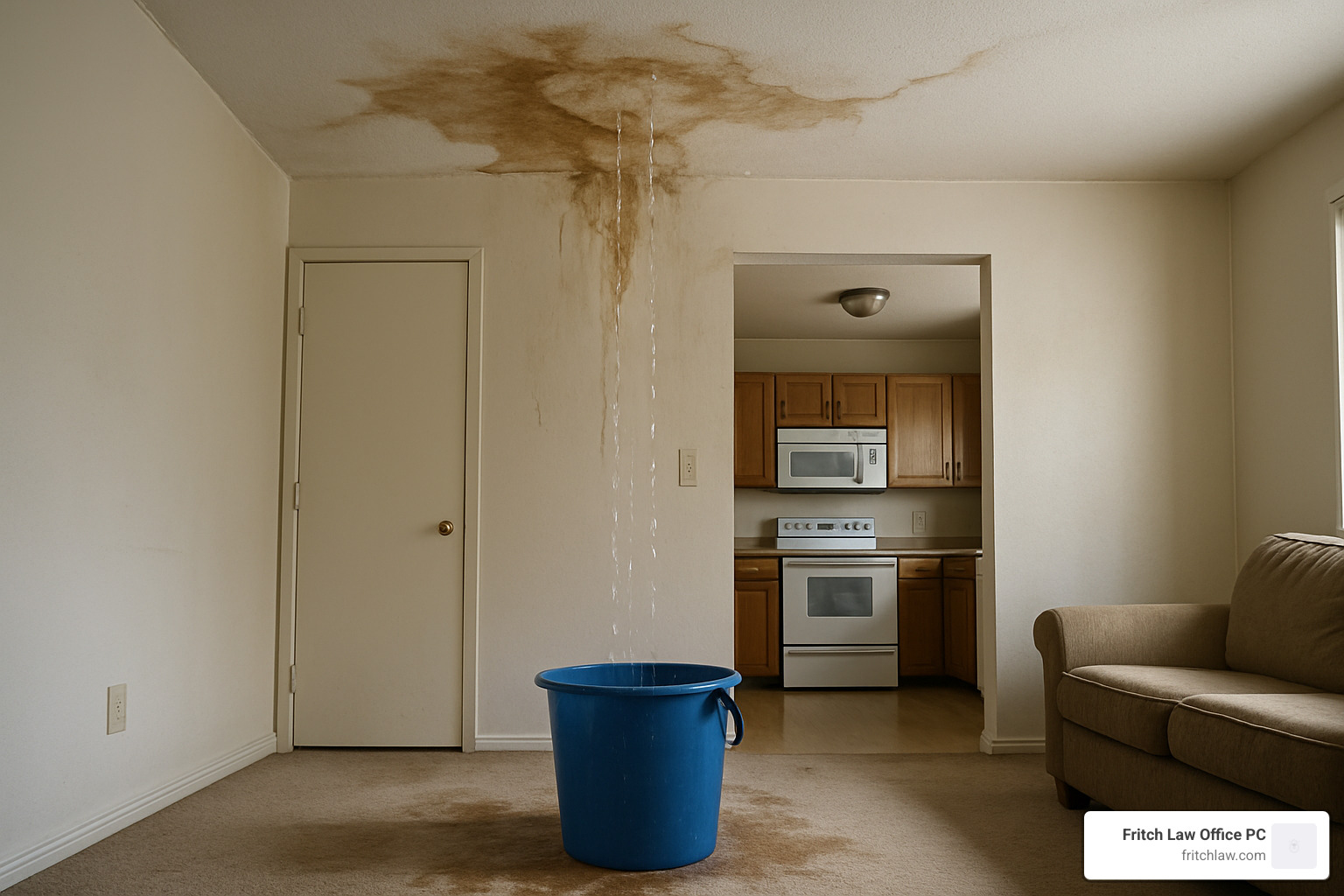
One tenant I worked with had a ceiling that resembled Niagara Falls during rainstorms. “My landlord kept promising to fix it ‘next week’ for three months straight,” she told me. “Meanwhile, I was putting buckets everywhere and worrying about mold.” Her detailed documentation—photos dated after each rainfall—proved invaluable when we took her case to court.
Utility Services
Your landlord cannot play games with essential services. Shutting off utilities to force you out is considered a “self-help” eviction and is absolutely illegal in Indiana. Only sheriff’s deputies with court orders can legally remove tenants.
I once represented a family whose landlord turned off their electricity during a payment dispute. When we explained that this constituted an illegal eviction attempt, the landlord quickly restored service and ultimately covered the family’s hotel expenses during the outage.
Illegal Entry
That knock-and-enter routine some landlords practice? It’s not legal. In Indiana, landlords must provide reasonable notice—typically 24 hours—before entering your home, except in genuine emergencies. A pattern of unannounced visits crosses the line into harassment territory.
Discrimination and Retaliation
Federal Fair Housing laws shield tenants from discrimination based on race, color, national origin, religion, sex, familial status, or disability. Indiana’s fair housing protections align with these federal standards.
Equally important, your landlord cannot retaliate against you for exercising your legal rights. If you report code violations and suddenly receive an eviction notice or rent increase, the timing alone raises red flags about possible retaliation.
Lease Changes and Property Sales
When your building changes hands, your existing lease doesn’t vanish into thin air. New owners must honor your current lease terms until renewal time.
“When my building was sold,” one tenant shared, “the new owner tried adding $200 to my monthly rent with six months left on my lease. My Indiana tenant rights attorney wrote one letter citing the law, and they backed down immediately.”
Documenting Violations the Smart Way
When landlord problems arise, strong documentation becomes your best ally. Think of yourself as a housing detective, gathering evidence that tells your story clearly:
Capture photos and videos with visible timestamps showing problems as they develop. Keep a detailed repair log noting when issues occurred and when you reported them. Send all repair requests through certified mail so you have proof of delivery. And if you’re in Indiana (a one-party consent state), consider recording important conversations with your landlord.
“Documentation wins cases,” I often tell clients. “The tenant who shows up with a folder of dated photos, repair requests, and a timeline usually prevails over the landlord who offers only vague recollections.”
More info about Legal Help for Renters
Can You Withhold Rent or Repair-and-Deduct?
Here’s where Indiana differs significantly from many neighboring states: Indiana has no statute explicitly allowing tenants to withhold rent or deduct repair costs from rent payments when landlords fail to make repairs.
This catches many tenants by surprise, especially those who’ve moved from states like Illinois where such practices are legally protected. Without statutory protection, withholding rent in Indiana—even for legitimate repair issues—puts you at risk of eviction proceedings.
If your landlord ignores repair requests, safer alternatives include contacting local housing code enforcement, filing in small claims court, or consulting with an Indiana tenant rights attorney before taking actions that might jeopardize your tenancy.
While some Indiana courts might ultimately side with tenants in truly uninhabitable conditions, withholding rent remains a high-risk strategy that requires careful legal guidance. Remember: winning an argument about repairs won’t help much if you’ve already been evicted for non-payment.
Legal terms like “constructive eviction,” “covenant of quiet enjoyment,” and “estoppel certificate” may sound like gibberish to the average renter, but understanding these concepts can significantly strengthen your position when dealing with landlord issues. For more information about tenant rights regarding repairs and maintenance, the U.S. Department of Housing and Urban Development provides valuable resources for renters nationwide.
Indiana Tenant Rights Attorney: How to Hire, What to Expect, and Eviction Defense
Finding an Indiana tenant rights attorney can be challenging in a state where many lawyers primarily represent landlords. However, proper legal representation can make a dramatic difference in the outcome of your case.
Signs You Need an Indiana Tenant Rights Attorney
When your rental situation goes from frustrating to unbearable, it might be time to call an attorney. Consider seeking legal help if your landlord ignores serious habitability issues like a non-functioning furnace in winter or persistent water leaks. Similarly, if you’ve received an eviction notice or lawsuit, legal representation becomes crucial to protect your rights.
Housing discrimination requires immediate legal attention, as does a landlord who constantly violates your privacy through unannounced entries. You might also need an attorney if circumstances force you to break your lease early, your security deposit wasn’t returned within the 45-day window, or your landlord is clearly retaliating against you for exercising your legal rights.
“One client called us after living with a severe rat infestation for months,” recalls David Fritch. “Her landlord had simply told her to ‘put out traps.’ After we sent a formal demand letter citing health-code violations, the landlord hired professional exterminators within 48 hours.”
Finding an Indiana Tenant Rights Attorney
The search for representation doesn’t have to be overwhelming. Start by asking friends, family, or coworkers who have faced similar issues for referrals to attorneys they trust. The Indiana State Bar Association can provide referrals to attorneys specializing in landlord-tenant cases.
For those with limited finances, reaching out to legal-aid organizations like Indiana Legal Services might provide options if you meet income qualifications. Many communities also offer free legal clinics through organizations such as the Neighborhood Christian Legal Clinic, where you can get initial guidance. Online directories can help you filter specifically for landlord-tenant law specialists in your area.
“Many tenants fall into what I call the ‘representation gap,'” explains David Fritch. “They earn too much to qualify for free legal aid but not enough to easily afford private representation. At Fritch Law Office, we offer flexible payment plans to help bridge this gap.”
What to Expect When Working with an Indiana Tenant Rights Attorney
The attorney-client relationship begins with an initial consultation where your attorney will review your situation, examine your lease, and assess how strong your case is. Come prepared with all your documentation—lease agreement, communication records with your landlord, photos of problems, and payment receipts are all valuable evidence.
Based on your circumstances, your attorney will develop a custom legal strategy. Sometimes negotiation or mediation can resolve the issue; other times, litigation becomes necessary. Often, simply having an attorney send a formal letter to your landlord can work wonders—landlords tend to take issues more seriously when legal representation gets involved.
“The consultation is crucial,” notes David Fritch. “I’ve had clients come in thinking they had no case, only to find multiple violations that strengthened their position tremendously.”
When it comes to costs, most Indiana tenant rights attorneys structure their fees in one of three ways: hourly rates typically ranging from $150-300 per hour; flat fees for specific services like writing demand letters or handling eviction defense; or, in some cases (particularly security-deposit disputes), contingency arrangements where the attorney takes a percentage of what you recover.
Step-by-Step: Fighting an Eviction in Indiana
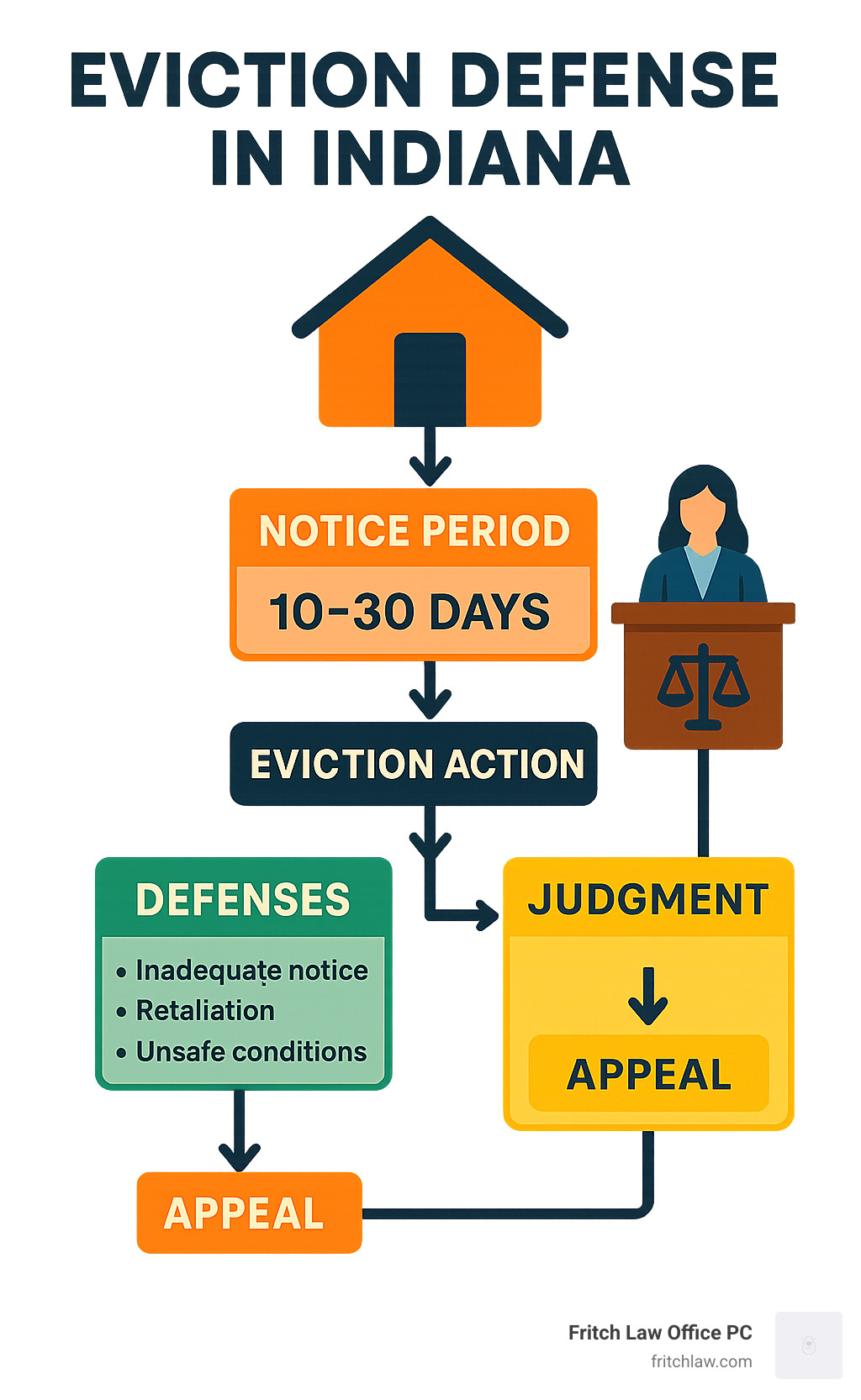
Eviction in Indiana follows a specific legal process with timelines that typically span from two weeks to four months, depending on the circumstances and your response:
- Notice period – Before filing an eviction lawsuit, landlords must provide proper notice: 10 days for nonpayment of rent, 30 days for correctable lease violations, or immediate notice for serious violations via an Unconditional Quit Notice.
- Filing the lawsuit – If you don’t comply with the notice, your landlord can file an eviction lawsuit (often called an “ejectment” or “complaint for immediate possession”).
- Court appearance – You’ll receive a summons to appear in court, typically scheduled within 10-14 days of filing. Presenting a solid defense—with an attorney by your side—greatly improves your odds.
- Judgment and removal – If the court rules against you, the judge issues an order granting possession to the landlord. The landlord can then request a Writ of Possession authorizing law enforcement to remove you, usually within 24-72 hours.
- Appeal – You may appeal, but an appeal doesn’t automatically stop the eviction unless you obtain a stay from the court.
“I represented a tenant who received an eviction notice for nonpayment of rent, even though she had proof of payment,” says David Fritch. “The landlord had simply lost track of her money order. We presented the receipt in court, and the judge dismissed the case and ordered the landlord to pay my client’s legal fees.”
Indiana Tenant Rights Eviction
Frequently Asked Questions about Indiana Tenant Rights
What should I do if my landlord refuses to make repairs?
When your landlord ignores repair requests, it can feel like you’re stuck in an impossible situation. Start by thoroughly documenting the issue – take clear photos and videos that show the problem in detail. One tenant told me she created a simple repair log on her phone, with dated entries and photos that proved invaluable later.
Your next step should be sending a formal written repair request. Send it via certified mail with return receipt requested – this creates an official paper trail showing exactly when your landlord was notified. Give them a reasonable timeframe to respond, typically 3-7 days for serious issues like no heat or water.
If your landlord still doesn’t take action, it’s time to contact your local housing code enforcement office. They can inspect the property and potentially issue citations that often motivate reluctant landlords.
“What surprises many of my clients,” says David Fritch, “is that making repairs yourself and deducting the cost from rent can be risky in Indiana. Unlike some neighboring states, Indiana doesn’t have a specific law allowing this practice, which means you could face eviction for nonpayment.”
At this point, consulting with an Indiana tenant rights attorney about your specific situation is your best move. They can advise whether small claims court or other legal remedies might help resolve your situation.
Can I break my lease early without penalties?
Life happens, and sometimes you need to move before your lease ends. Fortunately, Indiana law does provide some protections for early termination without penalty in specific situations.
If you receive military orders for a permanent change of station or deployment, federal law protects your right to break your lease. Similarly, victims of domestic violence with a protective order or police report can terminate their lease early under Indiana law.
Your rental becoming truly uninhabitable through no fault of your own also provides grounds for termination. This isn’t about minor inconveniences – we’re talking about serious conditions that make living there unsafe or impossible.
For situations not covered by these protections, you still have options. First, check your lease for any early termination clauses – some leases allow you to leave by paying a fee. If that’s not available, try negotiating with your landlord for a mutual termination agreement.
Many tenants don’t realize that Indiana law requires landlords to make reasonable efforts to re-rent a unit even if you break your lease. This means that if you find a qualified replacement tenant, your landlord must consider them, potentially limiting your financial liability.
“I worked with a young teacher who needed to relocate mid-year for a new position,” shares David Fritch. “We helped her find a qualified replacement tenant and negotiate with her landlord. Instead of owing five months of rent, she only paid for the three weeks the apartment was vacant.”
How do I protect myself from landlord retaliation?
Landlord retaliation can take many forms – sudden rent increases, reduced services, or even eviction notices that appear after you’ve exercised your legal rights. While retaliation is illegal in Indiana, proving it requires careful documentation.
Document everything in writing from the beginning of any dispute. This creates a clear timeline showing your legitimate complaints came before any negative actions from your landlord. Keep detailed records of all communications, including dates, times, and what was discussed.
While dealing with retaliation, continue paying your rent on time and following all lease terms. This prevents your landlord from claiming eviction is based on lease violations rather than retaliation.
If you believe you’re experiencing retaliation, report it to local housing authorities. In cases involving discrimination, the Indiana Civil Rights Commission may also provide assistance.
“The timing of events often becomes crucial evidence in retaliation cases,” notes David Fritch. “When a landlord suddenly increases rent or issues an eviction notice within days or weeks after you report code violations, that timeline can speak volumes in court.”
For serious retaliation, consulting with an Indiana tenant rights attorney about filing a formal complaint or lawsuit may be necessary to protect your rights and housing stability.
Standing up for your rights as a tenant is legally protected, and you shouldn’t face punishment for requesting repairs, reporting code violations, or joining tenant organizations. With proper documentation and legal guidance, you can effectively counter retaliation attempts.
Legal terminology like “prima facie case of retaliation” and “burden-shifting framework” may sound like gibberish, but these concepts are crucial in retaliation cases. For more information about tenant protections against retaliation, the National Housing Law Project offers comprehensive resources for tenants facing retaliatory actions.
Conclusion
Standing up for your rights as a tenant in Indiana can feel like an uphill battle, but you’re not alone on this journey. Throughout this guide, we’ve explored the essential protections available to you under Indiana law, even in a state that tends to favor landlords.
Knowledge is power when it comes to tenant rights. By understanding the basics—from security-deposit timelines to what makes a unit uninhabitable—you’ve already taken a significant step toward protecting yourself. But sometimes, knowledge alone isn’t enough when you’re facing a difficult landlord or a complex legal situation.
This is where having an experienced Indiana tenant rights attorney becomes invaluable. At Fritch Law Office PC, we’ve seen how proper legal representation can transform seemingly hopeless situations into positive outcomes for tenants. Our client-focused approach means we take the time to understand your unique circumstances and develop strategies custom to your specific needs.
Key takeaways to remember:
- Document everything in writing, including repair requests, landlord communications, and any problems with your unit.
- Respond promptly to legal notices, even if you believe they’re unfair. Missing deadlines can severely limit your options.
- Never withhold rent without proper legal guidance. Indiana doesn’t explicitly protect this practice, and it could put you at risk of eviction.
- Seek professional help early rather than waiting until a situation becomes dire. Many tenant issues can be resolved quickly with a single letter from an attorney.
- Your rights deserve protection, even in a landlord-friendly state. From the implied warranty of habitability to protection against retaliation, Indiana law provides important safeguards for tenants.
Need personalized help with a tenant-rights issue? Visit our tenant lawyers hub for a free case review. We’re here to help you steer Indiana’s complex rental laws and fight for the safe, secure housing you deserve.