

Landlord tenant attorney: Complete 2026 Guide
Fritch Law Office handles landlord tenant attorney cases for Indiana residents every day. First, our attorneys examine your situation carefully. Next, we identify your strongest legal options. Furthermore, we explain every step in plain language. Therefore, you make confident decisions from day one.
Key Facts About Landlord tenant attorney in Indiana
Indiana courts apply strict 2026 rules to landlord tenant attorney matters. Moreover, experienced attorneys win better outcomes for clients. Additionally, early legal advice prevents costly mistakes. Consequently, clients who hire Fritch Law gain a clear advantage. However, waiting too long weakens your position significantly.
Take Action on Landlord tenant attorney Today
Do not delay your landlord tenant attorney case. First, call our Jasper office directly. Next, we schedule your free consultation immediately. Then, we build a winning strategy for you. Additionally, we represent you at every court hearing. Finally, we resolve your case as fast as possible.

Visit the Indiana Courts website for official legal information. Contact Fritch Law for your free consultation today.
When You Need a Landlord Tenant Attorney Most
A landlord tenant attorney is a legal professional who specializes in housing law disputes between property owners and renters. Whether you’re facing eviction, dealing with security deposit issues, or navigating lease violations, these attorneys protect your rights and help resolve conflicts through negotiation, mediation, or court representation.
Quick Answer – When to Call a Landlord Tenant Attorney:
- Tenants: Received an eviction notice, living in unsafe conditions, facing illegal rent increases, or dealing with landlord harassment.
- Landlords: Tenant won’t pay rent, property damage occurred, lease violations persist, or need help with proper eviction procedures.
- Both: Security deposit disputes, discrimination claims, lease agreement problems, or any court summons.
The relationship between landlords and tenants can turn complicated fast. Time matters in housing disputes. Eviction notices have strict deadlines. Missed court dates can mean automatic judgments. Improper procedures can cost thousands in penalties.
Many people try to handle these issues alone — but housing law is complex and varies by state and city. What works in Indiana might not apply in Chicago or British Columbia. One wrong move can mean losing your home or facing expensive lawsuits.
I’m David Fritch, and I’ve spent 40 years helping clients steer complex legal challenges through my law firm, Fritch Law Office PC. Having worked with countless landlord-tenant matters, I understand how overwhelming housing disputes can feel and the importance of getting proper legal guidance quickly.
Here are a few resources you may find helpful as you start your research:
- Learn what to expect during a free consultation for tenants.
- Get answers to common questions with our guide on landlord legal advice free.
- If you are worried about eviction, see whether you qualify for free eviction lawyers for tenants.
Understanding the Role of a Landlord Tenant Attorney
A landlord tenant attorney specializes in housing law disputes, navigating federal, state, and local housing regulations. They understand the fine print that most people skip over – and that fine print matters when you’re facing eviction or fighting for your security deposit.
What Does a Landlord Tenant Attorney Do?
A landlord tenant attorney wears many hats, depending on who needs help. When you’re a tenant staring at an eviction notice, they become your shield in court. When you’re a landlord dealing with problem tenants, they help you follow the law while protecting your investment.
For tenants, these attorneys handle eviction defense – showing up to court hearings and challenging improper procedures. They assist with security deposit recovery when landlords find questionable “damages.” They handle habitability disputes when essential services fail, and address illegal rent increases or landlord retaliation.
For landlords, these attorneys help with eviction proceedings – ensuring every form is filed correctly and deadlines are met. They draft solid leases, assist with rent collection issues, and help maintain housing code compliance. When tenants cause property damage or violate lease terms, attorneys guide you through proper legal channels.
The real value of a housing law specialist versus a general attorney? They live and breathe landlord-tenant statutes with unique procedures and deadlines that don’t exist in other areas of law.
Most Common Issues They Handle
From my experience handling housing disputes, certain problems come up repeatedly. Non-payment of rent tops the list – it’s the most common reason landlords start eviction proceedings, but it’s rarely as simple as “they didn’t pay, so they’re out.”
Lease violations create another major category. Maybe the tenant got a pet when pets aren’t allowed, or they’re subletting without permission. These situations require careful handling to avoid wrongful eviction claims.
Security deposit disputes keep housing attorneys busy year-round. Habitability problems represent serious cases involving tenants living without heat, dealing with mold, or facing unsafe conditions. Illegal rent increases and discrimination claims round out common issues, along with wrongful eviction cases where landlords didn’t follow proper procedures.
When to Hire a Landlord Tenant Attorney
The clock starts ticking the moment housing trouble begins. Whether you’re a tenant facing eviction or a landlord dealing with problem renters, waiting too long can turn a manageable situation into a costly nightmare.
The golden rule? Act fast when red flags appear. Housing disputes have strict deadlines, and missing them can mean losing your case before it starts.
Tenants: Call a Landlord Tenant Attorney ASAP
If you’ve received an eviction notice, don’t panic – but don’t wait. Most eviction notices give you just days to respond. That’s barely enough time to understand your options, let alone fight back effectively.
Your apartment has become unlivable? Broken heat in winter, no hot water for weeks, or electrical problems your landlord ignores – these aren’t just inconveniences. They’re serious habitability issues that a landlord tenant attorney can address through proper legal channels.
Rent increases that seem too high might actually be illegal, especially in areas with rent control. What feels like landlord greed could be a violation of local ordinances that an experienced lawyer can challenge.
Facing landlord harassment? Threats, illegal entry, or sudden utility shut-offs are serious violations. These situations often escalate quickly, making immediate legal intervention crucial.
Discrimination based on race, family status, disability, or other protected characteristics is illegal – but proving it requires someone who knows housing law inside and out.
For Indiana tenants, understanding your specific protections is vital. Our detailed guide on Tenant Rights Indiana Eviction explains the deadlines and rights that could save your housing.
Landlords: Situations Requiring Counsel
Persistent late rent payments create paper trail problems. One late payment might be understandable, but ongoing issues require formal legal procedures handled correctly to avoid future complications.
Property damage beyond normal wear and tear – like holes in walls, carpet destruction, or appliance damage – needs proper documentation and legal action to recover costs effectively.
Lease violations such as unauthorized pets, subletting, or too many occupants can quickly spiral if not addressed through proper legal channels.
Starting eviction proceedings without legal guidance is like walking through a minefield. One procedural mistake can invalidate your entire case while you’re still not collecting rent.
For comprehensive guidance on your options as a property owner, check out our resource on Eviction Lawyers for Landlords.
Remember: Housing law moves fast, and second chances are rare. Getting a landlord tenant attorney involved early can save you time, money, and stress.
Navigating Evictions and Other Disputes

Nobody wants to end up in court over housing issues, but sometimes it’s unavoidable. Whether you’re facing eviction or dealing with a stubborn landlord who won’t make repairs, understanding the legal process helps you steer these stressful situations with more confidence.
Evictions are particularly time-sensitive. Unlike other legal matters where you might have weeks to respond, housing disputes often move quickly through the court system. Missing a single deadline can completely change your case outcome.
The Indiana Eviction Process in 5 Steps
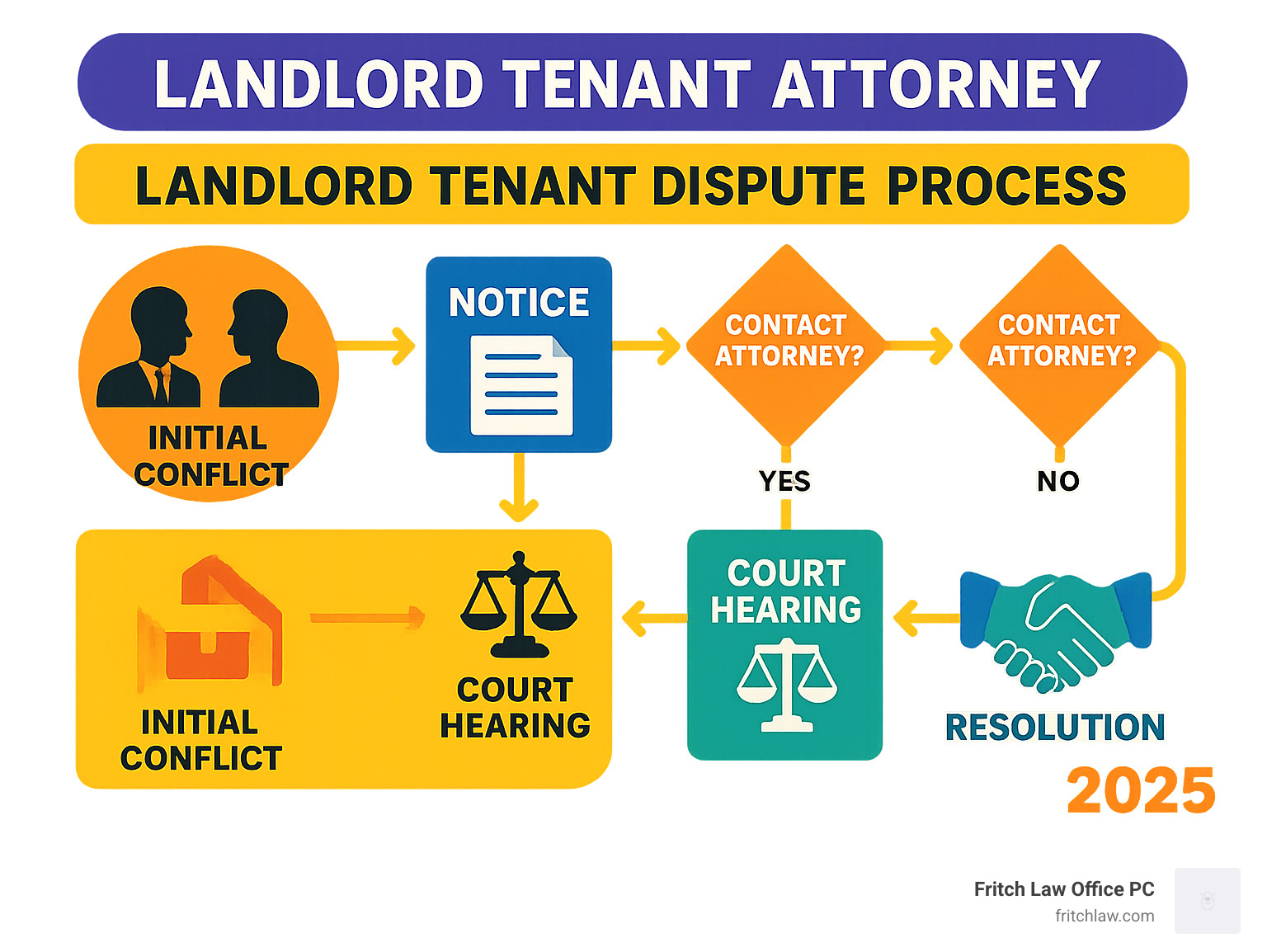
Indiana has a structured eviction process that follows the same basic pattern every time. Understanding these steps helps both landlords and tenants know what to expect.
The process starts with the notice period, where landlords must provide proper written notice – typically 10 days for non-payment of rent. This isn’t just courtesy; it’s a legal requirement that must be done correctly.
Next, the landlord files an eviction lawsuit in court, creating an official legal case with deadlines both parties must follow.
Service of court papers follows. The tenant receives a summons and complaint, officially notifying them of the lawsuit and upcoming court date.
The hearing is where both sides present their case to a judge. This is your chance to tell your story and present evidence. Preparation matters here.
Finally, the court issues a judgment and potentially a writ of possession. If the landlord wins, they may get permission to remove the tenant from the property.
For a detailed breakdown of timing and requirements at each stage, check out our comprehensive guide: How to Understand Indiana Tenant Eviction Process in 5 Steps.
How a Landlord Tenant Attorney Strengthens Your Case
Having a landlord tenant attorney changes everything about how your case unfolds. They bring experience, knowledge, and strategic thinking that can make the difference between winning and losing.
Evidence gathering is where many people struggle alone. An experienced lawyer knows exactly what documentation matters in court and understands what evidence is legally admissible.
Procedural compliance is absolutely critical. Housing law has specific requirements for everything from notice wording to filing deadlines. One small mistake can derail an entire case.
Defense strategies vary by situation. Tenants might challenge improper notices or raise habitability defenses. Landlords might need to prove lease violations. A skilled attorney knows which strategies work best.
Settlement negotiations often happen behind the scenes. Many cases resolve without trial, but only if both sides can reach agreement. Attorneys are trained negotiators who often achieve better outcomes.
Alternative Dispute Resolution
Court isn’t always the best solution for housing disputes. Many jurisdictions offer alternatives that can be faster, cheaper, and less stressful.
Residential Tenancy Branches operate in places like British Columbia, providing specialized tribunals focusing on housing issues. Small Claims Court offers another option for smaller disputes. Mediation services help parties work together to find mutually acceptable solutions.
For detailed information about British Columbia’s tenancy laws and dispute resolution procedures, visit: More on BC tenancy laws.
Costs, Free Help & Picking the Right Lawyer
Legal fees can feel scary when you’re already stressed about housing problems. But there are landlord tenant attorney options for every budget, and understanding your choices helps you make the right decision.
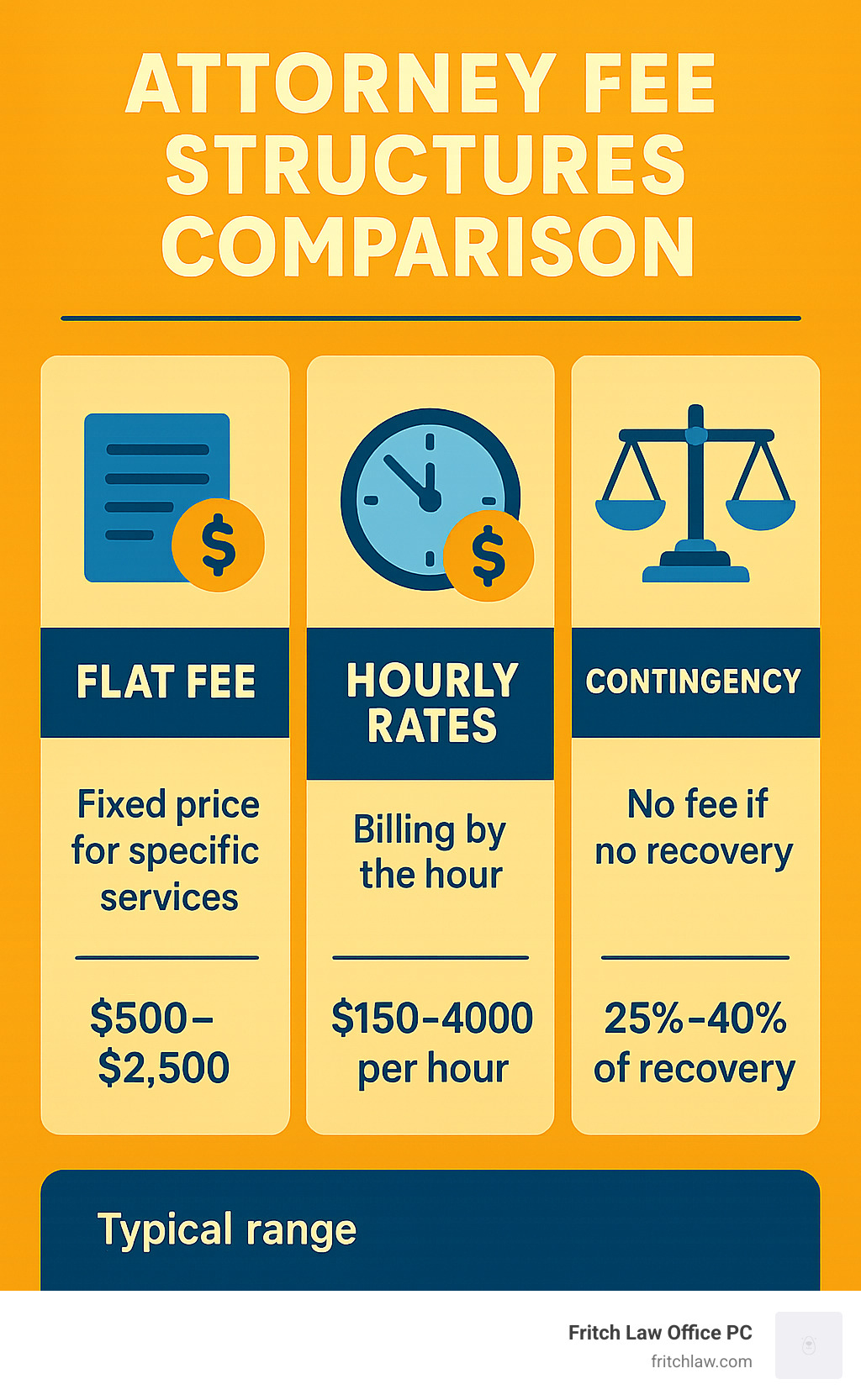
Most attorneys use one of four main fee structures. Flat fees work well for straightforward cases like simple evictions or lease reviews, typically ranging from $500 to $2,500. Hourly rates make sense for complex disputes, ranging $150 to $400 per hour. Contingency fees work for damage claims – your attorney only gets paid if you win, taking 25% to 40% of any settlement. Retainers involve paying $2,000 to $5,000 upfront for ongoing services.
Attorney Fee Structures Comparison
| Fee Type | How It Works | Best For | Typical Range |
|---|---|---|---|
| Flat Fee | Fixed price for specific services | Simple evictions, lease review | $500-$2,500 |
| Hourly Rate | Pay for time spent on case | Complex disputes, ongoing issues | $150-$400/hour |
| Contingency | Attorney paid from settlement/award | Damage claims, overcharge cases | 25-40% of recovery |
| Retainer | Upfront payment for ongoing services | Property management, multiple units | $2,000-$5,000 |
Affordable & Free Options
Money shouldn’t keep you from getting legal help when your housing is at stake. Many resources exist for people who can’t afford full representation.
Legal aid organizations provide free help to qualifying low-income residents. Pro bono programs connect you with volunteer attorneys. Many bar associations run free landlord-tenant clinics. Law schools often provide student clinics supervised by experienced attorneys.
Self-help resources can guide you through simpler issues. Courts provide forms and instructions for common problems. Online guided interviews walk you through processes step-by-step.
For comprehensive information about legal aid options, check out our guide: Legal Aid for Evictions.
Choosing the Best Fit Landlord Tenant Attorney
Finding the right landlord tenant attorney is like finding a good doctor – you want someone skilled, experienced, and easy to talk to.
Experience matters tremendously in housing law. Look for attorneys who focus on landlord-tenant cases rather than general practitioners. Ask how many similar cases they’ve handled and their success rate.
Local knowledge is crucial because housing laws vary dramatically by state and city. An attorney familiar with your local courts, judges, and housing authorities can steer the system more effectively.
Communication style can make or break your experience. You want someone who returns calls promptly, explains options in plain English, and keeps you updated on progress.
During consultation, ask direct questions: How many similar cases have you handled? What’s your strategy for my situation? How do you charge? How long will this take?
At Fritch Law Office PC in Jasper, Indiana, we believe every client deserves personalized attention. We take time to understand your unique situation and develop strategies custom to your specific needs and goals.
Landlord and Tenant Rights by Jurisdiction

Housing law is confusing because what’s perfectly legal in one state might land you in hot water in another. City ordinances can turn everything upside down. Housing rights change dramatically depending on where you live.
A landlord tenant attorney who knows your local laws can be the difference between winning and losing your case. Each state has its own statutes, and cities often add rules that completely change the game.
Indiana Highlights for Landlords & Tenants
Indiana keeps things relatively straightforward compared to some states, but important rules still apply.
For tenants, Indiana law protects your right to habitable living conditions – working heat, plumbing, and electrical systems. Your landlord needs proper notice before entering, typically 24 hours unless it’s an emergency. You have the right to get your security deposit back within 45 days.
Landlords in Indiana can collect rent as agreed in the lease and enter property for inspections with proper notice. You can evict tenants for lease violations – but must follow proper legal procedures. Security deposits can’t exceed one month’s rent plus pet deposits.
For the complete picture of Indiana housing law, check out our comprehensive guide: Indiana Landlord Laws.
Chicago & RLTO Protections
Chicago’s Residential Landlord and Tenant Ordinance (RLTO) gives renters some of the strongest rights in the country.
For security deposits: if your Chicago landlord violates RLTO rules, they might owe you twice your deposit plus attorney fees. Landlords must return deposits within 45 days with detailed deduction lists. If they hold deposits longer than six months, they pay you interest.
The RLTO cracks down on illegal lockouts with serious penalties. If you’re facing foreclosure, you might be entitled to relocation assistance up to $10,600 under the Keep Chicago Renting Ordinance.
British Columbia & Renoviction Rules
British Columbia created tough “renoviction” rules to stop landlords using fake renovations to evict tenants.
Renoviction protections mean landlords can only evict for genuine major renovations – not cosmetic work. If work is truly necessary, you might have right of first refusal to move back in.
Security deposit rules are equally strict. If your landlord unlawfully withholds your deposit, you could be entitled to double the amount. There are specific timelines for returning deposits, and disputes go to the Residential Tenancy Branch.
For complete information on BC tenancy laws, visit: More on BC tenancy laws.
The bottom line? Housing law is complicated, and local rules can make or break your case. Having a landlord tenant attorney who knows your specific jurisdiction can save you thousands of dollars and months of headaches.
Frequently Asked Questions about Landlord Tenant Attorneys
If you’re facing housing issues, you probably have lots of questions about getting legal help. Here are the most common concerns I hear from clients about working with a landlord tenant attorney.
How much does hiring a landlord tenant attorney cost?
The cost of hiring a landlord tenant attorney depends on several factors, but don’t let money worries stop you from getting help. Many attorneys offer free consultations, and there are options for every budget.
Consultation fees range from free to $400, though many lawyers offer that first conversation at no charge. This gives you a chance to understand your situation without any upfront cost.
For flat fees, expect to pay between $500 and $2,500 for straightforward cases like simple evictions or lease reviews. This pricing works well when you know exactly what service you need.
Hourly rates typically run $150 to $400 per hour, depending on the attorney’s experience and your location. This structure makes sense for complex disputes that might take unexpected turns.
Contingency fees of 25-40% apply when you’re trying to recover money – like overcharge cases or damage claims. You only pay if you win, which removes the financial risk.
Some complex cases require retainers of $2,000 or more, but legal aid organizations provide free services if you meet income requirements. Don’t assume you can’t afford help until you explore all your options.
What can a landlord tenant attorney do if I’m already in court?
Just because you’re already facing court proceedings doesn’t mean it’s too late to get help. A landlord tenant attorney can jump in at any stage and often turn things around.
First, they’ll review your case for any procedural mistakes or improper notices that could work in your favor. Landlords and tenants both make errors that experienced attorneys can spot immediately.
Your attorney can file motions and responses on your behalf, making sure all the proper paperwork gets submitted on time. Missing deadlines can doom your case, but lawyers know how to work within the system.
Settlement negotiations often happen right up until trial. Your attorney might be able to work out a deal that avoids the uncertainty of a judge’s decision. Research shows that tenants have choices about where to bring overcharge cases, and experienced attorneys know which venue offers the best chances of success.
If your case goes to trial, your lawyer will present evidence and argue your position before the judge. They understand what judges want to hear and how to frame your situation most effectively.
Even after an unfavorable decision, attorneys can handle appeals or assist with post-judgment issues like collection or compliance.
Can a landlord tenant attorney stop an unlawful eviction?
Yes, a skilled landlord tenant attorney can often stop unlawful evictions, even when time is running short. The key is acting fast and knowing exactly which legal tools to use.
Your attorney will first challenge improper notices or procedures. Landlords must follow strict rules when starting eviction proceedings, and any mistakes can invalidate the entire case.
Emergency motions for temporary restraining orders can halt evictions while your case gets sorted out. These legal tools exist specifically to prevent irreversible harm like losing your home.
Habitability defenses and discrimination claims provide powerful protection against eviction. If your landlord failed to maintain the property or treated you unfairly, these issues can stop eviction proceedings.
Payment plans or cure periods might be negotiated to resolve the underlying problem without anyone losing their home or rental income.
Local laws provide additional protection. Under Chicago’s RLTO, landlords cannot lock out tenants without a judge’s order, and violations result in significant penalties. In British Columbia, tenants can dispute eviction notices through the Residential Tenancy Branch, though deadlines are strict.
The bottom line? Don’t give up if you think your eviction is unlawful. Housing law provides many protections, but you need someone who knows how to use them effectively.
Conclusion
Housing disputes don’t wait for convenient times. One day you’re living peacefully, and the next you’re staring at an eviction notice. Or maybe you’re a landlord dealing with property damage and missing tenants.
These situations feel overwhelming because they are. Your housing is your foundation – whether it’s the roof over your family’s head or the investment that helps pay your bills. When that foundation shakes, everything else feels unstable.
Here’s what you need to remember: you don’t have to face this alone. A qualified landlord tenant attorney can be the difference between losing your home and finding a path forward. They turn confusing legal papers into clear action plans and help you understand rights you didn’t know you had.
Time is your most valuable asset in housing disputes. Those eviction deadlines aren’t suggestions – they’re hard stops that can cost you everything if missed. The security deposit you’re fighting for has strict time limits. The repairs your landlord is ignoring require specific procedures, but only if you follow them correctly.
Every day we see people who waited too long to get help. They thought they could handle it themselves, were scared of legal costs, or hoped the problem would disappear. Unfortunately, housing problems rarely go away on their own – they usually get bigger and more expensive to fix.
Local housing laws change frequently and vary dramatically from place to place. What works in Indianapolis might be completely wrong in Chicago. Indiana law differs from British Columbia law. Even neighboring cities can have vastly different rules about security deposits, rent increases, and eviction procedures.
At Fritch Law Office PC, we’ve spent decades helping people steer these complex waters. We’ve seen the relief on a tenant’s face when they realize their eviction notice was improper. We’ve helped landlords recover thousands in unpaid rent and property damage. We understand that behind every housing dispute is a real person with real worries about their future.
Your situation is unique, and it deserves personalized attention. Cookie-cutter legal advice from the internet can’t account for specific details that might make or break your case. Maybe your landlord failed to follow proper notice procedures. Perhaps your tenant has legitimate habitability complaints. These details matter, and an experienced attorney knows how to use them to protect your interests.
Don’t let fear of legal costs keep you from getting help. Many attorneys offer free consultations, and there are legal aid options for those who qualify. Even if you need to pay for representation, consider this: what’s the cost of losing your home compared to the cost of fighting for it?
The path forward starts with one phone call. Whether you’re dealing with an eviction, fighting for your security deposit, or trying to resolve a lease dispute, professional legal guidance can help you understand your options and protect your rights.
For comprehensive information about tenant legal representation and how we can help, visit our resource on Tenant Lawyers to learn more about protecting your housing rights.
Your home matters. Your rights matter. You matter. Don’t wait until tomorrow to get the help you need today. Contact a qualified landlord tenant attorney and take the first step toward resolving your housing dispute. You’ll be surprised how much better you’ll feel once you have someone knowledgeable in your corner.