Your Pet is Family: Securing Their Future with a Pet Trust
Finding a lawyer for a pet trust is the surest way to guarantee your companion is cared for if you become unable to do so. Here’s a concise checklist for choosing counsel:
- Focus on estate-planning and trust law
- Familiar with your state’s pet-trust statutes
- Appreciates that pets are family, not property
- Drafts documents that are legally enforceable and easy to administer
- Offers guidance after the trust is in place
More than 500,000 pets are euthanized each year when owners leave no plan behind. At the same time, 89 percent of Canadians see their pets as family, yet only 7 percent put that love into writing. Bridging this gap is why professional help matters.
A pet trust is a binding arrangement that sets aside money, names a caregiver and spells out instructions for your pet’s ongoing well-being. Unlike informal promises or a simple line in a will, the trust is enforceable in court.
I’m David Fritch. For four decades I’ve assisted clients with estate planning, including custom pet trusts that treat animals with the dignity they deserve.
What is a Pet Trust and Why is it Essential?
Picture this: you’re unable to care for your beloved companion due to illness, or worse, you’ve passed away unexpectedly. What happens to Max, your loyal golden retriever, or Whiskers, your finicky tabby cat? Without proper planning, even the most cherished family members can end up in shelters or face an uncertain future.
This is where a lawyer for a pet trust becomes invaluable in helping you create a safety net for your furry family.
A pet trust is a legally binding arrangement that ensures your pet receives proper care and financial support when you can no longer provide it yourself. Whether you become incapacitated or pass away, this powerful tool designates a caregiver, sets aside funds, and provides detailed instructions for your pet’s ongoing well-being.
Think of it as creating a comprehensive care plan that has the full force of law behind it.
The statistics tell a sobering story. While three-quarters of pet owners believe it’s important to make arrangements for their pet’s future care, only one-third have made any provision at all. Even more concerning, just seven percent have included formal arrangements in their estate planning documents.
This gap leaves countless beloved pets vulnerable to an uncertain fate. Without a formal plan, your pet could end up in a shelter, regardless of how much your family loves them. Financial constraints, housing restrictions, or simply not knowing your pet’s specific needs can create impossible situations for well-meaning relatives.
A pet trust eliminates these worries by creating a clear, legally enforceable roadmap for your pet’s future. It ensures that whoever cares for your companion has both the resources and the legal obligation to follow your wishes. For comprehensive information on how pet trusts fit into your overall planning strategy, explore our resources on estate planning.
Pet Trust vs. Will: A Clear Winner for Your Companion
You might think leaving instructions in your will is enough to protect your pet. After all, can’t you just write, “I leave $10,000 to my sister Sarah to care for Buddy”? While this approach shows good intentions, it falls short in several critical ways.
The fundamental difference comes down to legal enforceability and timing. A will provision for pet care is essentially a request with no binding obligation. Sarah could accept the money and decide she can’t actually care for Buddy, leaving your beloved companion without a home despite your careful planning.
Here’s how these two approaches stack up:
| Feature | Pet Trust | Will (for pet care) |
|---|---|---|
| Legal Binding | Legally enforceable, creating obligations for the trustee and caregiver | Not legally binding for pet care; relies on the goodwill of the named individual |
| Immediate Effect | Can take effect immediately upon your incapacity or death, bypassing probate | Only takes effect after probate, which can be a lengthy process (months or years) |
| Specific Instructions | Allows for highly detailed, legally enforceable instructions for care | Generally provides broad instructions, not legally enforceable |
| Probate Avoidance | Can be structured to avoid probate, ensuring continuous care and access to funds | Subject to probate, leading to potential delays in care and funding |
| Caregiver Discretion | Trustee monitors the caregiver to ensure funds are used for the pet’s benefit | Caregiver has full discretion; funds can be used for purposes other than pet care |
| Oversight | Trustee is bound by fiduciary duty to the pet’s care | No formal oversight mechanism to ensure pet’s well-being |
The timing issue alone makes pet trusts superior. Probate can drag on for months or even years, during which your pet needs immediate care, food, and veterinary attention. A properly structured pet trust can provide instant access to funds and activate care arrangements without delay.
As the ASPCA explains, a pet trust is an estate planning tool specifically designed to address these challenges. To learn more about avoiding probate delays that could affect your pet’s care, check out our guide on probate avoidance strategies.
The Legal Reality: Why You Can’t Just Leave Money to Your Pet
Here’s something that surprises many pet owners: legally, you cannot leave money directly to your pet. As much as we consider Fluffy or Rex to be family members, the law classifies pets as personal property or “chattel” – similar to furniture or jewelry.
This means your cat can’t open a bank account, and your dog can’t inherit your house. Anything left directly to an animal legally belongs to no one and becomes part of your estate’s unresolved assets.
This legal limitation explains why informal arrangements often fail spectacularly. Imagine telling your neighbor, “If anything happens to me, here’s $5,000 to take care of Mittens.” Without legal obligations, that well-meaning neighbor could face unexpected financial pressures and use the money for their own emergencies, leaving Mittens without support.
Even family members with the best intentions can find themselves in difficult situations. What if your sister loses her job and needs that money for her mortgage? What if your brother’s landlord doesn’t allow pets? These real-life scenarios highlight why good intentions aren’t enough.
A pet trust solves this problem by creating a legal structure where a trustee has a fiduciary duty to use the funds exclusively for your pet’s benefit. This isn’t just a moral obligation – it’s a legal requirement that can be enforced in court.
Understanding these legal nuances is crucial for effective planning. For more information about how Indiana handles these estate planning matters, visit our page on Indiana Probate Law.
Crafting the Perfect Pet Trust: Key Components and Instructions
Creating a pet trust is like writing a love letter to your pet’s future. It’s not just about setting aside money – it’s about crafting a detailed roadmap that ensures your furry, feathered, or scaled family member continues to receive the same love and care they’ve always known.
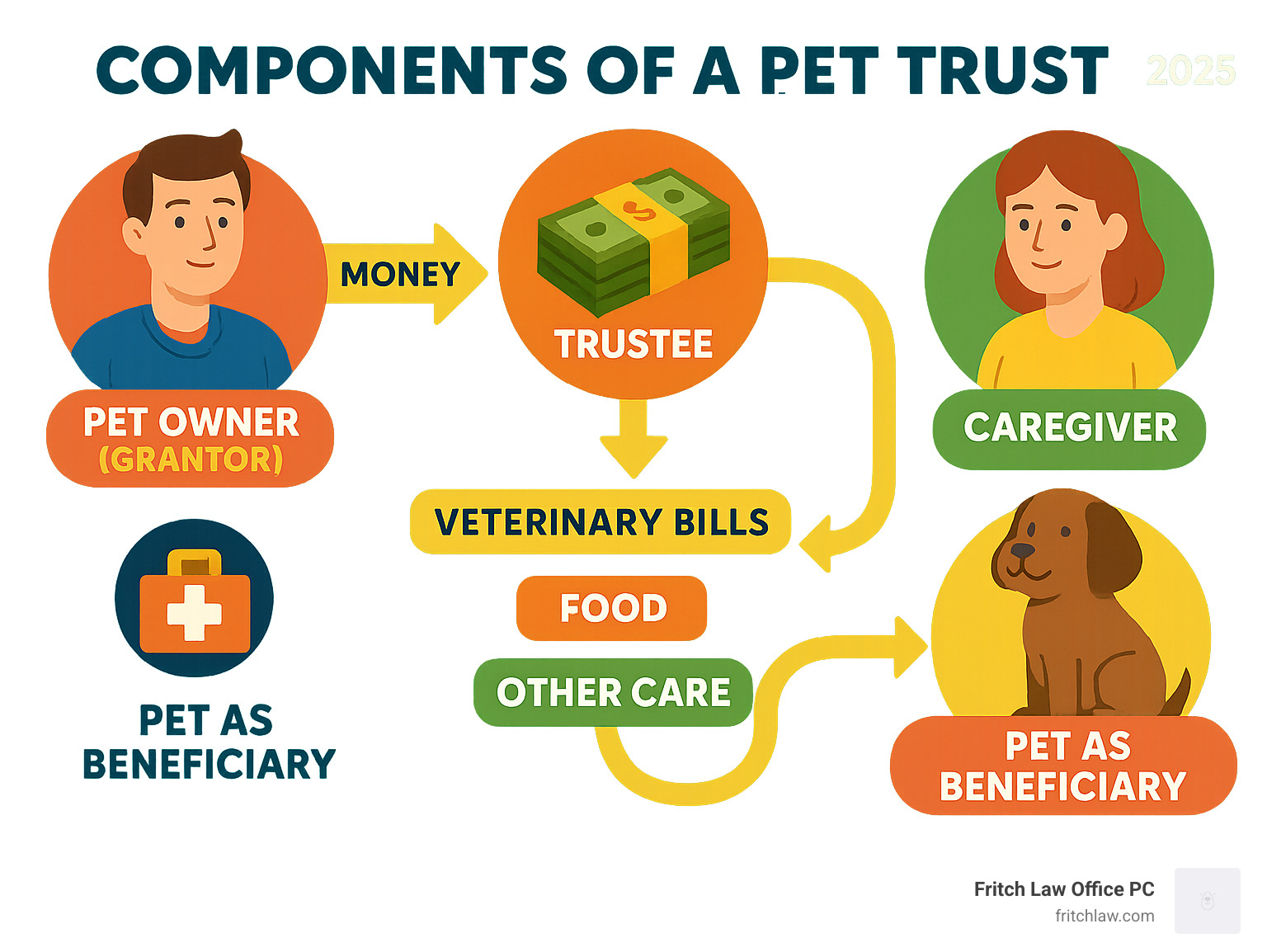
Think of your pet trust as having a team of people working together for your pet’s benefit. You, as the grantor, are the one creating and funding this safety net. The trustee becomes the financial guardian, managing the funds and making sure everything runs smoothly according to your wishes. This person holds a fiduciary duty, which means they’re legally bound to act in your pet’s best interest – no cutting corners allowed.
The caregiver is the hands-on hero who provides daily love and care for your pet. While your pet is the true beneficiary of the trust, the caregiver is the human who makes sure they get their morning belly rubs and evening treats on schedule.
Here’s where smart planning really shines: always name successor trustees and successor caregivers. Life happens, and your first choice might not always be available. Having backup people ensures your pet never falls through the cracks.
Many experienced lawyers for a pet trust recommend separating the trustee and caregiver roles. This creates a helpful system of checks and balances – one person provides the love, while another manages the money and ensures everything stays on track.

The Blueprint for Care: What to Include in Your Trust
This is where your pet trust becomes truly personal. You know your pet better than anyone – their quirks, preferences, and the little things that make them happy. A well-crafted trust captures all these details in legally enforceable instructions.
Start with pet identification that goes beyond basic descriptions. Include your pet’s breed, color, distinctive markings, and microchip number. Recent photos help ensure there’s no confusion, and DNA samples can provide additional verification if needed.
Your pet’s daily routines matter more than you might think. Does your dog need that 6 AM walk to start the day right? Does your cat have a favorite sunny spot for afternoon naps? These details help maintain the comfort and stability your pet is used to.
Diet and favorite treats deserve special attention. Specify preferred food brands, portion sizes, and any allergies or dietary restrictions. Don’t forget those special treats that make your pet’s tail wag – maybe that spoonful of peanut butter before bedtime or the way they go crazy for freeze-dried liver treats.
Include complete veterinarian information with your preferred vet’s contact details. Document any ongoing medical conditions and medications, including dosages and administration instructions. Emergency care protocols can be lifesavers when quick decisions are needed.
Grooming needs vary widely between pets. Some dogs need professional grooming every six weeks, while others just need occasional baths. Nail trimming, dental care, and coat maintenance all deserve mention in your trust.
Don’t overlook your pet’s personality and social needs. Do they love meeting new people at the dog park, or do they prefer quiet evenings at home? Are they terrified of thunderstorms but love car rides? These insights help caregivers provide emotional comfort alongside physical care.
If you plan to compensate your caregiver, specify the amount and payment schedule. Requiring documentation of expenditures ensures trust funds are used appropriately and provides helpful accountability.
The most difficult but crucial topic involves end-of-life decisions. Clearly state your wishes about euthanasia, including specific circumstances when it should be considered, such as irreversible suffering or complete loss of quality of life. Include your preferences for burial or cremation, whether that’s a pet cemetery, cremation, or scattering ashes in a meaningful location.
These detailed instructions transform your trust from a simple financial document into a comprehensive care guide. For guidance on making similar detailed decisions about your own future medical care, explore more on creating a living will.
Funding the Trust and Handling Leftover Assets
Even the most detailed pet trust falls flat without proper funding. The trick is finding that sweet spot – enough money to ensure excellent care without going overboard and inviting legal challenges from family members who might feel shortchanged.
Calculating the right amount starts with your pet’s life expectancy. A goldfish might need funding for a few years, while a parrot could require decades of care. Consider your pet’s current annual care costs, including food, routine vet visits, grooming, and any special needs they might have.
Emergency veterinary funds are crucial because pets, like people, can face unexpected health challenges. Factor in potential age-related issues and the reality that medical costs tend to increase over time. If you’re planning to compensate your caregiver, include those payments in your calculations too.
Don’t forget about inflation – what costs $100 today might cost significantly more in ten years. An experienced lawyer for a pet trust can help you strike the right balance between adequate funding and reasonable amounts that won’t raise eyebrows in court.
What happens to leftover money after your pet passes away? This is where naming a remainder beneficiary becomes important. You might choose a family member, friend, or charitable organization to receive any surplus funds.
Many pet owners find it meaningful to designate animal welfare organizations like Humane Societies as remainder beneficiaries. This way, any unused funds continue helping animals in need, creating a lasting legacy of compassion. It’s a beautiful way to ensure your love for animals keeps making a difference long after you’re gone.
For more information about incorporating charitable giving into your overall estate plan, learn about more on charitable trusts.
Why You Need a Lawyer for a Pet Trust

Every state now recognizes pet trusts, but the rules differ widely. A document that meets California’s standards might fall apart in Indiana, putting your companion at risk. Working with an experienced lawyer for a pet trust reduces that danger.
Common challenges include:
- Family members contesting the amount placed in the trust
- Long-lived animals (parrots, tortoises) that require decades of oversight
- The need for the trust to activate immediately if you are incapacitated
Legal guidance ensures the trust:
- Uses the exact language required by Indiana Code § 30-4-2-18
- Appoints reliable trustees and successor caregivers
- Provides contingency plans when circumstances change
For broader strategies that protect both you and your pet, see our insights on More on asset protection.
How an Experienced Lawyer for a Pet Trust Can Help
When you work with Fritch Law Office PC in Jasper, Indiana, you receive more than a template. We:
- Draft custom documents that reflect your wishes
- Structure the trust to withstand courtroom scrutiny
- Guide you in choosing and informing trustees and caregivers
- Update the plan when new pets join the family or finances change
Clear drafting also reduces the chance of disputes, allowing everyone to focus on what matters most—your pet’s continued comfort.
Finding the Right Lawyer for a Pet Trust in Indiana
Local knowledge matters. Indiana probate and trust statutes have quirks that differ from neighboring states. Fritch Law Office PC combines:
- Familiarity with state-specific requirements
- Experience preparing a wide range of trusts, including those for exotic or multiple pets
- A client-focused approach that values the human-animal bond
We listen to your concerns, translate them into clear legal language, and remain available to adjust the trust as life evolves. Explore additional tips on finding an estate planning attorney in Indiana.
Frequently Asked Questions About Pet Trusts
When clients visit our office in Jasper, Indiana, they often have thoughtful questions about pet trusts. These concerns are completely natural – after all, you’re making important decisions about your beloved companion’s future. Let me address the most common questions we hear, so you can feel confident moving forward.
What happens if the person I choose to be the caregiver can’t do it?
Life has a way of throwing curveballs, doesn’t it? The person who enthusiastically agrees to care for your pet today might face their own health challenges, move across the country, or simply find themselves unable to fulfill this commitment when the time comes.
A well-drafted pet trust should name one or more successor caregivers. If your first choice is unable or unwilling to serve, the responsibility passes to the next person on the list, ensuring your pet is never left without care. An experienced lawyer for a pet trust can help you structure this contingency plan properly.
Think of it like having backup plans for your backup plans. We recommend discussing these responsibilities with your chosen caregivers beforehand to make sure they understand what’s involved and are truly willing to take on this loving responsibility.
How much money is too much to put in a pet trust?
This is where the balance between love and legal reality becomes important. While you want to ensure your pet is well-cared for, an excessive amount of funding can invite legal challenges from family members who may feel it’s unreasonable.
Courts have the authority to reduce what they consider “unreasonably high” amounts in pet trusts. A lawyer for a pet trust can help you calculate a realistic amount based on your pet’s needs and life expectancy to minimize the risk of the trust being contested.
We consider factors like your pet’s current annual expenses, potential medical needs, life expectancy, and caregiver compensation if applicable. The goal is providing comfort and excellent care, not creating a trust fund that might raise eyebrows in probate court.
Can a pet trust provide care for my pet if I become disabled, not just after I die?
Yes, this is a key benefit that many people don’t realize! A pet trust can be structured as a “living trust” that takes effect upon your incapacity. This ensures your pet’s care routine is not disrupted if you are temporarily or permanently unable to care for them yourself.
Imagine you’re hospitalized unexpectedly or need extended care in a facility. With a properly structured pet trust, your designated caregiver can step in immediately, and the trustee can begin disbursing funds for your pet’s care without any legal delays. This continuity of care provides incredible peace of mind during already stressful times.
This immediate activation is one of the strongest arguments for creating a pet trust rather than relying on simple will provisions, which only take effect after death and often involve lengthy probate proceedings.
Secure Your Pet’s Future Today
Your pet has been there for you through thick and thin – greeting you at the door after long days, offering comfort during tough times, and bringing endless joy to your life. Now it’s time to be there for them, even when you can’t be.
A pet trust isn’t just a legal document; it’s your promise that the furry, feathered, or scaled family member who has given you so much love will continue to receive the care they deserve for their entire life. It’s the difference between hoping someone will do right by your pet and knowing they legally must.
The peace of mind that comes from proper planning is immeasurable. While we can’t predict what tomorrow brings, we can ensure our beloved companions are protected no matter what happens. A well-crafted pet trust eliminates the worry about your pet ending up in a shelter, being passed from person to person, or not receiving the specific care they need.
When you work with an experienced lawyer for a pet trust, you’re not just getting legal documents – you’re getting a comprehensive plan that reflects your deep love for your pet. Every detail matters, from their favorite bedtime routine to their preferred veterinarian, and a properly structured trust captures all of these important elements.
At Fritch Law Office PC in Jasper, Indiana, we understand that no two pets are alike, and no two families have identical needs. That’s why we take a personalized approach to every pet trust we create. We’ll sit down with you to learn about your pet’s unique personality, their daily routines, their health needs, and your specific concerns about their future care.
Our commitment goes beyond just drafting documents. We guide you through every decision – from selecting the right trustee and caregiver to determining appropriate funding levels. We help you think through scenarios you might not have considered and ensure your trust is structured to handle whatever life brings.
The process doesn’t have to be overwhelming. We’ll walk you through each step, explain everything in plain language, and make sure you feel confident about the plan we create together. Your pet trust will be custom specifically to your beloved companion’s unique needs, ensuring they receive the same level of love and attention you’ve always provided.
Don’t wait until it’s too late. Your pet depends on you today, and with proper planning, they can continue to receive the care they deserve tomorrow. Contact a Pet Trust Attorney to get started and take the first step toward securing your pet’s future with the peace of mind you both deserve.