
Eviction attorney near me: Complete 2026 Guide
Fritch Law Office handles eviction attorney near me cases for Indiana residents every day. First, our attorneys examine your situation carefully. Next, we identify your strongest legal options. Furthermore, we explain every step in plain language. Therefore, you make confident decisions from day one.
Key Facts About Eviction attorney near me in Indiana
Indiana courts apply strict 2026 rules to eviction attorney near me matters. Moreover, experienced attorneys win better outcomes for clients. Additionally, early legal advice prevents costly mistakes. Consequently, clients who hire Fritch Law gain a clear advantage. However, waiting too long weakens your position significantly.
Take Action on Eviction attorney near me Today
Do not delay your eviction attorney near me case. First, call our Jasper office directly. Next, we schedule your free consultation immediately. Then, we build a winning strategy for you. Additionally, we represent you at every court hearing. Finally, we resolve your case as fast as possible.

Visit the Indiana Courts website for official legal information. Contact Fritch Law for your free consultation today.
Why Finding the Right Eviction Attorney Near You Matters
When facing an eviction, finding a qualified eviction attorney near me can be the difference between losing your home and protecting your rights. Here’s when to seek help:
For Tenants:
- You receive an improper notice or face discrimination.
- Your landlord changes locks, shuts off utilities, or harasses you.
- You face wrongful eviction or uninhabitable living conditions.
For Landlords:
- It’s your first eviction and you need to ensure proper procedure.
- The tenant has a lawyer or has filed for bankruptcy.
- You want to avoid costly mistakes that could invalidate your case.
Both parties benefit from legal counsel when the case involves complex lease terms, rent control laws, significant money, or when the other party has an attorney. Eviction cases have strict legal requirements, and even small mistakes can cause costly delays. The national average for real estate lawyers is $350-$550, with hourly rates from $150-$300 or more.
Whether you’re a tenant facing displacement or a landlord protecting an investment, the process is governed by strict laws. Tenants may have rights to jury trials, while landlords must follow precise notice procedures to avoid case dismissal.
I’m David Fritch, an experienced lawyer with 40 years of practice in Indiana. I’ve helped many clients steer eviction attorney near me searches to find the right representation. My background in law and business provides unique insight into these complex cases.
Understanding the Eviction Process: What It Is and Why It Happens
Eviction, also known as an “unlawful detainer,” is the legal process a landlord uses to remove a tenant from a rental property. It’s a formal court proceeding initiated when a tenant allegedly breaks their lease and won’t leave voluntarily.

Common reasons for eviction include:
- Non-payment of rent: This is the most frequent cause, as landlords rely on rent to cover mortgages, taxes, and maintenance.
- Lease violations: This can range from having an unauthorized pet to causing disturbances or having unapproved occupants.
- Property damage: Significant damage beyond normal wear and tear can trigger an eviction.
- Illegal activity: Criminal acts on the property are grounds for immediate eviction.
- End of lease term: An eviction may occur if the lease ends and the tenant refuses to leave.
For complex commercial property issues, our guide on Understanding the Intricacies of Indiana Commercial Real Estate Law offers more detail.
The Critical Role of the Lease Agreement
Your lease is a legally binding contract that forms the foundation of the landlord-tenant relationship. Any major violation can trigger the eviction process. Written agreements are superior to oral ones as they provide clear proof of the terms, covering rent, late fees, pet policies, maintenance duties, and notice periods. Security deposit clauses are also critical, as mishandling them can lead to disputes.
Professional help with lease agreements can prevent future problems. Our article on Lawyers for Rental Agreement explains how legal guidance can protect your interests.
Residential vs. Commercial Evictions
Residential and commercial evictions operate under different legal frameworks. Residential evictions heavily favor tenant protection because a home is at stake. This means longer notice periods and higher standards for landlords. Judges scrutinize these cases carefully, weighing tenant rights like the warranty of habitability.
Commercial evictions are treated more as business disputes, assuming equal bargaining power. This results in faster proceedings, fewer tenant protections, and a strong emphasis on the lease terms. For more on this topic, see our discussion of Indiana Commercial Real Estate Law.
| Feature | Residential Evictions | Commercial Evictions |
|---|---|---|
| Tenant Protections | High (focused on housing stability) | Lower (focused on lease terms and business agreements) |
| Notice Periods | Often longer, specific legal requirements | Can be shorter, often dictated by lease |
| Legal Complexity | High due to tenant rights and procedural rules | Can be complex, but more lease-driven |
| Rent Control | Common in some jurisdictions | Rare |
| Speed of Process | Generally slower, more opportunities for tenant defense | Generally faster, fewer tenant defenses |
| Governing Laws | State and local landlord-tenant laws | Contract law, state commercial property laws |
Understanding these distinctions is vital, and an eviction attorney near me can help steer the correct legal path for your situation.
Navigating Your Rights and the Landlord’s Legal Duties
The eviction process is a precise legal journey with strict rules that landlords must follow. Any misstep can derail the case, causing delays and extra costs. Understanding your rights and the landlord’s duties is essential for both parties.

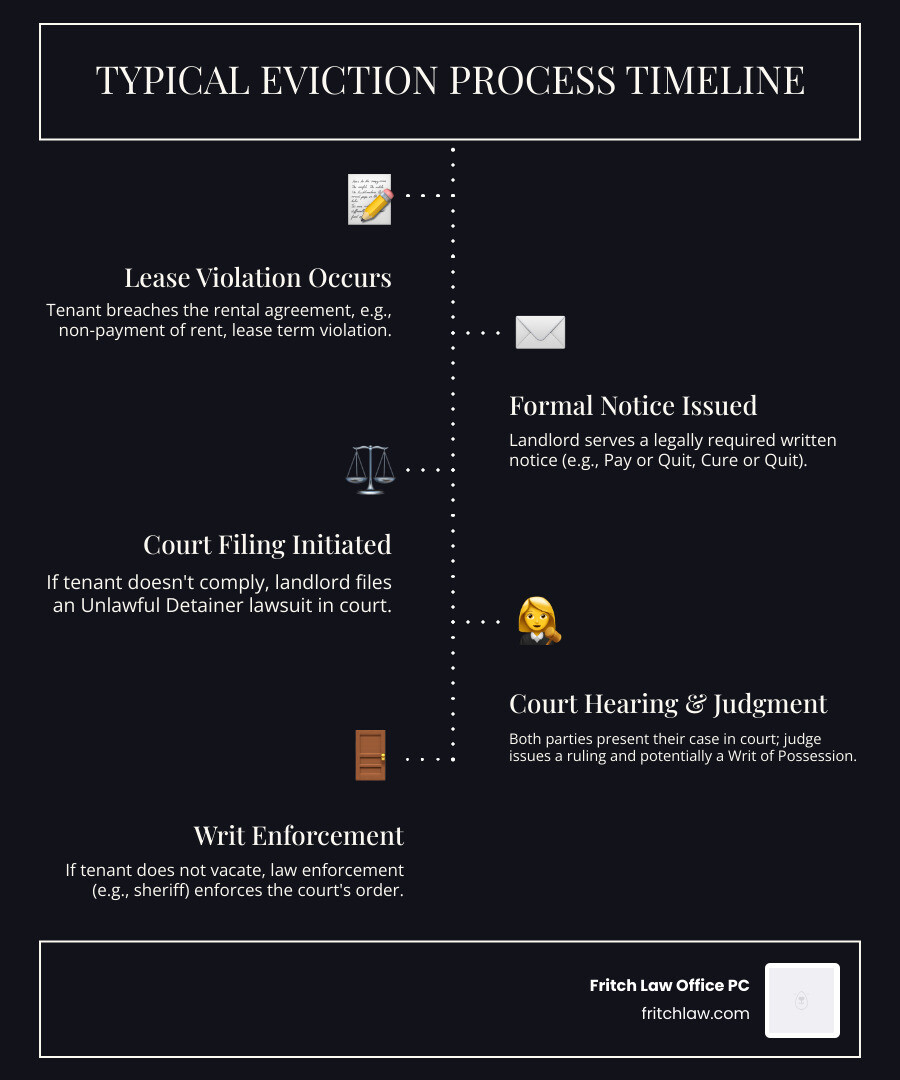
For landlords, the legal process typically involves these steps:
- Notice to Quit: A formal written notice explaining the reason for eviction and providing a deadline to fix the issue or move out.
- Filing an Eviction Lawsuit: If the tenant doesn’t comply, the landlord files an “unlawful detainer” action in court.
- Summons and Complaint: The tenant is officially served with the lawsuit and given a deadline to respond.
- Court Hearing: Both parties present their case and evidence to a judge.
- Writ of Possession: If the judge rules for the landlord, this court order allows law enforcement to remove the tenant.
Getting these steps right is critical. For more details on how this process connects with your rights in Indiana, see our article on Indiana Tenant Rights Eviction.
What Are a Tenant’s Rights During an Eviction?
As a tenant, you have important rights designed to ensure a fair process. These include:
- Right to Notice: Your landlord must provide proper, written notice before starting an eviction.
- Right to Challenge: You can defend yourself in court and require the landlord to prove their case.
- Implied Warranty of Habitability: Your landlord must maintain a safe, livable property. Failure to do so can be a defense against eviction for non-payment of rent, provided you’ve given them proper notice of the issues.
- Right to Quiet Enjoyment: Your landlord cannot unreasonably interfere with your peaceful use of the property.
- Protection from Retaliation: A landlord cannot evict you for exercising a legal right, such as reporting a code violation.
Knowing these rights is the first step to protecting yourself. For a deeper dive, read our article on Indiana Tenant Rights.
Illegal “Self-Help” Evictions
“Self-help” evictions are when a landlord tries to force a tenant out without a court order. These actions are completely illegal in every state, including Indiana. Examples include:
- Changing the locks.
- Shutting off utilities like water, heat, or electricity.
- Removing the tenant’s belongings from the property.
These actions bypass the legal system designed to protect both parties. A landlord who attempts a self-help eviction can face serious legal consequences, including fines and paying damages to the tenant. If you’ve been threatened with a lockout, contact an attorney immediately. Learn more about illegal landlord actions in our guide on What is Considered Landlord Retaliation in Indiana?.
When to Hire an Eviction Attorney Near Me
Eviction cases are complex, and the stakes are high for both landlords and tenants. Handling it alone is risky. Hiring an eviction attorney near me can prevent a costly legal disaster and is often the key to a successful outcome.

For tenants, an eviction judgment can damage credit and make it difficult to find future housing. For landlords, a mishandled eviction can mean months of lost rent and expensive legal fees, potentially forcing you to restart the entire process.
An experienced attorney ensures all legal requirements are met, reducing the stress of these emotionally charged situations.
Signs a Tenant Should Contact an Attorney
As a tenant, certain red flags mean you should seek legal help immediately:
- Wrongful Eviction: Your landlord tries to evict you without a valid legal reason or in violation of your lease.
- Discrimination: You believe the eviction is based on your race, religion, family status, disability, or another protected class. HUD can issue penalties starting at $16,000 for a first offense.
- Landlord Harassment: Your landlord threatens you, constantly disturbs you, or uses illegal “self-help” tactics like shutting off utilities.
- Uninhabitable Conditions: Your home has serious health or safety issues (mold, no heat, major leaks) that the landlord has ignored. This can be a strong defense, especially against eviction for non-payment of rent.
- Improper Notice: The eviction notice you received is incorrect, incomplete, or was not delivered according to law.
For more help, see our guide: Attorney for Tenants Near Me.
Why Landlords Should Seek Legal Counsel
Trying to save money by handling an eviction yourself often backfires. The smallest procedural error can invalidate your case.
- First-Time Eviction: If this is your first eviction, hiring a lawyer is essential to steer the intricate legal requirements.
- Ensuring Compliance: An attorney guarantees that all notices and court filings are handled correctly, which is critical to winning your case.
- Mitigating Liability: You need legal counsel if a tenant sues you for discrimination, injury, or illness.
- Tenant Has a Lawyer: If the tenant is represented, you should be too, to avoid being at a disadvantage.
- Complex Situations: Cases involving employee-tenants, tenant bankruptcy filings, or properties under rent control or Section 8 require specialized legal guidance.
An attorney can help after a tenant breaches the rental agreement and refuses to vacate. For more on landlord responsibilities, see our guide on Indiana Landlord Laws.
The Practicalities of Legal Action: Costs, Defenses, and Outcomes
A primary concern in any legal action is cost. For evictions, the price of an attorney varies based on case complexity and location, but investing in legal help can prevent more expensive mistakes. The national average for real estate lawyers is between $350 and $550, with hourly rates from $150 to $300 or more. Some offer flat fees for specific services, starting around $550. Many firms offer a free consultation to discuss your case and understand your options. You can explore an Eviction Lawyer Near Me Free Consultation to learn more.
Common Defenses Against Eviction
If you’re a tenant facing an eviction lawsuit, you have the right to challenge it in court. Common defenses include:
- Improper Notice: The landlord made a mistake in the eviction notice or how it was delivered.
- Breach of Warranty of Habitability: The landlord failed to maintain a safe and livable property after you notified them of the problems.
- Retaliation: The landlord is evicting you for exercising a legal right, like reporting a code violation.
- Discrimination: The eviction is based on your race, religion, gender, disability, or other protected status.
- Landlord Waived Eviction: The landlord accepted partial rent after sending the eviction notice, potentially voiding that notice.
- Payment of Rent: You paid or attempted to pay the rent within the notice period, but the landlord refused it.
An eviction attorney near me can help determine the best defense strategy for your situation. If hazardous conditions exist, you may have additional claims, which you can learn about here: Can I Sue My Landlord for Asbestos Exposure?.
How to Stop or Delay an Eviction
Acting quickly with professional legal advice can help you stop or delay an eviction. Options include:
- Paying Rent Owed: Paying the full amount, including any fees, can often halt the process.
- Curing the Lease Violation: Fixing the problem that led to the notice (e.g., removing an unauthorized pet) may stop the eviction.
- Negotiating a Payment Plan: If you can’t pay all at once, try to negotiate a plan with your landlord. Get any agreement in writing.
- Filing a Motion with the Court: An attorney can file motions to challenge the eviction or request more time.
- Mediation: A neutral third party can help you and your landlord reach a solution outside of court, which can help you avoid an eviction on your record.
Seeking Legal Advice is the most important step. An attorney can explain your rights, identify defenses, and guide you. They can also connect you with resources like the CFPB’s Help for Renters guide if you’re struggling with bills.
Finding Legal Help and Resources for Eviction
Eviction law varies significantly by state and even city, making local expertise essential. An eviction attorney near me understands the specific ordinances and court procedures in your area, which can be critical to your case. For example, some cities have mandatory mediation programs or unique notice requirements that can make or break a case.
How to Find an Eviction Attorney Near Me
A strategic approach can help you find qualified legal representation.
- Online Directories: Websites let you search for lawyers by location and practice area, read reviews, and compare credentials.
- State Bar Association: Your state bar’s website can provide lawyer referrals and verify an attorney’s license and standing.
- Referrals: Ask for recommendations from trusted friends, family, or real estate professionals who have faced similar issues.
- Free Consultations: Use these meetings to discuss your case and ask key questions about their experience, fees, and potential outcomes.
- Client-Focused Approach: Look for attorneys who provide personalized representation. At Fritch Law Office PC, we tailor our approach to each client’s unique situation.
Where to Find Free or Low-Cost Eviction Assistance
If you cannot afford a private attorney, several resources can help.
- Local Community Organizations: Non-profits often provide advice, paperwork assistance, and sometimes direct representation.
- Legal Aid Societies: These non-profit firms offer free civil legal help to eligible low-income individuals. While they rarely handle an entire eviction case for free, they provide crucial support. Indiana Legal Services is the largest provider in the state. Learn more in our guide on Legal Aid for Evictions.
- State and Local Government Programs: Dialing 2-1-1 can connect you to emergency rental and utility assistance programs.
- Online Resources: Websites like LawHelp.org offer free legal information and self-help tools.
- Pro Bono Services: Some private attorneys offer free services through bar association programs, though these opportunities are limited.
If you need free assistance, our article on Free Eviction Lawyers for Tenants provides additional guidance. Acting quickly is key, whether you hire a private attorney or use free resources.
Frequently Asked Questions about Eviction Lawyers
Facing eviction brings many questions. Here are answers to common concerns about working with an eviction attorney near me.
How much does it cost to hire an eviction lawyer?
Costs depend on case complexity and location. A simple, uncontested eviction costs less than a complex dispute involving a jury trial. Legal fees are often higher in major cities. Most attorneys use one of three fee structures:
- Hourly Rates: Typically $150 to $300+ per hour.
- Flat Fees: A set price for routine services. For example, an initial eviction service might start at $550.
- Retainer: An upfront deposit that the attorney bills against.
The national average for real estate lawyers is $350 to $550. While it seems expensive, a skilled attorney can save you money by avoiding costly mistakes.
Can an eviction be removed from my record?
This is difficult. An eviction judgment is a public court record that can appear on background checks and impact your credit. This “scar” on your rental history can make it hard to rent in the future.
Removal may be possible if the case was dismissed or you won. In such situations, you may be able to have the record sealed or expunged, but the process is complex and varies by state. An eviction attorney near me can advise if this is an option for you. Negotiating a settlement that avoids a formal judgment is another way to minimize the impact.
How long does the eviction process take?
The timeline varies. State and local laws set minimum timeframes. The biggest factor is whether the case is contested. An uncontested eviction might take 4-6 weeks. If a tenant fights the eviction, it can stretch to several months.
Court backlogs and case complexity also cause delays. While landlords hope for a 30-day resolution, this is often optimistic. You should prepare for a process that could take anywhere from a few weeks to several months. The legal system must balance efficiency with fairness and due process for all parties.
How an Experienced Indiana Attorney Can Guide You
Navigating Indiana’s landlord-tenant laws can be confusing and frustrating. Whether you’re a landlord protecting your investment or a tenant fighting for your home, an experienced attorney with deep knowledge of state and local regulations is invaluable.
At Fritch Law Office PC in Jasper, Indiana, we provide the client-focused guidance you need to find a fair and timely resolution. You don’t have to face this difficult process alone.
Instead of just searching for any eviction attorney near me, consider a team that truly understands Indiana law and is ready to champion your rights. Let us help you explore your options and guide you towards a better outcome. Don’t hesitate to reach out; explore how tenant lawyers can assist you – we’re here to help.